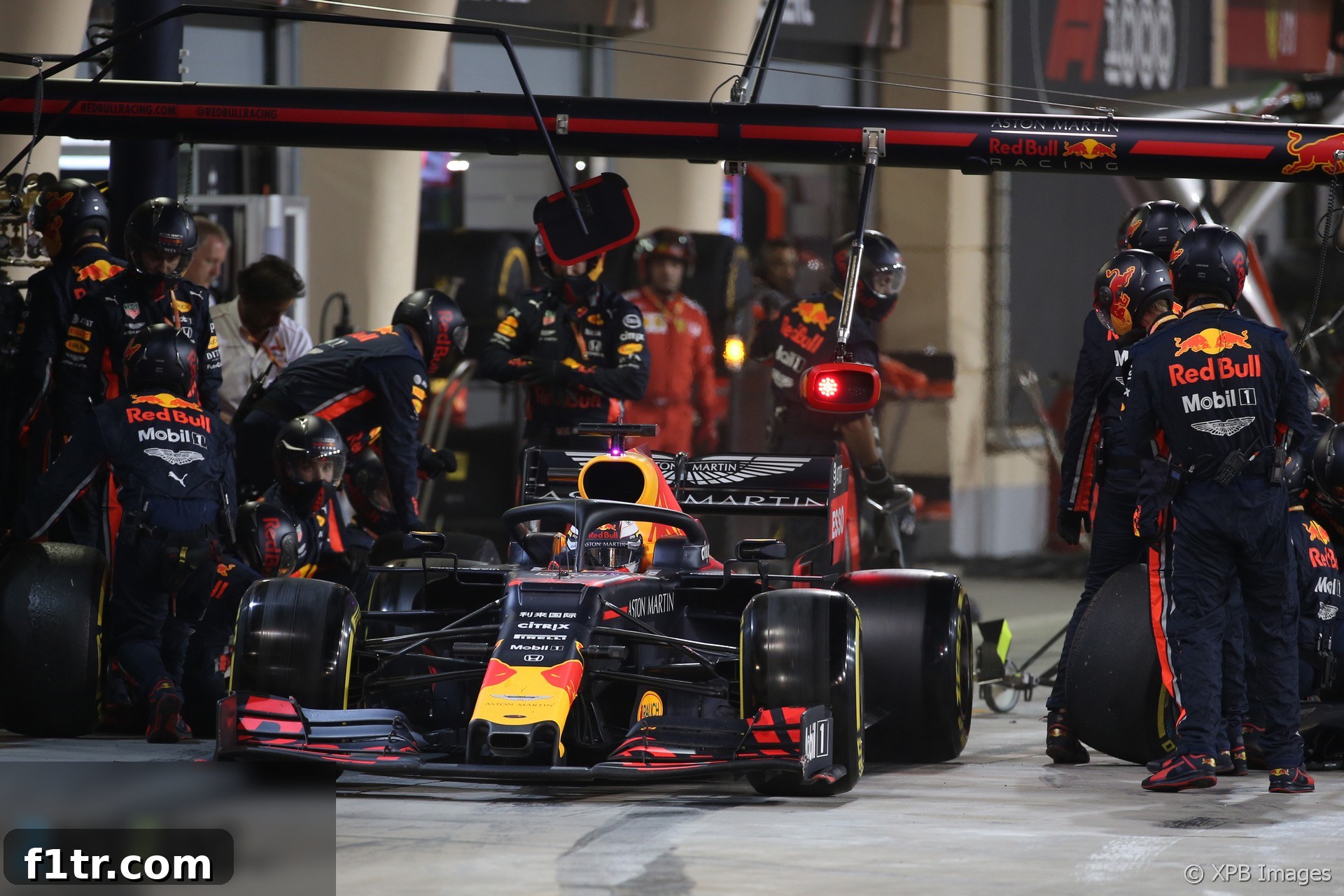
A significant shift in Formula 1’s approach to tyre strategy is underway, with Pirelli, the sport’s exclusive tyre supplier, indicating that a planned return to “very high degradation tyres” for the 2020 F1 season is now highly improbable. This decision marks a notable departure from the objectives outlined in the original tender document for tyre suppliers, reflecting a broader consensus among Formula 1 stakeholders.
Advert | Become a Supporter & go ad-free
F1 Tyre Strategy Undergoes Major Rethink: High Degradation Tyres Phased Out
The landscape of Formula 1 racing is continually shaped by numerous factors, and few are as critical or as debated as tyre performance. For years, the sport has grappled with finding the optimal balance between tyre durability, performance, and degradation to foster exciting and unpredictable races. Recent developments suggest a significant pivot in this philosophy, with Pirelli confirming that the aspiration for “very high degradation tyres” will likely not materialize for the upcoming 2020 F1 season, signaling a new era for tyre management in Grand Prix racing.
The Initial Vision: High Degradation for Enhanced Racing
The journey to this current juncture began with a clear mandate. A tender issued in the previous year, inviting potential tyre suppliers for the 2020-2023 Formula 1 seasons, set ambitious targets for degradation. Specifically, it outlined requirements for a soft tyre compound that would lose approximately two seconds of lap time over just 10% of a typical race distance. The underlying intention was to engineer a scenario where tyres would degrade rapidly, compelling teams to adopt multi-stop strategies and thereby inject more strategic variability and overtakes into races. This vision aimed to move away from what some perceived as predictable single-stop races, striving instead for a more dynamic and engaging spectacle for fans worldwide.
Pirelli, which ultimately secured the tender and will continue its role as F1’s exclusive tyre supplier for another four seasons, was initially aligned with this ambitious goal. However, insights gleaned from recent seasons and extensive discussions with the sport’s governing bodies and teams have prompted a re-evaluation of this direction. The consensus among key stakeholders — including the FIA, Formula One Management (FOM), and the competing teams — now leans against the aggressive high degradation approach.
Pirelli’s Perspective: A Change of Heart Driven by Experience
Mario Isola, Pirelli’s motorsport director, articulated this evolving stance in response to questions from RaceFans, highlighting the ongoing dialogue that has shaped this decision. “We have an ongoing discussion with both FIA and FOM and also the teams to understand which is the direction,” Isola explained. He further elaborated, “If you look at the tender document released by the FIA – the target letter that was appended to the document – they were thinking [about] very high degradation tyres. But looking at what happened last year now we quite agree that it is probably not the right direction.”
This statement underscores a pragmatic shift, acknowledging that theoretical ideals do not always translate effectively into real-world race conditions. Pirelli’s experience in previous seasons, particularly when attempting to introduce more aggressive tyre compounds to encourage multi-stop strategies, did not yield the desired outcomes. Instead of fostering varied strategies, these efforts often led to an increase in “pace management” by teams. As Isola candidly admitted, “We tried to be a lot aggressive with the three compounds and basically the teams were increasing the pace management to go on a one-stop.” This counterproductive outcome demonstrated that simply making tyres degrade faster did not automatically lead to more exciting racing; instead, it often resulted in drivers preserving their tyres for longer stints, limiting their ability to push to the absolute limit and diminishing the on-track spectacle.
The Unintended Consequences of High Degradation
The aspiration for high degradation, while well-intentioned, often created several challenges that detracted from the sport. One primary issue was the aforementioned pace management. When tyres were too fragile, drivers were often instructed to drive significantly below their car’s potential to preserve the rubber, leading to processions rather than flat-out racing. This not only frustrated drivers, who are inherently wired to push their machines to the limit, but also disappointed fans who yearned for unadulterated speed and aggressive competition.
Furthermore, the unpredictability introduced by excessively high degradation could sometimes lead to a lack of genuine strategic diversity. While the aim was to create multiple pit-stop options, the reality was often a scramble to minimize stops, which paradoxically constrained strategy rather than expanding it. Teams struggled with understanding the precise degradation curves, making it difficult to plan optimal stints, and often resulted in conservative approaches dominating race weekends. This also made it challenging for midfield teams, who often found themselves in a difficult position where tyre choices could disproportionately affect their race outcomes compared to top-tier teams with more robust car performance.
A Broader Industry Consensus
Pirelli is not alone in its assessment. Rival tyre manufacturer Michelin previously indicated to RaceFans that its decision not to submit an application for the F1 tender was partly due to Formula 1’s continued insistence on a degradation-focused tyre philosophy. This highlights a broader industry sentiment that an over-emphasis on degradation may not be the optimal path for the pinnacle of motorsport. A tyre manufacturer like Michelin, known for its high-performance and durable products in other racing series, found the F1 brief to be misaligned with what they believed would genuinely enhance the sport.
The Intricate Challenge of Tyre Selection
Isola further elaborated on the inherent complexities Pirelli faces in selecting tyre compounds for each Grand Prix, illustrating why there is “no perfect solution.” The challenge lies in striking a delicate balance that caters to the diverse needs of the grid and promotes dynamic racing without inadvertently penalizing certain teams or strategies. He outlined several scenarios:
- Too Conservative: “If we go conservative with all the three compounds then the hardest of the three is not chosen by anybody and you just have the mandatory set.” This leads to predictable, single-stop races where the hardest compound is largely ignored.
- Close Softs, Hard Outlier: “If we use the two soft that are quite close and a hard that is one step harder, nobody is using this one.” Again, the hardest compound becomes irrelevant, limiting strategic options.
- Aggressive Softest: “If we use two conservative and one that is more aggressive – the softest is one step more aggressive, then we create an issue to the midfield because the top teams try to qualify on the medium while the others are obliged to use the soft and their race is done.” This scenario disproportionately disadvantages midfield teams, forcing them into compromised strategies from the outset. They might burn through their soft tyres early in qualifying or the race, leaving them with less competitive options later on, while top teams can comfortably manage more durable compounds.
These examples underscore the multifaceted nature of tyre allocation, where a choice designed to create excitement for one part of the grid can inadvertently undermine the competitive balance for another. “So it’s difficult. We don’t have the perfect solution,” Isola concluded, highlighting the continuous pursuit of a “less imperfect” option.
Towards a More Balanced Future: Simulations and Data-Driven Decisions
In light of these challenges, Pirelli is committed to an intensive data-driven approach to refine its tyre selection process. “What we are trying to do is to run many simulations with different delta lap times with different levels of degradation to understand which is the best. That is not perfect, but at least is in the right direction.” This signifies a shift towards a more nuanced understanding of how various tyre characteristics impact race dynamics, moving beyond a simplistic focus on high degradation.
The goal is to provide compounds that offer sufficient performance without forcing excessive pace management, allowing drivers to push harder for longer, and promoting genuine overtaking opportunities. This new direction is expected to result in tyres that are more robust and predictable, granting teams greater confidence in their strategic planning and enabling drivers to extract maximum performance from their cars more consistently throughout a race. While the era of extreme degradation tyres appears to be drawing to a close, the commitment remains to enhance the spectacle of Formula 1, albeit through a more considered and balanced approach to tyre design and allocation.
Advert | Become a RaceFans supporter andgo ad-free
2021 F1 Season Insights and Related Articles
- Masi ‘basically gifted the championship’ to Verstappen says 2021 FIA steward Sullivan
- Las Vegas race backers looking to extend F1 deal beyond 2025
- Why Mercedes put ‘a reminder of joy and pain’ on display in their factory lobby
- Verdict on error in GT race suggests Mercedes would have lost 2021 Abu Dhabi GP appeal
- Title ‘stolen’ from Mercedes made us ‘underdogs people cheer for’ – Wolff
Browse all 2021 F1 season articles