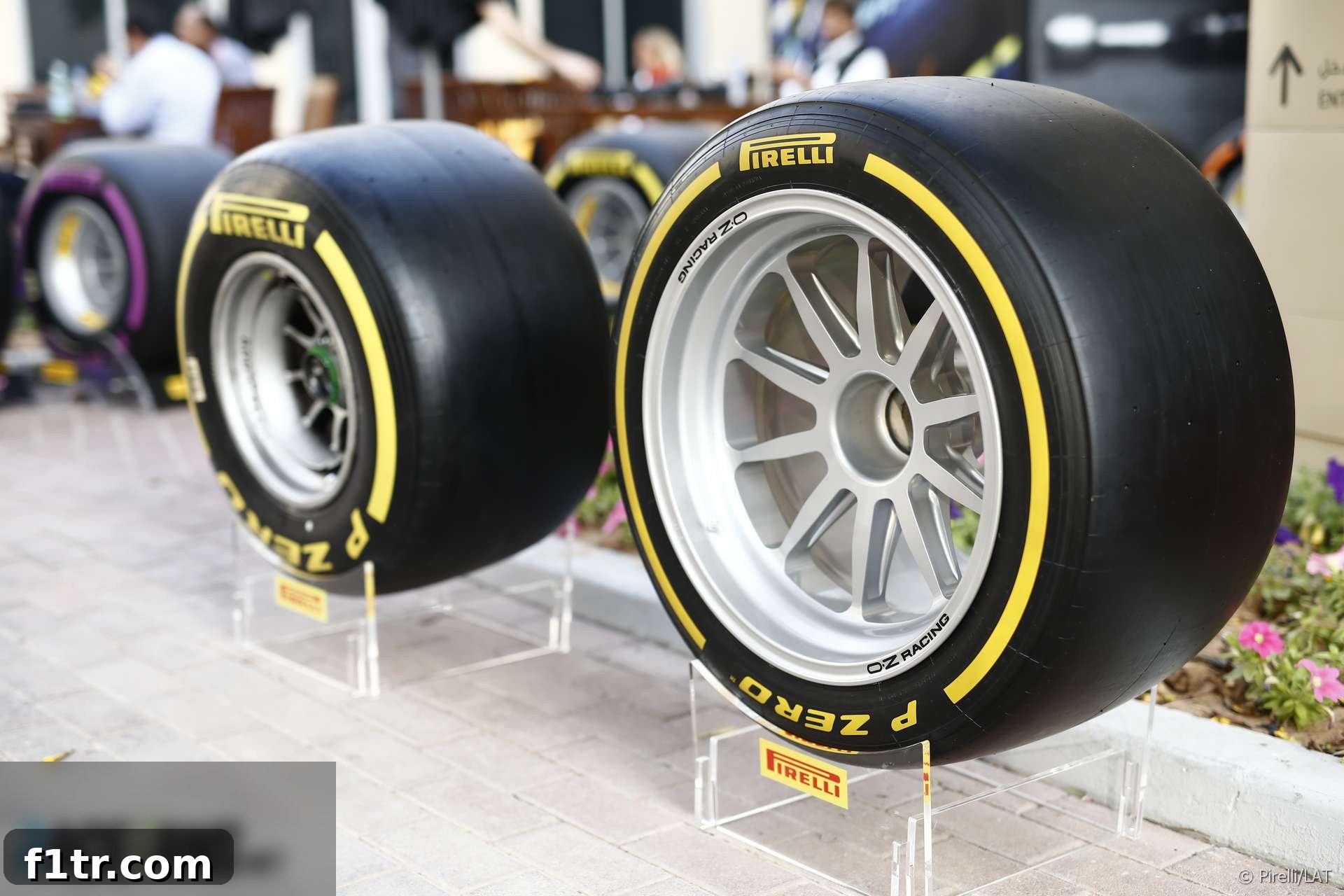
Pirelli’s 18-Inch F1 Tyres: Paving the Way for a New Era in 2021
The pinnacle of motorsport, Formula 1, is perpetually on the brink of evolution, consistently pushing the boundaries of engineering, aerodynamics, and driver performance. Among the most significant upcoming technical transformations, one fundamental change promises to reshape the very interaction between car and track: the introduction of 18-inch tyres. As the sport’s exclusive tyre supplier, Pirelli is meticulously preparing for this monumental shift, poised to usher in a new era with these larger wheels for the 2021 Formula 1 season. This transition represents a definitive departure from the sport’s long-standing 13-inch wheel format, promising not only a fresh aesthetic but also substantial engineering challenges for all involved, from chassis designers to the dedicated tyre manufacturer.
The Genesis of Change: Why 18-inch Tyres are Essential
For several decades, Formula 1 cars have been synonymous with their distinctive 13-inch wheels, characterized by exceptionally large sidewalls. These sidewalls play a critical role, acting as a significant component of the car’s overall suspension system, absorbing impacts and contributing to the vehicle’s dynamic characteristics. However, the sport’s stakeholders, including its governing bodies and commercial rights holders, have increasingly sought to modernize F1, both visually and technologically, to enhance its appeal to a broader audience and maintain its relevance in the automotive world. The strategic move to 18-inch wheels aligns Formula 1 more closely with contemporary road car technology, where larger diameter wheels and lower profile tyres have become the prevailing standard across various vehicle segments.
This shift is far more than a mere cosmetic upgrade; it’s a strategic decision rooted in multiple objectives. Primarily, it aims to enhance the visual aggression and modernity of the cars, making them appear more cutting-edge and resonant with current automotive design trends. Beyond aesthetics, the technical implications for car design and performance are profound. Thinner sidewalls mean that a substantially greater proportion of the car’s vertical suspension duties will inevitably shift to the mechanical suspension components – the springs, dampers, and intricate geometry – rather than relying on the inherent flexibility and deflection of the tyre sidewall itself. This fundamental change is anticipated to make cars more responsive and precise, yet potentially more challenging to drive at the absolute limit, demanding an even higher degree of precision from both drivers and engineers in optimizing car setup and handling. This crucial adoption of the new format was a central stipulation within the agreement that saw Pirelli secure its exclusive tyre supply contract for Formula 1 from 2020 to 2023, firmly establishing the trajectory for the sport’s tyre landscape in the coming years.
Pirelli’s Extensive Development Program for a New F1 Tyre Generation
As the singular tyre supplier to Formula 1, Pirelli shoulders the immense responsibility of developing an entirely new generation of tyres. These new tyres must not only withstand the monumental forces generated by the fastest racing cars on the planet but also deliver unparalleled levels of performance, durability, and contribute to exciting raceability. The journey towards the pivotal 2021 introduction is already well underway and progressing with meticulous planning. Pirelli has indicated its anticipation to conduct the first crucial on-track tests of these pioneering 18-inch tyres in the latter half of 2019. This timeline serves to clarify and provide precision to earlier speculations, as a spokesperson for Pirelli explicitly confirmed that, contrary to some initial reports, a specific June start date for testing had not been definitively finalized.
The initial and foundational phases of this extensive development program are rigorously carried out at Pirelli’s state-of-the-art research and development facility located in Milan, Italy. This impressive facility has proudly served as the nerve center and intellectual hub for Pirelli’s Formula 1 tyre project ever since the company made its highly anticipated return to the sport in 2011. Within these advanced laboratories, a dedicated team of engineers and scientists works tirelessly. They leverage cutting-edge simulations, delve deep into advanced material science, and conduct a battery of rigorous laboratory tests to meticulously refine compounds, optimize construction techniques, and perfect tread patterns specifically for the new 18-inch specification. This foundational, pre-track work is absolutely critical, ensuring that every prototype tyre is meticulously crafted and undergoes exhaustive virtual and physical scrutiny before any rubber is allowed to make contact with the asphalt of a test track.
Navigating the Challenges of On-Track Testing: A Race Against Time and Ambiguity
Bringing a revolutionary new tyre concept to the highly competitive and often secretive world of Formula 1 is an inherently complex and multi-faceted undertaking. One of Pirelli’s most immediate and pressing priorities revolves around securing or developing a suitable test car that can effectively and accurately run the new 18-inch tyres. This particular task is significantly complicated by the fact that, at the present moment, the new wheel format itself remains one of the very few definitive aspects known about the comprehensive 2021 technical regulations. The broader regulatory framework, encompassing critical elements such as aerodynamics, engine specifications, and fundamental chassis design, is still very much under active discussion and has yet to be fully formulated and officially ratified by the sport’s governing bodies.
This prevailing uncertainty presents a substantial hurdle for Pirelli. The precise characteristics of the test car – including its expected weight, projected downforce levels, and overall performance envelope – will undoubtedly have a profound and direct impact on how the prototype tyres behave under load and what kind of data can be reliably and accurately gathered during testing. Moreover, modifying an existing Formula 1 car to properly accommodate the larger rims and significantly thinner sidewalls of the new 18-inch tyres is a substantial engineering feat in itself. Teams and Pirelli’s engineers will face the daunting challenge of fundamentally overhauling their suspension designs to perfectly adapt to these drastically altered tyre characteristics.
The entire suspension system, which meticulously controls the car’s interaction with the road through springs, dampers, anti-roll bars, and intricate geometry, must be completely re-engineered to work in optimal harmony with the new tyre profile. The substantially reduced sidewall flex means that the mechanical suspension system will be compelled to absorb a significantly greater share of the vertical loads and will need to manage dynamic camber changes with even greater precision. This fundamental shift will undeniably influence every aspect of a car’s dynamic behavior, from ride quality and overall balance to the intricate aerodynamic interaction with the ground. Consequently, the development and deployment of a representative and reliable test mule car represents a critical, albeit inherently difficult, initial step for Pirelli in their extensive development program.
Recalling the Past: The 2014 18-Inch Tyre Demonstration
While the highly anticipated 2021 introduction of 18-inch tyres feels like a truly major leap into the future for Formula 1, it is important to acknowledge that this is not the first instance of Pirelli showcasing larger F1 tyres. In a forward-thinking and exploratory demonstration conducted during the 2014 season, Pirelli proactively utilized a modified Lotus chassis to conduct a public running with 18-inch prototype tyres. This initial outing served as a compelling proof of concept, offering the sport, its teams, and its fervent fanbase a tantalizing glimpse into a potential future direction for tyre technology.
The 2014 test provided valuable preliminary insights, sparking discussion and collecting initial data, although it is undeniable that the underlying tyre technology, specific performance requirements, and broader regulatory landscape have all evolved significantly since that time. The lessons gleaned from that early demonstration, combined with years of subsequent intensive research and development work, are now being strategically applied to the current, even more intensive development program. This iterative process ensures that the 2021 tyres will not merely be larger in diameter but will be fundamentally superior, meticulously optimized for the pinnacle of motorsport in every conceivable aspect – from grip levels and wear characteristics to safety and responsiveness. The 2014 experiment also effectively highlighted some of the striking visual impact these tyres would have, generally receiving positive feedback for making the Formula 1 cars appear more contemporary and aggressive. It convincingly demonstrated that while significant engineering effort would be required, the core concept was indeed viable and held considerable promise. This historical precedent firmly underscores Pirelli’s long-term vision, its unwavering commitment to innovation, and its continuous dedication to evolving in tandem with Formula 1’s ever-changing demands and aspirations.
Profound Implications for the Future of Formula 1
The impending move to 18-inch tyres is set to trigger far-reaching consequences that will reverberate throughout the entire spectrum of Formula 1. From the vital perspective of a driver, the significantly reduced sidewall flexibility could lead to a far more direct and immediate feel from the car, potentially necessitating nuanced adjustments to driving styles. Drivers may need to adapt how they manage slip angles, control weight transfer, and recover from moments at the limit, demanding even finer inputs and greater precision. The entire setup philosophy for teams will similarly undergo a radical transformation. Engineers will be tasked with developing entirely new baseline setups, meticulously recalibrating every parameter – from intricate damper settings and spring rates to precise aerodynamic balance – all in an effort to extract every last ounce of performance from the novel tyre architecture.
For the millions of fans worldwide, the visual change will be striking and immediately apparent, presenting a more aggressive, modern, and aesthetically appealing look to the Formula 1 cars. There is also considerable hope and expectation that these new tyres, particularly when integrated with other forthcoming 2021 regulations, will contribute significantly to closer racing, increased overtakes, and ultimately, more exciting on-track action. The overarching aim of Formula 1 is always to create a spectacular show that flawlessly balances cutting-edge technological advancement with thrilling and unpredictable competition, and the 18-inch tyres are undoubtedly a key component of that ambitious vision.
This technical transition further reinforces Formula 1’s enduring role as a global technological testbed. The unparalleled advancements made in developing these extremely high-performance 18-inch tyres for the demands of F1 can, and often do, trickle down directly to road car tyre technology. This benefits everyday drivers through improvements in materials science, compound formulations, construction techniques, and overall tyre efficiency. Pirelli’s unparalleled expertise, honed and pushed to its absolute limits in the crucibles of Formula 1 competition, will continue to drive innovation across its entire product range, cementing its position at the forefront of tyre technology.
Conclusion: A Vision for 2021 and Beyond
The highly anticipated introduction of 18-inch tyres for the 2021 Formula 1 season represents one of the most substantial and impactful technical shifts in the sport’s recent memory. It is a bold and progressive move, strategically driven by a collective desire for modernization, enhanced visual appeal, and increased relevance to contemporary road car technology. Pirelli, as the sport’s dedicated tyre partner, stands at the absolute forefront of this profound transformation, undertaking an extensive, complex, and highly specialized development program to ensure that the new tyres not only meet but exceed the exacting and often brutal demands of Formula 1.
From the meticulous research and development conducted in their state-of-the-art facility in Milan to the critical on-track testing phases scheduled for the latter half of 2019, every single step in this arduous process is absolutely crucial. The challenges ahead are undeniably considerable, particularly concerning the seamless integration of these new tyres with evolving car designs and within an often uncertain and dynamic regulatory landscape. However, armed with Pirelli’s profound depth of experience, its proven track record of innovation, and its unwavering dedication to the sport, Formula 1 is undoubtedly poised for an exciting new chapter. Here, larger wheels and thinner sidewalls will fundamentally redefine the look, feel, and performance characteristics of Formula 1 cars for many years to come. The anticipation for the first public sight and sound of these groundbreaking new tyres in action is palpable throughout the motorsport community, marking a truly significant and eagerly awaited milestone on the exhilarating road to 2021.
Stay Connected with the Latest Formula 1 Updates
Ensure you don’t miss any critical developments and news from the world of Formula 1:
- Join Formula 1 on Facebook
- Follow Formula 1 on Twitter
- Get the latest F1 news and updates directly