Pirelli Launches Urgent Probe Into British Grand Prix Tyre Failures
The dramatic conclusion to the British Grand Prix sent shockwaves through the Formula 1 paddock, culminating in multiple high-profile tyre failures in the final laps. Pirelli, the sport’s exclusive tyre supplier, has immediately launched an intensive investigation to determine the root cause of these incidents, pledging to deliver concrete findings within a mere 48 hours. This swift response underscores the critical nature of the situation, especially with another Grand Prix scheduled at the same demanding Silverstone circuit in less than a week.
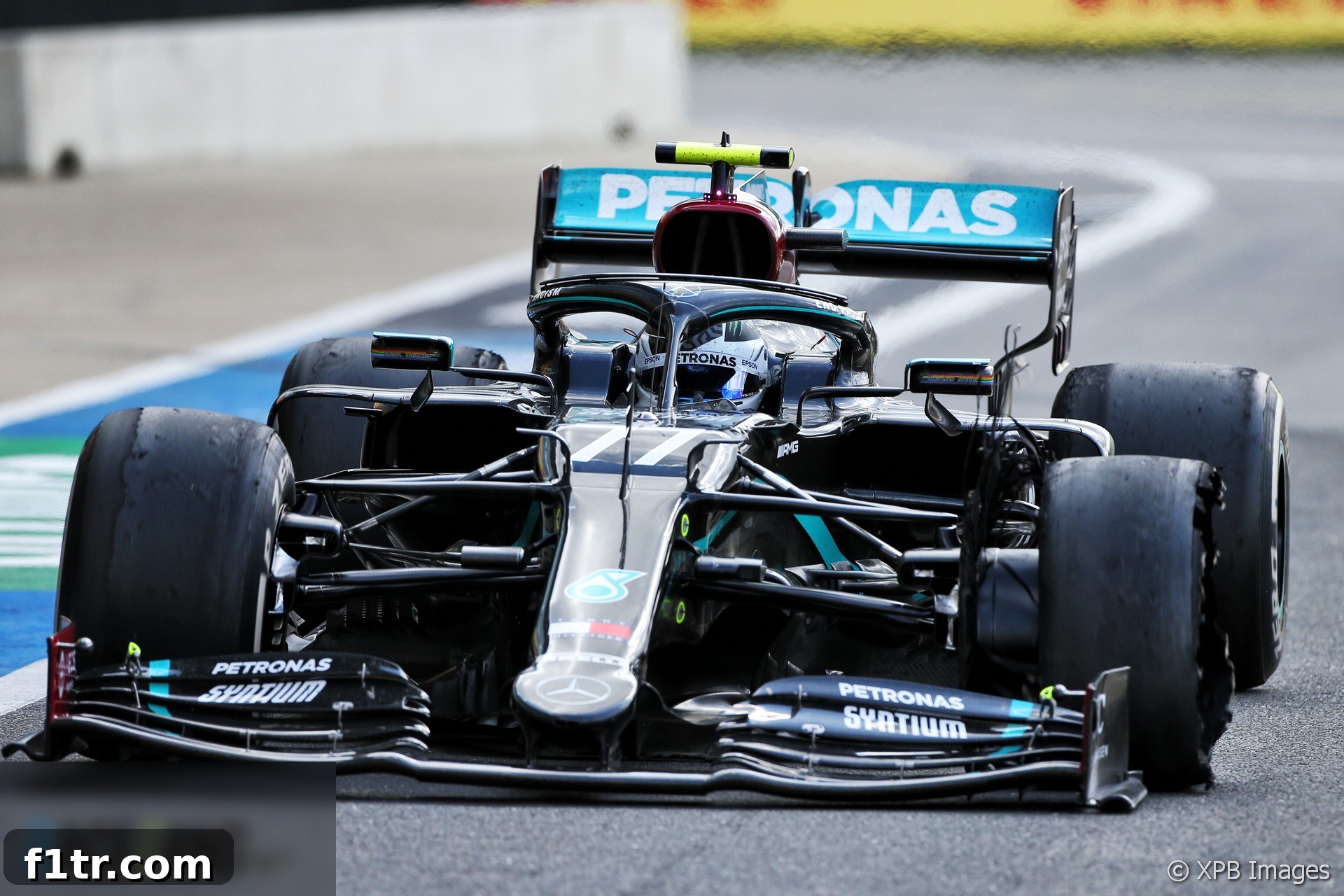
The race saw Mercedes drivers Lewis Hamilton and Valtteri Bottas, alongside McLaren’s Carlos Sainz Jnr, all succumbing to punctures that dramatically altered the race’s climax. Hamilton, despite suffering a blown front-left tyre on the final lap, managed to nurse his car across the finish line to secure a stunning victory. His remarkable resilience highlighted both the danger and the incredible skill involved, but also shone a bright spotlight on the integrity of the tyres.
The Unfolding Drama: A Race Against Time and Tyres
The British Grand Prix was already a thrilling spectacle, but it descended into nail-biting suspense as the laps wound down. Valtteri Bottas was the first major casualty among the leaders, experiencing a front-left tyre failure that forced him into an unscheduled pit stop, effectively ending his podium hopes. Just moments later, Carlos Sainz Jnr encountered a similar fate, his McLaren suffering a puncture that robbed him of a potential points finish.
However, the most heart-stopping moment came on the very last lap, as race leader Lewis Hamilton’s front-left tyre visibly delaminated. With only three wheels effectively gripping the tarmac, Hamilton had to expertly guide his Mercedes through the final corners, maintaining enough pace to clinch victory by a margin of mere seconds over Max Verstappen, who was rapidly closing in. The image of Hamilton battling his compromised car became an iconic moment, yet it also served as a stark reminder of the inherent risks when tyre integrity is compromised.
Mario Isola, Pirelli’s Head of Motor Sport, wasted no time in addressing the escalating concerns. “We will obviously investigate what happened in the last few laps,” Isola stated shortly after the race, acknowledging the gravity of the situation. “It’s a bit early now to give you any conclusion.” This initial statement set the tone for a rigorous and time-sensitive inquiry into the unforeseen events.
Pirelli’s Investigation: Piecing Together the Puzzle
The immediate focus of Pirelli’s investigation revolves around two primary hypotheses that could explain the wave of failures: extreme tyre wear and track debris. Isola elaborated on these possibilities, suggesting that a combination of factors, rather than a single isolated cause, was likely at play. Silverstone is renowned for its high-speed corners and abrasive track surface, which place immense lateral and vertical loads on tyres, making it one of the most demanding circuits on the calendar.
High Tyre Wear: Pushing the Limits
One of the leading theories points to the sheer duration and intensity of the stints run on the hard compound tyres. Many drivers, including those who suffered failures, were on tyres that had completed 38 laps or more – a considerable distance on a track as punishing as Silverstone. Isola confirmed that some tyres were experiencing wear levels “close to 100%,” meaning the tread was almost entirely depleted. While wear is an expected part of racing, reaching such critical levels raises questions about compound suitability, strategic decisions, or unforeseen conditions.
Modern Formula 1 tyres are designed with performance windows and degradation characteristics in mind. Teams meticulously monitor tyre temperatures, pressures, and wear rates throughout a race. However, an extended safety car period early in the race meant that many teams opted for a one-stop strategy, pushing their tyres to the absolute limit for the majority of the Grand Prix. This extended running, combined with the blistering pace of the cars, could have pushed the tyres beyond their intended operational parameters, particularly as the fuel load lightened and drivers pushed harder towards the end.
Track Debris: A Hidden Menace
The second significant hypothesis under consideration is the presence of track debris. Racing incidents are an inherent part of Formula 1, and with them comes the inevitable scattering of carbon fibre and other car components across the circuit. Kimi Raikkonen’s Alfa Romeo suffered a front wing failure during the race, leaving visible pieces of debris on track. Isola specifically referenced this incident, noting, “It can be debris because some pieces of the front wing of Kimi that were on track, but also some other debris.”
Even small, seemingly innocuous pieces of carbon fibre can act like razor blades at high speeds, capable of inflicting catastrophic cuts to a tyre carcass. A tiny puncture, initially unnoticed, can quickly develop into a full-blown delamination as the internal air pressure battles against the compromised structure of the tyre. The investigation will not only focus on the failed tyres but also meticulously examine “all the tyres used in the last few laps of the race to understand if we find any other cut or any other possible indication on what happened,” Isola explained. This comprehensive approach is crucial for ruling out or confirming debris as a contributing factor.
The Race Against Time: A Crucial Week Ahead
The urgency of Pirelli’s investigation is amplified by the fact that Formula 1 is set to return to Silverstone just one week later for the 70th Anniversary Grand Prix. Adding another layer of complexity, the tyre compounds selected for the upcoming race are softer than those used in the British Grand Prix, theoretically making them even more susceptible to wear and potential issues. This necessitates a rapid and conclusive outcome from the investigation.
Pirelli has the capability to conduct extensive analysis both trackside and at its state-of-the-art laboratories. This dual approach allows for immediate preliminary findings while more in-depth forensic analysis is underway. “It is clear that we don’t have a lot of time to carry on with the investigation because we have another race in less than one week. So we have to come to a conclusion as soon as possible,” Isola emphasized. The goal is ambitious: “The target is to have something more hopefully by tomorrow or Tuesday at the latest.”
The findings of this investigation will be pivotal. They will not only explain what happened but also guide Pirelli and the teams on how to prevent a recurrence. This could involve revised tyre pressure recommendations, mandated pit stop strategies, or even a change in the tyre compounds for the next race, although the latter is a more complex undertaking at such short notice.
Broader Implications: Safety, Strategy, and Supplier Responsibility
Tyre failures in Formula 1 are always a serious concern, primarily due to the inherent safety risks they pose to drivers traveling at speeds exceeding 300 km/h. While modern F1 cars are incredibly robust, a sudden loss of tyre integrity can lead to high-speed crashes, as seen with some notable incidents in F1 history. Pirelli, as the sole tyre supplier, carries the immense responsibility of providing safe and reliable components that can withstand the extreme forces of Formula 1 racing.
Beyond safety, these failures have significant implications for team strategies and the championship battle. In a sport where every point counts, an unexpected puncture can dramatically swing the fortunes of drivers and constructors. Teams spend countless hours analyzing data, simulating race scenarios, and optimizing their strategies based on tyre performance. Unforeseen failures disrupt these calculations, forcing immediate adaptations and highlighting the unpredictable nature of racing.
The F1 community, including teams, drivers, and fans, will be keenly awaiting Pirelli’s report. Transparency and a clear explanation of the events will be crucial for maintaining confidence in the sport’s safety standards and in Pirelli’s continued role as the official tyre supplier. The rapid turnaround time for this investigation reflects the high stakes involved and Pirelli’s commitment to ensuring the safety and integrity of Formula 1 racing.
Related Formula 1 Articles
- Grosjean to make F1 test return tomorrow for first time since Bahrain horror crash
- Pictures: Wrecked chassis from Grosjean’s Bahrain fireball crash to go on display
- Bottas vs Rosberg: Hamilton’s Mercedes team mates compared after 78 races each
- F1 revenues fell by $877 million in Covid-struck 2020 season
- Hamilton and Mercedes finally announce new deal for 2021 season
Browse all 2020 F1 season articles