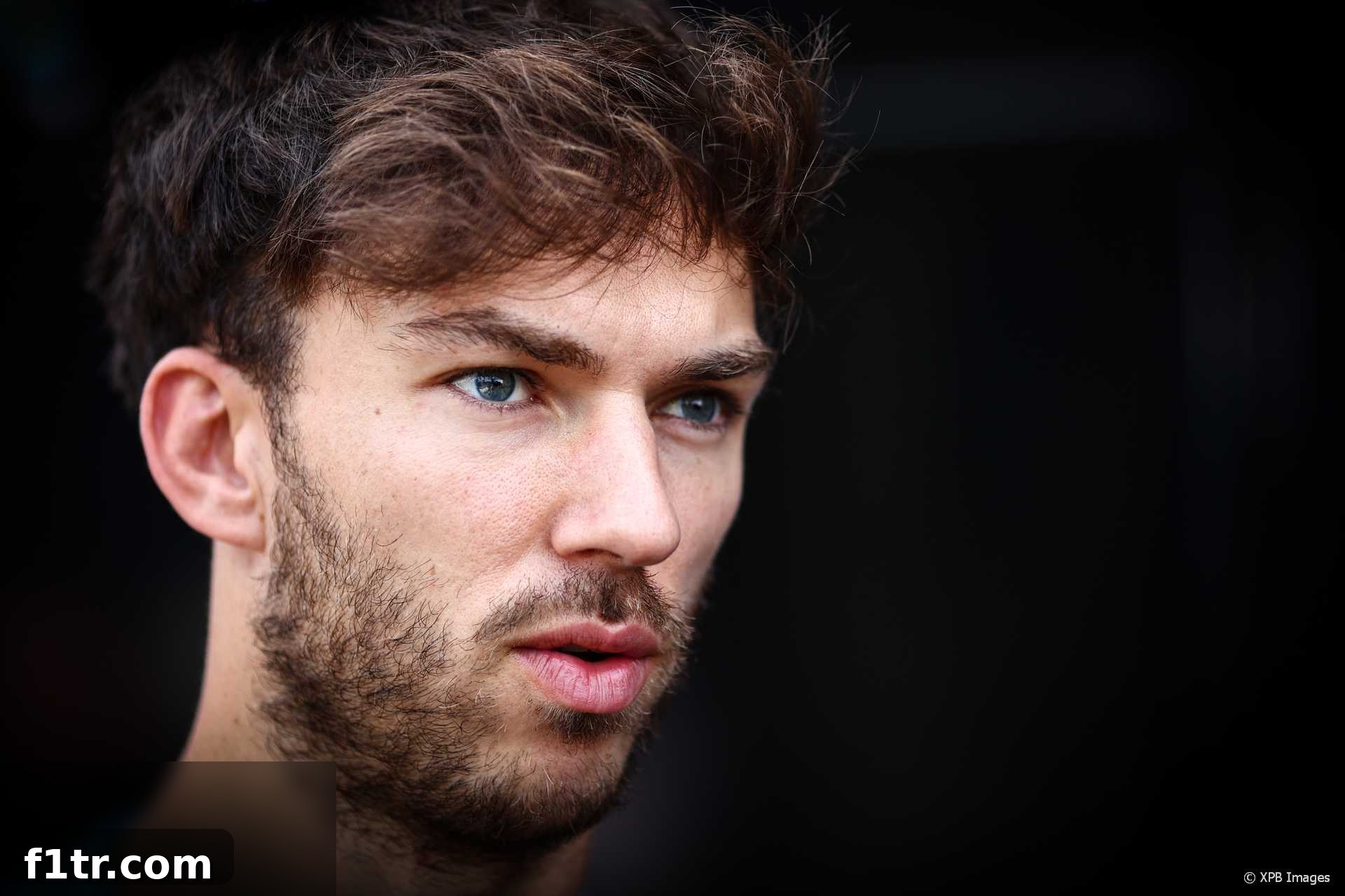
When Pierre Gasly officially signed with Alpine to join Esteban Ocon for the highly anticipated 2023 Formula 1 season, a palpable sense of optimism enveloped the Renault-owned team. This wasn’t merely a driver signing; it symbolized the dawn of a new era, uniting two formidable young French drivers, both grand prix winners, under the banner of a proud French constructor. The vision was clear: to leverage this potent all-French lineup, capitalize on Renault’s renewed commitment to its Alpine brand across various motorsports disciplines, and firmly establish the Enstone-based squad as a consistent front-runner in the fiercely competitive world of Formula 1. The stage was set for what should have been an exhilarating chapter for Alpine, promising a blend of talent, national pride, and a renewed charge up the championship standings.
Advert | Become a Supporter & go ad-free
However, the reality of Gasly’s tenure with Alpine has proven to be anything but smooth sailing. His journey has been marked by significant turbulence, a stark contrast to the initial high expectations. Intriguingly, this turbulence has largely stemmed not from internal driver dynamics or the much-feared rivalry between Gasly and Ocon, but rather from a profound and unexpected downturn in the team’s overall performance. While the prospect of two competitive drivers from the same nation potentially clashing was a common concern among pundits and fans, the actual challenges faced by the team transcended individual battles, highlighting deeper systemic issues within the Alpine operation.
Far from evolving into a formidable force in the Formula 1 paddock, Alpine experienced a significant regression between the conclusion of the 2023 season and the onset of the 2024 campaign. This downturn was sharp and undeniable, leaving both Gasly and Ocon in an unenviable position. They were tasked with navigating the opening races of the season in what was widely considered to be one of the slowest, if not the slowest, cars on the entire grid. The A524 chassis, plagued by fundamental design flaws and a lack of competitive pace, severely hampered their efforts. This dramatic step backward meant that instead of battling for points and challenging the midfield, the Alpine drivers frequently found themselves at the very back of the pack, engaged in battles of survival rather than competition. This challenging start underscored the urgent need for significant structural and technical overhauls within the team.
In the face of this harsh new reality, Pierre Gasly demonstrated commendable resilience and dedication in his efforts to adapt. However, his teammate, Esteban Ocon, arguably navigated this difficult initial period with a slightly more effective approach. The early phase of the 2024 season saw Gasly consistently trailing Ocon, being out-qualified in five consecutive races. This early disparity in qualifying performance was mirrored, to some extent, in race pace, where Ocon often appeared to extract more from the struggling package. While Gasly worked tirelessly to understand and overcome the limitations of the car, Ocon, with his longer tenure and familiarity with the Enstone setup, seemed to find a way to more consistently maximize the car’s limited potential. This initial period of struggle highlighted the steep learning curve Gasly faced, not just with a new team, but with a car that was fundamentally uncompetitive and demanded a very specific driving style to extract any semblance of pace.
The tide, however, began to show signs of turning for Alpine, albeit slowly, following a period of significant internal upheaval. After their abysmal start to the season, several key technical figures departed the team, signaling a clear acknowledgment of the deep-seated issues that had led to their performance slump. This restructuring, though disruptive, eventually coincided with the team finding a more encouraging trajectory in terms of car development. While Ocon was notably the first to benefit from the team’s new floor upgrade at the Chinese Grand Prix, Gasly still delivered a solid, mature performance, navigating his way to a respectable 13th place finish. This suggested that even without the very latest upgrades, Gasly was beginning to gel more effectively with the car and the team’s operational rhythm. His true breakthrough, securing his first point of the season, came at the prestigious Monaco Grand Prix. This hard-earned point, however, was not without its drama, as Gasly had to skillfully survive a highly questionable maneuver by Ocon into Portier on the opening lap, an incident that very nearly jeopardized both their races and highlighted the intense, sometimes fraught, nature of their intra-team rivalry, despite the broader team struggles. The incident became a talking point, raising questions about team cohesion and driver conduct in high-pressure situations, especially when both drivers are desperate for results.
Gasly’s performances continued to improve, with his strongest showings of the season coming in subsequent rounds in Canada and Spain. These races saw him consistently add to his points tally with more top-ten finishes, showcasing a renewed confidence and an improved understanding of the A524. The Canadian Grand Prix, in particular, was a notable race where Gasly finished ahead of Ocon, although this outcome was not without a degree of controversy. In the closing laps of the race, Ocon was explicitly asked by the team to allow Gasly to pass, a decision that sparked debate and undeniably impacted team morale, especially for Ocon, who was already confirmed to be departing the team at the end of the season. This team order underscored Gasly’s growing momentum and the team’s strategic focus on maximizing his points potential. He further solidified his improving form by securing another valuable point in Austria, recovering admirably from an underwhelming Saturday qualifying performance. In a chaotic race, Gasly capitalized on the late-race clash between championship contenders Max Verstappen and Lando Norris, expertly picking up the pieces to snatch tenth place. These results, achieved through a combination of skill, strategic awareness, and a touch of fortune, demonstrated Gasly’s increasing ability to seize opportunities and deliver crucial points for the struggling Alpine squad.
However, the momentum Gasly had built was abruptly halted by a frustrating sequence of events in the back-to-back rounds leading up to the summer break. The British Grand Prix weekend proved to be an absolute write-off, entirely due to circumstances beyond his control. Forced to retire from the race on the formation lap itself with a crippling gearbox problem, Gasly was denied even the chance to compete in front of an enthusiastic home crowd. The subsequent Hungarian Grand Prix brought little respite, compounding his woes. After a power unit change necessitated a start from the pit lane, Gasly’s race was once again cut short prematurely, this time by a hydraulic leak just before the halfway mark. These consecutive mechanical failures were not only costly in terms of championship points but also deeply frustrating for a driver who was just beginning to find his stride and demonstrate consistent performance. Such reliability issues can severely undermine a driver’s confidence and trust in their machinery, posing a significant psychological challenge in an already demanding sport. They highlight the precarious balance between driver skill and the reliability of the engineering, an area where Alpine clearly still had considerable work to do.
Despite the rollercoaster of his season so far, and sitting marginally ahead of his teammate Esteban Ocon in the championship after 14 rounds, it remains a nuanced assessment as to whether Gasly has definitively outshone Ocon over the course of the season. Both drivers have faced immense challenges with the uncompetitive Alpine package, often performing miracles just to bring the car home in point-scoring positions. However, with the Enstone team showing nascent signs of finding some much-needed momentum and a clearer development path, the latter half of the season presents a golden opportunity for Pierre Gasly. As his now-departing teammate Esteban Ocon prepares for his exit, Gasly is poised to step into a more central role, potentially becoming the stable focal point around which Alpine can rebuild and plan its future. This enhanced responsibility, coupled with the team’s gradual improvements, means Gasly should have an abundance of opportunities to not only consistently deliver stronger performances but also to emphatically secure his position as the clear victor of the intra-team battle. The remaining races are crucial for Gasly to demonstrate his leadership qualities, his ability to guide car development, and his unwavering commitment to pushing Alpine forward. His performance in these vital upcoming rounds will undoubtedly shape his standing within the team and his long-term career prospects in Formula 1, proving that he is not just a capable driver, but a leader who can thrive even under immense pressure.
Advert | Become a RaceFans supporter andgo ad-free
Formula 1
- Controversies, Norris, Newey and more: Five new motorsport books reviewed
- One of F1’s greatest races happened 15 years ago today. Or did it?
- “Overtaking is overtaking”: Domenicali denies F1’s yo-yo racing is “artificial”
- The crashes F1 is trying to prevent may be rare – but the danger is obvious
- F1 returning to India soon after 2027 sounds like wishful thinking
Browse all Formula 1 articles