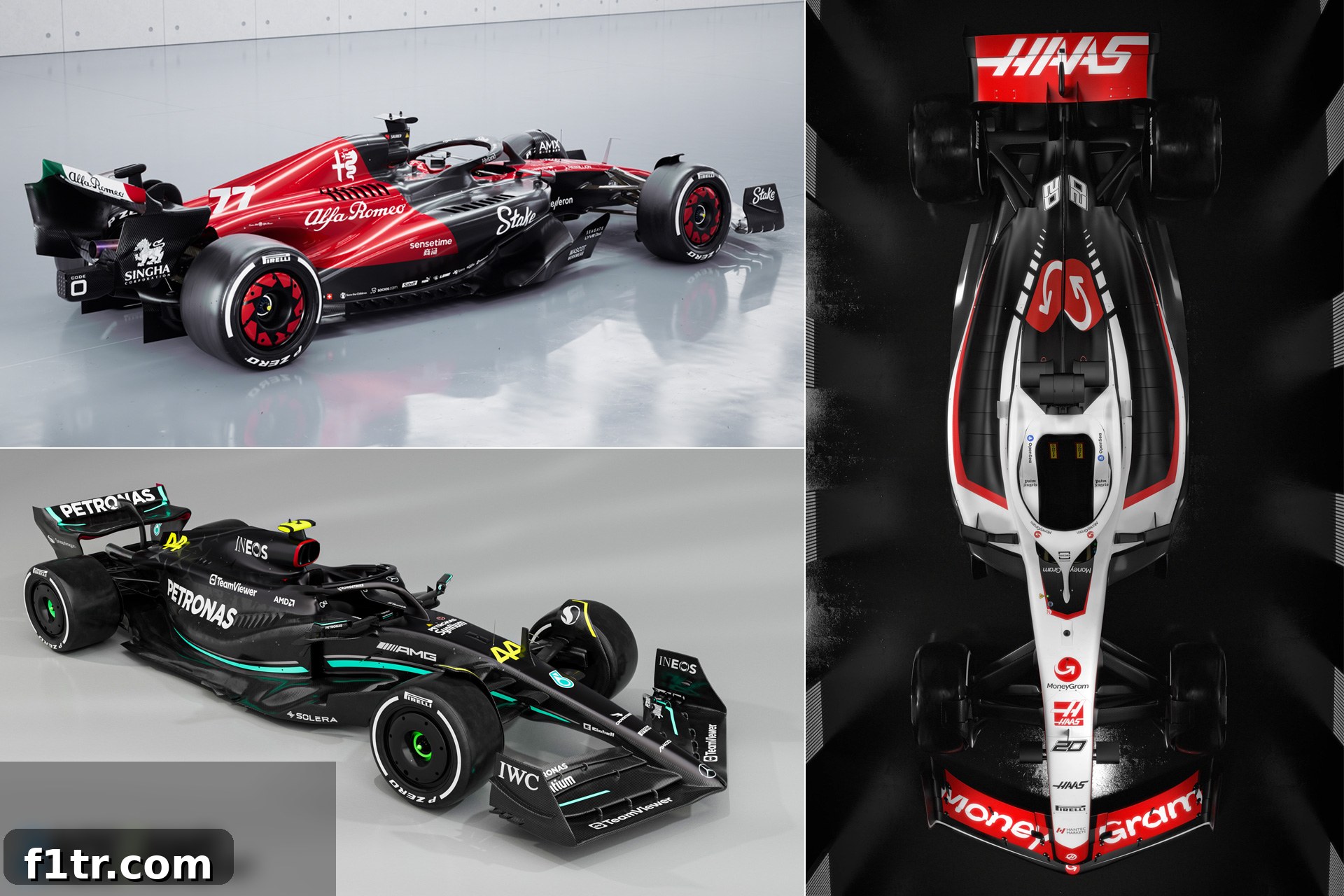
The 2023 Formula 1 season ushered in a grid that, to the dismay of many loyal fans, featured a conspicuous lack of vibrant color. This aesthetic shift, characterized by an abundance of bare carbon fiber, might have been anticipated by those attuned to the sport’s technical nuances, yet it nonetheless sparked considerable discussion among enthusiasts who cherish the visual spectacle of Grand Prix racing.
The Enduring Quest for Weight Reduction in Formula 1
For decades, Formula 1 teams have acutely understood and leveraged the performance benefits associated with minimizing car weight. While historical reasons for leaving certain areas unpainted often revolved around tactical advantages – dark, unpainted carbon could make it more challenging for rival teams to visually inspect the intricate geometries of aerodynamic surfaces – recent years have seen a singular, dominant driver for this trend: the relentless pursuit of lower weight. Less paint equates to fewer grams, and in the hypersensitive world of F1, every single gram carries immense performance implications.
When Every Gram Counts: The Impact of F1 Regulations
The introduction of new technical regulations for the 2022 season marked a pivotal moment. The minimum weight limit for F1 cars, which had been steadily increasing, was set at a substantial 798kg. This significant threshold presented a formidable engineering challenge, pushing teams to extreme measures to meet or even surpass this target. Exceeding the minimum weight means carrying ‘dead weight,’ a severe handicap that negatively impacts every aspect of a car’s performance – from acceleration and braking efficiency to tire degradation and cornering speed. Consequently, the weight of paint, seemingly trivial, transforms into a critical consideration.
Aston Martin’s experience serves as a clear illustration of this struggle. When the team debuted its British Racing Green livery in 2021, they quickly began exploring options for a lighter paint formulation, acknowledging the impending weight increases dictated by the new regulations. Their efforts intensified as the 2022 season unfolded. Technical director Dan Fallows candidly admitted to the unforeseen hurdles posed by external factors, such as an unexpected increase in the weight of components not manufactured in-house, notably Pirelli’s tires.
“The weight limit did go backwards and forwards,” Fallows conceded, highlighting the dynamic nature of regulatory specifications. “There was an increase in the weight of the tyres. There are ways that we can integrate that into the regulations, so that’s really what it came down to. Yes, these cars are, as we’ve seen, a reasonable challenge to get them down to the weight limit.” His remarks underscore the immense pressure on design and engineering teams to find innovative solutions within a constantly shifting regulatory landscape.
Throughout the 2022 season, several teams, including Aston Martin, visibly reduced the painted areas on their cars in a desperate bid to shave off every possible gram. What started as subtle tweaks soon became noticeable aesthetic changes, particularly on components like rear wings and floor edges, where the raw, matte black finish of carbon fiber became increasingly prominent. This trend highlighted the constant battle against the scales, a battle that often means sacrificing visual flair for raw performance potential. Fallows affirmed Aston Martin’s commitment to this endeavor, stating, “We’ve worked extremely hard to make sure that we have the ability to do what we want with the car. And so that’s been a big focus on getting there.” He also expressed optimism about their progress, noting, “AMR22, by the time we’d finished with it was in a much better shape than we were at the start of the season. So we’re in a pretty good position, I think, going into AMR23.”
The 2023 Grid: A Sea of Carbon and a Splash of Hope
Despite Fallows’ positive assessment, Aston Martin’s new AMR23 car appeared with a livery largely mirroring its predecessor, with front and rear wings predominantly left in their unpainted black carbon finish. This minimalist approach was not unique; Williams, Alfa Romeo, Mercedes, and Ferrari’s new machines also adopted similar strategies, leading many fans to fear a future grid dominated by dark, uniform liveries. The traditional vibrancy and distinctive identities of F1 cars seemed to be fading in the relentless pursuit of performance.
However, amidst this growing uniformity, one team dared to present a slightly different picture. McLaren, which had also scaled back its paintwork significantly on its 2022 car, unveiled its MCL60 with a notable splash more color. The new car sported an orange rear wing at its launch, offering a glimmer of hope to fans craving more visual diversity.
McLaren team principal Andrea Stella elaborated on this strategic decision, revealing that the team’s engineers had achieved significant success in reducing the chassis’s overall weight. This crucial breakthrough provided the freedom to reintroduce a degree of aesthetic richness without compromising performance. “I would be comfortable to say that our engineers have done a good job,” Stella explained with evident pride. “They’ve been able to take off weight in several areas of the car and so for what concerns our car we are, I think, in a good position from that point of view and we can finally give some more space for orange and vinyl [stickers] on the car rather than taking off up to the last bit.”
The Delicate Balance: Engineering, Aesthetics, and Fan Engagement
Stella’s optimism extended beyond McLaren’s own achievements. He predicted that other teams would likely make similar strides in weight reduction throughout the season, potentially leading to a gradual reintroduction of color across the grid. “In all honesty I think all teams will have made a good step from a weight point of view. We should be hearing less about this topic as we enter the second season of these new regulations.”
However, based on the initial car launches and the prevailing design philosophy, Stella’s prognosis appeared somewhat optimistic. The vast majority of teams seemed to have stripped off as much paint as technologically feasible, a testament to the intense internal discussions and inevitable compromises between engineering departments, driven by performance metrics, and marketing teams, tasked with maintaining brand identity and fan appeal. The visual identity of an F1 team is intrinsically linked to its livery, acting as a crucial component of its brand recognition and a vital connection point for fans worldwide. The increasing homogeneity of dark, unpainted carbon could potentially dilute this cherished aspect of the sport.
The proof of whether Stella’s foresight holds true will unfold throughout the upcoming season. Will we witness a gradual trimming back of paintwork by teams as they continue to find marginal gains, as was observed in 2022? Or will more teams follow McLaren’s lead, managing to achieve sufficient weight savings to reintroduce a much-desired splash of color, bringing back some of the visual excitement that has been a hallmark of Formula 1 for decades? The answer lies in the ongoing technological advancements, engineering ingenuity, and the subtle yet impactful interplay between performance and presentation.
The journey of F1 car liveries from purely national colors to highly complex, sponsor-driven designs has always mirrored the sport’s evolution. The current trend towards minimalist, weight-optimized liveries reflects the peak of engineering precision and the uncompromising nature of competition under stringent regulations. While the aesthetic appeal might currently be subdued, it serves as a powerful reminder of the incredible lengths teams go to gain even the slightest competitive edge, transforming paint itself from a decorative element into a performance liability.
2023 F1 Car Liveries Revealed So Far
Bringing the F1 news from the source
RaceFans strives to bring its readers news directly from the key players in Formula 1. We are able to do this thanks in part to the generous backing of our RaceFans Supporters.
By contributing £1 per month or £12 per year (or the equivalent in other currencies) you can help cover the costs involved in producing original journalism: Travelling, writing, creating, hosting, contacting and developing.
We have been proudly supported by our readers for over 10 years. If you enjoy our independent coverage, please consider becoming a RaceFans Supporter today. As a bonus, all our Supporters can also browse the site ad-free. Sign up or find out more via the links below:
- Become a RaceFans Supporter
- RaceFans Supporter FAQ
2023 F1 season
- FIA president cleared of alleged interference in two 2023 races
- First week viewing figures for new Drive to Survive season fall again
- Max who? Drive to Survive season six prefers its favourite faces
- RaceFans’ complete 2023 season review
- The F1 drivers who pulled off the 10 biggest charges through the field in 2023
Browse all 2023 F1 season articles