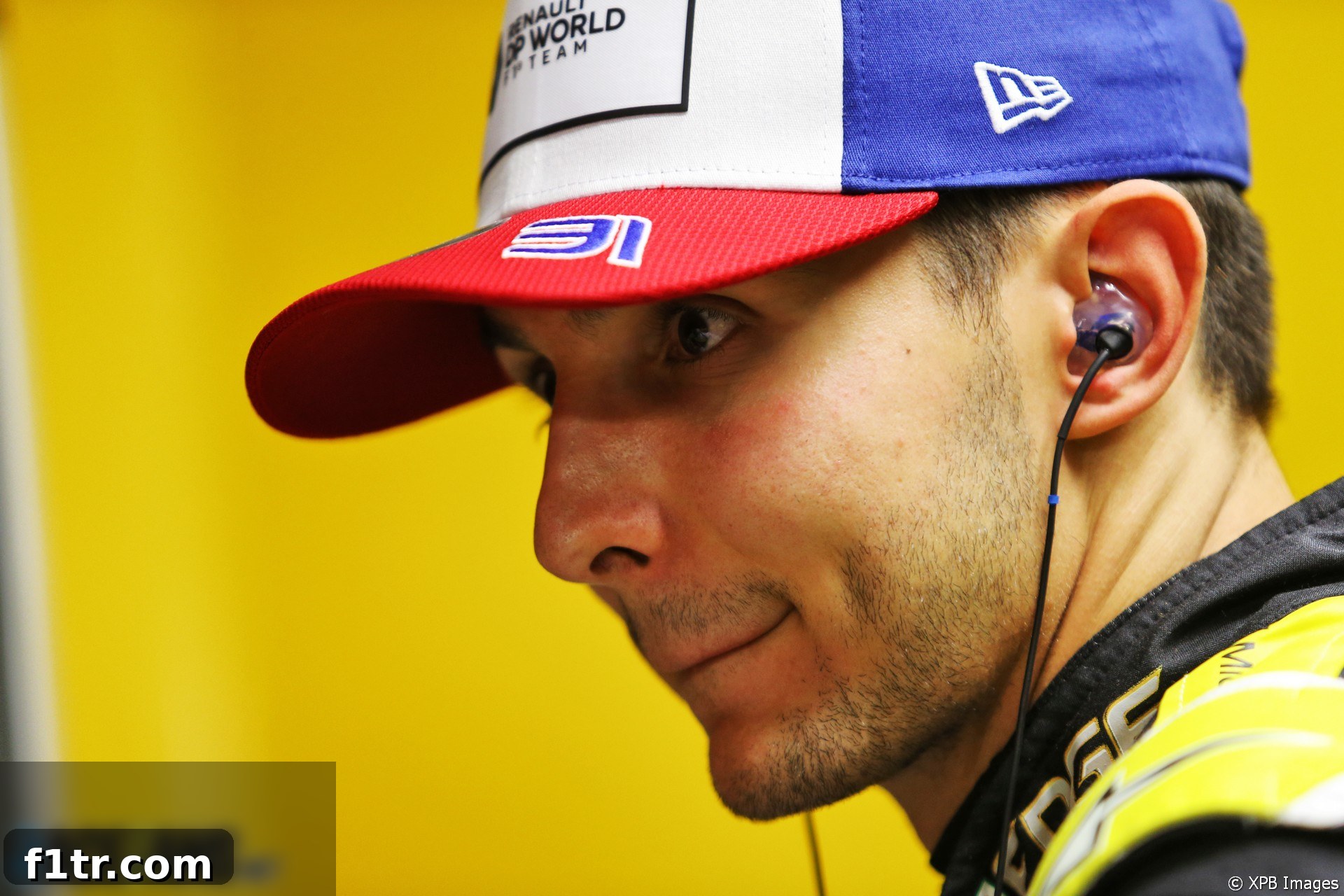
As Formula 1 machinery prepares to thunder through the legendary Nurburgring once more, anticipation builds not just for the spectacle of high-speed racing but also for the daunting conditions that await the teams and drivers. Renault’s Esteban Ocon has voiced his expectations for an exceptionally challenging weekend, with forecasts predicting a potent mix of cold temperatures and persistent rain, transforming the Eifel Grand Prix into a true test of skill, strategy, and resilience.
The return to the Nurburgring, a circuit steeped in motorsport history and notorious for its capricious weather, promises to deliver a captivating and potentially unpredictable event. Race day temperatures on Sunday could plummet to a frigid 10 degrees Celsius, a stark contrast to many of the warmer venues on the revised 2020 F1 calendar. Coupled with a significant chance of rain throughout the Grand Prix, these conditions are set to push Pirelli’s sophisticated tires, engine performance, and aerodynamic setups to their absolute limits. The recent Nurburgring 24 Hours endurance race, held just weeks prior in late September, serves as a vivid precursor, having been severely disrupted by torrential downpours and treacherous track conditions, offering a clear warning of what F1 might encounter.
“I think it’s going to be quite spicy,” Ocon candidly predicted, echoing the sentiments of many within the paddock who brace for a demanding return to the German circuit. His insights are further informed by peers who competed in the Nurburgring 24 Hours. “I have a few friends who raced the 24 hours of the Nurburgring, it doesn’t look too good,” he shared, highlighting the brutal nature of the Eifel weather. This informal intel from fellow racers paints a picture of a circuit that can swiftly turn hostile, demanding unwavering focus and adaptability from every competitor.
The two-week gap since the endurance classic means that the Nurburgring environment will likely be even colder, intensifying the challenge for Formula 1 teams. Ocon elaborated on the profound impact these conditions will have: “We are going there obviously two weeks [later] so potentially it’ll be even more cold. So it’s going to be completely different for the tyres, obviously, to get them to temperature, for the car set-up. And anything can happen going back to Europe and north of Europe with a bit of rain and stuff.” The implication is clear: the usual F1 parameters for tire performance and car handling will be drastically altered, necessitating a fresh approach to every aspect of race preparation.
Achieving optimal tire temperature is paramount in Formula 1, particularly for the high-performance Pirelli compounds. In cold and wet conditions, generating and maintaining this critical temperature becomes an immense struggle. Slicks, designed for dry adhesion, will be utterly ineffective, forcing teams onto intermediate or full-wet tires. Even these specialized wet-weather tires require specific temperatures to provide maximum grip, and cold asphalt combined with standing water can make them notoriously difficult to bring into their operating window. Drivers will contend with significantly reduced grip, extended braking distances, and the constant threat of aquaplaning, particularly on the Nurburgring’s undulating surface, which can lead to pools of water accumulating in unexpected places.
Beyond tire management, car setup will undergo a radical transformation. Teams will likely opt for increased downforce to enhance stability and grip in the wet, trading some straight-line speed for greater control through corners. Suspension settings will also be adjusted to better absorb bumps and manage the car’s behavior over potentially uneven, waterlogged surfaces. The aerodynamic balance of the car becomes even more critical in spray, as visibility plummets and drivers must rely on feel and instinct. A car that is inherently well-balanced in wet conditions offers a significant advantage, reducing driver fatigue and increasing confidence to push closer to the limit. These factors collectively underscore Ocon’s assertion that the weekend will be “completely different” from what teams have experienced in drier, warmer climates.
Despite the formidable challenges, Renault’s recent track record in wet conditions provides Esteban Ocon with a tangible sense of confidence heading into the Eifel Grand Prix. The French outfit has demonstrated a commendable ability to extract strong performance from their R.S.20 package when the heavens open, suggesting a robust foundation for success in adverse weather. This inherent strength could prove to be a significant differentiator in a race where chaos and opportunity are likely to intertwine.
Ocon reaffirmed his belief in Renault’s wet-weather prowess, citing specific instances of strong performance earlier in the season. “We know we are quite capable of doing well on the rain,” he stated. “The car’s been strong in Barcelona, in winter testing in the rain. I qualified fifth in Austria in the rain. So if it rains, we should be in decent shape as well.” The winter testing sessions in Barcelona are often a crucial proving ground for a car’s fundamental balance and wet-weather capabilities, and a strong showing there suggests a well-engineered chassis. Furthermore, his impressive fifth-place qualifying performance in the rain at the Austrian Grand Prix stands as a testament to both his driving skill and the car’s inherent competitiveness in such conditions. This past success fuels a genuine belief within the team that they can capitalize on the Nurburgring’s challenging forecast.
The strategic implications of a cold and wet Eifel Grand Prix are vast and complex. Race engineers will be working overtime, analyzing real-time weather data and track conditions to make split-second decisions on tire choices. The crossover point between intermediate and full-wet tires, or even a daring switch back to slicks if a dry line emerges, will dictate the fortunes of many. Safety Cars are almost a certainty in such conditions, potentially bunching up the field and creating opportunities for overtakes or strategic pit stops under neutralization. Red Flags, as seen in the Nurburgring 24 Hours, cannot be ruled out if the rain becomes too heavy, leading to visibility issues or excessive standing water. The unpredictability of “anything can happen” truly comes to the forefront, promising a tactical battle as fierce as the on-track racing.
For fans, a cold and wet Nurburgring promises edge-of-the-seat entertainment. These conditions often separate the truly exceptional drivers and teams from the rest, rewarding those with precision, bravery, and a deep understanding of their machinery. Ocon’s confidence, backed by Renault’s demonstrated ability in the rain, adds another layer of intrigue to what is already shaping up to be a momentous return for Formula 1 to one of motorsport’s most storied venues. The stage is set for a “spicy” Eifel Grand Prix, where the elements themselves may prove to be the most formidable competitor.
Don’t miss anything new from RaceFans
Follow RaceFans on social media:
- Join RaceFans on Facebook
- Follow RaceFans on Twitter
- Get daily email updates from RaceFans
2020 F1 season
- Grosjean to make F1 test return tomorrow for first time since Bahrain horror crash
- Pictures: Wrecked chassis from Grosjean’s Bahrain fireball crash to go on display
- Bottas vs Rosberg: Hamilton’s Mercedes team mates compared after 78 races each
- F1 revenues fell by $877 million in Covid-struck 2020 season
- Hamilton and Mercedes finally announce new deal for 2021 season
Browse all 2020 F1 season articles