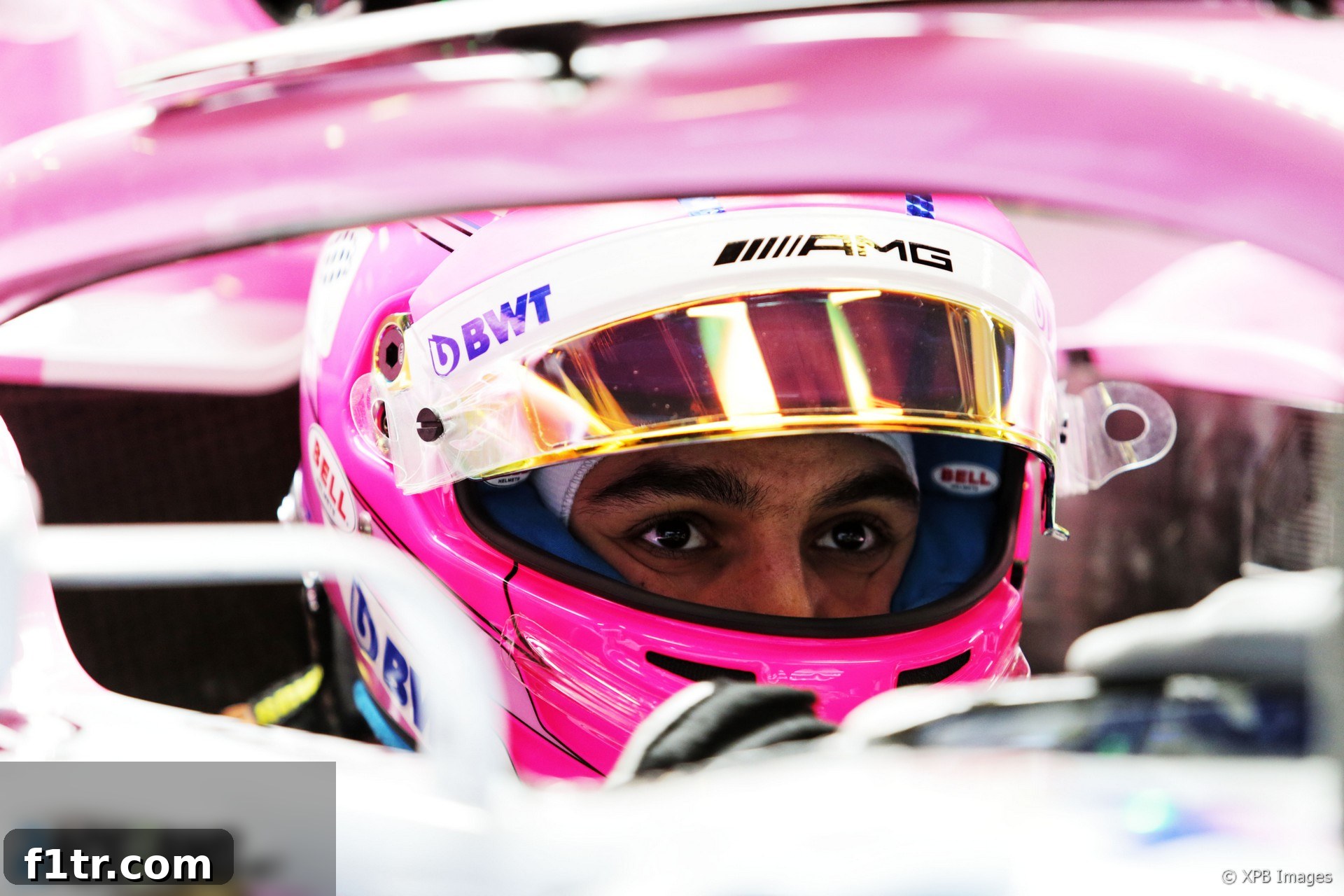
Welcome to your comprehensive Formula 1 daily briefing, where we dive deep into the most compelling stories from the paddock, dissecting driver insights, social media buzz, and the latest headlines shaping the world of Grand Prix racing. Today, we put the spotlight on the perennial challenge of overtaking in modern F1, a topic brought into sharp focus by Esteban Ocon’s candid remarks regarding the Albert Park circuit.
Navigating the Overtaking Puzzle: Esteban Ocon on Albert Park’s Demands
The Australian Grand Prix at Albert Park is renowned for its picturesque setting and passionate fans, but it often presents a formidable challenge for drivers attempting to make overtakes. As the season kicks off, discussions frequently revolve around how to improve the racing spectacle, with the implementation of additional DRS zones often being a key talking point. Yesterday, among several drivers questioned on whether the expanded DRS zones at Albert Park would genuinely facilitate easier passing, Esteban Ocon offered a revealing perspective that underscores the immense difficulty of making moves on this particular track.
Ocon’s insight highlights the significant performance advantage a car needs to successfully complete an overtake, particularly on a circuit like Albert Park where tight corners and limited straights create a unique aerodynamic challenge. He quantified this difficulty with a striking statistic, illustrating why drivers often find themselves stuck in a procession despite their best efforts to gain positions. The narrow racing lines and the pervasive “dirty air” effect, where following closely causes a significant loss of downforce for the trailing car, amplify this issue, making every pass a monumental effort requiring precision, bravery, and a substantial speed differential.
“It’s extremely hard [to pass]. It’s close to two seconds the overtaking, you need to be two seconds quicker.”
This statement from Ocon is not just a casual observation; it’s a stark reminder of the aerodynamic complexities that define modern Formula 1. For a driver to be “two seconds quicker” than the car ahead simply to execute an overtake indicates a fundamental issue with how cars perform when running in close proximity. This gap is enormous in F1 terms, often representing the difference between midfield teams and front-runners, or between different tire compounds at varying stages of degradation. It suggests that even with DRS, a significant performance disparity is still required, raising questions about whether current regulations truly foster the wheel-to-wheel racing fans crave.
F1 Social Media Pulse: Drivers, Pundits, and Paddock Insights
The digital world provides a real-time window into the thoughts and sentiments within the Formula 1 community. From influential drivers sharing personal perspectives to seasoned journalists offering candid observations, social media platforms are buzzing with reactions and insights as the Grand Prix season gets underway. Here’s a look at some of the most notable posts from Twitter, Instagram, and other channels, offering a snapshot of the paddock’s mood and key discussions.
A call for greater diversity in #F1 posted by @LewisHamilton on @instagram earlier. pic.twitter.com/vaymGMpyTg
— RaceFans (@racefansdotnet) March 22, 2018
Lewis Hamilton, a prominent voice for change both on and off the track, consistently champions the cause of greater diversity within Formula 1. His Instagram post, highlighted by RaceFans, served as a powerful reminder of the ongoing need for inclusivity across all levels of motorsport. Hamilton has frequently spoken about the homogeneous nature of the sport, advocating for increased representation for individuals from diverse backgrounds, be it in driving, engineering, or management roles. His efforts underscore a broader movement to make F1 more accessible and reflective of the global fanbase, challenging traditional barriers and fostering an environment where talent can emerge from anywhere, regardless of race, gender, or socioeconomic status. This commitment to diversity is not just about fairness; it’s about enriching the sport with varied perspectives and talents, ensuring its long-term growth and relevance.
Surprised by how flat both Lewis and Sebastian were today talking to us lot (media). I know its not their favourite part of the job but it would be nice if they were a bit more excited about the start of the season for the cameras and microphones.
— Jennie Gow (@JennieGow) March 22, 2018
Jennie Gow, a respected F1 journalist, observed a noticeable lack of enthusiasm from star drivers Lewis Hamilton and Sebastian Vettel during their media interactions. Her tweet playfully highlights the often-strained relationship between drivers and their media duties. While drivers are, first and foremost, athletes focused on performance, the public expects them to project excitement and passion, especially at the start of a new season. Gow’s comment reflects the challenging balance drivers must strike between intense focus and public engagement. The relentless schedule, combined with the pressure to perform and the repetitive nature of media questions, can understandably lead to moments where drivers appear less effervescent than fans might hope. This observation provides a glimpse into the human side of F1, where even the sport’s biggest personalities navigate professional obligations that extend beyond the cockpit.
Really fascinating piece of deduction spiced with typical Rencken rectitude. We shall see! #Ferrari #F1 #PiranhaClub
— Damon Hill (@HillF1) March 21, 2018
Former F1 World Champion Damon Hill weighed in on a piece of analysis, commending its “fascinating deduction” and “typical Rencken rectitude.” This praise likely refers to the meticulous and often incisive journalism of Dieter Rencken, known for his deep dives into the political and technical undercurrents of Formula 1. Hill’s mention of the “Piranha Club” evokes the cutthroat, competitive nature of the F1 paddock, where strategic moves, power plays, and intense rivalries are constantly at play, both on and off the track. His tweet hints at an intriguing development concerning Ferrari or F1 politics, acknowledging the complex web of relationships and high stakes that characterize the sport’s elite circles. It serves as a reminder that F1 is as much about strategic maneuvering and intricate analysis as it is about raw speed.
A very full workshop pic.twitter.com/yfHKobuy0y
— Dickie Stanford (@dickiestanford) March 22, 2018
Dickie Stanford, a highly respected figure with a long history in Formula 1, particularly with Williams, shared a photograph of a “very full workshop.” This seemingly simple image offers a powerful glimpse behind the scenes of Grand Prix preparations. It conveys the immense effort, meticulous organization, and countless hours dedicated by hundreds of engineers and mechanics before a single wheel turns in anger on the track. A “full workshop” signifies the final stages of assembly, calibration, and countless checks – a flurry of activity where every component is scrutinized and optimized. It speaks volumes about the dedication required to run an F1 team, highlighting the often unsung heroes who work tirelessly to ensure the cars are perfectly prepared for the demands of a Formula 1 weekend. This visual reminds us of the intricate dance of logistics, engineering, and human effort that forms the backbone of the sport.
- For a comprehensive list of official F1 accounts and more to enhance your social media experience, explore our F1 Twitter Directory.
F1 News Digest: Key Headlines from Across the Web
Stay informed with our daily digest of the most important Formula 1 news, insightful features, and diverse opinions from hundreds of leading motorsport sites around the globe. This curated selection brings you the essential reading to keep you up-to-date with all the latest developments, driver perspectives, and team strategies as the F1 season progresses.
Title push doesn’t hinge only on Renault – Verstappen (F1)
Max Verstappen’s comments on the title push provide a cautious but optimistic outlook for Red Bull Racing. While acknowledging the critical role of the Renault power unit, Verstappen emphasizes that overall car package performance, including aerodynamics and chassis balance, will be equally crucial. He candidly admits that the team expects some challenges on straights, particularly at power-sensitive circuits like Albert Park, indicating that the team is realistic about their engine’s current standing against rivals. This reflects the intense scrutiny on engine suppliers and their impact on championship aspirations, a recurring theme in modern F1 where power unit performance can often dictate a team’s fortunes.
Red Bull: RB14 giving nothing away in corners (Motorsport)
Complementing Verstappen’s remarks, this report from Motorsport.com delves into the strengths of the Red Bull RB14 chassis. The article highlights that the car is demonstrating exceptional balance and confidence-inspiring handling in corners, which has historically been a hallmark of Adrian Newey-designed Red Bulls. This assertion suggests that while the team might face a deficit on the straights, their car’s aerodynamic efficiency and mechanical grip in high-speed and low-speed corners are allowing them to claw back significant time. The focus on the RB14’s prowess in the twisty sections underscores the intricate design philosophies at play in F1, where different teams prioritize varying aspects of performance to gain an edge, often dictated by their engine package.
Ecclestone: Liberty can’t ignore breakaway threat (Autosport)
Bernie Ecclestone, the former commercial supremo of F1, continues to be a vocal observer of the sport, and his comments about a potential “breakaway threat” underscore the ongoing political tensions within Formula 1. This Autosport report captures Ecclestone’s view that Liberty Media, the current owners, must take seriously the possibility of teams forming an alternative series if their demands or concerns are not adequately addressed. His colorful language about “punching them in the face” vividly portrays the high-stakes negotiations and fierce power struggles that have long been a part of F1’s history. These discussions often revolve around revenue distribution, governance, and the future direction of the sport, reminding us that F1’s drama extends far beyond the racetrack, into the boardrooms and legal offices.
The Rookie (The Players’ Tribune)
Brendon Hartley’s deeply personal account in The Players’ Tribune offers a rare and honest look into the arduous journey of an aspiring Formula 1 driver. His story, titled “The Rookie,” chronicles the emotional rollercoaster of setbacks and triumphs, including the painful experience of being overlooked for an F1 seat in 2009 in favor of Jaime Alguersuari. Hartley’s candid recollection of the phone call with Helmut Marko, who delivered the news, highlights the brutal reality of the Red Bull junior program and the immense pressure young talents face. It’s a testament to his resilience and unwavering determination that he eventually made it to F1, providing a powerful narrative about perseverance, the psychological toll of elite motorsport, and the sheer unpredictability of a driver’s career path.
Forget the ‘race card’ – Hamilton is right (Motorsport magazine)
Reinforcing the earlier social media discussion, this compelling opinion piece from Motorsport Magazine argues firmly in favor of Lewis Hamilton’s stance on diversity in F1. The article directly addresses critics who might dismiss calls for diversity, advocating that Hamilton’s perspective is not only valid but essential for the sport’s evolution. It draws parallels with other racing series, such as NASCAR’s successful “Drive for Diversity” program, to illustrate how targeted initiatives can begin to reshape the demographic landscape of a sport. The piece highlights that while change may be gradual, actively challenging F1’s traditional image as an exclusively white, male-dominated sport is crucial for its future relevance and appeal to a broader global audience. It’s a powerful endorsement of the imperative to foster a more inclusive and representative motorsport environment.
Do you have a hot tip for a link to feature in an upcoming RaceFans round-up? We’re always eager to discover new perspectives and breaking stories. Send your suggestions and insights to us here:
- Contact RaceFans
DRS: A Creative Solution for Overtaking?
Today’s featured comment comes from @Graigchq, who offers an intriguing and thought-provoking alternative suggestion for the implementation of the Drag Reduction System (DRS). His proposal delves into the core mechanics of overtaking assistance, drawing parallels to historical innovations and challenging the current, more restrictive use of DRS in Formula 1. It sparks a vital debate about engineering freedom versus regulated performance.
Why not reduce its effectiveness a little, then go back to it being driver-operated at any time, a pure mechanical device.
This is how the F-duct was introduced when McLaren worked out how to stall the rear wing easily, and managed to run a massive rear wing in Monza, and effectively turn it into a smaller one by stalling it on the straights.
Until, if ever, we have cars that can actually follow each other without overheating or losing downforce/grip, we’ll always need devices like this. This one came as an engineering solution to the main problem of downforce/drag, perhaps the Adrian Neweys of the F1 world should be free to think up newer solutions to this problem on their own?
@Graigchq
@Graigchq’s comment champions a return to a more driver-centric and innovative approach to overcoming the aerodynamic challenges of modern F1. By suggesting a slightly less effective but always-available driver-operated DRS, he invokes the spirit of past engineering marvels like McLaren’s F-duct. The F-duct, a brilliant innovation that allowed drivers to “stall” their rear wing for reduced drag on straights, perfectly exemplifies how engineers, when given the freedom, can devise ingenious mechanical solutions to performance problems. This contrasts sharply with the current, highly regulated DRS zones, which are activated at specific points on the track and are often criticized for creating “artificial” overtakes.
The core of @Graigchq’s argument lies in the belief that F1 should foster an environment where brilliant minds like Adrian Newey are empowered to invent novel solutions to fundamental aerodynamic issues, such as the debilitating effect of dirty air and the inability of cars to follow closely without losing performance or overheating tires. He correctly identifies that until these underlying problems are resolved through radical car design, supplementary devices will always be necessary. Allowing teams more freedom to engineer their own driver-activated drag reduction systems, within safety parameters, could lead to a new era of innovation and more organic, skill-based overtakes, enhancing the purity of competition and once again celebrating the technical ingenuity that is a hallmark of Formula 1.
Join the F1 Fan Community: Share Your Race Weekend Experience
The Formula 1 season brings together a global community of passionate fans, each with their unique way of experiencing the thrill of Grand Prix racing. Whether you’re lucky enough to be trackside, soaking in the atmosphere, or watching from afar, glued to your screen, your experiences enrich the collective F1 narrative. We invite you to connect with fellow enthusiasts and share your insights.
- Are you making the pilgrimage to this weekend’s race at Albert Park? Where in the world are you watching the action unfold? Share your pre-race excitement, your race-day observations, and your post-race analysis with our vibrant community in the forum. Dive into discussions, compare notes, and connect with fans who share your passion right here: Australian Grand Prix Forum.
Happy Birthday to Our F1 Community Members!
A very special shout-out and warmest birthday wishes go out to our wonderful community members: Cacarella, James Newnham, Tommyc, and George! We hope you all have a fantastic day filled with joy, celebration, and perhaps even some Formula 1-themed delights. Your continued engagement and passion for the sport are what make our community truly special.
If you’d like to receive a special birthday shout-out in our future round-ups and share your special day with the wider RaceFans community, don’t hesitate to let us know! Simply tell us when your birthday is via our dedicated contact form, or feel free to add your name to our growing list here. We love celebrating with our readers!
On This Day in F1 History: Raikkonen’s Dominance in Malaysia
- Delving into the rich tapestry of Formula 1 history, exactly ten years ago today, on March 23rd, 2008, reigning World Champion Kimi Raikkonen delivered a truly dominant performance at the Malaysian Grand Prix. Driving for Ferrari, Raikkonen showcased his signature cool and calculated brilliance, utterly routing the opposition with a masterful drive at the Sepang International Circuit. This victory not only solidified his status as a formidable champion but also highlighted Ferrari’s early-season strength. His win was a clinic in controlled aggression and strategic execution, leaving his rivals trailing and reminding everyone why he held the coveted number one plate. It remains a memorable moment for the “Ice Man” and a classic example of his raw talent and ability to extract maximum performance from his machinery, especially under pressure.