Esteban Ocon Slams FIA Delta Time Rule at Italian GP for Exacerbating Qualifying Traffic Chaos
Esteban Ocon, the Alpine Formula 1 driver, voiced strong criticism regarding the new maximum delta time regulation implemented during the Italian Grand Prix weekend. He asserted that the rule, intended to improve track traffic conditions, instead made them significantly worse. His comments highlight a persistent and complex challenge in Formula 1 qualifying sessions, particularly at high-speed circuits like Monza, where drivers strategically seek slipstreams and optimal track position.
Advert | Become a Supporter & go ad-free
FIA’s New Rule: Intent vs. Reality at Monza
The Fédération Internationale de l’Automobile (FIA) introduced a maximum reference lap time of 1 minute 43 seconds for out-laps and in-laps during the qualifying sessions at Monza. This new directive aimed to mitigate hazardous situations arising from cars travelling at vastly different speeds. Historically, drivers would often slow down significantly on their preparation laps to create substantial gaps to competitors, seeking clear air or positioning themselves for a crucial slipstream from a rival. This practice frequently led to congestion and dangerous speed differentials, particularly on busy tracks with narrow windows for flying laps, sparking continuous debate over safety and fair play.
The FIA’s intention was clear: by imposing a minimum speed for these non-timed laps, they sought to reduce the risk of collisions, minimize impeding incidents, and ensure a fairer and safer environment for all participants. The Italian Grand Prix, with its unique track layout that heavily rewards slipstreaming, has historically been a hotbed for such strategic slowdowns. Therefore, Monza was chosen as a critical testing ground for this new regulatory approach.
However, Ocon’s experience, echoed by several others during the chaotic final minutes of Q1 at Monza, suggested that the well-intentioned rule had an unintended and counterproductive effect. Rather than streamlining traffic, many drivers found themselves in tighter, more difficult situations, suggesting the rule created more problems than it solved on that particular weekend.
Ocon’s Frustration: Why the Delta Rule Failed
According to Esteban Ocon, the new regulation inadvertently exacerbated the very traffic issues it sought to resolve. “I think the new rule with the delta that we have to follow, to not go too slow, made things worse than how it was before,” the Renault driver stated emphatically after the qualifying session. His primary concern stemmed from the inability of drivers to manage their crucial gaps effectively under the new constraints.
In a typical Formula 1 qualifying scenario, drivers meticulously manage the space between their car and the one ahead. This precise gap management is vital for ensuring optimal conditions for their hot lap, which includes allowing sufficient distance for tyres and brakes to be brought into their ideal operating windows. Crucially, a larger gap also allows a driver to avoid the detrimental effects of ‘dirty air’ from a preceding car, which can significantly compromise aerodynamic performance, especially in corners. The 1’43” delta time effectively removed this critical strategic tool, preventing drivers from deliberately backing off to create the necessary clear air.
Ocon elaborated on the practical implications of this restriction: “We need to review at the next drivers’ meeting what we can do better. Obviously the intention was to not have those issues – people slowing down for no reason. But at some point we have to make a gap so we can do the lap and we didn’t have the chance to do that because we couldn’t slow down.” This lack of flexibility led to multiple cars being “bunched together” during the crucial dying moments of Q1. Drivers found themselves unable to create the space required for an unimpeded flying lap without violating the delta time rule. The result was a compressed pack, with drivers fighting fiercely for limited clear track, ultimately compromising the quality of their flying laps and increasing the potential for on-track disputes and near misses.
The Monza Q1 Incident: Ocon, Raikkonen, and the Fight for Track Position
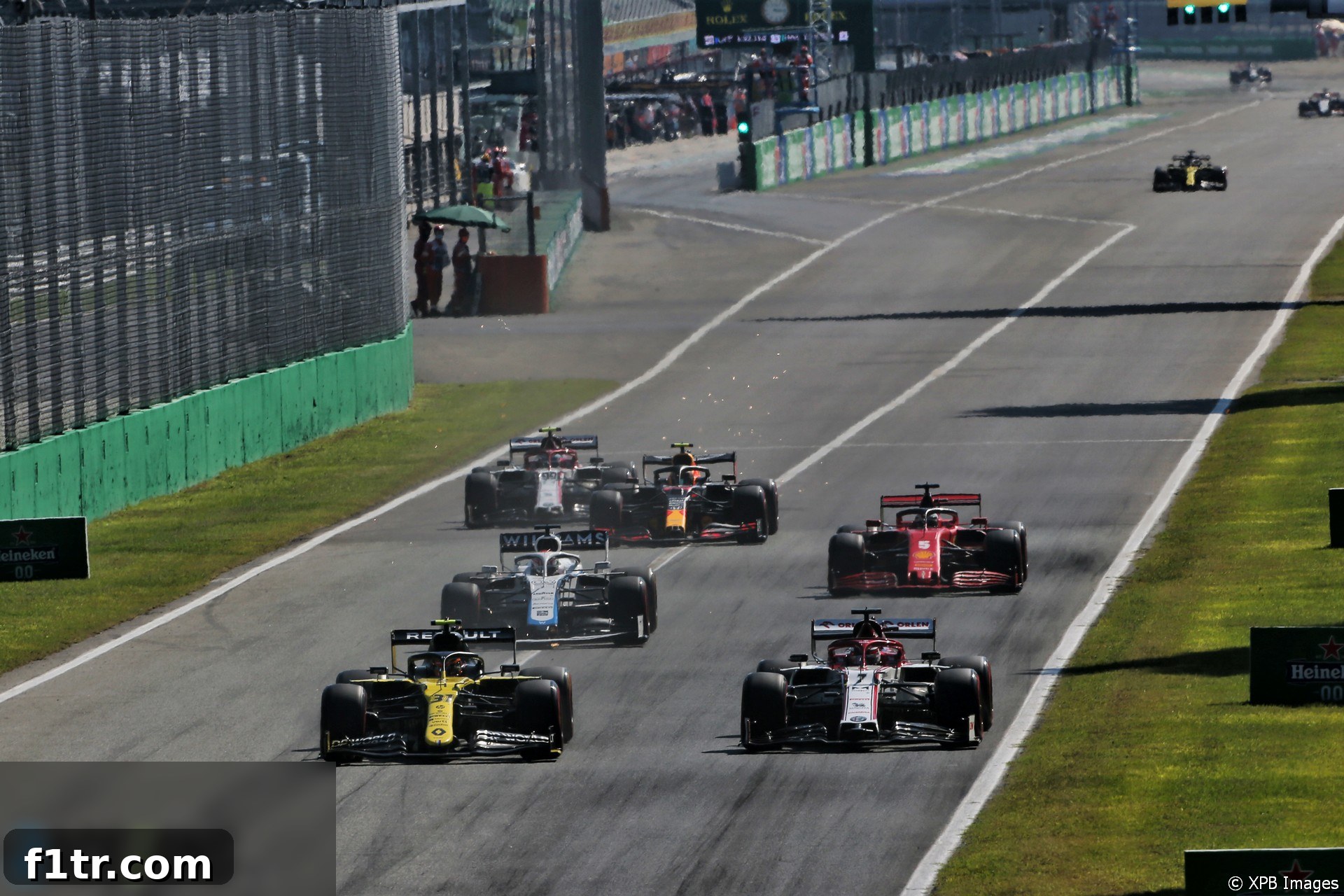
The chaotic nature of Q1 under the new rule was vividly exemplified by a specific incident involving Esteban Ocon, Kimi Raikkonen, and Nicholas Latifi. While Ocon was ultimately cleared by the stewards for his involvement, the event underscored the heightened tensions and difficulties drivers faced in managing track position in the constrained environment.
Raikkonen, known for his direct and often blunt assessments, lodged a complaint regarding Ocon’s driving during a moment when both drivers were beginning a flying lap in close proximity. The incident saw Ocon defending his track position aggressively at the Rettifilio chicane and through the sweeping Curva Grande, maneuvers that Raikkonen clearly felt were out of line. The Alfa Romeo driver’s frustration was palpable, reflecting the precarious situation many found themselves in as they jostled for prime real estate on the track.
However, Ocon offered a robust defense of his actions, framing the situation as an intense battle for optimal track space rather than reckless driving. “It was very much racing for position – racing is definitely the word,” Ocon clarified, emphasizing the competitive nature of the qualifying scramble when every millisecond counts. He explained that Raikkonen’s proximity was the root cause of the problem from his perspective. “Kimi started his lap too close to me,” Ocon contended. He further elaborated on the dilemma faced by both drivers, highlighting the zero-sum nature of their interaction: “He was trying to pass me, but if he’d done that, both of our laps would’ve been ruined. Obviously his lap was, but I was still able to complete mine even if it wasn’t an improvement.” This exchange perfectly encapsulated the tight margins and split-second decisions drivers are forced to make when track space is at a premium, a problem magnified by the inability to strategically distance themselves from rivals due to the new delta rule.
Advert | Become a RaceFans supporter andgo ad-free
The Broader Challenge of F1 Qualifying Traffic
The scenario witnessed at Monza is not an isolated incident but rather a microcosm of the ongoing struggle Formula 1 faces in effectively managing qualifying traffic. For many years, drivers have employed elaborate tactics to create sufficient gaps for a clean lap, especially at circuits where slipstreaming offers a significant advantage, such as Monza’s lengthy straights. The strategic game of “chicken”—where drivers slow down excessively on out-laps, sometimes almost coming to a near halt—has been a frequent source of contention, leading to numerous penalties, investigations, and persistent calls for stricter enforcement from both teams and the FIA.
The FIA’s introduction of the delta time rule was a direct and proactive response to these long-standing safety concerns, aiming to eliminate the most dangerous aspects of this strategic game. However, as Ocon’s candid feedback suggests, finding the right balance between ensuring safety and allowing drivers the necessary strategic freedom to prepare for their fastest lap remains an incredibly intricate and delicate challenge. The high-stakes environment of F1 qualifying means that every fraction of a second and every metre of clear track can be crucial for making it into the next session or securing a prime grid position. Depriving drivers of the ability to manage this spatial relationship through traditional speed adjustments appears to have inadvertently created a different, yet equally problematic, form of congestion.
Monza, with its unique characteristics, exacerbates this problem further. Its long straights make the tow from a car ahead incredibly valuable, prompting drivers to strategically queue up at the final corners, hoping to latch onto a slipstream from a competitor. This inherent strategic element of the “Temple of Speed” clashes directly with regulations designed to maintain consistent speeds and prevent excessive bunching. The Italian Grand Prix qualifying session served as a clear indicator that while the FIA’s intention was noble and focused on safety, the practical application of the delta time rule requires further refinement and, crucially, more extensive consultation with the drivers who are at the sharp end of its impact.
Seeking Solutions: The Future of Qualifying Regulation
Esteban Ocon’s call for a comprehensive review at the next drivers’ meeting underscores the necessity of a collaborative and adaptive approach to regulation. Drivers possess invaluable first-hand experience of the on-track dynamics, and their insights are absolutely crucial for developing rules that are both effective in enhancing safety and fair to the intensely competitive nature of the sport. Future discussions might explore alternative solutions, such as staggered release times from the pit lane, designated slower lanes or sections for out-laps, or more nuanced interpretations of delta times that allow for minor, safe speed adjustments without encouraging dangerous braking or queuing.
The FIA is continuously striving to evolve Formula 1 regulations to ensure the highest standards of safety while simultaneously preserving the thrilling spectacle of racing that fans cherish. The Monza experiment with the delta time rule, despite its mixed results and the immediate backlash from some drivers, provides invaluable data and feedback. It highlights a critical lesson: while theoretical solutions may appear sound on paper, their real-world application can sometimes lead to unforeseen consequences that impact driver strategy and safety in unexpected ways. The ongoing challenge for the governing body will be to refine these rules to truly address the root causes of qualifying traffic congestion, rather than inadvertently creating new ones, thereby maintaining the integrity and thrilling essence of Formula 1 qualifying for years to come.
2020 Italian Grand Prix Related Articles
- Grosjean “obviously jealous” but pleased for Gasly after win
- 2020 Italian Grand Prix Star Performers
- Gasly: I’m ready for Red Bull return
- Ban on ‘quali mode’ reduced overtaking at Monza – Hamilton
- Gasly beats Sainz in closest F1 finish for 10 years
Browse all 2020 Italian Grand Prix articles