Formula 1’s Qualifying Conundrum: Drivers Call for Stricter Rules Against Hindrance
The fiercely competitive world of Formula 1 qualifying has recently seen a heated debate among drivers regarding incidents that impede rivals’ flying laps. Following events in Azerbaijan and Monaco, calls for stricter regulations have grown louder, with prominent figures like Lando Norris, Esteban Ocon, and Fernando Alonso weighing in on the issue.
Advert | Become a Supporter & go ad-free
Recent Incidents Spark Outcry
The catalyst for this renewed discussion stemmed from two particular race weekends. In Azerbaijan, Fernando Alonso faced accusations from Alexander Albon of deliberately driving slowly during Q1. Alonso, on his final run, navigated ahead of several cars only to then drive into the escape road at Turn 15. This action inadvertently triggered yellow flags, effectively nullifying the efforts of the drivers behind him who were on crucial improvement laps.
Just two weeks prior, the streets of Monaco witnessed a similar, albeit more dramatic, scenario. During the decisive moments of Q3, the qualifying session was prematurely ended when Sergio Perez and Carlos Sainz Jnr crashed. This incident prevented numerous drivers from completing their final, potentially fastest, laps. Such occurrences are not isolated; tracks with limited run-off areas, particularly street circuits, frequently present these challenges, leading to frustration and questions about sporting fairness.
The Case for Stricter Penalties: Learning from IndyCar
These repeated disruptions have led some within the F1 paddock to advocate for rules similar to those employed in other major motorsport series, such as IndyCar. In these championships, drivers who cause yellow or red flags during qualifying sessions are often penalized by having one or more of their fastest lap times deleted. The rationale behind this approach is clear: to ensure that a driver cannot inadvertently, or worse, intentionally, benefit from an error or incident they caused.
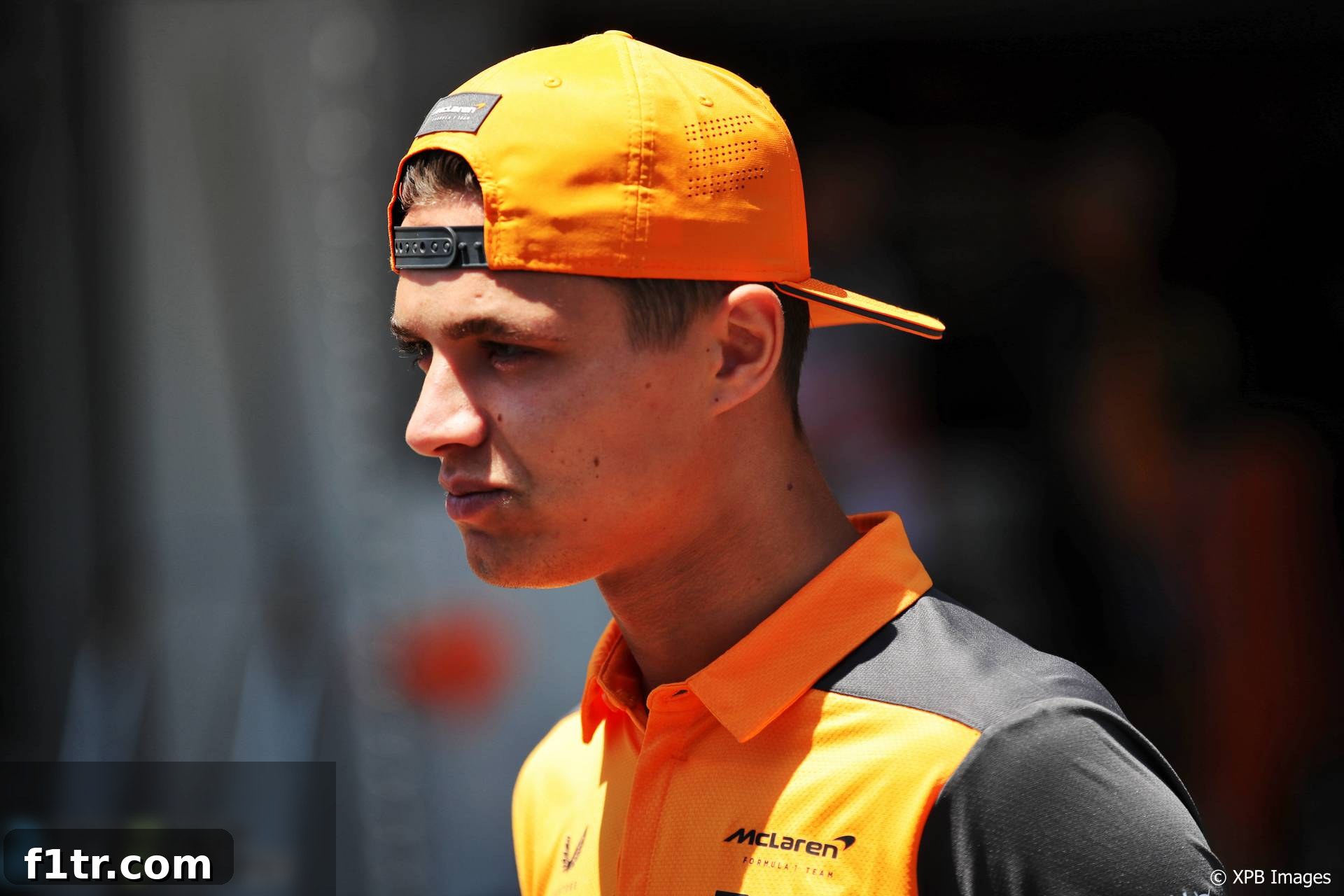
Lando Norris is a strong proponent of tightening F1’s existing regulations in this critical area. He believes there’s a vital distinction to be made between genuine mistakes and potentially deliberate actions designed to compromise rivals. “I was one of the guys who caused the yellow [on Saturday], but just to get out of the way of Seb [Vettel],” Norris clarified, highlighting the nuance. “I think there’s a difference between people doing it by accident – and people doing it to get out of the way of people by not causing blue flags and whatever when you’re in qualifying business – versus people who quite obviously do it on purpose. Especially when you’re one-and-a-half seconds down on the push lap.” This statement from Norris underscores the need for officials to discern intent, a complex task in the heat of competition.
The Double-Edged Sword of New Rules
However, Norris also acknowledged the inherent difficulty and potential hypocrisy in implementing such stringent rules. He admitted that while drivers might advocate for stricter penalties when they are on the receiving end of an incident, their perspective often shifts dramatically when they themselves are the ones making a mistake. “It’s tough. You always say it until you’re the one that does something wrong, and then you’re like ‘I wish that rule wasn’t introduced’ because you just made a simple mistake,” he mused. “Or like when I spun in Imola, then I guess I’d say I wish there’s no rule.”
This sentiment reveals the psychological aspect of the debate: what seems fair in principle can feel harsh in practice. “Obviously when someone else does it, you say you wish that was a rule. So it’ll always bite someone at some point,” Norris concluded, offering a candid and realistic view of the challenge. “But of course people who are more vocal about it are the ones who just haven’t made a mistake just yet.” His honesty highlights the fine line between ensuring fair play and unduly punishing genuine errors, a balance the FIA would need to meticulously strike.
Advert | Become a RaceFans supporter andgo ad-free
Street Circuits: A Special Case for Stricter Enforcement
Esteban Ocon echoed the call for more rigorous qualifying rules, particularly emphasizing their necessity for street circuits. These tight, unforgiving tracks inherently increase the probability of a driver’s incident interfering with another’s crucial lap. The lack of extensive run-off areas means that even minor mistakes can lead to cars stopping in dangerous positions, necessitating yellow or red flags.
“At the moment Monaco and [Baku] I’ve been suffering for that in qualifying. Probably people would take more care if they get penalised,” Ocon stated, sharing his personal experience of frustration. He believes that the risk of a penalty, such as a deleted lap time, would compel drivers to exercise greater caution and precision, reducing the likelihood of incidents that disrupt the session for others. “It would be less easy to take a risk and just go down the escape road. So I would definitely be in favour of changing that for the street circuits.” This targeted approach suggests a recognition that a one-size-fits-all rule might not be optimal for the diverse range of F1 tracks.
Alonso’s Pragmatic View: Complexity and Alternative Solutions
While acknowledging the problems, Fernando Alonso presented a more cautious perspective on introducing new rules. His primary concern revolves around the practical challenges of implementation, particularly the subjective nature of determining whether a driver’s error was genuine or intentional. He cited the example of Kevin Magnussen stopping his broken Haas at the side of the track during Sunday’s Grand Prix, illustrating how a seemingly innocuous choice could have unintended consequences.
“It’s going to be always difficult,” said the Alpine driver. “It’s like in the race if you crash in one corner or if you park [I think] it was one Haas that parked in turn 15 if you park there or you park 10 metres after that, maybe you have a Safety Car deployment, depending on if you take a good position or not. And then we will penalise Haas driver because he chose the wrong thing? So we need to be careful on how we enter and how we do those things.” Alonso’s argument highlights the potential for unintended penalties based on interpretations of intent or even the exact location a car comes to rest, which could lead to further controversy.
Instead of merely adding punitive rules, Alonso believes the entire framework for qualifying sessions warrants a comprehensive re-evaluation. “Especially qualifying should be different,” he asserted. “We are dealing with problems of slow laps, minimum time to respect traffic in the last corner, tows, no tows. I think we should be clever and think [of] another format in qualifying.” This suggests a desire to address the root causes of the traffic and hindering issues, rather than simply reacting with penalties. A reimagined qualifying format could potentially mitigate many of these problems by structuring sessions in a way that naturally reduces congestion and the opportunities for interference.
Advert | Become a RaceFans supporter andgo ad-free
The Path Forward: Finding a Fair and Effective Solution
The divergent opinions among F1 drivers underscore the complexity of the qualifying hindrance issue. While there’s a consensus that fairness and sporting integrity are paramount, the method of achieving this remains a subject of intense debate. Lando Norris’s call for penalties for intentional acts, Esteban Ocon’s focus on street circuits, and Fernando Alonso’s broader vision for a qualifying format overhaul all highlight different facets of the problem and potential solutions.
The FIA faces a significant challenge in balancing the need for clear, enforceable rules with the dynamic and often unpredictable nature of motorsport. Any new regulations must be robust enough to deter intentional hindering without unduly penalizing drivers for genuine errors. The ultimate goal is to ensure that qualifying sessions are a true test of speed and skill, free from artificial disruptions that can unfairly influence starting grids and, consequently, race outcomes. As Formula 1 continues to evolve, the quest for optimal sporting regulations remains an ongoing and crucial endeavor.
2022 Azerbaijan Grand Prix Coverage
- FIA should black-flag cars if their porpoising endangers drivers’ safety – Horner
- Transcript: Why Norris reluctantly complied with McLaren’s Baku team orders
- Montreal “is going to hurt” in stiff 2022 cars say drivers hoping for bouncing fix
- Leclerc was heading to a ‘comfortable win’ before retirement – Ferrari
- F1 should penalise those who ‘obviously’ slow on purpose in qualifying – Norris
Browse all 2022 Azerbaijan Grand Prix articles