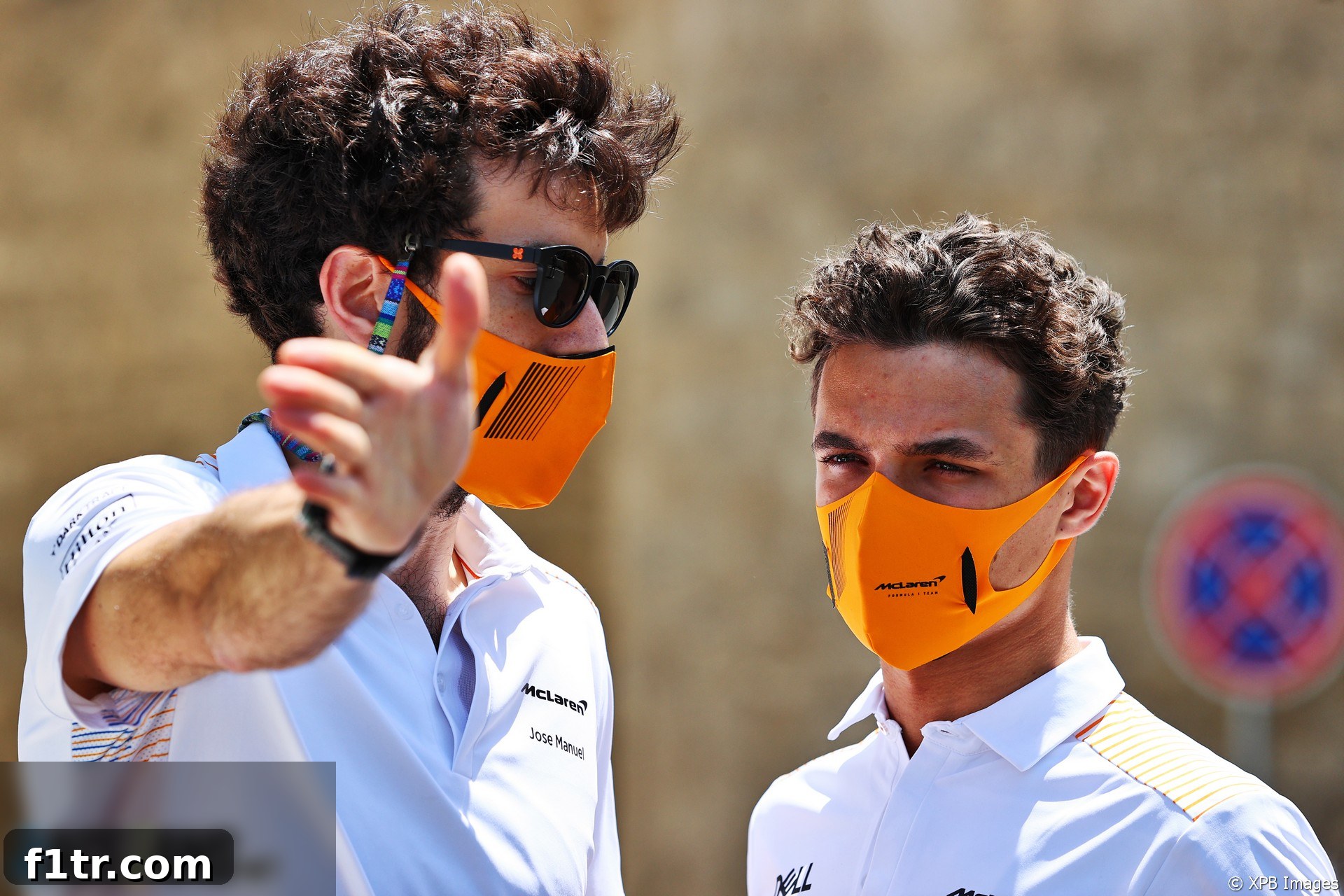
McLaren’s Baku Ambitions: Norris Cautious, Ricciardo Confident on Straight-Line Speed
Following a thrilling Monaco Grand Prix that saw Lando Norris secure a hard-fought podium, the Formula 1 circus now turns its attention to the unique challenges of the Azerbaijan Grand Prix at the Baku City Circuit. Known for its incredibly long straights and intricate old town section, Baku demands a very specific car setup and driver approach. While rivals like Max Verstappen and Carlos Sainz Jnr have lauded McLaren’s impressive straight-line speed, even labeling their Mercedes-powered MCL35M a “rocket,” opinions within the Woking-based team appear to be split. Lando Norris, the rising star with two podium finishes already this season, maintains a measured skepticism about their potential, advocating for a grounded approach. In stark contrast, his teammate Daniel Ricciardo, eager to rebound from a disappointing Monaco outing, expresses a palpable confidence, particularly buoyed by the team’s perceived advantage on the straights.
Lando Norris: Measured Expectations Amidst High Praise
Lando Norris has been a revelation this season, consistently extracting strong performances from his McLaren. His third-place finish in Monaco, a track where driver skill can often outweigh raw car pace, only amplified the whispers about McLaren’s overall strength. However, despite the external hype regarding the MCL35M’s straight-line capabilities – a crucial asset for Baku – Norris remains firmly pragmatic. He acknowledges the compliments but tempers expectations, emphasizing the broader competitive landscape of Formula 1.
“I think we can be confident and optimistic [that] we can go well,” Norris stated, reflecting a cautious but hopeful tone. “I don’t think we’re going to be anything extraordinary or unexpected.” This statement underscores his belief that while McLaren has a competent car, consistently good across various track types, they are not yet in a position to challenge the absolute front-runners on pure pace at every circuit. His two podiums from the first five races speak volumes about his talent and the team’s progress, yet Norris is acutely aware of the formidable challenge posed by the likes of Mercedes and Red Bull Racing.
Norris’s perspective is rooted in a deep understanding of F1’s pecking order. While the Mercedes power unit certainly provides a significant boost on the straights, racing is about the entire package – aerodynamics, chassis balance, tire management, and driver execution through all corners. Baku, with its blend of high-speed sections and incredibly tight, slow turns, exposes every aspect of a car’s performance. For Norris, simply having a “rocket” on the straight might not be enough to overcome the overall performance advantage still held by the top two teams. “We have a good car and we’ve shown that over the first five races of the season that we have a decent car in most of the tracks. But I don’t think we can be confident saying we’re going to be quicker than Mercedes or Red Bull,” he elaborated, setting realistic targets for the weekend. The focus, for Norris, remains on disciplined execution and capitalizing on opportunities, rather than banking on a perceived single-area advantage. “We’ll do our best to keep our heads down and try and get another result like last time,” he concluded, highlighting his commitment to consistent point-scoring performances.
Daniel Ricciardo: Seeking Redemption with Straight-Line Confidence
In stark contrast to his younger teammate, Daniel Ricciardo approaches the Azerbaijan Grand Prix with a renewed sense of purpose and optimism. His Monaco Grand Prix was undeniably a difficult weekend, marked by a lack of pace and a frustrating non-points finish – his first of the season. However, the unique characteristics of Baku, combined with McLaren’s straight-line prowess, offer a promising opportunity for the Australian veteran to reset and regain momentum.
Ricciardo’s confidence stems directly from the MCL35M’s engine performance, recognizing that the team’s straight-line capabilities give him added assurance for this weekend’s race. This is a critical factor for a circuit where over 60% of the lap is taken at full throttle. His historical success at Baku also plays a significant role in his positive outlook; Ricciardo famously won the chaotic 2017 edition of the race for Red Bull, demonstrating his ability to thrive in high-pressure, unpredictable environments. This prior victory instills a psychological edge, reminding him that he possesses the skill and experience to conquer the street circuit.
“This circuit is a fun one,” Ricciardo remarked, emphasizing the thrill and challenge of Baku. He drew a compelling comparison to the previous race, stating, “Monaco is Monaco but I think Baku is just as tricky and it’s very different.” This highlights his appreciation for the distinct technical demands of the Azerbaijani track. He further explained the nuanced setup required: “We run less downforce because of the straight so in a way the cornering is maybe even more difficult here.” This insight reveals the delicate balance teams must strike – sacrificing some cornering grip for maximum speed on the colossal main straight. Yet, Ricciardo sees a silver lining in this challenge: “But you do have a bit more time and space to think about the next corner and gather your thoughts and have a breather. So it’s kind of a different tempo, but still the same intensity.” This description perfectly encapsulates the unique rhythm of Baku, where bursts of extreme speed are punctuated by intricate, strategic corner sequences.
Ricciardo’s eagerness to return to action is palpable, especially after the Monaco setback. “I think we’ll be alright,” he confidently predicted. “Obviously I’m just looking forward to getting back out.” He articulated the universal driver sentiment after a poor performance: “When a weekend doesn’t go well, you can’t wait to get back in the car to try and obviously do better so I’m just looking forward to going racing again.” For Ricciardo, Baku presents not just an opportunity for points, but a chance for personal redemption and to further solidify his integration and performance within the McLaren team.
McLaren’s MCL35M: Harnessing Straight-Line Prowess at Baku
The perception of McLaren’s MCL35M as a “rocket” is not without merit. The switch to Mercedes power units for the 2021 season has undeniably given the team a significant boost in engine performance, particularly in terms of straight-line speed. This advantage is critical for a circuit like Baku, which features the longest straight on the F1 calendar – a staggering 2.2 kilometers where cars spend extended periods at full throttle. The Mercedes engine, known for its formidable power delivery, allows McLaren to maximize its potential on these sections, which is precisely why rivals like Verstappen and Sainz were quick to highlight it.
However, Baku is far more than just long straights. The circuit is a fascinating dichotomy of high-speed blasts and incredibly tight, challenging technical sections, particularly through the ancient city walls. Teams must make crucial compromises in their car setup. Running low downforce is essential to minimize drag and achieve top speeds on the main straight, but this concurrently makes the car less stable and harder to control through the numerous slower corners and braking zones. This balancing act can be incredibly difficult, often leading to spectacular incidents as drivers push the limits. The Baku City Circuit demands a car that can be both aerodynamically efficient for speed and mechanically grippy for the tight corners, a challenge that will truly test the versatility of the MCL35M and the skill of its drivers.
Tyre management also becomes a critical factor. The combination of high-speed sections putting immense energy through the tyres and heavy braking zones testing their durability, all on a street circuit with limited runoff, adds another layer of complexity. The unpredictable nature of the race, often punctuated by Safety Car periods due to incidents in the tight sections, means that strategy and quick thinking from the pit wall will be just as important as raw pace. McLaren’s ability to adapt to changing race conditions and make astute strategic calls will be pivotal in translating their straight-line advantage into a strong result.
The Broader F1 Battle: Where Does McLaren Stand?
While the focus is on McLaren’s internal dynamics, the Azerbaijan Grand Prix is a chapter in a much larger F1 narrative. Mercedes and Red Bull Racing continue their fierce battle at the front, and their performance at Baku will undoubtedly set the benchmark. McLaren, aiming to consolidate its position as the third-strongest team, must not only contend with its own aspirations but also with a highly competitive midfield. Ferrari, with its own resurgence, Alpine, and AlphaTauri are all capable of strong performances, making the fight for points incredibly intense.
The “rocket” comments from rivals could be interpreted in several ways – genuine admiration, or perhaps a subtle psychological tactic to place more pressure on McLaren. Regardless, these comments acknowledge the tangible progress McLaren has made. However, as Lando Norris wisely pointed out, translating specific strengths into overall victory or podiums against the top teams requires consistent excellence across all domains. The unpredictability of Baku, with its history of dramatic races and unexpected outcomes, means that nothing is guaranteed. A moment of brilliance, a well-timed Safety Car, or even a rival’s misfortune could swing the race results dramatically. This unpredictability, while exciting for fans, also adds to the strategic headache for teams.
Past Azerbaijan Grands Prix have often been characterized by high drama. From multiple safety cars to driver errors and surprising podium finishers, the street circuit rarely delivers a dull race. Ricciardo’s 2017 victory, coming from tenth on the grid amidst a chaotic event, serves as a potent reminder of the opportunities Baku can present to those who are patient, strategic, and opportunistic. For McLaren, understanding this dynamic and being prepared for anything will be key to success.
Conclusion: A Weekend of Contrasting Hopes and High Stakes
The Azerbaijan Grand Prix looms as a fascinating test for McLaren. The team arrives in Baku with a dual narrative: Lando Norris’s cautious realism, emphasizing the need to keep expectations in check despite recent successes and rival praise, and Daniel Ricciardo’s determined optimism, fueled by the MCL35M’s straight-line pace and his own desire for redemption. This internal contrast perfectly encapsulates the complexities of Formula 1 – the interplay between specific car strengths, overall package performance, driver psychology, and the unique demands of each circuit.
While the “rocket” status of their Mercedes engine offers a clear advantage on Baku’s gargantuan straight, success will ultimately hinge on McLaren’s ability to master the circuit’s full spectrum of challenges. From navigating the tight, unforgiving castle section to managing tyre wear and executing flawless pit stops, every element must align. Both Norris and Ricciardo will be under pressure to deliver, but their differing approaches highlight the multifaceted nature of motorsport. The stage is set for an enthralling weekend, where McLaren hopes to turn potential into tangible results, striving to narrow the gap to the championship leaders and consolidate their strong start to the 2021 season at one of Formula 1’s most unpredictable venues.
Further Reading: 2021 Azerbaijan Grand Prix Insights
- Aston Martin Confirms Compliance with Pirelli Tyre Restrictions Before Crash
- Pirelli Exonerates Teams in Baku Tyre Failure Investigation
- Villeneuve on Baku Tyre Failures: “Tyres Should Not Explode Like That”
- Exploring Fernando Alonso’s Renewed Enjoyment in F1
- Nicholas Latifi’s Baku Frustrations: A Safety Car Error and More
Browse all 2021 Azerbaijan Grand Prix articles