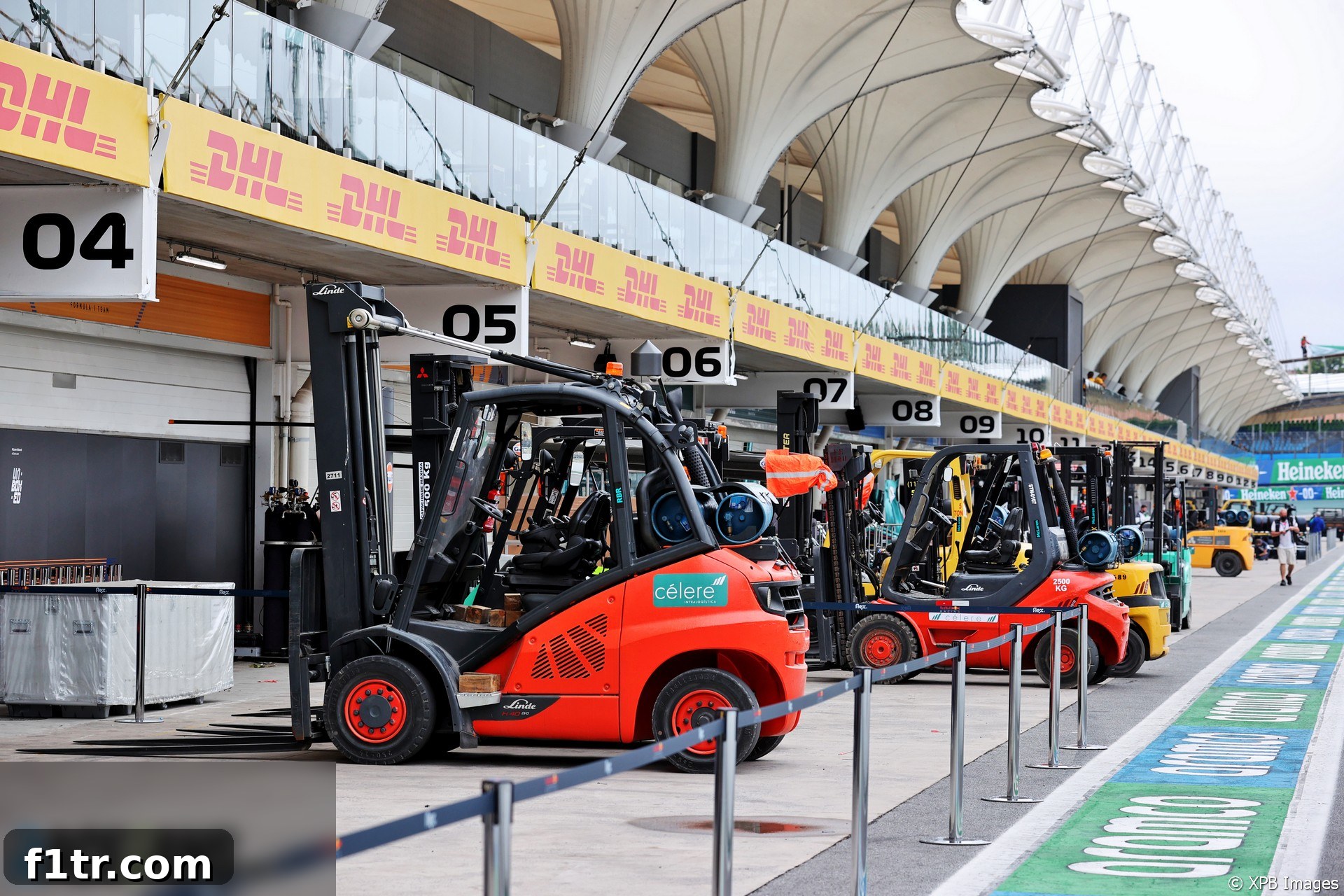
Formula 1 teams are facing an intense race against the clock at the Autódromo José Carlos Pace, better known as the Interlagos circuit in São Paulo, Brazil. Preparations for the highly anticipated Sao Paulo Grand Prix were significantly hampered following an unprecedented delay in the arrival of crucial team freight. Haas F1 team principal Guenther Steiner highlighted the gravity of the situation, confirming that personnel would be forced to work through the night to ensure their cars are ready for Friday’s practice sessions.
Advert | Become a Supporter & go ad-free
The logistical nightmare unfolded as all ten Formula 1 teams reportedly experienced substantial delays in shipping their essential equipment from the previous race in Mexico City to the Brazilian venue. This intricate and time-sensitive operation, which typically runs like clockwork, encountered unforeseen hurdles, causing widespread disruption across the paddock. For Haas, the impact was immediate and critical, with Steiner confirming that vital components, including their Ferrari power units and indispensable toolboxes, were among the delayed items. Without these fundamental elements, mechanics were left unable to commence car assembly or setup, effectively paralyzing initial preparations.
Unprecedented Delays Threaten Sao Paulo GP Preparations
The F1 calendar is a meticulously planned logistical exercise, moving vast amounts of equipment across continents in incredibly tight windows. Following the Mexican Grand Prix, teams packed up their entire operations for the journey south to Brazil. However, complications in the shipping process meant that a significant portion of the air freight, containing the core components of the F1 cars and necessary operational tools, did not arrive as scheduled. This created a palpable sense of urgency and concern within the F1 community.
A substantial consignment of the delayed freight finally reached the Interlagos circuit shortly after 11:00 AM on Thursday, mere hours before what would typically be the start of the final push for car construction. Recognizing the severity of the situation and the potential for teams to miss crucial track time, the sport’s governing body, the FIA (Fédération Internationale de l’Automobile), swiftly intervened. To facilitate the monumental task ahead, the FIA took the unusual step of waiving its standard overnight curfew on work hours for Thursday night and extended the deadline for technical scrutineering.
FIA Waives Curfew and Extends Scrutineering Deadline
Guenther Steiner elaborated on the FIA’s proactive measures, stating, “I think the guys just have to work through the night. That’s the only thing you can do. I don’t know if we need to work through the night, but it will be for sure a late night.” He further added, “All the rest of the regulations have been changed as of this morning; the curfew and the scrutineering times have been all adjusted so that we can still do the event as planned, not change the timetable of the event, that that’s the plan. I think that’s achievable now.” This flexibility from the FIA is paramount in ensuring the integrity of the race weekend schedule.
Ordinarily, Formula 1 regulations strictly prohibit team personnel directly involved in the operation of the cars from being within the circuit confines for a nine-hour period overnight preceding the first practice session. This curfew is designed to manage staff welfare and maintain fair competition. However, given the extraordinary circumstances, the stewards confirmed on Thursday that this rule had been temporarily lifted. Additionally, teams were granted a significant 15-hour extension to complete the scrutineering of their cars. This critical process, which verifies that all vehicles comply with F1’s stringent technical regulations, must now be completed three hours before the commencement of Friday’s practice sessions, instead of the usual timeframe.
Haas F1’s Unique Logistical Challenges
Despite the widespread delays, some elements of team infrastructure had arrived via sea freight, allowing initial setup of garages and hospitality areas. For Haas, this included their vital IT equipment, which thankfully traveled by air freight and arrived without issue, enabling them to establish crucial data and communication systems. However, the absence of specific car parts and, crucially, tools rendered much of this early setup work ineffective concerning car assembly.
Steiner emphasized the fundamental challenge posed by the missing tools: “I don’t know exactly which car parts are missing, but for sure the engines were missing, I think the toolboxes were missing – without the toolboxes you cannot work because that is going all in there in the air freight. So basically, we couldn’t work on the cars or we still cannot work on the cars, even if some of the parts may be there, we cannot work on them because we don’t have the tools.” This highlights the intricate dependency within an F1 team’s operations; even with major components present, the lack of basic equipment can halt progress entirely.
The Complex World of F1 Logistics
The logistics of Formula 1 are among the most complex in global sports. Each Grand Prix involves transporting approximately 1,500 tonnes of equipment, including cars, spare parts, tools, garage setups, hospitality units, and IT infrastructure, across vast distances. This massive undertaking is typically divided into two main categories: sea freight and air freight.
Sea freight handles the bulkier, less time-sensitive items like hospitality units, garage frameworks, and some non-critical spare parts. This method is cost-effective but significantly slower. Air freight, on the other hand, is reserved for the most critical and time-sensitive components: the cars themselves, their engines, gearboxes, essential spare parts, and the invaluable toolboxes that mechanics depend on. Given the tight schedule of ‘flyaway’ races, where Grands Prix are held on consecutive weekends in different continents, air freight turnaround times are incredibly short, often leaving only a few days between packing up at one circuit and needing to be ready at the next.
The delay from Mexico City to São Paulo underscores the inherent risks in this high-speed logistical ballet. A single hiccup—be it customs issues, unexpected cargo delays, or technical problems with charter planes—can cascade into a major crisis for all teams. Such incidents place immense pressure on logistics teams, freight forwarders, and airline partners who work tirelessly behind the scenes to keep the F1 circus moving.
Impact on Team Personnel and Race Weekend
The implications of such delays extend far beyond mere inconvenience. For the dedicated mechanics and engineers, it means sacrificing rest and working gruelling extended shifts, often through the night, to catch up. This demanding schedule can lead to fatigue, which, in a sport where precision and attention to detail are paramount, carries inherent risks. The waived curfew, while necessary, puts an extraordinary burden on these individuals, who are already under immense pressure during a race weekend.
Furthermore, any lost time in the garage directly impacts car preparation. Every moment is crucial for fine-tuning setups, conducting essential checks, and implementing pre-practice adjustments. Missing out on this preparation time can compromise a team’s performance, potentially affecting their competitiveness in practice, qualifying, and ultimately, the race itself. The extension of the scrutineering deadline provides a much-needed buffer, but it doesn’t eliminate the fundamental challenge of building and testing a complex F1 machine from scratch in record time.
Resilience of Formula 1 and the Road Ahead
Despite the significant setbacks, the Formula 1 paddock is renowned for its resilience and ability to adapt rapidly to unforeseen circumstances. The swift action by the FIA, combined with the unwavering dedication of team personnel, is a testament to the sport’s commitment to delivering a full race weekend for fans. The next 24 hours will undoubtedly be a frantic period at Interlagos as teams work collaboratively and individually to overcome these logistical hurdles. As the engines roar to life for the first practice session, it will be a victory not just for the drivers on track, but for the countless individuals who worked tirelessly through the night to make it happen.
Advert | Become a RaceFans supporter andgo ad-free
2021 Sao Paulo Grand Prix Related News
- Red Bull and Mercedes summoned to FIA hearing on review of Sao Paulo incident
- McLaren must “get back to scoring the results that are on the table” – Seidl
- Hamilton makes his second-biggest climb to victory from 10th on the grid
- F1 releases missing video footage from Verstappen’s car of Hamilton incident
- How Alonso and Ocon “pushed team tactics to the ultimate limit” to delay Gasly
Browse all 2021 Sao Paulo Grand Prix articles