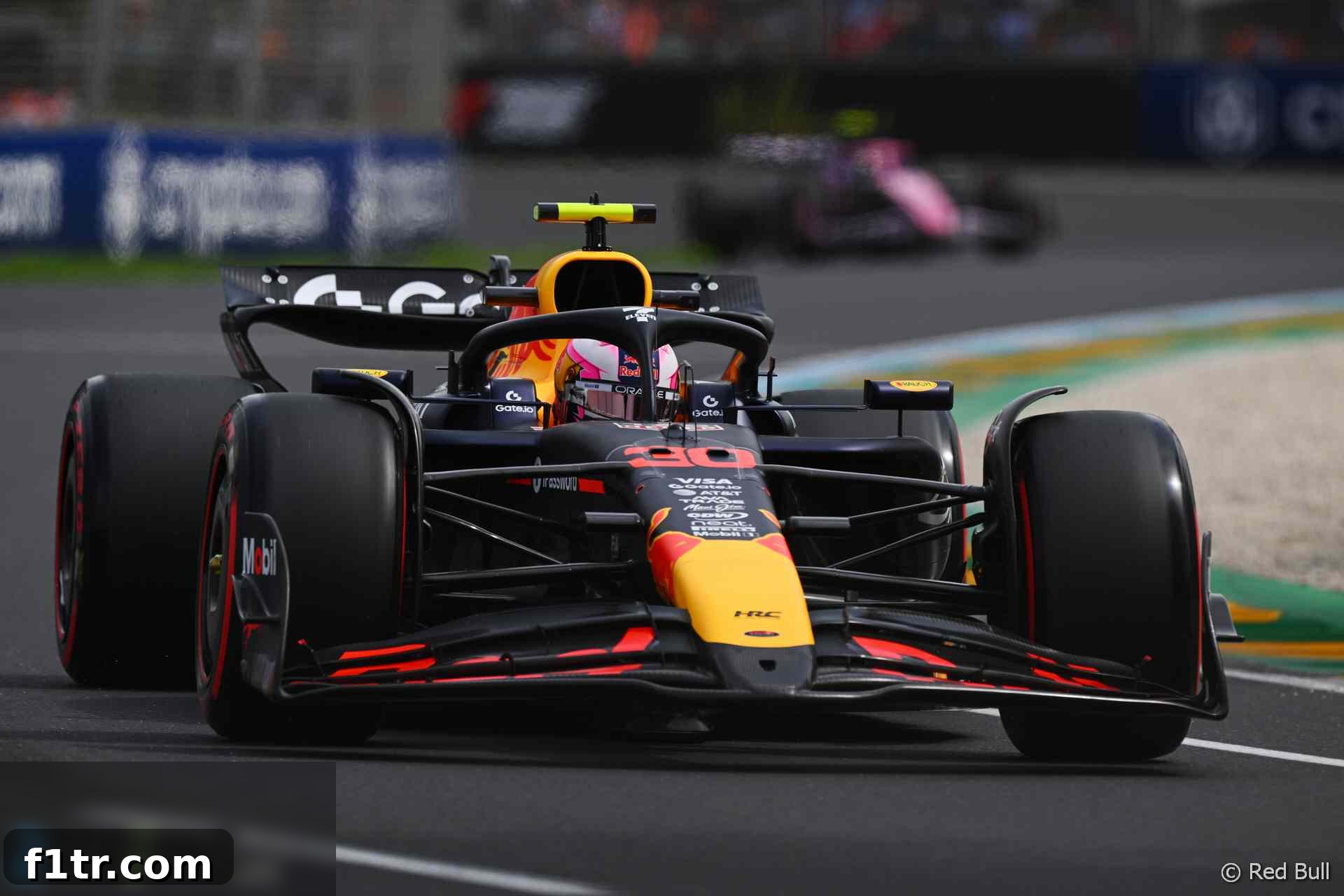
Liam Lawson’s Challenging F1 Debut: Red Bull’s Horner Defends Rookie After Tough Qualifying
The high-octane world of Formula 1 is notoriously unforgiving, a reality newly introduced Liam Lawson experienced firsthand during his qualifying debut for Red Bull. The young driver, stepping into one of motorsport’s most scrutinised seats, faced immediate headwinds, culminating in an early exit from the first round of qualifying (Q1). However, his team principal, Christian Horner, was quick to leap to his defense, acknowledging the unique and formidable challenges Lawson encountered on a demanding debut weekend.
Navigating the Challenges: Lawson’s Tough Start to Qualifying
Lawson’s journey into his inaugural F1 qualifying session was fraught with difficulties even before the green light. A power unit issue during the crucial final practice session (FP3) meant valuable track time was lost, a critical setback for any driver, but particularly for a rookie tackling an unfamiliar circuit. Being the only driver on the grid never to have raced at the venue, this absence of preparation immediately placed him on the back foot, creating an uphill battle against seasoned competitors.
During qualifying, the pressure intensified with each run. His initial lap was commendable given the circumstances, showcasing glimpses of his potential despite the limited mileage. Yet, as the session progressed and the need to find pace grew, the compounding pressure led to minor but costly errors. A lock-up on his second run was followed by another mistake on his third, ultimately costing him the precious tenths required to advance beyond Q1. These small missteps, magnified by the intensity of F1 qualifying, highlighted the razor-thin margins at the pinnacle of motorsport.
Christian Horner’s Stance: Defending the Rookie Amidst Immense Pressure
Christian Horner, known for his pragmatic and often direct assessments, offered a staunch defense of Lawson, emphasising the extraordinary circumstances surrounding his debut. Horner underscored the difficulty of the situation:
“It was a tough day for him because losing [final practice] at a track that he’s never raced at – he’s the only driver on the grid not to have raced here – immediately put him on the back foot.”
This statement encapsulates the core of Lawson’s challenge; lacking the foundational knowledge and practice laps that every other competitor benefited from. Horner further elaborated on the escalating pressure:
“His first run was pretty decent, considering the lack of mileage, but then unfortunately a lock-up on the second run, a mistake on the third run, the pressure’s just building and building at that point. So you can’t judge him on today’s performance, but hopefully he can have a reasonable run tomorrow.”
Such nuanced understanding from a team principal is vital for a young driver’s confidence, ensuring that a single difficult outing does not overshadow their long-term potential.
The Max Verstappen Benchmark: A Formidable Comparison
Further adding to Lawson’s baptism of fire was the inherent comparison to his teammate, reigning world champion Max Verstappen. The statistics from Q1 were stark: Lawson was a full second slower than Verstappen, representing the largest gap between any pair of teammates on the grid. While numerically significant, Horner was quick to provide crucial context:
“Max is a machine of a team mate to be next to. You can’t judge Liam on what we’ve seen so far. It’d be very unfair to do that.”
This sentiment highlights the almost insurmountable challenge of being paired with a driver of Verstappen’s calibre, especially as a rookie. Verstappen’s exceptional talent and experience set an incredibly high benchmark, one that few, if any, drivers could match instantly. Horner’s perspective reminds observers that F1 is a steep learning curve, and initial performance against a multiple world champion should be viewed with a realistic lens.
Looking Beyond Debut: Lawson’s Future Potential
Horner expressed optimism for Lawson’s future, anticipating that he would “come alive” as he gains familiarity with different circuits. This long-term vision is crucial for any driver in Red Bull’s talent development system. The initial struggles on an unfamiliar track with limited practice are less indicative of a driver’s true potential than their ability to adapt and perform on circuits where they have previous experience. The goal for Lawson, therefore, will be to demonstrate consistent improvement and confidence in subsequent races, proving his adaptability and raw speed.
The Red Bull Driver Program: A Crucible of Talent and Expectation
The Red Bull driver program is renowned for its intensity, a demanding pathway that has produced some of F1’s greatest talents but also seen many promising careers falter under pressure. Drivers are constantly evaluated, and the stakes are perpetually high. This environment, while nurturing champions, places immense psychological and performance pressure on individuals like Lawson, who are striving to prove their worth. His debut, therefore, wasn’t just about personal performance but also about demonstrating his resilience within one of F1’s most competitive academies. The scrutiny isn’t just from fans and media but from a system designed to identify and fast-track the best of the best.
Racing Bulls Shine: Yuki Tsunoda and Isack Hadjar Make Their Mark
While attention was primarily on Lawson’s debut, Christian Horner also took the opportunity to commend the impressive performances from Red Bull’s sister team, Racing Bulls. Both of their drivers qualified ahead of Lawson, showcasing the strength and depth within the Red Bull driver pool.
Notably, Yuki Tsunoda delivered an outstanding qualifying performance, securing fifth place on the grid. This result was particularly significant as Tsunoda was considered for a promotion to Red Bull Racing earlier in the year. Horner praised his maturity and strategic driving:
“Yuki did a great job today… Yuki, you can see that experience is playing through now. He’s an experienced grand prix driver, and he’s using it, he’s driving with his head, he’s doing a good job, and it’s good for him to be starting at the sharp end of the grid. It’s exactly what he needs to be doing to keep saying, ‘look I’m still here’.”
Tsunoda’s consistent improvement and ability to deliver under pressure are clearly being noticed, reinforcing his case for a potential future seat in the main Red Bull team. His performance serves as a testament to the value of experience and continuous development in Formula 1.
Horner also highlighted the promising talent of Isack Hadjar, a rookie making his Free Practice 1 appearance, who also put in an impressive showing. Though not directly comparable in a qualifying context, Hadjar’s contribution to the weekend further underscored the pipeline of talent at Red Bull’s disposal:
“I have to commend Isack Hadjar as well. I thought, of the rookies, he did an outstanding job. So it’s great for that team, great for Yuki to be to be right up there ahead of the Ferraris.”
This recognition of both experienced and emerging talents within the Racing Bulls team demonstrates the comprehensive nature of Red Bull’s strategy, nurturing drivers at various stages of their careers.
The “Wrong Driver” Debate: A Premature Conclusion
Despite Tsunoda’s strong performance, Horner dismissed any premature conclusions about Red Bull promoting the “wrong driver.” He succinctly put it:
“We’ve got a sample of one. You have to remember how close Liam was to him. Isack Hadjar as well is doing a great job.”
This statement emphasizes the need for a larger dataset before making definitive judgments on driver selection. Formula 1 is a sport of continuous evolution, and a single weekend, especially under challenging circumstances, cannot dictate a driver’s long-term trajectory or validate a complex strategic decision. Red Bull’s philosophy is built on sustained performance and potential, not isolated events.
Lawson’s Candid Reflection: Acknowledging Mistakes and Seeking Progress
In a display of maturity and self-awareness, Liam Lawson openly admitted his dissatisfaction with his qualifying performance. Speaking to Sky after the session, he acknowledged the initial struggles:
“We expected the start of quali to be tough, to be honest. The first laps were expected to be off and then we were just planning on building through the session.”
His candid assessment further detailed how minor errors derailed his strategy:
“But obviously going off on that second lap sort of put everything out of order a bit. Then the last lap was good, honestly, just until the last sector where I just had a big drop.”
Lawson also linked his qualifying struggles to the lost FP3 time, noting, “obviously doesn’t help any of this but I also shouldn’t be going off in quali.” This balanced view demonstrates a driver who understands the external factors but also takes accountability for his own execution.
Battling Tyre Degradation and Setup Issues
Digging deeper into the technical aspects, Lawson explained his struggle with tyre performance in the crucial final sector of his last flying lap. He was on course for a significant improvement before experiencing a sudden drop-off:
“Before turn nine we were about half a second up… And then obviously we would have just kept improving. But I already had a snap through nine and 10, I think the tyres were already starting to drop there. That’s something we’ve just been battling this weekend and obviously something that we missed practising in P3.”
This detailed analysis reveals the intricate balance required in F1 – a slight deviation in tyre management or car setup, exacerbated by missed practice, can drastically alter performance. It highlights the domino effect of missing FP3, where critical data on tyre behaviour and car balance would have been gathered.
Optimism for Car Development
Despite the personal disappointment, Lawson maintained a positive outlook regarding the team’s progress with the car. He expressed belief that Red Bull had made a tangible step forward:
“We feel like we made a step with the car today, regardless of this. Obviously Max is in a good position so we definitely made a step and obviously the weather tomorrow is variable so let’s see.”
This perspective is crucial for team morale and a rookie’s mindset. Recognizing the team’s overall progress, even when personal performance is sub-optimal, shows a collective focus and an understanding of the bigger picture. The variable weather forecast for the race day also adds another layer of unpredictability and potential opportunity for Lawson to demonstrate his race craft.
The Road Ahead: Race Day and Lawson’s Future in Formula 1
Liam Lawson’s debut qualifying session serves as a stark reminder of the immense challenge and relentless competition in Formula 1. While his Q1 exit was undoubtedly a tough pill to swallow, the support from Christian Horner and Lawson’s own mature self-assessment point towards a resilient approach. The race day, with its potential for variable weather conditions, presents a fresh opportunity for Lawson to showcase his racing abilities, manage strategy, and climb through the field. For a rookie, every lap is a learning experience, and adapting to dynamic race situations is just as vital as raw qualifying speed.
His journey in Formula 1 has just begun, and like many great drivers before him, it will likely be marked by both triumphs and setbacks. The true measure of his potential will lie in his ability to learn from this challenging debut, integrate feedback, and consistently improve in the races to come. The Red Bull junior program thrives on this kind of pressure, and Liam Lawson’s response to it will be closely watched as he navigates the demanding path of a Formula 1 career.
Explore More F1 Insights and News
Stay updated with the latest happenings and in-depth analyses from the world of Formula 1 by exploring our related articles:
- F1 rules change to prevent repeat of Verstappen-Bearman Australian GP confusion
- Contact with team mate may have led to Bortoleto’s Australian GP crash
- Hamilton dismisses ‘negativity’ over his radio calls. ‘Other drivers are almost abusive’
- Antonelli “got really scared” when he made “big save” on first lap of Australian GP
- Williams explain role played by car’s systems in Sainz’s race-ending crash
Browse all 2025 Australian Grand Prix articles