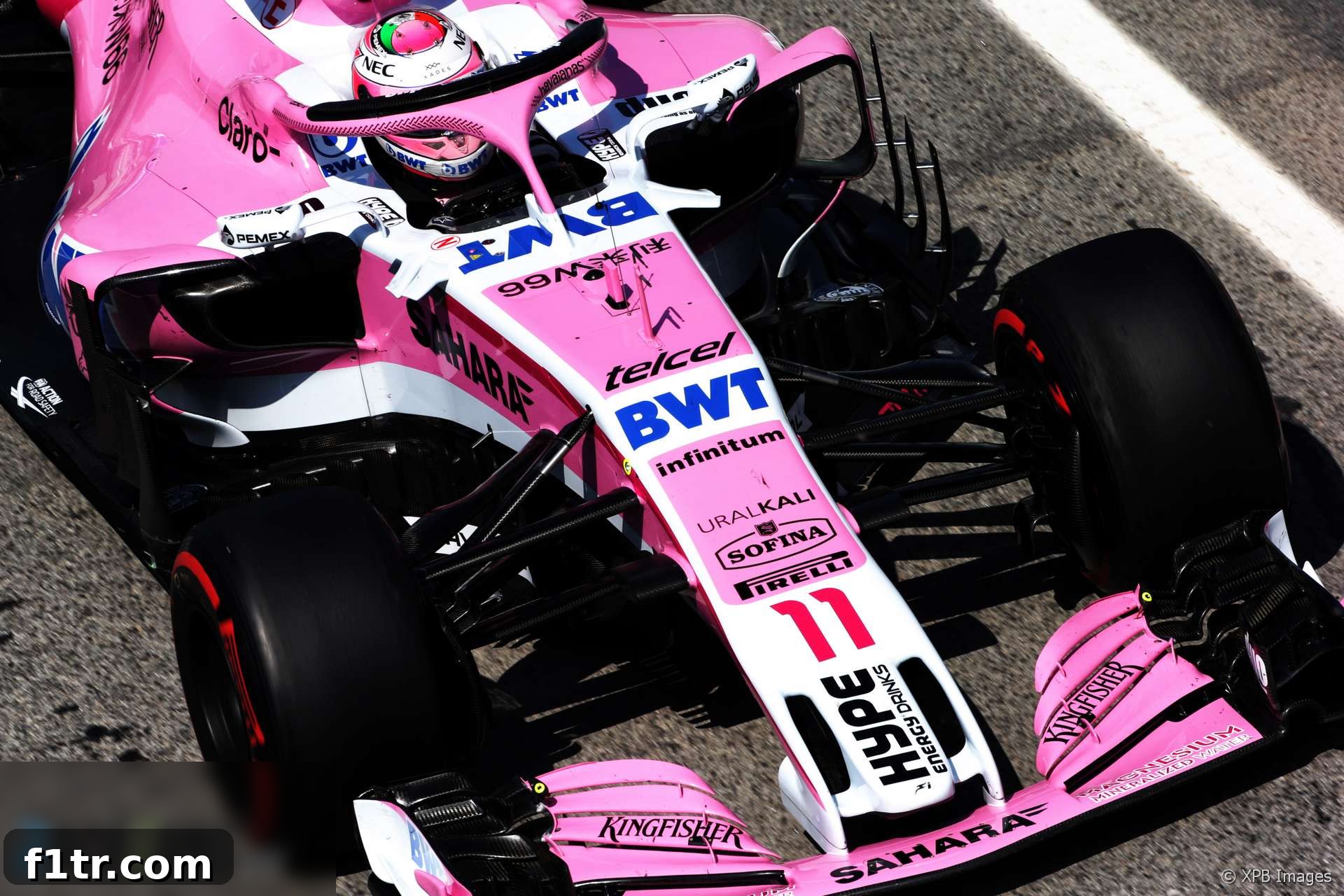
Force India Fined for Unsafe Pit Release: Unpacking the €5,000 Penalty and F1 Safety Protocols
In the high-stakes world of Formula 1, where milliseconds define success and failure, every aspect of a race weekend is scrutinized with immense precision. Pit stops, once a simple tire change, have evolved into a choreographed ballet of speed, skill, and cutting-edge technology. However, even with the most advanced systems and highly trained crews, critical errors can occur, underscoring the constant tension between performance and safety. One such incident involved the Force India Formula 1 team, which faced a €5,000 fine for an unsafe release of driver Sergio Perez’s car from the pits during a race, an event that highlighted the stringent safety regulations governing the sport.
The Incident: A Cross-Threaded Wheel Nut and Unseen Danger
The incident in question saw Sergio Perez’s car prematurely released from its pit box without one of its wheels being correctly fitted. While an immediate glance might have suggested all was well, a critical mechanical fault lay hidden: a cross-threaded wheel nut. This particular malfunction meant that although the wheel appeared to be securely clamped onto the car, providing a deceptive sense of stability, the nut was not properly fastened. This created a significant safety risk that only became apparent once Perez rejoined the track and began to accelerate at racing speeds.
The subtle nature of the issue played a crucial role in the stewards’ subsequent decision. Unlike obvious instances where a wheel is visibly loose or completely detached, the cross-threading made the defect almost imperceptible to the pit crew in the intense heat and pressure of the moment. This near-invisible fault underscores the immense challenges and intricate mechanics involved in a Formula 1 pit stop, where even the slightest miscalculation or mechanical anomaly can have profound implications for driver safety and race integrity.
FIA Investigation and Stewards’ Ruling: Fine, But No Grid Penalty
Following the incident, the car underwent a thorough inspection by the FIA’s technical delegate. This expert assessment confirmed the team’s explanation: the wheel nut had indeed been cross-threaded. The stewards, after reviewing the findings, acknowledged the unique circumstances. They concurred that despite the wheel appearing clamped to the car, the underlying issue was not immediately obvious to the team upon release. This distinction proved vital in their ruling.
The official statement from the stewards clarified their stance, stating they “determined that the car was released in an unsafe condition in breach of Article 28.13(b) [of the Sporting Regulations] as the wheel was not properly attached to the car when released.” This article specifically addresses the responsibility of teams to ensure a vehicle is safe before rejoining the track. However, the stewards went on to elaborate, noting, “Unusually, the wheel clamped to the car and it was not immediately apparent that the wheel was not fully fitted. The stewards had the technical delegate inspect the car, and his conclusion agreed with the team’s that although the wheel clamped, the wheel nut was cross-threaded.”
This critical nuance prevented Force India from receiving a more severe penalty, such as a grid place demotion for the subsequent race. The stewards’ decision reflects a pragmatic approach, differentiating between a clear, negligent unsafe release and one where the fault was genuinely difficult to detect instantaneously. While the team was still held accountable for the unsafe condition, the lack of immediate obviousness played a significant role in mitigating the severity of the sanction beyond a monetary fine.
Driver’s Decisive Action and Team’s Prompt Response
Credit was also deservedly given to Sergio Perez for his exemplary handling of a potentially dangerous situation. As soon as the issue became apparent to him – likely through unusual handling characteristics or feedback from the car – he acted promptly and safely to stop the vehicle. This quick thinking prevented what could have been a much more severe incident, highlighting the professionalism and training of F1 drivers who are constantly prepared for unexpected scenarios.
The stewards’ statement noted, “The driver stopped the car in a safe manner as soon as the above became apparent to him. And while there was some confusion on the radio, the team gave appropriate instructions as soon as they realised the issue, which was not apparent until just before turn nine.” This indicates that while there might have been a brief period of uncertainty over team radio as the issue unfolded, the Force India strategists and engineers quickly understood the gravity of the situation and guided Perez to safely park the car. This combination of an attentive driver and a responsive team significantly contributed to the stewards’ decision not to impose a grid penalty, emphasizing that all “appropriate measures were taken” once the problem was identified.
Understanding F1 Pit Stop Safety and Regulations
The Force India incident serves as a stark reminder of the paramount importance of safety in Formula 1 pit stops. Over the years, F1 has continually refined its regulations and introduced new technologies to minimize the risks associated with these high-speed operations. Unsafe releases have been a particular focus, given their potential to cause serious accidents not only for the driver involved but also for other cars and pit lane personnel.
Evolution of Pit Stop Safety Measures
Modern F1 pit stops are a marvel of engineering and human coordination. Teams employ sophisticated sensor systems that detect whether all wheels are correctly fitted and torqued before giving the green light for release. These systems often integrate with the car’s clutch and gearbox, preventing release if a wheel is not secure. While these technologies significantly reduce the chances of human error, as the Force India case showed, they are not entirely foolproof against specific mechanical failures like cross-threading which can mimic a secure fit.
Regulations such as Article 28.13(b) are in place precisely to ensure that teams bear ultimate responsibility for the safety of their cars. Penalties for unsafe releases can range from monetary fines to grid penalties, and in severe cases, even disqualification or suspension from races, depending on the circumstances, the degree of danger posed, and whether the car caused an accident. This tiered approach allows the FIA to apply sanctions proportionately to the severity and preventability of the infraction.
Notable Unsafe Release Incidents in F1 History
The Force India incident, while resulting in a fine, fortunately avoided the more catastrophic outcomes seen in other instances. One of the most severe recent examples occurred during the 2018 Bahrain Grand Prix, where a Ferrari mechanic suffered a broken leg after Kimi Räikkönen was released with a loose wheel, running over the mechanic’s leg. This tragic event led to even tighter scrutiny and discussions around pit stop automation and safety protocols across the entire paddock. Similarly, the 2018 Australian Grand Prix saw both Haas cars retire due to incorrectly fitted wheels after pit stops, resulting in substantial fines and investigations. These high-profile incidents highlight the unforgiving nature of F1 pit lanes and the constant need for vigilance from every team member involved.
The Balancing Act: Speed vs. Security
The pursuit of ever-faster pit stops has pushed the boundaries of human and mechanical capability to unprecedented levels. What once took tens of seconds now takes less than two seconds, a testament to incredible engineering and relentless practice. This relentless drive for efficiency is a critical component of race strategy, capable of winning or losing races on tight margins. However, this pursuit must always be balanced against the imperative of security. The Force India incident is a perfect illustration of this delicate equilibrium: the team’s mechanics, under immense pressure, likely executed the tire change with incredible speed, but a subtle mechanical fault slipped through the net.
The stewards’ careful deliberation in this case – fining the team but waiving a grid penalty – demonstrates the regulatory body’s attempt to apply justice fairly, taking into account the specifics of each situation. It reinforces that while ultimate responsibility lies with the team, the unique and often complex nature of mechanical failures, especially those difficult to detect instantly, can influence the severity of the sanctions applied. This approach ensures that penalties serve as a deterrent without unfairly punishing teams for errors that were genuinely unforeseeable in real-time.
Conclusion: A Continuous Commitment to Safety
The €5,000 fine levied against Force India for the unsafe release of Sergio Perez’s car due to a cross-threaded wheel nut serves as a powerful reminder of the unforgiving nature of Formula 1. It underscores that even in a sport defined by cutting-edge technology and peak human performance, unforeseen mechanical anomalies and human error can still occur with serious implications.
This incident, alongside others in recent memory, reinforces the FIA’s unwavering commitment to safety, ensuring that teams maintain the highest standards of diligence in every aspect of their operations, especially in the high-risk environment of the pit lane. While the pursuit of speed will always be at the heart of Formula 1, the safety of drivers, pit crew, and trackside personnel remains the sport’s paramount concern, continually driving advancements in regulations, technology, and operational protocols. The Force India case is a testament to the fact that vigilance, precise execution, and robust safety measures are non-negotiable necessities in the relentless quest for Grand Prix glory.
Related Articles: Exploring the 2018 F1 Season and Beyond
Dive deeper into the context of the 2018 F1 season and related developments in Formula 1 with these insightful articles:
- F1 feared “death knell” for Drive to Survive after Ferrari and Mercedes snub
- McLaren staff told us we were “totally crazy” to take Honda engines in 2018 – Tost
- ‘It doesn’t matter if we start last’: How Red Bull’s junior team aided Honda’s leap forward
- Honda’s jet division helped F1 engineers solve power unit problem
- McLaren Racing losses rise after Honda split
Browse all 2018 F1 season articles