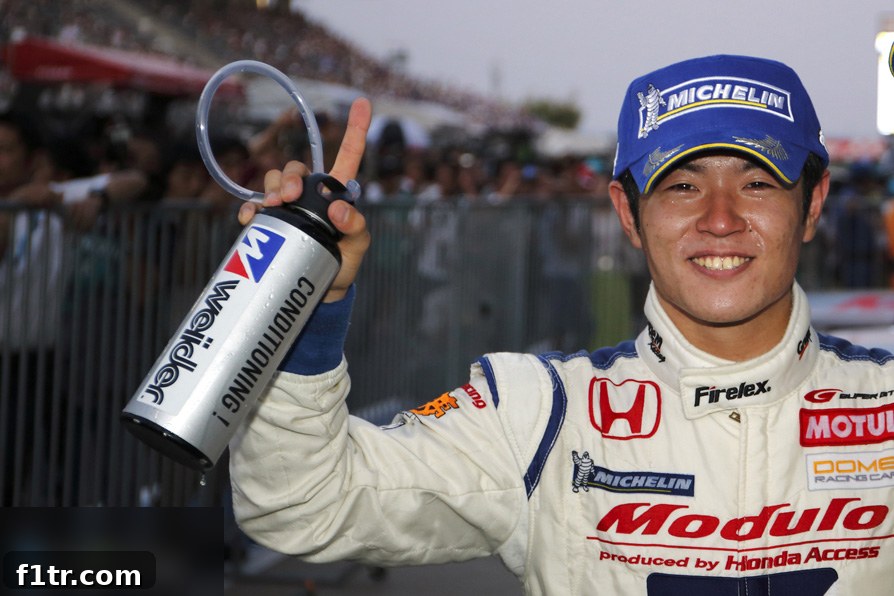
In a significant moment for Japanese motorsport and a highlight for the 2019 Formula 1 season, two-time Super Formula champion Naoki Yamamoto made his highly anticipated Formula 1 debut with Scuderia Toro Rosso during the first practice session of the Japanese Grand Prix weekend at Suzuka. This opportunity, long-awaited by fans and a testament to Yamamoto’s illustrious career in his home country, saw the seasoned driver take the wheel of a contemporary F1 car, replacing regular driver Pierre Gasly. The occasion marked a rare chance for a Japanese talent, supported by Honda, to showcase their prowess on the global motorsport stage, particularly at the iconic Suzuka Circuit, a track deeply woven into the fabric of Formula 1 history and Japanese racing heritage.
Naoki Yamamoto: A Champion’s Journey to Formula 1
At 31 years old, Naoki Yamamoto is not a typical rookie stepping into Formula 1. His career in Japanese motorsport has been nothing short of stellar, marked by multiple championship victories that underscore his exceptional talent and consistency. Yamamoto has cemented his legacy as one of Japan’s most successful racing drivers, a reputation built on relentless determination and strategic brilliance.
Dominance in Super Formula and Super GT
Yamamoto’s most prominent achievements come from the highly competitive Super Formula series, often regarded as one of the fastest single-seater championships outside of Formula 1. He first claimed the Super Formula title in 2013, a remarkable season where he tied on points with the formidable André Lotterer, ultimately securing the championship by virtue of count-back. This victory showcased his ability to compete and triumph against internationally acclaimed drivers.
His second Super Formula championship came in 2018, a season where he once again demonstrated his superior race craft and composure under pressure. This time, he edged out then-rising star Nick Cassidy by a mere single point in a thrilling championship decider. Such narrow victories against top-tier talent highlight Yamamoto’s mental fortitude and ability to perform when it matters most.
Beyond single-seaters, Yamamoto has also tasted success in endurance racing. He shared championship honours in the prestigious Super GT series, partnering with none other than the 2009 Formula 1 World Champion, Jenson Button. Their collaboration proved potent, with Button himself showering praise on Yamamoto, advocating for his deserved opportunity in Formula 1. Button remarked on Yamamoto’s exceptional speed, technical feedback, and race intelligence, stating that he possesses all the attributes of a top-tier driver and genuinely merited a chance to compete at the pinnacle of motorsport.
Honda’s Vision: Nurturing Japanese Talent for F1
Naoki Yamamoto’s long-awaited Formula 1 opportunity was largely facilitated by Honda, a manufacturer with a rich history in both Formula 1 and Japanese motorsport, and a key partner in Yamamoto’s numerous successes in Super Formula and Super GT. Honda’s unwavering support for Japanese talent and its strategic alliance with teams like Toro Rosso (now AlphaTauri) and Red Bull Racing have created a vital pathway for promising drivers.
Katsuhide Moriyama, Honda’s Chief Officer for Brand and Communications, expressed profound satisfaction regarding Yamamoto’s debut. “We are pleased that Japanese fans will now get the opportunity to see Yamamoto, a Honda-supported Japanese driver at the wheel of a current F1 car at our own Suzuka circuit, as part of the Japanese Grand Prix weekend,” Moriyama stated. He extended gratitude to Toro Rosso and Red Bull for providing such a significant chance, emphasizing Honda’s commitment to developing racing talent.
Moriyama’s statement underscored Honda’s broader ambition: to inspire a new generation of Japanese drivers. “We hope Naoki makes the most of this opportunity, that he learns from it and that it helps him as a racing driver. We also hope that seeing Yamamoto on track will serve as an inspiration to young Japanese drivers, so that in the near future, we can once again have Japanese drivers competing in Formula 1.” This reflects Honda’s long-term strategy of fostering a strong grassroots motorsport culture in Japan, aiming to cultivate future champions who can represent their nation on the global stage, much like past Japanese F1 figures such as Takuma Sato, Kamui Kobayashi, and Yuki Tsunoda.
The Iconic Suzuka Circuit: A Home Debut Like No Other
Making an F1 debut is always a monumental occasion, but doing so at the Suzuka Circuit, especially as a Japanese driver, adds an unparalleled layer of significance and emotion. Suzuka is not just another race track; it is an iconic venue, revered by drivers and fans alike for its unique figure-of-eight layout, high-speed corners, and demanding technical challenges. From the legendary Esses to the thrilling 130R and the final chicane, every section of Suzuka tests a driver’s skill, courage, and precision.
For Naoki Yamamoto, Suzuka holds a particularly special place. It is the circuit where he achieved many of his domestic triumphs, and it is also the place where his love affair with Formula 1 began. “It will be a special moment and I’m glad I will get to share it with the fans at this amazing race track, where I first watched Formula 1 cars in action 27 years ago,” Yamamoto shared, highlighting a deeply personal connection to the venue. The roar of the home crowd, the familiar surroundings, and the sense of fulfilling a lifelong dream at the very place where it all started undoubtedly amplify the emotional weight of this debut.
Preparation and Goals: Making the Most of an F1 Opportunity
Yamamoto’s path to the F1 cockpit was not merely a matter of being handed an opportunity; it was the result of diligent preparation and dedicated work behind the scenes. He revealed that he had spent considerable time integrating with the Toro Rosso team at several Grand Prix weekends, immersing himself in their operations and learning the intricate workings of a Formula 1 outfit. This proactive approach allowed him to familiarize himself with team procedures, engineering philosophies, and the intense environment of an F1 paddock.
Furthermore, Yamamoto underwent rigorous training in the Red Bull simulator, a crucial tool for modern F1 drivers. Simulator sessions are invaluable for understanding car dynamics, track characteristics, and for practicing various scenarios without the risks of real-world testing. This preparation ensured that he would not be entirely new to the feel and responsiveness of a contemporary F1 car, mitigating some of the learning curve for his actual track debut.
His main objective for the FP1 session was clear and professional: “My main aim in FP1 will be to do a good job for the team, gathering data and information which will be useful for them over the weekend,” he explained. In Formula 1, Friday practice sessions are vital for engineers to collect telemetry, test different setups, and refine strategies. A new driver’s primary role is to provide consistent feedback and accumulate reliable data, rather than chase ultimate lap times. Yamamoto’s focus on data gathering underscored his commitment to contributing meaningfully to the team’s efforts.
Beyond his professional duties, Yamamoto also acknowledged the personal significance of the moment. “On a personal note, I want to enjoy the experience of driving an F1 car as much as possible and I will be trying my very best to get the most out of it,” he added. This blend of professional responsibility and personal ambition perfectly captured the spirit of his debut. It was an opportunity not just to perform a task for the team, but also to savor a dream come true, driving a Formula 1 car at his home Grand Prix.
Naoki Yamamoto’s F1 debut at Suzuka was more than just a single practice session; it was a powerful narrative of a champion’s perseverance, a manufacturer’s strategic vision, and the enduring passion for motorsport in Japan. His presence on track, supported by Honda and cheered on by his home crowd, served as a beacon of inspiration for aspiring talents, reaffirming the global dream of reaching Formula 1.
2019 F1 season
- Crying in the Melbourne car park at 2019 grand prix was my career low – Ocon
- McLaren Racing reports reduced £71 million loss in 2019
- Kvyat: Hockenheim podium last year was “my biggest achievement” so far
- How the FIA’s new encrypted fuel flow meter targets Ferrari’s suspected ‘aliasing’ trick
- “He smashed my office door”: 23 must-see moments from ‘Drive to Survive’ season two
Browse all 2019 F1 season articles