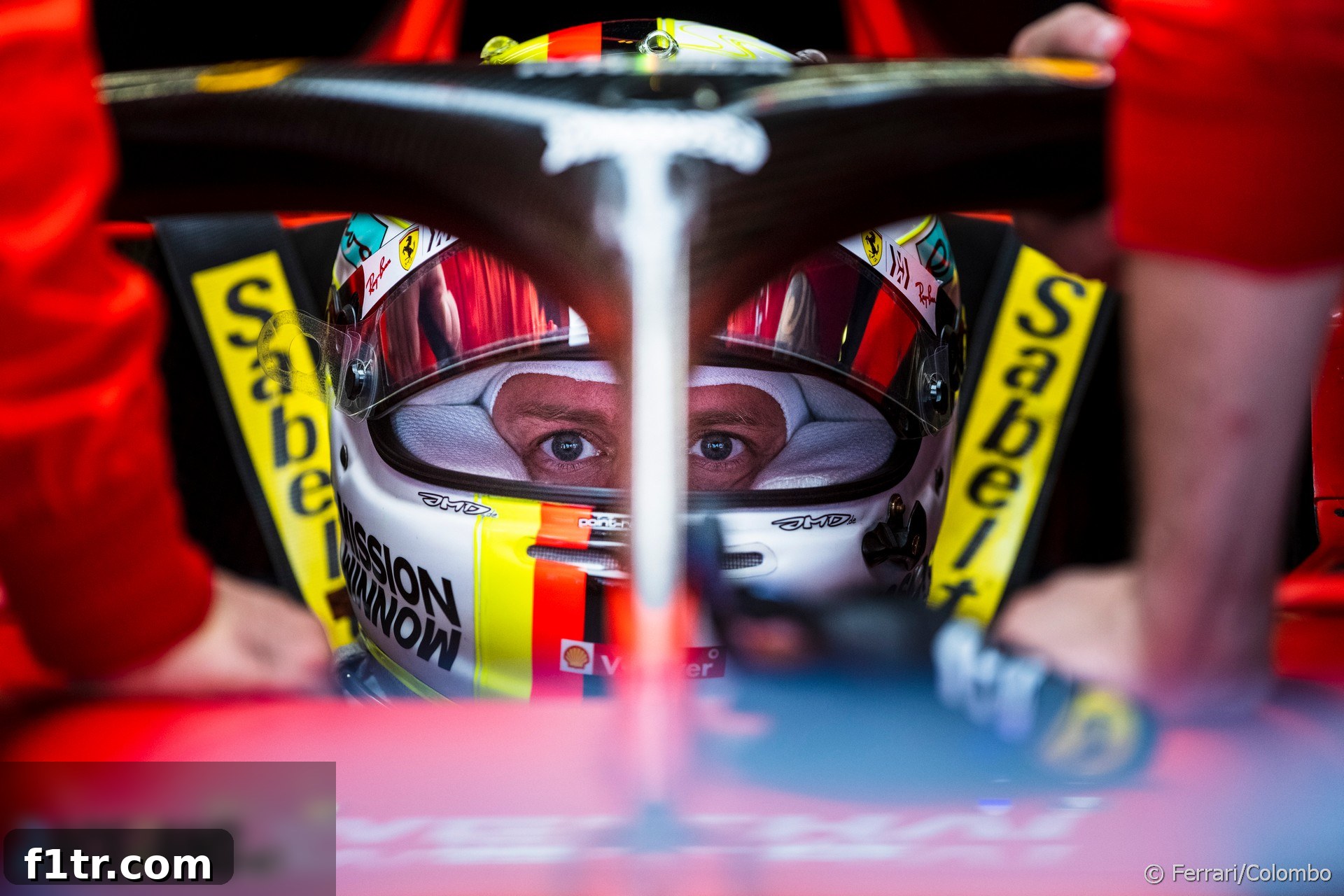
Ferrari’s Daunting Monaco Challenge: Vettel Voices Concerns Over Low-Speed Corner Performance
Following a disheartening performance at the Spanish Grand Prix, Scuderia Ferrari faces an uphill battle as the Formula 1 circus heads to the iconic streets of Monaco. Sebastian Vettel, the team’s four-time world champion, has openly voiced his apprehension, suggesting that the team’s struggles with low-speed cornering—a persistent issue for their SF90 chassis—will be acutely amplified on the notoriously tight and twisty Circuit de Monaco. His candid comments cast a shadow of doubt over Ferrari’s ability to close the formidable gap to rivals Mercedes, who have dominated the early stages of the 2019 season with an impressive run of one-two finishes.
The Spanish Grand Prix: A Revealing Indicator of Ferrari’s Weakness
The Circuit de Catalunya, with its diverse range of corners, often serves as a crucial benchmark for a car’s overall performance. From sweeping high-speed bends to technical low-speed sections, it demands a well-rounded package. For Ferrari, the Spanish Grand Prix laid bare a critical deficiency: a distinct lack of pace in slower sections. This issue, which has plagued the SF90 throughout the season, becomes particularly alarming when considering the unique characteristics of the upcoming Monaco Grand Prix.
Speaking candidly after the Barcelona race, Vettel pinpointed this weakness as a major concern heading into the unique challenges of the Principality. “It will be difficult for us because we are losing time in low-speed corners,” Vettel stated, his assessment reflecting the team’s ongoing struggle. “We are struggling with those type of corners to put enough grip into the tyre, and Monaco is all about that.” This admission underscores a fundamental problem with the SF90’s aerodynamic and mechanical package, which appears to generate insufficient downforce and mechanical grip at lower speeds. This prevents drivers from extracting maximum performance from the Pirelli tires, leading to understeer or oversteer and ultimately, slower lap times.
Performance Disparity in Barcelona’s Critical Final Sector
The final sector of the Circuit de Catalunya is predominantly composed of slow-speed chicanes and tight corners, making it an excellent barometer for a car’s performance in environments akin to Monaco. The lap times from this crucial sector painted a stark picture of the competitive hierarchy. Mercedes, showcasing their W10 car’s exceptional balance and low-speed prowess, recorded the fastest time through this section at an impressive 25.878 seconds. This demonstrated their superior ability to carry speed through the twisty parts of the track and generate consistent tire grip.
Red Bull Racing, known for their strong chassis and aggressive aerodynamic philosophy, particularly in tight circuits, also performed commendably. As last year’s Monaco Grand Prix winners with Daniel Ricciardo, their car concept often excels where mechanical grip is paramount. They were the next-quickest in Sector 3, clocking in at 26.322 seconds, a solid performance that places them firmly in contention for Monaco.
Ferrari, by contrast, lagged significantly, posting a best time of 26.513 seconds—a substantial six-tenths of a second adrift of Mercedes and nearly two-tenths behind Red Bull. This deficit is not merely a number; it represents a significant handling imbalance and a struggle for the drivers to inspire confidence and push the limits through these critical parts of the track. Such a performance gap in low-speed sections is a worrying sign for a race like Monaco, where the entire circuit is essentially a magnified version of Barcelona’s final sector, demanding continuous precision and maximum grip at slower speeds.
Ferrari’s Unfulfilled Promise: A Season of Setup Struggles
The 2019 season began with high expectations for Ferrari. Following a stellar pre-season testing performance where their car demonstrated impressive straight-line speed and overall pace, many pundits and fans anticipated a substantial speed advantage for the Scuderia. The SF90 looked like a genuine challenger, capable of taking the fight to Mercedes.
However, the reality of the racing season has been a stark contrast to those initial hopes. The team has consistently struggled to translate its raw potential into consistent qualifying and race pace across various track characteristics. Bahrain stands as the notable exception, where Charles Leclerc nearly secured a dominant victory before engine issues intervened, showcasing the car’s potential when it hits its sweet spot.
The core of Ferrari’s challenge appears to lie in finding an optimal car setup that unlocks the SF90’s performance across different track characteristics and varying conditions. While the car has demonstrated flashes of brilliance, particularly on high-speed straights where its power unit can shine, it has frequently lacked the crucial balance and tire management capabilities required for sustained performance. This inconsistency has left both Sebastian Vettel and Charles Leclerc grappling with a tricky car, often forcing them to compromise between outright speed and tire degradation, or between qualifying pace and race endurance. The inability to consistently put enough grip into the tires, as Vettel highlighted, points to deeper issues with how the car interacts with its aerodynamics and suspension at different speeds, hindering its cornering performance and overall agility.
Monaco: Where Driver Skill Meets Unpredictable Outcomes
The Monaco Grand Prix stands apart from every other race on the Formula 1 calendar. Its unique blend of history, glamour, and extreme technical demands makes it a true test of man and machine. The circuit, carved through the narrow streets of the Principality, offers no margin for error. High-speed precision through the famous tunnel, followed by the tightest hairpin on the calendar, and relentless corner sequences, demand absolute focus, bravery, and finesse from the drivers. Unlike modern purpose-built circuits with expansive run-off areas, Monaco’s unforgiving barriers punish even the slightest misjudgment, often ending a driver’s race.
It is precisely this distinct character that gives Sebastian Vettel a glimmer of hope. In Monaco, the driver’s contribution to the team’s overall performance can be significantly amplified, sometimes outweighing the inherent technical advantages or disadvantages of the machinery. “It’s Monaco, so the driver can make a difference,” Vettel affirmed. This sentiment is widely shared among drivers and experts alike. A driver’s ability to ride the curbs aggressively without unsettling the car, to consistently hit apexes within millimeters of the barriers, and to maintain an unwavering level of concentration for nearly two hours can shave crucial tenths off a lap time. The mental and physical demands are immense, and a confident, in-tune driver can indeed elevate the car’s performance beyond its intrinsic capabilities, potentially masking some of the SF90’s deficiencies.
Moreover, the setup for Monaco is critically important. It requires maximum downforce, achieved through specific wing configurations, and a soft, compliant suspension setup to navigate the bumps and undulations of the street circuit. The smallest adjustment can have a profound impact on handling and tire performance. Vettel’s comment, “You need to have the right set-up and everything so there are a lot of things that in Monaco could be mixed,” highlights the delicate balance required. The unpredictable nature of a street circuit race, with a high probability of safety cars, red flags, and varying track conditions (such as sudden rain showers), further adds to the “mixed” potential. These external elements can often level the playing field, creating opportunities for teams and drivers who might otherwise struggle on more conventional, high-speed tracks. Strategic calls in Monaco are also paramount, with track position being king, making qualifying crucial and pit stop timings critical.
The Competitive Landscape for Monaco: Mercedes vs. Red Bull vs. Ferrari
Looking ahead to Monaco, the competitive picture remains fascinating, despite Mercedes’ seemingly unshakeable dominance. While the W10 has proven to be an all-rounder, excelling in almost every condition from high-speed sweeps to technical sectors, Monaco presents a different challenge that might slightly reduce their outright advantage. Their consistency and robust low-speed performance from Spain suggest they will be strong contenders, but the unique, stop-start nature of a street circuit always brings an element of uncertainty. Their car’s ability to generate immense downforce through various corner types will undoubtedly be an asset.
Red Bull Racing, however, stands out as a significant threat. Their car, particularly in the hands of Max Verstappen, has consistently shown exceptional performance in tight, twisty circuits and under heavy braking. Daniel Ricciardo’s masterful victory in Monaco in 2018 for Red Bull further reinforces their prowess on this particular track layout. Their strong showing in Barcelona’s final sector, where they were comfortably ahead of Ferrari, is a direct indicator that their chassis, likely boasting superior mechanical grip and aerodynamic efficiency in slow corners, could be perfectly suited to the Principality. This makes them a dark horse, perhaps even a favorite, to challenge Mercedes for victory, capitalizing on the circuit’s demands.
For Ferrari, the challenge is clear: overcome the SF90’s inherent low-speed cornering deficiencies. While the technical struggle is undeniable, the “driver effect” remains their most significant hope. Both Sebastian Vettel and Charles Leclerc are immensely talented and capable of producing moments of magic behind the wheel. If Ferrari can find a setup compromise that provides even a modicum of confidence and grip for their drivers, then the sheer skill and determination of Vettel and Leclerc might be enough to push them closer to the front. However, without a fundamental improvement in the car’s behavior through the slow sections, even the most heroic driving efforts may not be enough to bridge the gap to their formidable rivals.
Conclusion: A High-Stakes Weekend Awaits Ferrari
The Monaco Grand Prix promises to be a high-stakes affair for Ferrari. Sebastian Vettel’s pragmatic assessment highlights the deep-seated issues that have plagued their 2019 campaign, particularly the critical lack of low-speed performance. This deficiency, vividly illustrated by their sector times in Spain, is directly antithetical to the demands of the Monaco circuit, where mechanical grip and slow-speed agility are paramount.
While the romantic notion of Monaco allowing the driver to make a significant difference offers a sliver of hope, the data from Spain and the team’s consistent struggles with car setup suggest a challenging weekend lies ahead. To truly contend for victory or a strong podium finish, Ferrari will need to defy their recent form and unearth a setup solution that has eluded them thus far—one that allows their drivers to extract maximum performance from the tires in the crucial slow corners. The unpredictable nature of Monaco could indeed “mix things up,” with safety cars and strategic gambles potentially altering the race’s outcome, but relying solely on external factors is a precarious strategy for a team with championship aspirations. The pressure is mounting on the Scuderia to demonstrate progress, and the unforgiving streets of Monaco will provide a definitive stage for their ongoing quest to understand and tame the SF90.
Stay Connected with RaceFans for the Latest F1 News and Updates:
- Join RaceFans on Facebook
- Follow RaceFans on Twitter
- Get daily email updates from RaceFans
Explore More from the 2019 F1 Season:
- Crying in the Melbourne car park at 2019 grand prix was my career low – Ocon
- McLaren Racing reports reduced £71 million loss in 2019
- Kvyat: Hockenheim podium last year was “my biggest achievement” so far
- How the FIA’s new encrypted fuel flow meter targets Ferrari’s suspected ‘aliasing’ trick
- “He smashed my office door”: 23 must-see moments from ‘Drive to Survive’ season two
Browse all 2019 F1 season articles