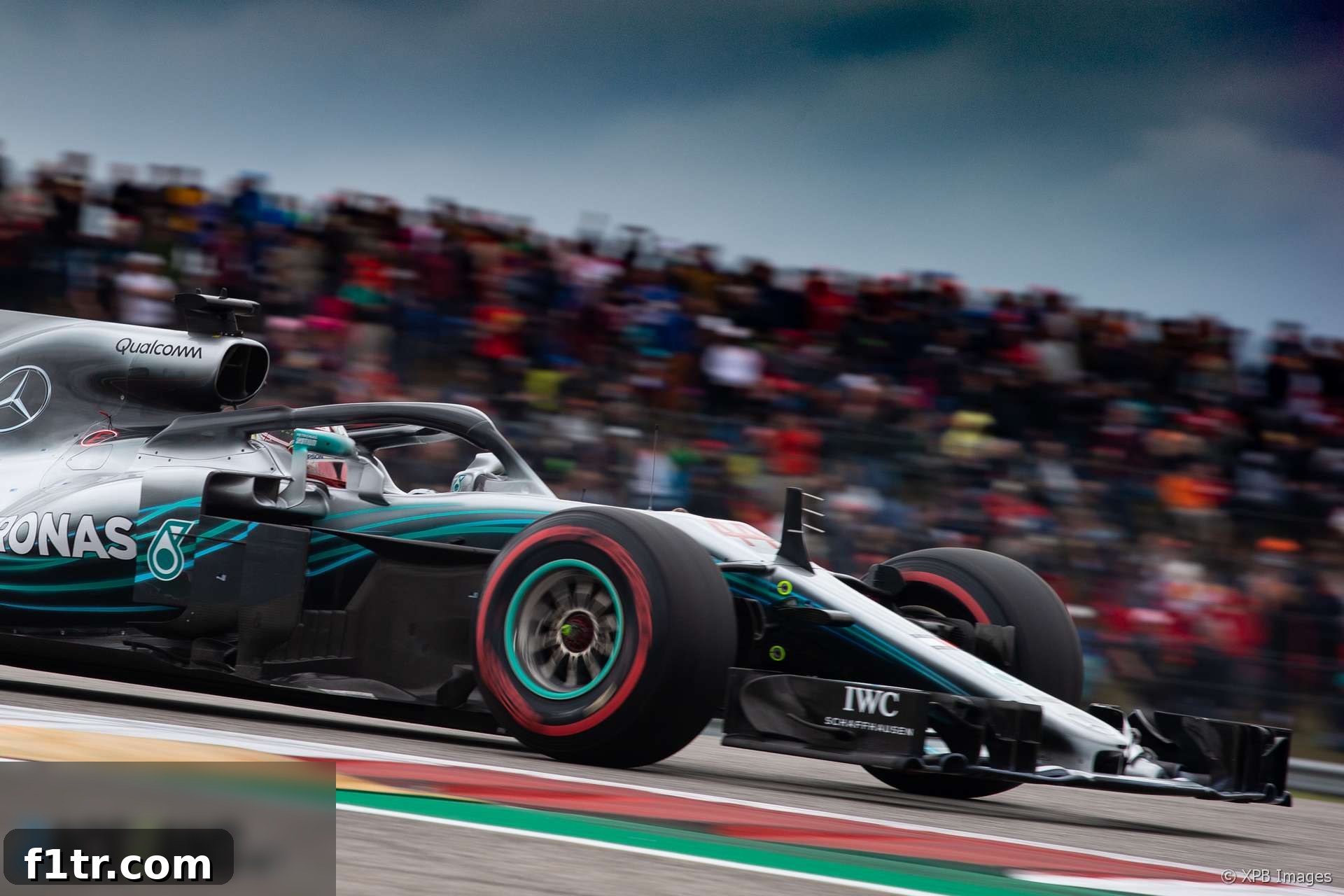
Mercedes Prepares for Strategic Intervention in Hamilton’s Championship Pursuit at US Grand Prix
As the tension mounts ahead of today’s United States Grand Prix, Mercedes-AMG Petronas Motorsport is reportedly ready to implement controversial team orders to secure the 2018 Formula 1 World Championship for Lewis Hamilton. The high-stakes race at the Circuit of the Americas (COTA) in Austin, Texas, is not just another Grand Prix; it represents a pivotal moment in Hamilton’s dominant season, with the British driver on the cusp of his fifth world title.
The strategic discussions within the Mercedes camp highlight the relentless pressure of championship contention, where individual aspirations often yield to team objectives. With Hamilton holding a significant points lead over rival Sebastian Vettel, every decision, every lap, and every position on the track becomes critical.
The Crucial US Grand Prix Showdown
The United States Grand Prix has historically been a challenging yet rewarding event on the F1 calendar, and the 2018 edition is no exception. The undulating track, with its mix of high-speed sections and technical corners, demands precision from both car and driver. For Mercedes, the focus extends beyond merely winning the race; it’s about optimizing the outcome to seal the championship as early as possible. This approach, while strategically sound from a team perspective, often places an immense burden on the drivers, particularly the second driver whose role might shift from outright competition to strategic support.
Team Principal Toto Wolff has openly acknowledged the possibility of intervening, suggesting that Mercedes will meticulously evaluate the unfolding race situation. “The objective for Valtteri Bottas is really to go for it at the beginning – he hasn’t got a lot to lose – and show us a strong race,” Wolff stated, outlining Bottas’s initial directive. However, he quickly added a caveat: “If at the end we find ourselves in a situation where we again need to evaluate the points we’ll do that. But I don’t want to commit to saying now whether or what we will be doing.” This calculated ambiguity underscores the fluidity of race strategies and the team’s commitment to maximizing Hamilton’s championship prospects.
Team Orders: A Recurring Dilemma for Mercedes
The concept of team orders is a perennial hot topic in Formula 1, often sparking fierce debate among fans, pundits, and even within the teams themselves. For Mercedes, this isn’t uncharted territory. The echoes of the Russian Grand Prix earlier in the 2018 season are still fresh, where Valtteri Bottas, after securing pole position and leading much of the race, was instructed to cede his position to Lewis Hamilton. That controversial decision ultimately secured a vital win for Hamilton and extended his lead in the championship standings.
The Echoes of Sochi: A Controversial Precedent
The Sochi incident served as a stark reminder of the ruthless pragmatism that underpins championship campaigns. While Hamilton publicly expressed unease about the manner of his victory, understanding the team’s rationale for prioritizing the drivers’ championship was clear. This precedent sets the stage for Austin. If Mercedes finds itself in a similar scenario at COTA, with Bottas leading or running strongly ahead of Hamilton, and with the championship outcome hanging in the balance, a repeat of the Sochi strategy becomes a very real possibility. Such a move would aim to place Hamilton in the best position to secure the race victory, and with it, potentially the championship title.
The underlying principle is simple: securing the Constructors’ and Drivers’ Championships is the ultimate goal, and individual race wins, while celebrated, can become secondary when the bigger picture is at stake. This pragmatic approach, while sometimes unpopular, is a common thread throughout F1 history, especially during intense championship battles. The decision to invoke team orders is never taken lightly, considering the morale of the affected driver and the potential public backlash, but the allure of a world title often outweighs these concerns.
Toto Wolff’s Calculated Ambiguity
Toto Wolff’s comments reveal a nuanced understanding of the delicate balance between racing integrity and strategic necessity. His unwillingness to commit definitively to team orders pre-race is a shrewd move, keeping both his drivers and rival teams guessing. It allows Mercedes the flexibility to react to the dynamics of the Grand Prix without being bound by a prior declaration. This strategic flexibility is paramount in Formula 1, where unexpected events—safety cars, weather changes, or rival performance—can drastically alter race outcomes.
Wolff also addressed the external narrative surrounding Hamilton’s impending championship, cautioning against premature celebrations. “Since a few days you guys have been talking us up: This is almost done, he has a hand on the trophy – you either have the trophy in your hands or you don’t. And we don’t,” he remarked. This statement serves as a reminder that in motorsport, nothing is guaranteed until the final flag drops. Despite Hamilton’s healthy lead, the potential for unforeseen circumstances or a resurgent rival always looms. “I know from the points we are looking solid but everything can happen in the sport. Ferrari has come back strong, it’s what we had expected, and that’s why I’d like to keep all options open for tomorrow.”
Valtteri Bottas: Ambition Versus Team Loyalty
For Valtteri Bottas, the United States Grand Prix presents a complex challenge. As a fiercely competitive driver, his primary instinct is to win. Yet, as a Mercedes driver, he is also an integral part of a team whose overarching goal is a championship double. His season, while marked by strong performances, has also seen him play a crucial support role to Hamilton, particularly exemplified by the Sochi incident. Navigating this duality—personal ambition versus team loyalty—is one of the toughest aspects of being a second driver in a championship-contending team.
Bottas’s Stance: “No Plans to Slow Anyone Down”
Despite the speculation, Bottas himself has expressed his determination to race his own race. “I think my job tomorrow is to try and attack, try and progress in the race and that means at least getting by Kimi [Raikkonen],” Bottas stated, referring to the Ferrari driver starting ahead of him. His focus remains on his individual performance and contributing to the team’s points tally in the most straightforward way possible. “For us again the goal is to gather maximum points we can as a team. There’s no plans of me trying to slow down anyone. I’m just trying to go for it and the best result there is possible to get.”
This statement reflects a driver’s natural competitive spirit. Bottas wants to prove his capabilities, not just as a team player, but as a race winner. However, the ultimate decision rests with the team principal, and Bottas, as a professional, would undoubtedly follow instructions if they were issued, even if it goes against his personal racing desires. The psychological toll of such a role, particularly when a driver feels capable of winning, can be significant.
Ferrari’s Resurgence: A Catalyst for Caution
A significant factor influencing Mercedes’ cautious approach is the renewed performance from Ferrari at the Austin track. Wolff explicitly mentioned this, highlighting that Ferrari’s improved pace underscores why Mercedes must remain vigilant and prepared for any eventuality. Ferrari’s resurgence adds another layer of complexity to the race, potentially splitting Mercedes’ strategy between attacking for victory and defending against a strong rival.
Sebastian Vettel, starting further down the grid due to a penalty, still represents a formidable threat. His ability to charge through the field, combined with Ferrari’s improved car, means that every point Vettel scores reduces Hamilton’s championship advantage. This dynamic intensifies the need for Mercedes to manage their drivers’ positions meticulously, ensuring Hamilton is always in a superior scoring position relative to his championship rival.
The Championship Stakes: Why Every Point Matters
For Lewis Hamilton, the United States Grand Prix offers the opportunity to clinch his fifth world title, an achievement that would place him among the sport’s all-time greats. To do so, he needs to outscore Sebastian Vettel by a specific margin. This mathematical equation is at the heart of Mercedes’ strategic considerations. A race victory for Hamilton at COTA would almost certainly seal the championship, provided Vettel doesn’t finish in certain high-scoring positions.
The pressure on Hamilton is immense, not just to perform flawlessly, but also to remain calm and focused amidst the swirling speculation about team orders. His ability to deliver under pressure has been a hallmark of his career, and this race will be another test of that resolve. For Mercedes, securing the title in Austin would be a significant milestone, allowing them to shift focus to the Constructors’ Championship in the remaining races and relieving some of the pressure on the entire team.
The F1 Landscape: Navigating Ethics and Victory
The conversation around team orders in F1 inevitably touches upon the ethical dimensions of the sport. While some argue that it undermines the purity of racing, others contend it’s a legitimate tool in a team sport where the ultimate prize is the championship. F1 has seen periods where team orders were outright banned, and times when they were permitted, reflecting a continuous debate within the sport’s governing bodies and fanbase.
Mercedes’ willingness to consider such a strategy is not unique but rather a reflection of the cutthroat nature of elite motorsport. Every team strives for victory, and every available legal tool is considered to achieve it. The decision ultimately lies with the team, weighing the short-term gains against potential long-term impacts on driver morale and public perception.
Looking Ahead: Race Day Dynamics at COTA
As race day dawns at the Circuit of the Americas, all eyes will be on the Mercedes pit wall and the interactions between Hamilton and Bottas. The United States Grand Prix promises to be a captivating spectacle, not just for the on-track action but also for the underlying strategic battles. Whether Mercedes ultimately resorts to team orders or if Hamilton secures the championship on pure pace, the outcome will undoubtedly be a defining moment in the 2018 Formula 1 season. The intricate dance of speed, strategy, and championship ambition will unfold across 56 laps, with millions of fans watching to see if Lewis Hamilton can claim his rightful place in history.
2018 F1 Season Highlights
- F1 feared “death knell” for Drive to Survive after Ferrari and Mercedes snub
- McLaren staff told us we were “totally crazy” to take Honda engines in 2018 – Tost
- ‘It doesn’t matter if we start last’: How Red Bull’s junior team aided Honda’s leap forward
- Honda’s jet division helped F1 engineers solve power unit problem
- McLaren Racing losses rise after Honda split
Explore More from the 2018 F1 Season