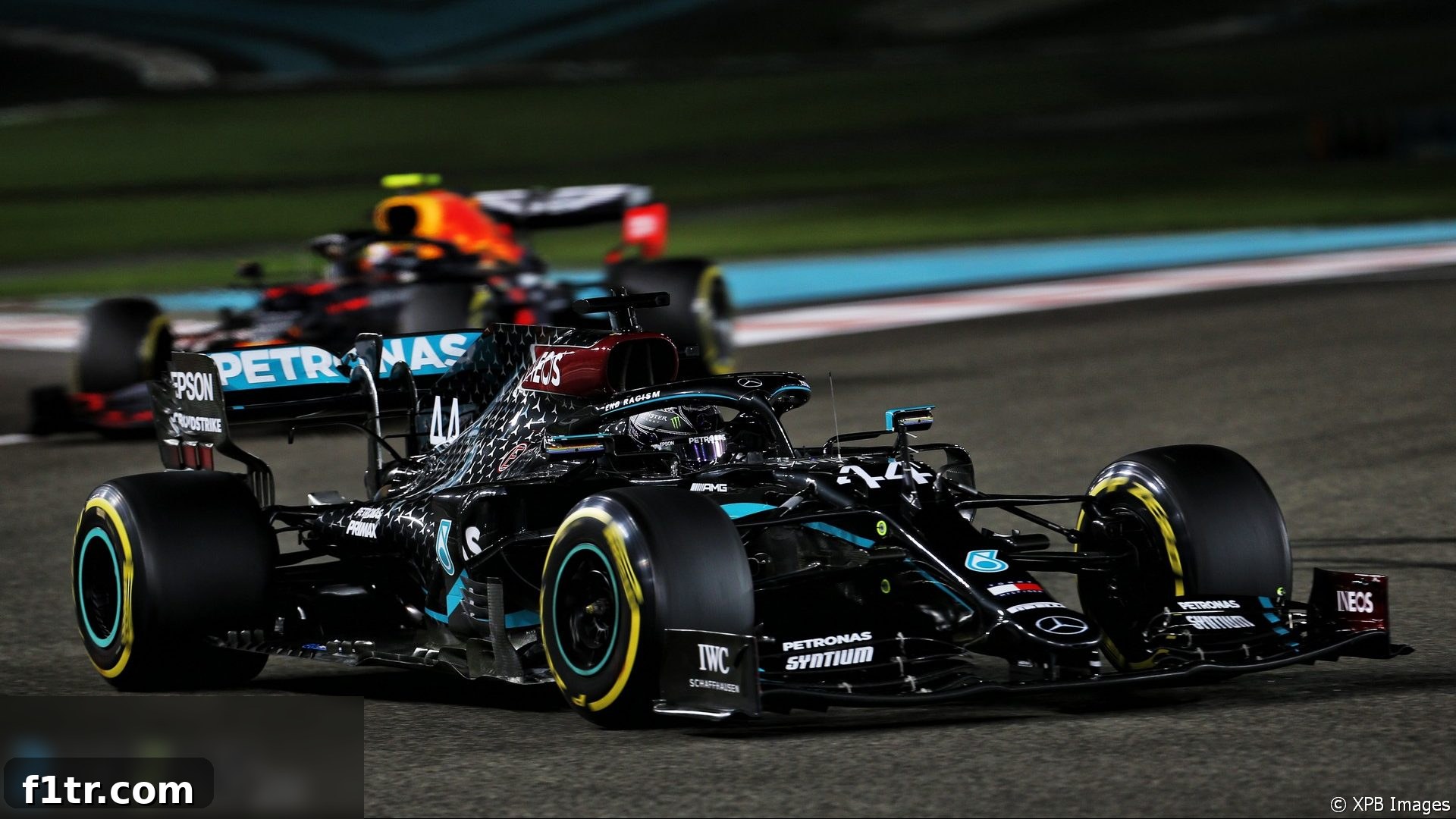
The final race weekend of the 2020 Formula 1 season at Yas Marina saw Mercedes continue their formidable pace, yet not without experiencing their share of challenges on the opening day. As the paddock descended upon Abu Dhabi, memories of the previous weekend’s Sakhir Grand Prix, and Mercedes’ rare double-stack pit stop blunder, were fresh in mind. However, the return of seven-time world champion Lewis Hamilton was meant to signal a fresh start, putting that crushing defeat firmly in the rearview mirror. In theory, at least, Hamilton’s late arrival and subsequent re-integration with his car presented a few unexpected hurdles.
Advert | Become a Supporter & go ad-free
Having been sidelined by COVID-19 and replaced by George Russell in the Thursday media sessions, Lewis Hamilton’s return to the cockpit of his Mercedes W11 wasn’t entirely seamless. It was akin to the common experience of driving your car after someone else has used it – everything felt slightly out of sync, not quite tailored to his precise preferences. His initial practice session was almost immediately hampered by a persistent braking issue, where pressure was being applied by the discs even when his foot wasn’t on the pedal. This mechanical anomaly led to a significant loss of track time, with engineers working diligently in the garage for 40 minutes to resolve the problem, disrupting his crucial acclimatization period.
Further complications arose during the second practice session. Hamilton was observed changing steering wheels on multiple occasions, a move that Mercedes confirmed was part of their scheduled test plans rather than a direct response to a malfunction. However, a more pressing issue emerged after a red flag period, when he lost all gears while attempting to exit the pit lane. Reflecting on his day, Hamilton acknowledged the need to recalibrate the car’s base setup to better suit his driving style. Despite the setbacks, he expressed optimism that his team would work through the night to fine-tune the W11, ensuring it was dialled back into his formidable comfort zone for the crucial qualifying and race sessions ahead.
While Mercedes contended with Hamilton’s initial struggles, other teams also faced their own reliability concerns on Friday. Daniel Ricciardo experienced a power unit failure, George Russell encountered an MGU-K glitch, and Kimi Raikkonen’s car dramatically erupted into flames, prompting a red flag. These incidents, though attention-grabbing, are less likely to persist into the critical parts of the race weekend. This is because many drivers traditionally utilize ‘Friday power units’ – assemblies of older, higher-mileage components – for the initial practice sessions. This strategic approach helps to conserve the fresher, race-spec components for Saturday’s qualifying and Sunday’s Grand Prix. The fact that some of these older parts struggled to complete the final Friday of an intensely condensed season is a testament to the rigorous demands placed on modern F1 machinery and the precision with which teams gauge their components’ longevity.
Second practice is typically considered the most representative session for analyzing race pace, as it usually takes place under conditions closely mirroring those of the race itself. However, the FP2 session in Abu Dhabi was subject to significant disruptions. Firstly, all drivers were mandated to participate in a Pirelli 2021 tyre test, requiring them to complete at least eight timed laps on next year’s C4 compound. This obligation naturally skewed the session’s primary objective of race preparation. Adding to the complexity, Kimi Raikkonen’s dramatic car fire led to a prolonged red flag period, further fragmenting the limited track time available for crucial data gathering. These interruptions made it particularly challenging for teams to draw definitive conclusions about long-run performance and tyre degradation.
As a direct consequence of these disruptions, even Pirelli’s head of motorsport and F1, Mario Isola, expressed uncertainty regarding the accuracy of the observed tyre performance deltas. Isola admitted that the measured difference between the hard and medium compounds appeared unexpectedly small. “The delta between the hard and the medium, is smaller than expected,” he stated, noting a measured difference in the range of 0.3 seconds, significantly less than their pre-session prediction of approximately 0.7 seconds. Isola remained sceptical about this figure, highlighting its potential implications for race strategy. Testing this critical delta accurately before the main event will be difficult, as only one more practice session remains, which will run in warmer daytime temperatures that differ from the cooler evening conditions of qualifying and the race.
“It’s important to understand if this number is a real one or is underestimated because it affects strategy for Sunday,” Isola emphasized. He explained that Abu Dhabi typically favors a one-stop strategy. However, if the hard compound proves to be only 0.2 to 0.3 seconds slower than the medium, it transforms into a highly “suitable, race-able tyre,” potentially offering greater strategic flexibility and longer stints. Conversely, if the delta truly approaches 0.7 seconds, as initially predicted, it would present a distinctly different strategic scenario, likely prioritizing the medium compound for a larger portion of the race. This uncertainty underscores the strategic complexities introduced by the disrupted practice sessions.
Adding to the tyre-related complexities, several drivers across multiple teams voiced their difficulties in extracting performance from the soft compound tyre at Yas Marina this year. Carlos Sainz Jnr of McLaren was particularly surprised by his team’s lack of pace on the softer rubber. “Every time this week we put a soft tyre on we’ve been very slow. It’s something to find out because it’s normally the opposite with our car,” Sainz commented. He elaborated, “Normally we put soft tyres, low fuel and the car gets better. But today for whatever reason, we had some problems extracting the performance out of the soft tyre. We need to find [it] because obviously qualifying here is pretty important.” The Yas Marina circuit, with its flowing corners and specific asphalt characteristics, can sometimes present unique challenges for tyre management and grip generation, making the soft compound tricky to maximize. Isola, however, offered a contrasting view on the soft tyre’s performance, noting that it was much the same as in 2019, with similar levels of graining and a comparable delta of 0.4 to 0.5 seconds between the medium and soft compounds. This suggests that while individual teams may struggle, the inherent characteristics of the compound on this track might not have drastically changed year-on-year.
Beyond mechanical and tyre challenges, track limits proved to be another point of contention during Friday’s running. Kevin Magnussen, who was already facing power unit component penalties for Sunday and thus not focused on outright qualifying pace, notably failed to stay within the track boundaries at Turn 21 a remarkable five times during the second practice session. Following updated guidance issued to drivers, such repeated infringements would have significant repercussions in the race. Were Magnussen to commit the same number of track limit violations during the Grand Prix, he would first be shown the black-and-white flag, a warning, and could potentially be referred to the stewards for further penalties. The rules stipulate that drivers are allowed three ‘strikes’ for running wide at the final turn before they begin to face warnings and consequences that extend beyond the mere deletion of their lap times, emphasizing the FIA’s commitment to consistent enforcement.
Ultimately, despite the early disruptions, the challenges with various tyre compounds, and even Lewis Hamilton’s initial troubles in settling back into his championship-winning car, Mercedes’ underlying pace shone through in second practice. The Silver Arrows once again demonstrated a clear advantage over the rest of the field. Valtteri Bottas led the session, with Hamilton a close second, showcasing the team’s potent combination. Crucially, Hamilton was still half a second clear of the third-fastest Max Verstappen, reinforcing Mercedes’ dominant position heading into the business end of the weekend. This considerable margin suggests that once Hamilton fully re-syncs with his car and the team resolves any lingering technical quirks, their performance lead is likely to be even more pronounced.
While the top of the leaderboard painted a familiar picture, the midfield battles offered a thrilling glimpse of the intense competition further down the grid. The fight for positions six through nine was astonishingly tight, with Esteban Ocon in sixth and Daniel Ricciardo in ninth separated by an almost imperceptible three-thousandths of a second. Adding to the drama, Ricciardo and Charles Leclerc set identical lap times, highlighting the razor-thin margins and fierce competition that characterize Formula 1’s competitive midfield. These close battles often provide some of the most exciting on-track action, with every millisecond making a significant difference to a driver’s and team’s fortunes.
At a circuit where Mercedes has remained undefeated throughout the V6 turbo hybrid era, the prospect of any other team challenging them for victory this weekend appears increasingly remote. When asked whether the black cars were out of touch, Max Verstappen, ever the pragmatist, simply admitted: “Like the whole year…” This frank assessment encapsulates the overarching narrative of the 2020 season, where Mercedes has consistently demonstrated unparalleled performance. The final race of 2020, therefore, looks set to be a definitive reaffirmation of the season’s storyline: Mercedes confidently leading the charge, Red Bull valiantly trying to bridge the gap but not quite close enough, and a captivating, unpredictable “bedlam” unfolding behind them as the rest of the grid battles for every available point.
Quotes: Dieter Rencken
Advert | Become a RaceFans supporter andgo ad-free
Combined practice times
| Pos | Driver | Car | FP1 | FP2 | Total laps |
|---|---|---|---|---|---|
| 1 | Valtteri Bottas | Mercedes | 1’37.412 | 1’36.276 | 60 |
| 2 | Lewis Hamilton | Mercedes | 1’38.744 | 1’36.479 | 54 |
| 3 | Max Verstappen | Red Bull-Honda | 1’37.378 | 1’37.046 | 56 |
| 4 | Alexander Albon | Red Bull-Honda | 1’38.547 | 1’37.263 | 58 |
| 5 | Lando Norris | McLaren-Renault | 1’39.352 | 1’37.438 | 57 |
| 6 | Esteban Ocon | Renault | 1’38.515 | 1’37.505 | 64 |
| 7 | Sergio Perez | Racing Point-Mercedes | 1’38.956 | 1’37.506 | 60 |
| 8 | Charles Leclerc | Ferrari | 1’39.344 | 1’37.508 | 56 |
| 9 | Daniel Ricciardo | Renault | 1’37.508 | 32 | |
| 10 | Lance Stroll | Racing Point-Mercedes | 1’38.831 | 1’37.560 | 54 |
| 11 | Daniil Kvyat | AlphaTauri-Honda | 1’39.150 | 1’37.596 | 59 |
| 12 | Carlos Sainz Jnr | McLaren-Renault | 1’39.330 | 1’37.616 | 58 |
| 13 | Pierre Gasly | AlphaTauri-Honda | 1’39.160 | 1’37.900 | 62 |
| 14 | Kimi Raikkonen | Alfa Romeo-Ferrari | 1’39.199 | 1’38.068 | 50 |
| 15 | Sebastian Vettel | Ferrari | 1’39.670 | 1’38.198 | 51 |
| 16 | Kevin Magnussen | Haas-Ferrari | 1’38.504 | 35 | |
| 17 | Antonio Giovinazzi | Alfa Romeo-Ferrari | 1’38.564 | 31 | |
| 18 | George Russell | Williams-Mercedes | 1’40.446 | 1’38.817 | 48 |
| 19 | Pietro Fittipaldi | Haas-Ferrari | 1’44.069 | 1’39.027 | 49 |
| 20 | Nicholas Latifi | Williams-Mercedes | 1’41.063 | 1’39.132 | 58 |
Advert | Become a RaceFans supporter andgo ad-free
Teams’ progress vs 2019
Join the RaceFans Supporters Drive!
If you’ve enjoyed RaceFans’ motor sport coverage during 2020, please take a moment to find out more about our Supporter Drive.
We’re aiming to welcome 3,000 new Supporters to help fund RaceFans so we can continue to produce quality, original, independent motorsport coverage. Here’s what we’re asking for and why – and how you can sign up:
- Join the RaceFans Supporters Drive!
2020 Abu Dhabi Grand Prix
- Mercedes also had MGU-K concerns over Russell’s car
- Ferrari hail “outstanding professional” Vettel after his final drive for team
- 2020 Abu Dhabi Grand Prix Star Performers
- Driver line-up confirmed for Yas Marina test, two teams won’t attend
- Paddock Diary: Abu Dhabi Grand Prix
Browse all 2020 Abu Dhabi Grand Prix articles