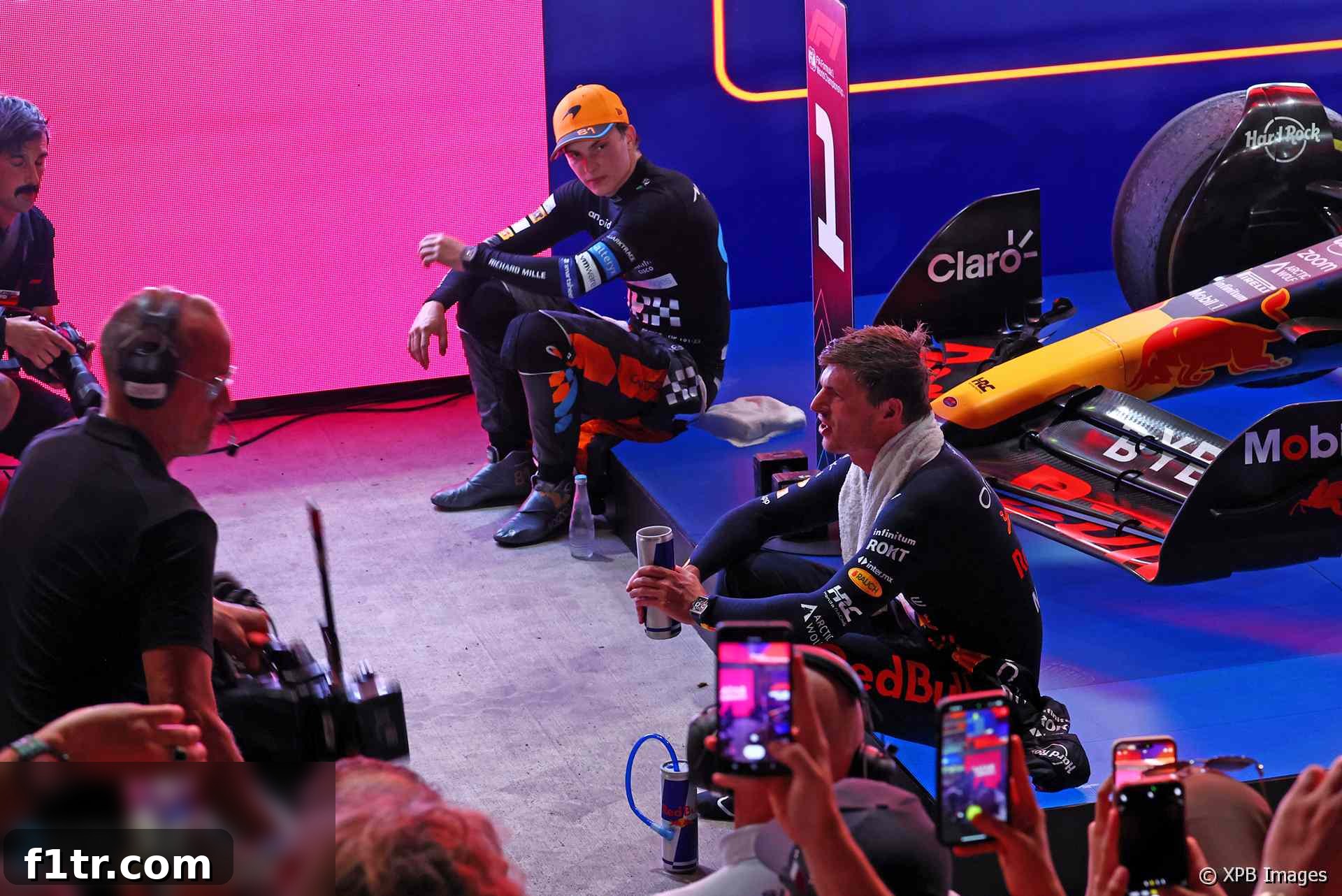
Qatar Grand Prix 2023: Formula 1 Drivers Pushed to Breaking Point by Extreme Heat and Relentless Pace
The 2023 Qatar Grand Prix will forever be etched in Formula 1 history not just for its on-track drama, but for the unprecedented physical toll it exacted on the drivers. Amidst scorching desert temperatures and the relentless, high-speed demands of the Losail International Circuit, numerous competitors found themselves pushed to – and in some cases, beyond – their absolute physical limits. This harrowing event has ignited a critical conversation within the sport regarding driver welfare and the safety protocols required for racing in such extreme conditions.
Widespread Struggles: Drivers Confront Dehydration and Exhaustion
The severity of the challenge was immediately evident, with several drivers experiencing acute physical distress. Among the most striking incidents was the early retirement of Williams driver Logan Sargeant. Already battling flu-like symptoms earlier in the week, Sargeant’s condition severely deteriorated during the race. After a gruelling 40 laps, the American rookie was ultimately forced to withdraw from the Grand Prix duealing with intense dehydration. His immediate assessment at the on-track medical centre, followed by a swift clearance, highlighted the critical nature of his ordeal and underscored the significant health risks drivers faced.
Sargeant’s team, Williams, confirmed in an official statement: “Following Logan’s retirement from the Grand Prix, he has been assessed and cleared by the medical team on-site after suffering from intense dehydration during the race, weakened by having flu-like symptoms earlier in the week.” This transparent communication brought immediate and widespread attention to the brutal physical challenges unfolding on the track.
Sargeant was far from alone in his struggles. His Williams teammate, Alexander Albon, also required medical attention at the on-track medical centre for acute heat exposure post-race, a testament to the shared suffering across the grid. Perhaps one of the most vivid and alarming accounts came from Alpine’s Esteban Ocon, who revealed a shocking mid-race incident. On lap 15 of 57, Ocon reported to his team that he was physically sick inside his cockpit – a profound moment of distress that he nonetheless managed to overcome, securing a commendable seventh-place finish.
Ocon’s frank admission painted a grim picture of his experience: “I was feeling ill lap 15 and 16, I was throwing up for two laps inside the cockpit,” he recounted. “And then I was like, ‘shit, this is going to be a long race’.” His immediate reaction underscored the immense mental battle required to continue under such duress, pushing past severe physiological discomfort.
He continued, describing the mental resilience that allowed him to persevere: “I tried to calm down, I tried to remember that the mental side in sport is the strongest part of your body and I managed to get that under control and finish the race. But, honestly, I was not expecting for the race to be that hard.” Ocon’s testimony served as a powerful reminder of the extreme mental and physical fortitude demanded of Formula 1 drivers, especially when confronting unexpected physiological distress in a high-stakes environment.
The physical onslaught extended to other seasoned drivers as well. Aston Martin’s Lance Stroll, who ultimately finished 11th after incurring penalties, described a harrowing experience in the final third of the race. He admitted to starting to suffer with approximately 20 laps remaining, going as far as to say he was “passing out in the car” at various points. Similarly, Haas driver Kevin Magnussen reported feeling on the verge of sickness within his cockpit, highlighting the pervasive nature of the challenge that affected drivers throughout the field.
The Unforgiving Conditions: Why Qatar 2023 Became a Breaking Point
The root cause of these widespread issues lay in a confluence of exceptionally brutal environmental and race-specific factors. Despite the race commencing after nightfall, the ambient air temperature at the start remained a sweltering 31 degrees Celsius. Crucially, there was a noticeable absence of the cooling winds that had provided some respite in the preceding days, leaving the Losail circuit a still, intensely hot environment. This lack of natural ventilation, combined with the enclosed cockpits of the F1 cars, created an oven-like atmosphere where internal temperatures soared dramatically.
Ferrari’s Charles Leclerc unequivocally labelled the event as an unparalleled test of endurance. He stated his firm belief that it was “the toughest race for every driver in Formula 1 of our career – for everybody, no exception, and I don’t believe the one that says it’s not.” This bold assertion from a top-tier athlete speaks volumes about the collective ordeal faced by the entire grid, suggesting a shared and deeply challenging experience across all teams and driver skill levels, irrespective of their fitness or experience.
Beyond the ambient heat, specific operational factors compounded the physical strain. The preceding day’s 19-lap sprint race, though shorter, had offered drivers multiple periods of respite under three Safety Car deployments. In stark contrast, the main Grand Prix saw only a single Safety Car interruption, leaving drivers with precious little opportunity to recover or even momentarily reduce their physical exertion. This relentless, uninterrupted pace was a major contributor to the profound fatigue experienced.
Adding another layer of difficulty was an unusual regulatory directive: drivers were mandated to complete no more than 18 laps on any single set of tyres during the Grand Prix. This rule, introduced as a safety measure following concerns about tyre integrity on the high-load Losail circuit, fundamentally altered the race dynamic. It effectively eliminated the usual strategic element of tyre management, forcing drivers into an almost continuous ‘qualifying lap’ pace. Instead of conserving tyres and finding a rhythm, they were compelled to push their cars and bodies to the absolute maximum, lap after punishing lap. This sustained high-intensity driving amplified the physical stress exponentially, transforming the race into a relentless sprint.
Leclerc elaborated on the confluence of factors, telling RaceFans: “I think there were many things adding up. Obviously, the heat was extremely warm, we have a track where there are lots of high-speed corners.” He clearly articulated how the circuit’s layout, demanding continuous high-G forces on the body, combined with the oppressive heat to create a uniquely strenuous and exhausting challenge that few had ever encountered.
He pinpointed the tyre rule as the critical element that exacerbated everything: “But I think the most significant part is the fact that we had to do three stops and that meant no tyre management in the high speed, which meant quali laps after quali laps.” This particular regulation transformed the race from a strategic endurance test into an intense, unrelenting series of sprints, severely impacting driver endurance and recovery.
Leclerc further underscored the visible signs of distress among his peers, noting, “We can always look at each other at the end of the race when we are sat down, and this time you could feel it was different. Some drivers really felt bad.” This observation from a fellow competitor offered a poignant insight into the shared suffering and the clear deviation from typical post-race fatigue.
The conditions were so tough that drivers found it difficult to see at times, as Leclerc revealed. He went further, describing how the severe conditions compromised fundamental aspects of driver performance and safety. He explained that intense dehydration led to impaired vision for some, a critical and dangerous consequence in a sport where split-second decisions are paramount. “This is something we maybe will have to discuss because at one point, it’s not even a physical preparation, it’s just dehydration at such a level that you and your vision is so much worse. Your heart rate is going to the stars and it’s very difficult to control all of this, so it was really, really difficult,” he explained. This highlighted a threshold beyond which even peak physical conditioning cannot compensate for environmental extremes.
He elaborated on the futility of traditional hydration methods under such strain: “It’s difficult to put into words and to explain how tough it is,” Leclerc admitted. “Especially with the G-forces. When you have a lot of dehydration you can drink, but the drink is more tea than anything else because it’s at 60-plus degrees. So it’s extremely difficult to hydrate yourself, and again, with the G-forces you don’t see as well.” This vivid description illustrated the vicious cycle of dehydration, extreme cockpit heat making drinks unpalatable, and the compounding effect of G-forces on vision, painting a grim picture of the drivers’ fight for survival on track.
A Call for Change: Finding the Limit of Human Endurance
McLaren driver Lando Norris echoed the sentiment of having reached a critical threshold, asserting that Formula 1 had “found the limit” of human endurance in competitive racing during the Qatar Grand Prix. He expressed profound regret over the circumstances: “I think it’s sad we had to find it this way,” remarked the young British driver. His comments reflected a broader concern within the paddock that the sport had inadvertently stumbled into a potentially dangerous territory where driver well-being was severely compromised.
Norris continued, emphasizing the inherent dangers of the situation: “It’s never a nice situation to be in. Some people are ending up in the medical centre or passing out, things like that. It’s a pretty dangerous thing to have going on.” He underscored the direct threat to driver safety, moving beyond mere discomfort to outright incapacitation, which could have far more serious consequences at the speeds Formula 1 cars achieve.
Crucially, Norris dismissed any simplistic notions that drivers simply needed to improve their physical conditioning. “But it’s not a point where you can just go ‘the drivers need to train more’ and do any of that,” he argued emphatically. “We’re in a closed car that gets extremely hot in a very physical race.” This statement powerfully challenged the common perception of elite athletes needing more training, instead pointing to systemic issues related to the machinery and environment that transcend individual fitness levels.
He articulated the frustration stemming from the disparity between public perception and on-track reality: “It’s frustrating, I guess on TV it probably doesn’t look very physical at all. But clearly, when you have people who end up retiring or in such a bad state, it’s too much for the speeds we’re doing, it is too dangerous.” Norris’s concern highlighted the critical balance between sporting challenge and unacceptable risk, emphasizing that the physical toll posed a genuine threat to safety, especially at the phenomenal speeds Formula 1 cars achieve.
Looking Ahead: Ensuring Driver Safety in Future Races
In a proactive move to mitigate future risks, next year’s Qatar Grand Prix is slated to take place at the beginning of December, a period expected to bring significantly cooler temperatures to the region. While this schedule adjustment is a positive step, both Leclerc and Norris stressed that Formula 1 has a fundamental responsibility to prevent a recurrence of such perilous conditions. Leclerc stated, “This, I think, maybe next year if we find ourselves in the same situation, we’ll have to discuss in between us drivers,” highlighting the need for collective action and a unified stance on safety and welfare.
Norris echoed this sentiment, stating, “I know that this race next year is later on in the season and it will be a lot cooler a few months later. But it’s something that needs to be thought of, and I’m sure we’ll speak about it because it shouldn’t have happened in the first place.” These calls from the drivers themselves signal a clear demand for comprehensive review and preventative measures to safeguard driver well-being, ensuring that the pursuit of speed and spectacle never compromises the fundamental health and safety of those competing at the pinnacle of motorsport.