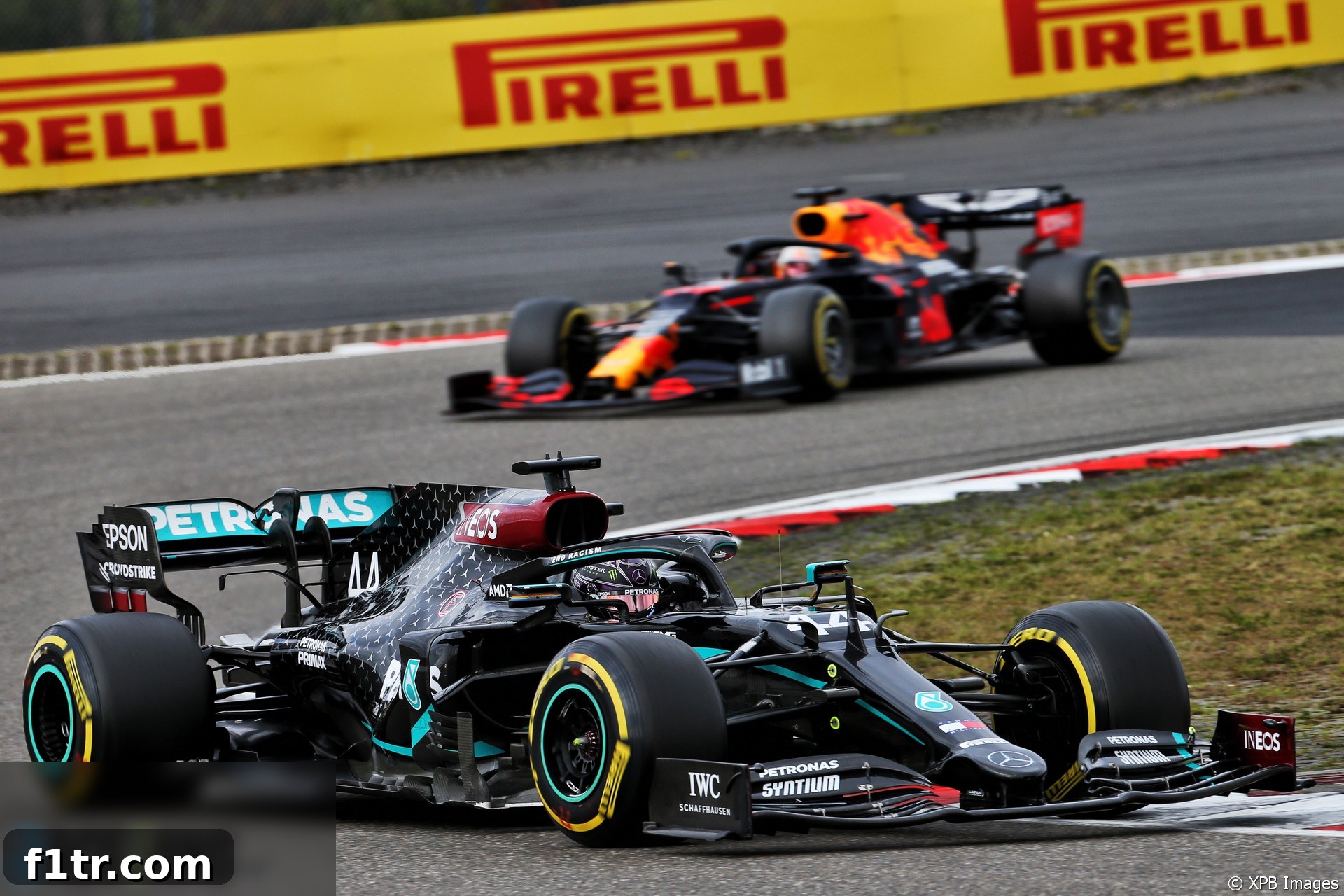
Mercedes Wary as Red Bull Closes Gap, Signaling Intensified 2020 F1 Championship Battle
In the relentlessly competitive world of Formula 1, even the most dominant teams cannot afford complacency. Mercedes-AMG Petronas F1 Team, architects of an unprecedented era of success, found themselves increasingly vigilant during the 2020 season, particularly after the Eifel Grand Prix at the Nürburgring. This race weekend served as a stark reminder of the persistent threat posed by their fierce rivals, Red Bull Racing. While Mercedes continued their formidable run of poles, Red Bull, spearheaded by the electrifying Max Verstappen, demonstrably narrowed the performance gap, signaling a potential shift in momentum that promised to ignite the latter stages of the championship.
The Nürburgring Qualifier: A Telltale Sign of Red Bull’s Progress
The Eifel Grand Prix at the historic Nürburgring circuit showcased Mercedes’ formidable raw pace, as Valtteri Bottas secured pole position, narrowly edging out his illustrious teammate Lewis Hamilton, thus locking out the front row once again for the Silver Arrows. This continued their impeccable qualifying record for the season, a testament to the engineering prowess behind their W11 chassis. However, the true story of the qualifying session lay just behind them. Max Verstappen, in the Red Bull RB16, delivered a blistering lap that placed him less than two-tenths of a second adrift of Mercedes’ pace-setting time. This wasn’t merely a strong performance; it represented a new low in the gap between the two top teams, a tangible indicator that Red Bull was genuinely finding their stride and posing a more credible threat than in previous rounds.
Mercedes’ Trackside Engineering Director, Andrew Shovlin, a veteran observer of Formula 1’s intricate dynamics, was candid in his assessment following the race weekend. “They were a lot closer to us in qualifying,” Shovlin admitted, acknowledging the narrowing margin. He further highlighted that both Lewis Hamilton and Max Verstappen posted their best times in Q2, suggesting that the raw, unhindered pace of both cars was indeed exceptionally close. “It’s very, very close at the front. Valtteri just put together a brilliant lap when it actually counted,” Shovlin noted, giving credit to Bottas for extracting the absolute maximum when it mattered most, ultimately securing pole in a session where the margins were razor-thin.
The Impact of the Engine Mode Ban: Leveling the Playing Field
Shovlin elaborated on the factors contributing to Red Bull’s resurgence, pointing to a significant regulatory change introduced earlier in the season: the ban on engine ‘qualifying modes.’ These specialized engine settings, often referred to as ‘party modes,’ allowed teams to unleash an additional burst of power for a brief period during qualifying, providing a crucial advantage over a single lap. While Mercedes had famously utilized these modes to devastating effect, their abolition at the Italian Grand Prix was intended to curb escalating development costs and potentially level the competitive landscape.
According to Shovlin, this regulatory adjustment had precisely the intended effect, closing the performance window between the leading power units. “Definitely the changes in the engine modes to stop qualifying modes has brought them a step closer,” he stated, confirming the significant impact of the new regulations. For a team like Red Bull, which had been diligently working on optimizing its Honda power unit throughout the year, this ban was a clear opportunity. It meant that a greater emphasis was placed on the car’s inherent aerodynamic efficiency, mechanical grip, and overall race-pace performance, areas where Red Bull typically excelled. The removal of the ‘qualifying mode’ advantage forced all teams to rely more on their baseline performance, playing into the hands of those who had a strong all-round package.
Red Bull’s Relentless Development and Historical Trajectory
Beyond the regulatory shifts, Shovlin also observed a more fundamental trend that he had witnessed repeatedly over the years: Red Bull’s exceptional ability to develop their car over the course of a season. “I think they are developing quicker than we are at the moment. We’ve seen that progressively,” he revealed, offering a testament to Red Bull’s aggressive in-season development program. This characteristic has been a hallmark of the Milton Keynes-based squad, often starting a season slightly behind their main competitors but consistently closing the gap through relentless innovation and iterative improvements to their chassis.
Shovlin reflected on this pattern, noting, “But to be honest, we’ve seen that in most of the recent years, they tend to not start as strongly as we do. I can’t really think of a year recently where they’ve not been, with us by the end.” This insight underscores a crucial aspect of the Mercedes-Red Bull rivalry: it’s not just about who starts stronger, but who finishes stronger. Red Bull’s design philosophy, often spearheaded by the legendary Adrian Newey, focuses on aerodynamic refinement and mechanical grip, and these areas often yield significant gains as the season progresses and more data becomes available for analysis and improvement. The Nürburgring performance was merely the latest manifestation of this well-established development curve, indicating that the RB16 was finally beginning to unlock its full potential.
Mercedes’ Unprecedented Dominance and the W11’s Legacy
The 2020 Formula 1 season had been, by most measures, another masterclass in dominance by Mercedes. Their W11 EQ Performance car was a marvel of engineering, setting new benchmarks in performance and reliability. With Lewis Hamilton and Valtteri Bottas at the helm, the team had been virtually untouchable, breaking records for consecutive pole positions, race victories, and demonstrating an unparalleled level of consistency. The car’s innovative Dual Axis Steering (DAS) system, along with its formidable engine and aerodynamic package, had given Mercedes a significant competitive edge over the field.
However, the whispers of concern from within the Mercedes garage, particularly after the Nürburgring, indicated that even unparalleled dominance could be challenged. The team understood that resting on their laurels was not an option. While the drivers’ and constructors’ championships seemed firmly within their grasp, the principle of maintaining a competitive advantage and pushing the boundaries of performance remained paramount. The threat from Red Bull, therefore, was not merely about championship points but about the prestige of outright pace and the psychological battle that underpins every Grand Prix weekend. It served as a motivator for Mercedes to continue pushing their own development despite their commanding lead, knowing that their closest rival was gaining ground.
The Evolving Mercedes-Red Bull Rivalry
The rivalry between Mercedes and Red Bull Racing has been one of the defining narratives of modern Formula 1. While Mercedes dominated the turbo-hybrid era from its inception in 2014, Red Bull has consistently been their closest challenger, often operating with a different technical philosophy and driver approach. This enduring battle has delivered some of the most memorable races and strategic duels, pushing both teams to new heights of engineering and operational excellence. Max Verstappen, in particular, has emerged as a generational talent, consistently extracting maximum performance from his Red Bull machinery and challenging the Mercedes drivers even when the car might not have been on equal footing.
The 2020 season, despite Mercedes’ overall superiority, was no exception to this ongoing saga. The Nürburgring served as a fresh chapter, underscoring the relentless nature of the pursuit of performance in F1. It highlighted that even in a season marked by unprecedented success for one team, the competitive spirit of their rivals, fueled by innovation and determination, can still create moments of genuine tension and excitement. This dynamic interplay ensures that Formula 1 remains a spectacle of constant evolution and strategic intrigue, with every race offering a new opportunity for fortunes to shift.
Looking Ahead: The Toughening Challenge for Pole and Victory
Given the observed trend, Andrew Shovlin’s concluding remarks carried a significant weight of expectation for the remaining races of the 2020 season. “So if we see that trend continue, then the remaining races are going to get tougher. It’ll be harder to try and keep getting the cars on pole on Saturday and winning on a Sunday,” he projected. This was not a statement of panic, but rather a pragmatic acknowledgment of the intensifying challenge. Mercedes understood that the comfortable margins they had enjoyed for much of the season were shrinking, demanding even greater precision in setup, flawless execution in strategy, and absolute maximum performance from both drivers and the car.
The Nürburgring race became a crucial point of reflection for Mercedes, forcing them to confront the reality that Red Bull was not just developing but genuinely closing in. This meant that the fight for pole positions, which had been almost a certainty for Mercedes, would become a much more strenuous affair. Similarly, converting those poles into race wins on Sunday would require an even sharper focus, anticipating Red Bull’s strategies and defending against their improved race pace. The prospect of tougher races, however, is precisely what fuels the competitive fire in Formula 1, promising a thrilling conclusion to an already remarkable season for the championship leaders.