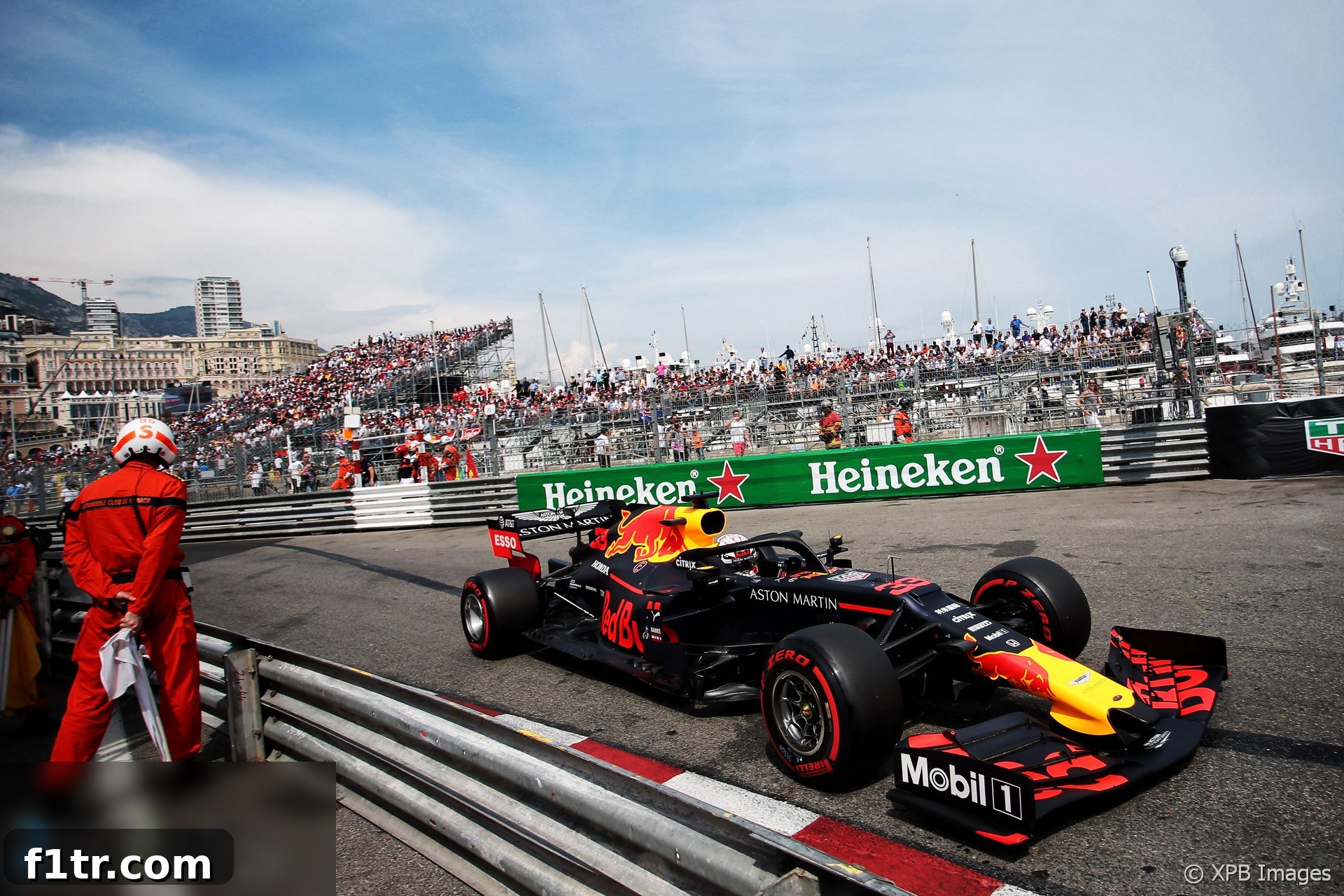
The prestigious Monaco Grand Prix, a true highlight of the Formula 1 season, consistently delivers a captivating blend of precision driving, strategic brilliance, and unpredictable drama. As the 2019 edition approached, the formidable Mercedes-AMG Petronas Motorsport team arrived in the Principality boasting an unparalleled series of one-two finishes. Their dominance seemed absolute, yet two powerful elements stood poised to challenge their reign: the fickle forces of nature and the relentless talent of Max Verstappen.
Advert | Become a Supporter & go ad-free
The dynamic Red Bull driver, Max Verstappen, has been a standout performer since the previous year’s challenging race on these very streets. He has consistently demonstrated an opportunistic flair, seizing track positions whenever they presented themselves, and reliably bringing his Red Bull home in the highest possible classification. This impressive consistency has allowed him to accumulate more championship points than both Ferrari drivers in the current season, underscoring his exceptional form. The question on everyone’s lips was whether Verstappen could finally be the driver to break Mercedes’ impeccable one-two streak, potentially splitting the Silver Arrows on the iconic streets of Monte Carlo.
Max Verstappen: The Principal Challenger to Mercedes’ Domination
Monaco’s unique street circuit configuration, with its tight corners and narrow confines, famously diminishes the impact of raw engine power, instead prioritizing aerodynamic efficiency, chassis balance, and outright driver skill. These characteristics traditionally play into the hands of Red Bull Racing, whose cars are renowned for their exceptional downforce and agility. Max Verstappen’s aggressive yet meticulously controlled driving style is ideally suited to the unforgiving nature of the circuit, making him a potent threat to Mercedes’ seemingly impenetrable dominance. While it would undoubtedly be an immense challenge to separate the two Mercedes cars on the opening lap – given their meticulously choreographed starts – Red Bull’s strong race pace has been a consistent advantage throughout the season, and this could be Verstappen’s crucial weapon.
Should Verstappen manage to maintain close proximity to the leading Mercedes duo, strategic opportunities could materialize. The unique pit-stop dynamics of Monaco further complicate matters. Unlike many other circuits where an early pit stop (the ‘undercut’) often yields a significant advantage, Monaco’s low tyre wear and degradation frequently alter this strategic norm. Drivers can typically extend their stints considerably without a drastic drop in performance. Furthermore, the mandatory switch from soft compound tyres to mediums introduces another layer of strategic complexity. Medium tyres are known to take longer to reach their optimal operating temperature, a critical consideration when rejoining the race directly onto Monaco’s demanding corners. This extended warm-up period can significantly diminish the effectiveness of a conventional undercut, potentially allowing a car that stays out for an extra lap to maintain or even improve its track position. Teams will be meticulously monitoring tyre performance and track conditions to identify the optimal pit window.
Adding another layer of uncertainty to the race strategy, significant sections of the Monaco circuit have been resurfaced for the 2019 season. This could subtly alter grip levels and, consequently, the behaviour of the Pirelli tyres. However, with revised regulations mandating lower tyre blanket temperatures for this season, the tendency for medium compounds to require a longer warm-up phase is expected to remain a decisive factor on Sunday. Mercedes strategists must remain vigilant for a scenario where their two drivers are running in close formation at the front, with Verstappen in hot pursuit. In such a high-stakes situation, pitting both drivers without one of them losing track position to their attacking rival becomes an incredibly delicate and risky strategic manoeuvre, highlighting a rare vulnerability for the dominant Silver Arrows.
The Unpredictable Hand of Mother Nature
Beyond the intricate dance of strategy and driver skill, the weather frequently emerges as the ultimate wildcard in Monaco, and the 2019 forecast certainly promised its share of meteorological intrigue. While initial predictions had suggested a significant risk of rain for Saturday’s crucial qualifying session, the skies remained clear, allowing for a dry and blistering battle for pole position. However, Sunday’s race day forecast continued to include a decent, albeit fluctuating, chance of showers. Some meteorological models indicated a modest 20% probability, while others presented a more substantial 40% chance right from the race’s commencement, potentially escalating to a considerable 80% towards the Grand Prix’s concluding laps. This significant range in forecasts creates a strategic nightmare for teams, forcing them to consider diverse setup options and contingency plans.
Even if the rain ultimately fails to materialize, the mere threat of precipitation can dramatically reshape race strategy. Teams become inherently reluctant to commit to a dry-weather pit stop if there is a strong suspicion that rain is imminent. This strategic hesitation can lead to prolonged stints on worn dry tyres, or even prompt an audacious gamble on intermediate tyres, potentially igniting chaos and opening doors for unexpected results. Monaco boasts a rich history of producing iconic moments and surprise victors during wet races, such as Olivier Panis’s famous win in 1996. Any rain would undoubtedly infuse an additional layer of excitement, unpredictability, and strategic complexity into an already demanding event, truly testing the mettle of both drivers and strategists alike.
Safety Cars and the Inevitable Chaos of Monte Carlo
The unique, unforgiving characteristics of the Monaco circuit make race interruptions a near certainty. The support races throughout the weekend typically offer a dramatic prelude to the main event, frequently featuring Safety Cars and even red flags. While Formula 1’s elite drivers generally possess a superior ability to avoid incidents, the sheer narrowness of the circuit, combined with the intense and close-quarters midfield battles, inevitably heightens the risk of collisions and subsequent race stoppages. A Safety Car period, particularly if deployed in the latter stages of the Grand Prix, has the potential to completely reshuffle the running order and present a fresh set of strategic dilemmas for every team on the grid.
During a late-race Safety Car period, drivers and their strategists face a critical, split-second decision: should they dive into the pits for fresh, faster tyres, or gamble on staying out on their worn rubber? Opting for new tyres almost certainly means sacrificing valuable track position, a catastrophic outcome on a circuit where overtaking is notoriously difficult, almost impossible. Conversely, remaining on worn tyres presents the challenge of managing pace and aggressively defending position on cold, potentially slippery rubber, especially if the race restarts quickly before the tyres can be brought back up to temperature. The near-impossibility of overtaking in Monaco often tempts drivers to stay out, hoping their defensive driving prowess and the circuit’s inherent characteristics will help them retain their hard-earned positions. This creates incredibly tense and nail-biting moments, where a single misjudgment or error can cost a driver dearly, potentially impacting their entire race outcome and championship aspirations.
Go ad-free for just £1 per month>> Find out more and sign up
Qualifying Day: The Grid Takes Shape Under Pressure
Saturday’s qualifying session was a gripping spectacle, serving as a thrilling prelude to the main event. Drivers pushed the absolute limits of their intricate machinery on the razor-thin streets of Monte Carlo. Lewis Hamilton ultimately secured pole position in a nail-biting conclusion, delivering a truly masterful final lap that narrowly edged out his teammate. This performance underscored his status as a multi-world champion and highlighted his exceptional skill in navigating the challenging Monaco layout.
Mercedes successfully locked out the front row, with Valtteri Bottas qualifying a mere fraction of a second behind Hamilton in second place. While a strong team result, Bottas would undoubtedly harbor frustration at missing out on pole, especially considering his impressive pace earlier in the weekend. Max Verstappen continued to impress, securing a strong third place on the grid, just a whisper behind the dominant Mercedes duo. His performance was a clear indicator of Red Bull’s significant potential on race day, solidifying his position as the most likely and credible challenger to the Silver Arrows’ supremacy.
Scuderia Ferrari, in contrast, endured a somewhat disheartening qualifying session. Sebastian Vettel managed to qualify fourth, a respectable but far from ideal starting position, particularly for a team with championship aspirations. However, the most significant and dramatic shock of the session came from local hero Charles Leclerc. Due to a calamitous strategic miscalculation by his Ferrari team, he was controversially eliminated in Q1. Starting a dismal 16th on a circuit where overtaking is famously difficult, Leclerc faced an almost insurmountable challenge to salvage any meaningful points in front of his home crowd, transforming his qualifying into a true disaster for the Monegasque driver and his team.
The midfield battle proved to be as fierce and tightly contested as ever. Drivers such as Pierre Gasly, Kevin Magnussen, and Daniel Ricciardo delivered strong performances to secure valuable grid positions, setting the stage for an intense fight for points. The close proximity of lap times within the midfield underscored the critical importance of a clean start, faultless execution, and astute race strategy on Sunday.
Qualifying Times in Full
| Driver | Car | Q1 | Q2 (vs Q1) | Q3 (vs Q2) | |
|---|---|---|---|---|---|
| 1 | Lewis Hamilton | Mercedes | 1’11.542 | 1’10.835 (-0.707) | 1’10.166 (-0.669) |
| 2 | Valtteri Bottas | Mercedes | 1’11.562 | 1’10.701 (-0.861) | 1’10.252 (-0.449) |
| 3 | Max Verstappen | Red Bull | 1’11.597 | 1’10.618 (-0.979) | 1’10.641 (+0.023) |
| 4 | Sebastian Vettel | Ferrari | 1’11.434 | 1’11.227 (-0.207) | 1’10.947 (-0.280) |
| 5 | Pierre Gasly | Red Bull | 1’11.740 | 1’11.457 (-0.283) | 1’11.041 (-0.416) |
| 6 | Kevin Magnussen | Haas | 1’11.865 | 1’11.363 (-0.502) | 1’11.109 (-0.254) |
| 7 | Daniel Ricciardo | Renault | 1’11.767 | 1’11.543 (-0.224) | 1’11.218 (-0.325) |
| 8 | Daniil Kvyat | Toro Rosso | 1’11.602 | 1’11.412 (-0.190) | 1’11.271 (-0.141) |
| 9 | Carlos Sainz Jnr | McLaren | 1’11.872 | 1’11.608 (-0.264) | 1’11.417 (-0.191) |
| 10 | Alexander Albon | Toro Rosso | 1’12.007 | 1’11.429 (-0.578) | 1’11.653 (+0.224) |
| 11 | Nico Hulkenberg | Renault | 1’12.097 | 1’11.670 (-0.427) | |
| 12 | Lando Norris | McLaren | 1’11.845 | 1’11.724 (-0.121) | |
| 13 | Romain Grosjean | Haas | 1’11.837 | 1’12.027 (+0.190) | |
| 14 | Kimi Raikkonen | Alfa Romeo | 1’11.993 | 1’12.115 (+0.122) | |
| 15 | Antonio Giovinazzi | Alfa Romeo | 1’11.976 | 1’12.185 (+0.209) | |
| 16 | Charles Leclerc | Ferrari | 1’12.149 | ||
| 17 | Sergio Perez | Racing Point | 1’12.233 | ||
| 18 | Lance Stroll | Racing Point | 1’12.846 | ||
| 19 | George Russell | Williams | 1’13.477 | ||
| 20 | Robert Kubica | Williams | 1’13.751 |
Sector Times: A Glimpse into Cornering Mastery
Analyzing sector times in Monaco offers a deeper insight into a driver’s and car’s performance characteristics. Sector 1 (from the start/finish line through Sainte Devote and up to Casino Square) demands early acceleration and precise turn-in. Sector 2 (the longest, most technical section, including Mirabeau, the Hairpin, Portier, and the Tunnel) is all about pinpoint accuracy, braking control, and maintaining momentum through the slowest corners in F1. Sector 3 (from the Tunnel exit, past the Nouvelle Chicane, Tabac, Swimming Pool, and Rascasse) tests high-speed stability and agile direction changes. Unsurprisingly, the Mercedes drivers, Hamilton and Bottas, demonstrated their mastery across all three sectors, with Bottas particularly strong in Sector 2, highlighting the W10’s exceptional balance through the tightest turns. Verstappen, though slightly behind, showed consistent pace, especially in the final sector, proving his Red Bull’s agility.
| Driver | Sector 1 | Sector 2 | Sector 3 |
|---|---|---|---|
| Lewis Hamilton | 18.280 (1) | 33.096 (2) | 18.667 (1) |
| Valtteri Bottas | 18.354 (2) | 33.026 (1) | 18.685 (2) |
| Max Verstappen | 18.511 (4) | 33.240 (3) | 18.789 (3) |
| Sebastian Vettel | 18.466 (3) | 33.444 (6) | 18.972 (9) |
| Pierre Gasly | 18.658 (5) | 33.370 (4) | 18.892 (5) |
| Kevin Magnussen | 18.693 (7) | 33.425 (5) | 18.968 (8) |
| Daniel Ricciardo | 18.769 (9) | 33.525 (8) | 18.863 (4) |
| Daniil Kvyat | 18.746 (8) | 33.470 (7) | 18.933 (7) |
| Carlos Sainz Jnr | 18.671 (6) | 33.716 (12) | 19.030 (10) |
| Alexander Albon | 18.791 (12) | 33.714 (11) | 18.906 (6) |
| Nico Hulkenberg | 18.785 (11) | 33.824 (15) | 19.061 (11) |
| Lando Norris | 18.882 (14) | 33.699 (10) | 19.093 (12) |
| Romain Grosjean | 18.874 (13) | 33.670 (9) | 19.202 (15) |
| Kimi Raikkonen | 18.901 (15) | 33.789 (14) | 19.121 (14) |
| Antonio Giovinazzi | 18.782 (10) | 33.844 (16) | 19.238 (17) |
| Charles Leclerc | 18.903 (16) | 33.763 (13) | 19.118 (13) |
| Sergio Perez | 18.945 (17) | 34.039 (17) | 19.216 (16) |
| Lance Stroll | 19.124 (18) | 34.199 (18) | 19.427 (18) |
| George Russell | 19.257 (19) | 34.622 (20) | 19.585 (19) |
| Robert Kubica | 19.267 (20) | 34.548 (19) | 19.841 (20) |
Speed Trap: The Tunnel’s Flat-Out Blast
The speed trap figures in Monaco are particularly interesting as they are taken at the exit of the iconic Tunnel section, the only truly flat-out stretch of the circuit. While raw top speed is less critical here than at other venues, these figures still offer a snapshot of a car’s aerodynamic efficiency and engine power. As expected, Ferrari-powered cars typically excel in straight-line speed, and Sebastian Vettel topped the speed charts, followed closely by his teammate Charles Leclerc. However, the leading Mercedes and Red Bull cars were notably lower down the speed trap rankings, illustrating their strategic trade-off: prioritizing downforce and cornering grip over outright straight-line speed, a common approach for Monaco where corners dictate lap time much more than the single straight. This difference in philosophy often translates to how teams approach setup, optimizing for stability and traction in the winding sections.
| Pos | Driver | Car | Engine | Speed (kph/mph) | Gap |
|---|---|---|---|---|---|
| 1 | Sebastian Vettel | Ferrari | Ferrari | 291.6 (181.2) | |
| 2 | Charles Leclerc | Ferrari | Ferrari | 289.9 (180.1) | -1.7 |
| 3 | Lance Stroll | Racing Point | Mercedes | 289.3 (179.8) | -2.3 |
| 4 | Kimi Raikkonen | Alfa Romeo | Ferrari | 289.3 (179.8) | -2.3 |
| 5 | Lando Norris | McLaren | Renault | 289.1 (179.6) | -2.5 |
| 6 | Antonio Giovinazzi | Alfa Romeo | Ferrari | 288.8 (179.5) | -2.8 |
| 7 | Carlos Sainz Jnr | McLaren | Renault | 288.6 (179.3) | -3.0 |
| 8 | Sergio Perez | Racing Point | Mercedes | 288.5 (179.3) | -3.1 |
| 9 | Daniel Ricciardo | Renault | Renault | 287.7 (178.8) | -3.9 |
| 10 | Kevin Magnussen | Haas | Ferrari | 287.2 (178.5) | -4.4 |
| 11 | Romain Grosjean | Haas | Ferrari | 287.0 (178.3) | -4.6 |
| 12 | Alexander Albon | Toro Rosso | Honda | 286.4 (178.0) | -5.2 |
| 13 | Nico Hulkenberg | Renault | Renault | 285.9 (177.6) | -5.7 |
| 14 | Pierre Gasly | Red Bull | Honda | 284.8 (177.0) | -6.8 |
| 15 | Max Verstappen | Red Bull | Honda | 284.7 (176.9) | -6.9 |
| 16 | Daniil Kvyat | Toro Rosso | Honda | 284.7 (176.9) | -6.9 |
| 17 | Valtteri Bottas | Mercedes | Mercedes | 284.6 (176.8) | -7.0 |
| 18 | Lewis Hamilton | Mercedes | Mercedes | 284.2 (176.6) | -7.4 |
| 19 | George Russell | Williams | Mercedes | 283.2 (176.0) | -8.4 |
| 20 | Robert Kubica | Williams | Mercedes | 282.8 (175.7) | -8.8 |
The Stage is Set: Race Day Anticipation in Monaco
As the grid prepares for the iconic lights out, the 2019 Monaco Grand Prix promises to be a race brimming with tension, strategic gambles, and the ever-present threat of the unexpected. Will Mercedes manage to continue their flawless run with a sixth consecutive one-two finish, further solidifying their championship dominance in a season already marked by their unparalleled performance? Or will Max Verstappen, armed with his aggressive driving style, the Red Bull’s formidable chassis, and potentially a little help from the weather gods, finally break their stronghold and inject a much-needed shake-up into the top order of Formula 1? And what heroics can the local sensation, Charles Leclerc, possibly pull off from his disadvantaged 16th starting position on the grid, in a desperate attempt to salvage points and pride in his home race?
Every corner, every pit stop decision, and every shift in the sky will be meticulously scrutinized as the drivers navigate the most iconic and demanding street circuit in motorsport. The intricate dance of strategy, the relentless pursuit of ultimate speed, and the inherent, ever-present risks of Monaco combine to create an unforgettable spectacle that captivates millions worldwide. Prepare for a Grand Prix where anything is truly possible, and where only the most resilient, cunning, and precise will emerge victorious. The chequered flag awaits, ready to write another thrilling chapter in the storied history of Formula 1 in Monte Carlo.
2019 Monaco Grand Prix Highlights and Further Reading
For more insights and developments from this thrilling race weekend, explore these related articles:
- 2019 Monaco Grand Prix Star Performers: Who shone brightest in Monte Carlo?
- Top ten pictures from the 2019 Monaco Grand Prix: Relive the drama in images.
- Monaco setback will ‘annoy the hell out of Bottas’ – Wolff: Team principal’s reaction to the race.
- Hamilton wins for Lauda as Verstappen hands second to Vettel: A race dedicated to a legend.
- Paddock Diary: Monaco Grand Prix day four: Behind-the-scenes insights from the paddock.
Browse all 2019 Monaco Grand Prix articles