Mercedes Puts Historic W12 on Display: A Symbol of Triumph, Heartbreak, and F1’s Pivotal 2021 Season
The Mercedes-AMG Petronas Formula 1 Team has recently placed the iconic W12 E Performance, the very car driven by Sir Lewis Hamilton during the intensely controversial 2021 Formula 1 World Championship season, prominently on display in the lobby of their Brackley factory. This isn’t just any car; it’s a profound artifact, emblematic of one of the most polarizing title deciders in the sport’s rich, century-long history, where Hamilton narrowly missed securing a record-breaking eighth world championship.
The W12 represents a season of incredible highs and devastating lows for the team and its star driver. It was the machine that carried Hamilton through a fiercely contested battle against his formidable rival, Max Verstappen, culminating in the dramatic and contentious final race in Abu Dhabi. The car’s presence at the heart of the Mercedes factory now serves as a powerful, tangible reminder of the unparalleled performance, strategic brilliance, and ultimately, the profound sense of injustice that permeated the conclusion of that unforgettable season. Its display invites reflection on the fine margins of success and failure at the pinnacle of motorsport.
The Unforgettable Abu Dhabi Finale: A Championship Decided in Controversy
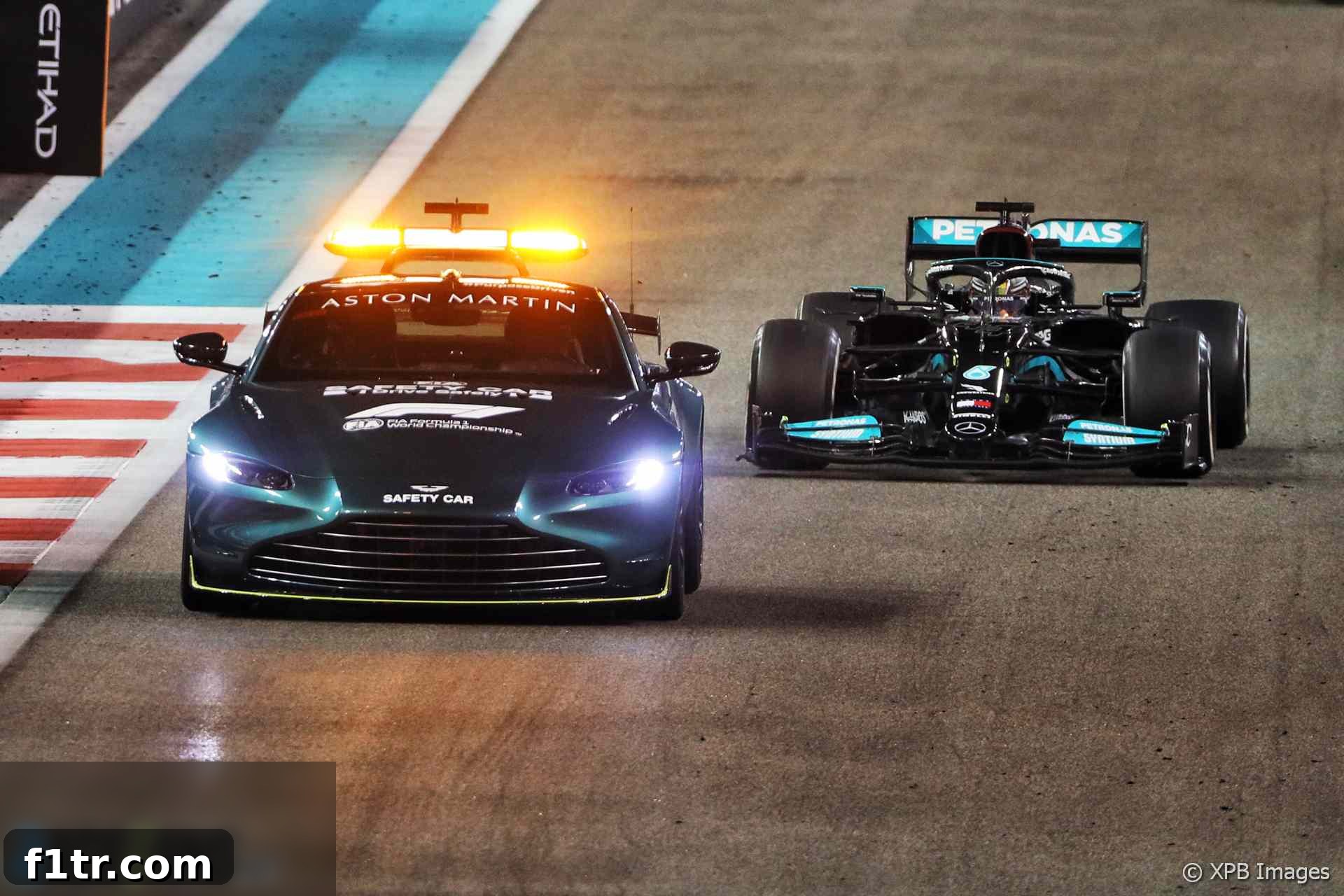
The 2021 Abu Dhabi Grand Prix remains indelibly etched in the collective memory of Formula 1 fans and pundits alike, largely due to its extraordinary and contentious conclusion. Lewis Hamilton, at the wheel of the formidable Mercedes W12, appeared to be cruising towards his historic eighth world title, having expertly managed the race and holding a comfortable lead over his Red Bull rival, Max Verstappen, for the majority of the event. However, a late-race safety car incident dramatically reshaped the final laps, setting the stage for an unprecedented and hotly debated series of decisions.
In a move that sent shockwaves through the sporting world, then-race director Michael Masi made a series of critical interventions. Most notably, he arranged a restart on the final lap of the race but permitted only a select number of lapped cars positioned between Hamilton and Verstappen to un-lap themselves. This decision deviated significantly from the established sporting regulations which typically mandate that all lapped cars must clear the field before a safety car period ends and racing resumes. This selective application of the rules placed Verstappen, on much fresher tires after a late pit stop, directly behind Hamilton, on worn tires, effectively creating a one-lap sprint finish that undeniably favored the Red Bull driver.
Verstappen, seizing the critical opportunity presented to him, overtook Hamilton on that final, decisive lap to claim his maiden world championship. The outcome ignited a firestorm of protest from Mercedes, who immediately challenged the handling of the race. They argued vehemently that Masi’s actions constituted a clear breach of sporting regulations, directly influencing the championship’s outcome and depriving Hamilton of a deserved victory. While Mercedes’ initial protests were unsuccessful, the widespread controversy prompted a comprehensive review by the FIA, which later confirmed that Masi had indeed made errors in judgment and did not follow the rules correctly. Masi was subsequently removed from his role as race director and officially left the FIA the following year, a testament to the severity of the incident’s fallout and its lasting repercussions for the sport’s governance.
Mercedes, despite their profound disappointment and outrage, ultimately opted against escalating the matter to the International Court of Appeal. This decision, though difficult, was driven by a desire to avoid a prolonged legal battle that they felt would further tarnish the image and integrity of Formula 1. However, the team’s sentiments were made unequivocally clear: Lewis Hamilton and team principal Toto Wolff conspicuously chose to be absent from the FIA’s traditional prize-giving gala, a silent yet potent demonstration of their deep dissatisfaction and protest against the championship’s contentious conclusion.
The W12: A Tangible Reminder of Joy and Pain, Resilience and Regret
The decision to proudly display the W12 at the very entrance of their factory is deeply symbolic for Mercedes. Team Principal Toto Wolff articulated the profound significance of the car, explaining that it is intended to serve as a constant, visceral reminder of the extreme highs and devastating lows experienced throughout that unforgettable season. “It’s a special car because it’s also a car that turned the situation around after Brazil, where we thought the championship is gone, and it was a very good car for the summer,” Wolff recounted in an insightful interview with High Performance. He was referencing Hamilton’s incredible comeback victories and surging performance in the latter half of the season, which kept the championship fight dramatically alive against all odds.
Wolff continued to emphasize the dual nature of the W12’s legacy, reflecting on its role as a teacher of life’s unpredictable trajectory: “And it is a car that reminds all of us that things could go wrong very quickly, but things could be right also very quickly. It’s basically how life goes. And that car’s a stark reminder of all the joy and all the pain a situation can bring with it.” This poignant perspective elevates the car from mere racing machinery to a profound metaphor for the unpredictable journey of competition and, indeed, of human existence itself. Its prominent presence acknowledges the incredible engineering prowess, human endeavor, and sheer determination that went into its creation and performance, while simultaneously confronting the painful memory of a title that, in many eyes, slipped away under highly contentious and irregular circumstances.
For the Mercedes team, the W12 embodies a spirit of resilience, innovation, and the relentless pursuit of excellence, even in the face of profound adversity. It represents the fighting spirit that saw them overcome significant technical and competitive challenges during the season, only to be met with a dramatic and controversial twist of fate at the very last moment. The car stands as a monument to their triumphs – including securing the Constructors’ Championship that year – and the heart-wrenching individual defeat that followed, ensuring that the critical lessons learned from both the glory and the grievance will forever remain at the core of their team’s ethos and future aspirations.
Toto Wolff’s Enduring Reflections on a Lost Title and the Pursuit of Fairness
Even years after the contentious events, the circumstances surrounding Sir Lewis Hamilton’s 2021 championship defeat continue to weigh heavily on Toto Wolff. He candidly admitted in his reflections that he still thinks about the outcome “every week,” underscoring the deep emotional impact and lasting frustration within the Mercedes camp. This persistent rumination highlights not just the competitive disappointment, but a profound and unwavering belief in what should have been for Hamilton – a historic, unparalleled eighth world title.
Wolff elaborated on his reasoning, stating unequivocally, “I mainly think about it because I think Lewis should have deserved to be the greatest of all times with eight world championship titles.” This sentiment reflects a widespread view among many in the F1 community who believe that Hamilton was unjustly denied a historic crown. While acknowledging the intensity and exceptional quality of the season-long battle, Wolff also offers a nuanced perspective on the contenders. “You can argue all along about that year, I think Max and Lewis were deserving champions,” he conceded, recognizing the exceptional talent, relentless effort, and sheer competitive drive displayed by both drivers throughout the demanding 2021 campaign.
He further acknowledged that the championship narrative wasn’t solely defined by the events of Abu Dhabi, referencing earlier incidents where crucial points were lost by both front-runners in moments of high drama. “There were instances during the year where Max lost some points that he shouldn’t have lost. You look at Silverstone, you look at the crash in Monza both of them had. So both deserving champions. But on that particular afternoon in Abu Dhabi, it was unfair.” This balanced view underscores the competitive nature of the entire season, validating the immense efforts of both champions, yet it firmly isolates the Abu Dhabi finale as an anomalous and unjust resolution, irrespective of the deserving qualities of both competitors over the full course of the year.
Wolff’s Candid Criticism of Michael Masi and the Pursuit of Sporting Integrity
Toto Wolff has been unsparing and consistent in his criticism of Michael Masi’s conduct as race director during the tumultuous 2021 season, particularly regarding the highly contentious events in Abu Dhabi. He famously accused Masi of being a “liability” for Formula 1 and of showing profound disrespect towards the sport’s elite drivers, whose safety and careers rested on his impartial decisions. Wolff revealed that he had actively attempted to engage with and guide Masi, who had taken over the immensely demanding role following the untimely death of his respected predecessor, Charlie Whiting, just two years prior.
“I really tried to speak to Michael and guide him all along the year and speak to him and say, listen, I’ve been in this sport for a long time, listen to the drivers, don’t always be stubborn in your decision-making, don’t be arrogant,” Wolff recalled. These attempts highlight a perceived pattern of inflexibility and perhaps a concerning lack of openness to expert input from those deeply entrenched in the sport, including the experienced teams and drivers themselves. Wolff’s guidance, he emphasized, was not merely for Mercedes’ competitive benefit, but was also intended for “the good of the sport,” aiming to prevent exactly the kind of situations that could be “totally detrimental” to its integrity, fairness, and global reputation.
From Wolff’s perspective, the catastrophic and rule-bending decisions made in Abu Dhabi were simply “inexcusable.” While acknowledging the human element and the immense pressure inherent in the role, he expressed deep frustration that Masi seemingly failed to heed advice and warnings offered throughout the season from multiple respected parties, not just Mercedes. “Now, you could say the empathy should make me realise how he feels. I realise how he feels and I know that’s not good, and bad. But he could have thought about it all year long when people, not only me, tried to support [him] in the right way,” Wolff remarked, suggesting a critical lack of receptiveness on Masi’s part to constructive feedback and established protocols.
Despite the enduring pain and frustration associated with that day, Wolff ultimately indicated a form of emotional detachment and a move towards closure, concluding, “So sometimes you have to just realise that someone is just doing his own thing or taking his own decisions. For me, I don’t care about it any more.” This statement, while perhaps signaling a step forward, still carries the profound weight of a deeply felt injustice that Mercedes and Lewis Hamilton were forced to contend with, and which continues to resonate throughout their history.
Beyond 2021: Mercedes’ Post-Controversy Era and Hamilton’s Future Horizon
The 2021 championship finale cast a long and, in some ways, challenging shadow over the Mercedes-AMG Petronas F1 Team. In the seasons that have followed, the team has endured a period of largely unsuccessful campaigns by their own incredibly high standards, struggling to recapture the dominant form that defined their turbo-hybrid era. The sweeping regulatory changes introduced in 2022, particularly regarding ground-effect aerodynamics, presented significant new challenges. The team faced difficulties in adapting their car philosophy, leading to a noticeable dip in performance and a struggle to consistently challenge for race wins and, crucially, for the coveted world championships.
This period of relative underperformance, coupled with the lingering bitterness and the emotional toll from the 2021 events, has inevitably contributed to a significant shift within the team’s dynamics and long-term outlook. Adding another monumental chapter to this evolving narrative, Sir Lewis Hamilton, the seven-time world champion and a cornerstone of Mercedes’ unparalleled success for over a decade, is set to embark on an entirely new challenge, joining the iconic Ferrari team at the end of the current year. His impending departure marks the profound end of an era, making the W12’s display all the more poignant and historically significant. It stands not only as a powerful symbol of past glory and profound pain but also as a vivid reminder of a partnership that, while incredibly successful and groundbreaking, ultimately concluded under the most challenging and controversial circumstances imaginable.
The Enduring Legacy: How the 2021 Finale Reshaped Formula 1’s Future
The extraordinary events of the 2021 Abu Dhabi Grand Prix extended far beyond the immediate disappointment and frustration for Mercedes and Lewis Hamilton; they initiated significant structural and procedural changes within Formula 1 itself, changes that continue to shape the sport today. The intense scrutiny and widespread criticism directed at race control prompted the FIA, motorsport’s governing body, to implement a thorough and much-needed overhaul of the race director role and its supporting systems. This included the introduction of a new rotating race director structure, designed to share the immense pressure and bring fresh perspectives, as well as a dedicated Virtual Race Control Room equipped with advanced technology to assist officials in making more consistent and informed decisions.
Furthermore, the controversy led to clearer, more defined interpretations of critical sporting regulations, particularly concerning safety car procedures and the protocols for un-lapping cars under caution. These revisions were directly aimed at preventing any future ambiguities or discretionary decisions that could fundamentally impact the outcome of a championship. The enduring legacy of that controversial day is that Formula 1, as a global sport, was compelled to confront its own governance, consistency issues, and the need for absolute impartiality in its highest officiating roles. The FIA, through these reforms, aimed to restore widespread faith in the fairness, transparency, and integrity of its race management, acknowledging that the trust of teams, drivers, and millions of passionate fans worldwide had been severely tested. The W12, therefore, represents not only a pivotal moment for a single team and driver but also stands as a catalyst for profound systemic reform that has fundamentally shaped the modern era of Formula 1, pushing for greater clarity and strict adherence to rules to prevent such a contentious and divisive finale from ever recurring.
Conclusion: The W12 as a Historical Landmark in Formula 1
The Mercedes W12, now proudly displayed in the factory lobby, transcends its identity as a mere racing car. It stands as a powerful and enduring symbol of one of Formula 1’s most dramatic, contentious, and ultimately transformative seasons. It encapsulates the sheer brilliance of Sir Lewis Hamilton’s driving, the relentless innovation and strategic prowess of the Mercedes team, and the excruciating pain of a championship lost under profoundly disputed circumstances. As Toto Wolff aptly put it, it’s a poignant reminder of life’s unpredictable swings, of immense joy and deep suffering intertwined.
More than just a piece of motorsport history, the W12 is a testament to the relentless pursuit of excellence, a stark warning of how quickly fortunes can change at the highest level of competition, and a compelling catalyst for significant change within the sport’s governing bodies. Its prominent presence in Brackley ensures that the triumphs, controversies, and profound emotional lessons of the 2021 Formula 1 season will forever remain at the forefront of Mercedes’ identity, influencing their future endeavors and serving as a constant, powerful reminder of the incredibly fine and often volatile line between ultimate victory and heartbreaking defeat.