The Bendy Wing Saga: Formula 1 Teams Lock Horns Over Aerodynamic Flexibility
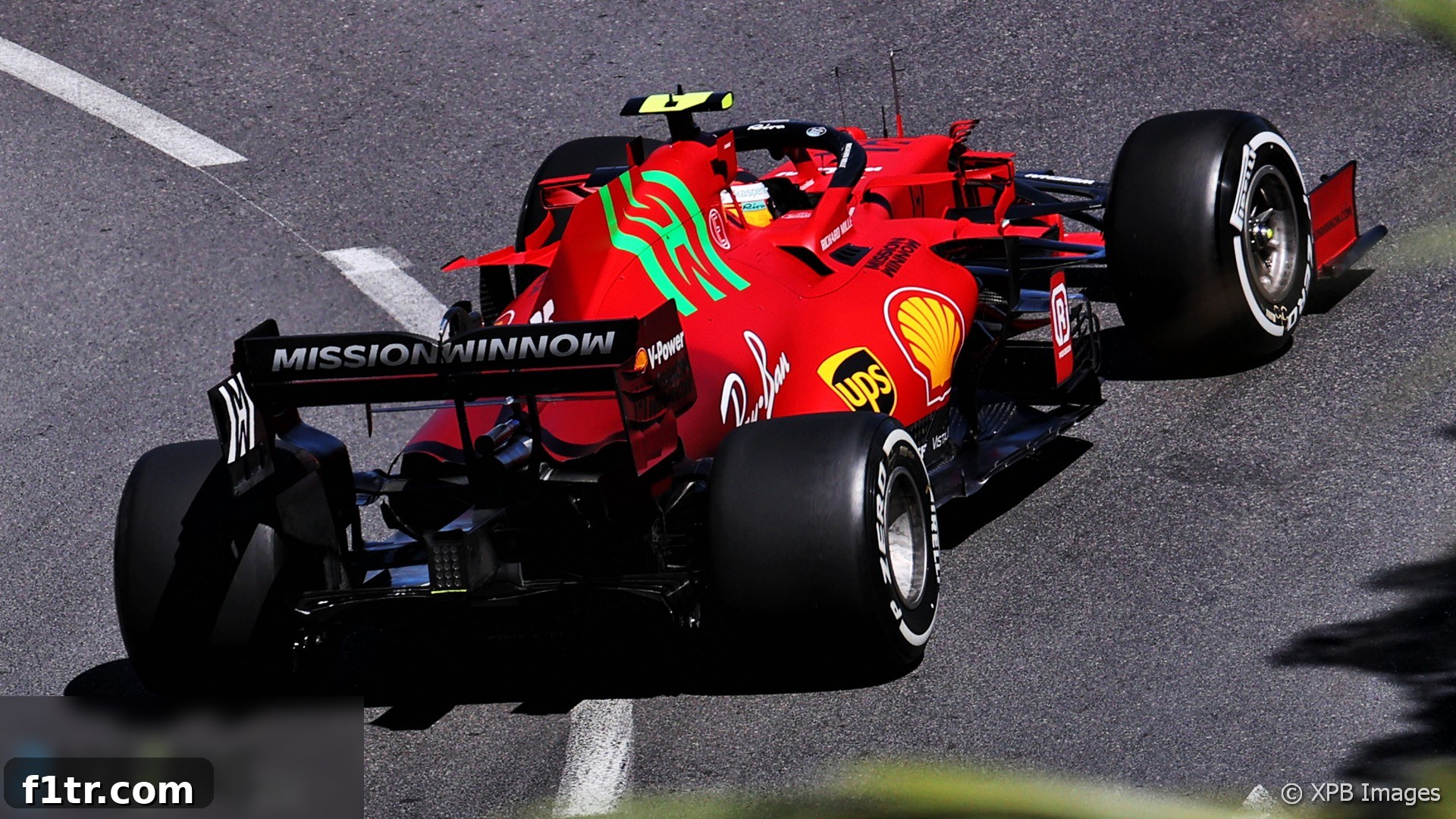
The high-stakes world of Formula 1 was gripped by a heated debate during the Monaco Grand Prix, as the controversial topic of “bendy” wings exploded into a full-blown paddock row. At the heart of the dispute was the FIA’s decision to implement a tougher test designed to eliminate the noticeable deflection of rear wings, particularly those observed on Red Bull’s cars and, to a lesser extent, on some other teams’ challengers during previous races.
In typical Formula 1 fashion, any contentious technical development quickly divides the grid into opposing factions: the ‘haves’ and the ‘have-nots’. Mercedes and McLaren emerged as vocal leaders among the latter, yet their reactions in Monaco revealed distinct objectives and differing strategies for addressing the regulatory grey area.
Unpacking the Technical Dispute: What Are Bendy Wings?
At its core, the “bendy wing” issue revolves around a critical aerodynamic principle and its interpretation within F1’s technical regulations. Article 3.8 of the FIA’s Technical Regulations stipulates that “aerodynamic components or bodywork must be rigidly secured to the entirely sprung mass of the car and must remain immobile in relation to the sprung mass.” This rule aims to prevent components from flexing under aerodynamic load, which could offer an unfair performance advantage.
However, achieving absolute rigidity in components subjected to immense forces is a significant engineering challenge. Teams strive to design wings that are compliant with static deflection tests but might still flex dynamically at high speeds. A rear wing that subtly deforms or ‘bends’ at high velocity effectively reduces its angle of attack. This reduction in angle of attack leads to lower aerodynamic drag on long straights, allowing for higher top speeds. Crucially, the wing is designed to return to its original, stiffer configuration in corners, where maximum downforce is paramount for grip and stability. This ‘best of both worlds’ scenario – low drag on straights, high downforce in corners – provides a substantial performance edge.
The FIA’s response was to introduce a new Technical Directive (TD) – a clarification or interpretation of existing rules, rather than a new regulation itself. This TD outlined a more stringent test for rear wing rigidity, aiming to catch wings that previously passed static checks but demonstrated dynamic flexibility. While the FIA asserted that the underlying regulation (Article 3.8) remained unchanged, the new test would effectively compel teams to redesign components if they were found to be non-compliant with the heightened scrutiny.
McLaren’s Stance: A Battle for Fairness and Championship Position
While the matter was extensively debated in the official FIA press conferences, McLaren team principal Andreas Seidl had already fired the opening salvo earlier in the day. Though he unequivocally stressed McLaren’s support for the introduction of tougher tests to ensure fair play, his primary contention lay with the timing of its implementation. Seidl highlighted that teams utilizing these flexible wing designs would be permitted to continue doing so for two more races before the new tests came into effect.
“They had the advantage already for several races, which is something we’re obviously not happy with,” Seidl stated emphatically. “But now allowing them to have further advantage for some more races is clearly something we strongly disagree and we’re already in conversation with FIA.”
McLaren’s frustration was acutely focused not just on Red Bull, whose wing deflection had been widely publicized through on-board camera footage, but also on Ferrari. Locked in a fierce battle for third place in the constructors’ championship, McLaren likely saw Ferrari’s rear wing exhibiting similar characteristics. While the visual evidence against Ferrari might have been less dramatic, the competitive implications for McLaren were profound. Every point gained or lost in their fight for third could have significant financial ramifications and impact their standing in the sport.
A maximum-downforce circuit like Monaco would offer minimal benefit from a rear wing that flexes slightly at top speed to reduce drag. Indeed, the perceived advantage wasn’t the reason Ferrari topped the timing screens on Thursday. McLaren’s primary concern, and the underlying strategic calculation behind Seidl’s remarks, was undoubtedly the potential value of such a design at the subsequent venue on the calendar: the Baku City Circuit. Baku is infamous for its long straights and the second-highest top speeds of the year, making any drag reduction incredibly potent.
While McLaren publicly downplayed the possibility of protesting Ferrari’s rear wing, the unspoken threat lingered. Both teams understood this dynamic well, having previously joined forces in 2020 to appeal a penalty handed down to Racing Point over their controversial brake duct design. This history underscored the readiness of teams to pursue legal avenues when competitive integrity was perceived to be at stake. McLaren’s strategy might have been to use the threat of a protest to dissuade Ferrari from running their current rear wings in Baku, thereby leveling the playing field.
Seidl further clarified McLaren’s position: “We don’t have to change anything on the car. Our car was compliant with the regulations for the first races, it’s compliant now and I just want to make it clear as well that the technical directive is not a new regulation, it’s just an additional or different test, but the basic regulation, especially article 3.8, which is the key one, doesn’t change.” His words reinforced the idea that McLaren believed their rivals were exploiting a loophole, rather than adhering to the spirit of the rules, despite passing older tests.
Ferrari’s Adaptation Challenge: Downplaying the Impact
Ferrari team principal Mattia Binotto, confronted with the impending changes, admitted that modifications would be necessary for their cars to comply with the new test. However, he was quick to downplay the potential consequences, particularly regarding performance.
“We will need to slightly adapt,” Binotto commented, “but I don’t think it’s impacting Ferrari much. Certainly on the lap time from what we’ve seen, very, very little. There are some redesigns just needed which need to be carried over somehow to comply fully to the technical directive. Again, I think that, as Ferrari, it’s not impacting us much but still, a redesign is required.” While publicly minimizing the effect, the necessity for a redesign underscored that Ferrari’s current wing indeed leveraged some degree of flexibility that would no longer be permissible under the more stringent tests.
Mercedes’ Strategic Shift: “If You Can’t Beat ‘Em, Join ‘Em”
While McLaren meticulously aimed its crosshairs at Ferrari, Mercedes, naturally, was primarily preoccupied with its championship rival, Red Bull. However, their approach to the bendy wing saga was distinctly different, adopting a pragmatic “if you can’t beat ’em, join ’em” philosophy.
Mercedes CEO Toto Wolff revealed that the team had initially raised concerns about the FIA’s enforcement of its wing rules as far back as the previous season. “We have been left in a limbo since a long time,” he stated, expressing palpable frustration. “We have flagged the flexible rear wing situation last summer, without having received any feedback. I understand some of the teams’ frustration when, making the concept of this year’s car, that this was an area that should have been tackled much earlier.” This suggested a long-standing issue that Mercedes believed had been overlooked, potentially costing them performance by adhering strictly to what they perceived as the spirit of the rules.
Strikingly, Wolff indicated that Mercedes intended to produce a ‘softer’ rear wing – one designed to flex more. “We will need to modify our wing,” he openly admitted. “We need to soften it. Our wing is extremely rigid, complying to the famous article 3.8 that it must remain immobile. The new test that has been introduced is a half-baked solution which is giving us opportunity and the whole thing can soften and can bend more in the future.”
This admission was particularly remarkable given the tight financial constraints imposed by the budget cap, which had, just days prior, led Mercedes to withdraw from a planned tire test due to cost concerns. The decision to commit resources to redesigning and manufacturing a more flexible wing, even if only for the interim period before the new tests fully apply, underscored the perceived performance advantage at stake. Mercedes’ move highlighted the ruthless engineering arms race inherent in F1, where every fraction of a second is pursued relentlessly, even if it means adapting to what one perceives as a flawed interpretation of the rules.
The Financial Fallout and Wider Grid Implications
Red Bull CEO Christian Horner, whose team would undoubtedly need to revise its rear wing to comply with the stricter regulations, put a tangible value on the cost of such a redesign within the compressed timeframe of a month. “The impact of something like this is probably about half a million dollars,” he estimated. “That will prevent something else from happening, so that’s the juggling act that we’re now having to make with the budget cap and financial regs.”
This financial burden, coupled with the engineering effort, would disproportionately affect teams already operating at the limits of the budget cap. It’s a testament to F1’s constant evolution that technical directives, while intended to clarify rules, can still trigger significant expenditures and strategic shifts. Horner also emphasized that the impact would extend beyond the front-running teams. “It’s not just Ferrari and Red Bull that are affected,” he confirmed. “I think Sauber [Alfa Romeo] are quite badly affected by this as well.” This broader impact underscores how even seemingly minor regulatory clarifications can ripple through the entire grid, forcing multiple teams to adapt their designs and reallocate precious resources.
Ultimately, the “bendy wing” controversy is a classic illustration of Formula 1’s intricate blend of engineering innovation, competitive ambition, and regulatory oversight. Teams will always push the boundaries of what is technically possible and legally permissible, leading to an ongoing dance between innovation and regulation. As Horner aptly concluded, “But that’s Formula 1. That’s what happens when technical directives get issued that change things like the tests that the rear wings are subjected to.” The saga in Monaco served as a sharp reminder that in F1, advantage is fleeting, and the battle for supremacy is fought not just on the track, but also in the meticulous interpretation of the rulebook.
2021 Monaco Grand Prix Articles & Insights
- ‘I need that point, we’ve lost a ton’: Hamilton team radio transcript analysis
- Perez sees Austrian double-header as valuable chance to master his RB16B
- No fun to be had in Monaco Grand Prix even if you’re winning, says Hamilton
- Mercedes explain Bottas’ Monaco pit stop failure
- F1 will consider adopting “intelligent” IndyCar rule in wake of Leclerc crash
Browse all 2021 Monaco Grand Prix articles