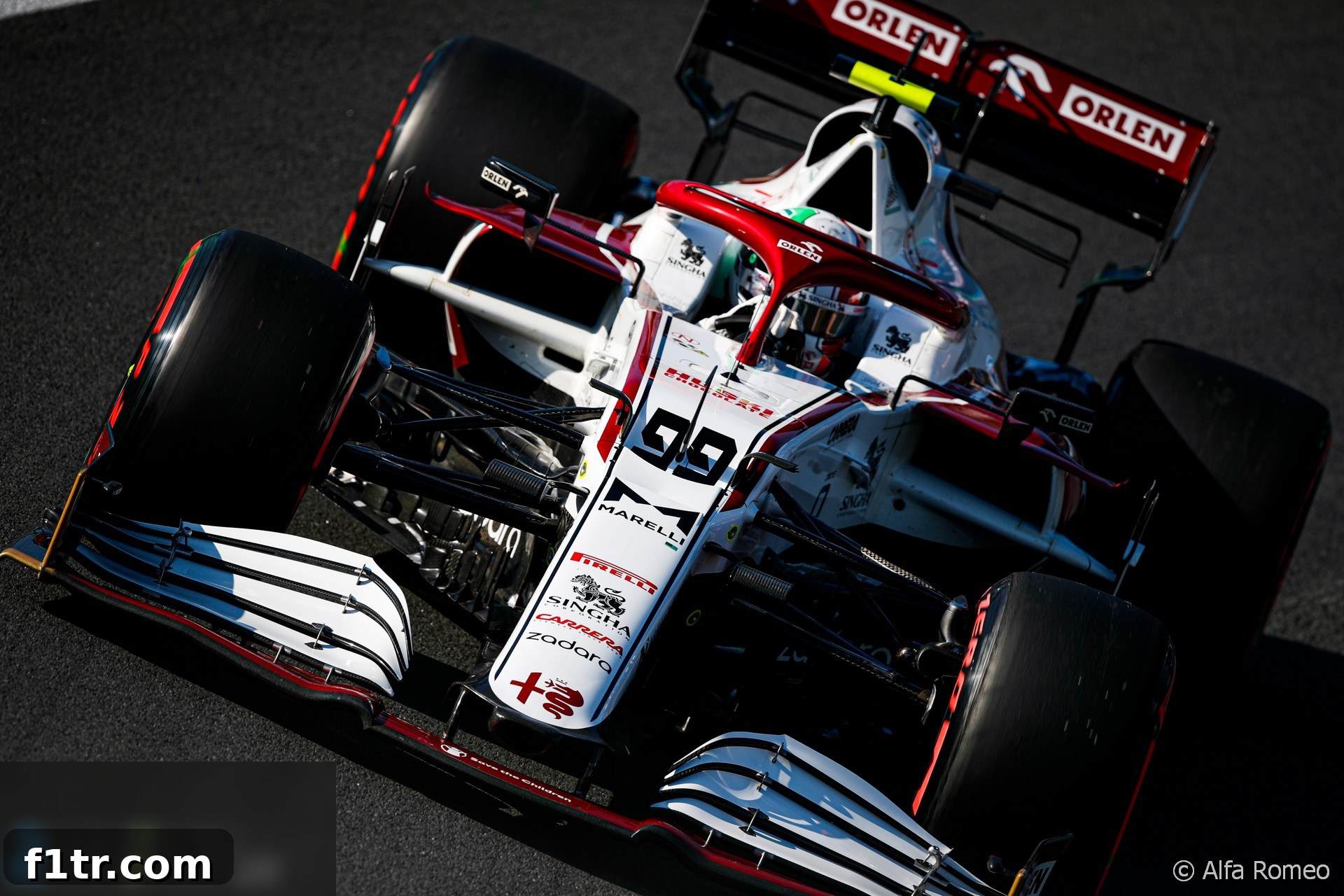
Giovinazzi Secures Alfa Romeo’s Best Qualifying Position of the Season at Dutch Grand Prix
Antonio Giovinazzi delivered a standout performance at the Zandvoort circuit, clinching seventh place on the grid for the Dutch Grand Prix. This exceptional result marked Alfa Romeo Racing ORLEN’s strongest qualifying showing of the 2021 Formula 1 season, a testament to the Italian driver’s skill and the team’s relentless effort. Giovinazzi, reflecting on his achievement, confidently stated that Alfa Romeo “deserved” this prime starting position after navigating a challenging session that included a dramatic incident with a wheelnut.
Advert | Become a Supporter & go ad-free
A Qualifying Session Marred by Drama and Resilience
The qualifying hour for Giovinazzi was anything but straightforward, a “rollercoaster” ride as he vividly described it. The initial free practice sessions had already hinted at Alfa Romeo’s surprising pace on the Zandvoort track, with the C41 car consistently demonstrating top-10 potential in FP1 and FP2. This early confidence was a crucial building block for the weekend, allowing the team to fine-tune their setup and for Giovinazzi to establish a strong rhythm on the demanding circuit.
However, the smooth sailing was nearly derailed during the crucial Q2 segment. A critical problem emerged with a wheelnut, threatening to prematurely end Giovinazzi’s bid for a spot in Q3. In the high-stakes environment of Formula 1 qualifying, even a minor mechanical glitch can spell disaster, and the pressure on the Alfa Romeo pit crew was immense. The team, however, rose to the occasion with remarkable professionalism and speed. “To be honest, the qualifying was a little bit of a rollercoaster because at one moment we had an issue with a wheel in Q2,” Giovinazzi recounted, visibly relieved. “But then the guys, they didn’t give up so thanks to them.” This quick thinking and efficient work from his mechanics ensured he could return to the track and complete a competitive lap, showcasing the unbreakable spirit within the Alfa Romeo garage.
Breaking Through to Q3: A Mega Lap and Deserved Reward
Once the wheelnut issue was resolved, Giovinazzi’s determination shone through. He successfully navigated Q2 and, for only the second time this year, powered the Alfa Romeo into the top-10 shootout of Q3. This achievement in itself was significant, signaling a breakthrough for a team that has often struggled to consistently compete at the sharp end of the grid.
In Q3, with the pressure mounting and the circuit conditions at their peak, Giovinazzi delivered a truly “mega” lap. This exceptional effort solidified his P7 grid slot, placing him directly behind the two Ferraris of Charles Leclerc and Carlos Sainz Jnr. The proximity to a top-tier team like Ferrari underscored the quality of his performance. “We went to Q3 and the car was okay – actually, it was great. The lap in Q3 was really mega. I just think we deserved this result,” Giovinazzi asserted, his voice tinged with pride and satisfaction.
This remarkable turn of pace was particularly surprising given Alfa Romeo’s pre-weekend expectations. Giovinazzi admitted that the team hadn’t anticipated such strong single-lap performance at Zandvoort. “This year it’s really difficult to understand which track can be better for us,” he explained. The fluctuating nature of their performance across different circuits had made it challenging to predict their competitiveness at any given Grand Prix. However, the unique characteristics of Zandvoort, combined with meticulous teamwork and a well-balanced car setup, seemed to unlock a hidden potential.
The Zandvoort Effect: Understanding Alfa Romeo’s Edge
Zandvoort, with its undulating terrain, high-speed banking, and demanding sequence of corners, presented a unique challenge to all teams. The circuit requires a finely tuned car that can handle rapid changes in direction, provide strong aerodynamic grip, and maintain stability through its iconic banked turns. For Alfa Romeo, it appears their C41 found a sweet spot in these conditions. Giovinazzi highlighted the importance of early confidence on such a technical track: “I think it was just teamwork. The car felt good from Friday, when you can build great confidence in a track like this, it’s just better.” This ability to quickly adapt and build driver confidence from the outset was a significant factor in their qualifying success.
The car’s inherent balance, combined with Giovinazzi’s precise driving style, allowed him to extract maximum performance. The team’s engineers likely made astute setup choices that optimized the car for Zandvoort’s distinctive features, perhaps favoring a higher downforce configuration that suited the twisty sections and banked corners. This synergy between driver, car, and track proved to be a potent combination, enabling them to outpace several rivals who typically operate ahead of them in the pecking order.
Setting Sights on Race Day: The Challenge of Holding Position
Looking ahead to the race, Giovinazzi’s objective was clear and pragmatic: “keep the position.” Starting from P7 offers a strong opportunity to score valuable championship points for Alfa Romeo, a crucial target as they battle in the constructors’ standings. However, Zandvoort is also known for being a circuit where overtaking is notoriously difficult. This characteristic presents both an advantage and a challenge. While it makes defending easier, it also means that any early gains must be consolidated, and strategic decisions during the race will be paramount.
“We start from a good position, P7. I know that something can happen also in the front. So we’ll see but for sure the target is to keep the P7,” Giovinazzi reiterated. His awareness of potential incidents among the front-runners hinted at a hopeful ambition for an even higher finish, should opportunities arise. The focus will be on a clean start, managing tyre degradation effectively, and executing a flawless pit stop strategy. Converting this strong qualifying performance into solid points would not only be a morale booster for the team but also a significant step in their championship campaign, potentially helping them climb away from the bottom of the constructors’ table.
Implications for Giovinazzi and Alfa Romeo’s Future
This exceptional performance at the Dutch Grand Prix arrived at a critical juncture for both Antonio Giovinazzi and the Alfa Romeo team. For Giovinazzi, whose future in Formula 1 has been a subject of ongoing speculation, a result like this is invaluable. It serves as a powerful demonstration of his talent, speed, and ability to perform under pressure, especially when given a competitive car. Delivering such a strong qualifying result, outperforming expectations and even placing ahead of a Ferrari, reinforces his credentials as a capable Formula 1 driver.
For Alfa Romeo, a P7 start represents more than just a good grid position; it’s a statement of intent. It highlights the team’s capacity to deliver peak performance when conditions align, and it validates the hard work put in by every member of the Sauber-run squad. Such results can attract further investment, boost team morale, and potentially influence driver market decisions for the upcoming seasons. As the season progresses, maintaining this level of performance and converting strong starts into consistent points finishes will be key to solidifying their position in the midfield and building a more competitive future in Formula 1.
Advert | Become a RaceFans supporter andgo ad-free
2021 Dutch Grand Prix: Related Coverage
- “So many people love him”: Raikkonen’s rivals pay tribute to retiring champion
- Alonso studied junior series, not IndyCar, for Zandvoort banking clues
- 2021 Dutch Grand Prix Star Performers
- Paddock Diary: Dutch Grand Prix part two
- Verstappen makes the Netherlands 12th country to produce a home F1 winner
Browse all 2021 Dutch Grand Prix articles