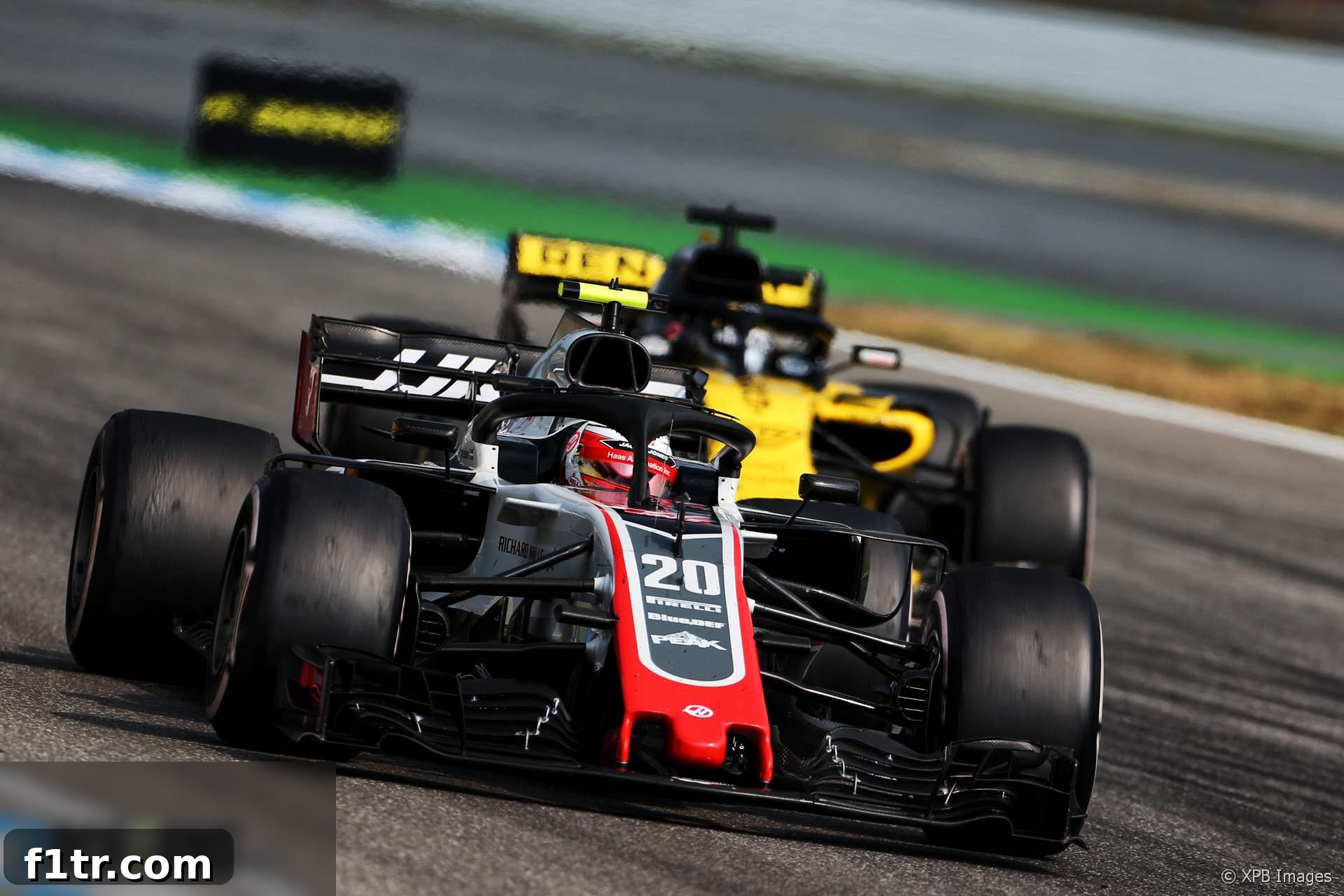
Haas F1 Team Commits Development Resources to 2019 Challenger
In a strategic move signaling their long-term vision, Haas F1 team principal Guenther Steiner has officially announced that the team is now fully dedicating its development efforts to its new car for the highly anticipated 2019 F1 season. This decision underscores the relentless pace of Formula 1 development and the critical importance of early preparation for future campaigns.
Haas’s Forward-Thinking Development Strategy for the 2019 Season
Insights from the Team Principal: Guenther Steiner on the 2019 Car
When pressed about the team’s development priorities, Steiner offered a clear and candid explanation of Haas’s forward-looking approach:
We decided. We are doing the ’19 car. We have to because otherwise you fall too far behind. And also when you look at our car now in the midfield we are quite solid so it’s no point to keep on working on this one because we have to look at the future.
We make developments and we will bring them to the car in the next races. They are smaller ones. In the windtunnel we are developing the ’19 car.
Quotes: Dieter Rencken
Steiner’s declaration highlights a common, yet crucial, strategic dilemma faced by many Formula 1 teams, particularly those operating within the highly competitive midfield. The decision to shift focus from the current car to the next year’s challenger is a calculated gamble. For Haas, the rationale is clear: their current VF-18 model demonstrated strong performance in the 2018 season, establishing the team as a solid contender in the midfield battle. With a relatively stable position, the immediate gains from further extensive development on the current car would likely be marginal compared to the long-term benefits of an early head start on the 2019 design.
The F1 development cycle is unforgiving. Teams that fall behind in conceptualizing and testing their next-generation cars often find themselves playing catch-up for an entire season. By committing resources to the 2019 car now, Haas aims to avoid this pitfall, ensuring they are at the forefront of the design curve for the upcoming regulations and competitive landscape. While minor upgrades will still be introduced to the current car for the remainder of the season, the primary focus of critical departments, especially aerodynamics and design, has irrevocably shifted to the future. This move is a testament to Haas’s ambition and their determination to solidify their position as a formidable force in Formula 1.
Elevate Your F1 Experience: Become a RaceFans Supporter and Go Ad-Free
RaceFans thrives as an independent voice in motorsport journalism, a mission supported in large part by its dedicated community of readers. To ensure the continued development and growth of our comprehensive coverage, we invite you to consider becoming a RaceFans Supporter.
For a modest contribution of just £1 per month, or £12 annually, you’ll not only help fund the future of independent F1 journalism but also unlock an enhanced, ad-free browsing experience across the entire site. This exclusive benefit allows you to dive deep into news, analysis, and insights without interruption, enjoying a cleaner, faster interface.
Your support is invaluable, directly contributing to the quality and breadth of content we can provide. Join our growing community of supporters and experience RaceFans at its best. Learn more and sign up today:
- Become a RaceFans Supporter
- RaceFans Supporter FAQ
Advert | Become a RaceFans supporter andgo ad-free
F1 Social Media Buzz: Engaging with the Fan Base
Social media platforms have become an indispensable channel for real-time news, fan interaction, and candid insights within the world of Formula 1. Here’s a glimpse into some notable discussions and posts circulating on Twitter, Instagram, and beyond:
Rather poignant discovery in my archive while cleaning up the office: @ForceIndiaF1 marketing brochure circa 2013 pic.twitter.com/0E1vvuREtC
— Fritz-Dieter Rencken (@RacingLines) August 7, 2018
Veteran motorsport journalist Dieter Rencken shared a poignant throwback: a 2013 marketing brochure for Force India F1. This discovery resonated deeply given the precarious financial situation the team faced around this time in 2018. Force India, a team renowned for punching above its weight, had recently entered administration, casting a shadow over its future. Rencken’s tweet served as a nostalgic reminder of the team’s journey and achievements during more stable times, highlighting the ever-present financial challenges in Formula 1 and the often-fragile nature of team existence despite competitive on-track performance.
https://twitter.com/keithcollantine/status/1026825259171938306
Sorry, not got a ticket to climb aboard the Stroll/Force India hype train. I’m genuinely delighted for the employees of FI that their futures are safe, but really… hope I’m proven wrong (again)… #VerucaSalt
— Ben Hunt (@benjhunt) August 7, 2018
Another prominent voice in F1 journalism, Ben Hunt, expressed skepticism regarding the “Stroll/Force India hype train.” His tweet captured a sentiment shared by some fans and pundits alike: while the rescue of Force India by a consortium led by Lawrence Stroll (father of driver Lance Stroll) was undeniably positive for the team’s employees and their immediate future, there were underlying concerns about the implications of such an acquisition. The use of the hashtag #VerucaSalt humorously alluded to potential perceptions of entitlement or singular focus, raising questions about the team’s long-term direction and whether its core identity would be preserved amidst the new ownership. This sentiment highlights the complex interplay of finance, team ownership, and sporting integrity in modern Formula 1.
- Find more official F1 accounts to follow in the F1 Twitter Directory
Beyond the Paddock: Key Motorsport News and Insights
Here’s a curated selection of additional motor racing links of interest, offering deeper dives into various aspects of the sport:
Advert | Become a Supporter & go ad-free
Michael Andretti and McLaren: A Look Back at a Challenging F1 Stint (McLaren)
“While Andretti’s race was over on lap one, Senna went on to score of the most famous wins of his career. ‘I really think I could have raced with him, that’s the worst part.'” This article reflects on Michael Andretti’s tumultuous 1993 Formula 1 season with McLaren, a partnership that promised much but ultimately delivered little. Despite his immense success in IndyCar, Andretti struggled to adapt to F1, particularly alongside the legendary Ayrton Senna. The quote poignantly captures Andretti’s frustration and the ‘what if’ scenario of competing on equal terms with one of the sport’s greatest, underscoring the formidable challenge of transitioning between different motorsport disciplines at the highest level.
- Further Reading: 1993 European Grand Prix: Senna’s last great race at Donington
COTA Chairman Epstein Downplays Austin IndyCar Series Talk (Austin-American Statesman)
“As we’ve said for some time, IndyCar at COTA would be spectacular. It may happen one day but, as of now, we’ve had little more than some constructive conversations.” The prospect of IndyCar racing at the Circuit of the Americas (COTA) in Austin has long been a topic of discussion among motorsport enthusiasts. COTA, a world-class facility primarily known for hosting Formula 1, offers a challenging and exciting track layout that many believe would be perfectly suited for IndyCar’s brand of high-speed, close-quarters racing. This report indicates that while both parties acknowledge the potential for a “spectacular” event, concrete plans were not yet in place, highlighting the complexities involved in scheduling and integrating major racing series at a single venue.
Ricciardo Interview: Why He Needs Renault (Goodwood)
Daniel Ricciardo (speaking before his Renault deal was confirmed): “It’s a tough one because I feel for a lot of years we’ve had a great chassis. It’s always every year, this is our year. We win a few more, but we’re not quite there. If I was to leave and Honda come good…” This interview provides fascinating insight into Daniel Ricciardo’s mindset shortly before his surprising move from Red Bull Racing to Renault was announced. His comments reveal a growing frustration with Red Bull’s perennial championship drought, despite their strong chassis, particularly concerning the engine performance. The uncertainty surrounding Honda’s future engine development for Red Bull appears to have been a significant factor in his decision, as he pondered the risk of remaining with a team that might still fall short of championship aspirations. His eventual move to Renault was a bold gamble, driven by a desire for a new challenge and the belief in Renault’s potential as a factory team.
Written in the Stars: Analyzing F1 Broadcasting (F1 Broadcasting)
“A further negative trend comes in the form of five ‘beeps’ at the start of each race. The beeps have blighted not only the F1 broadcasts, but also Formula Two, GP3 and Porsche Supercup races. FOM are experimenting in this area, with some races featuring excruciatingly loud beeps, and others featuring no beeps at all (possibly because the sound of the cars masks the beeps).” This piece delves into the nuances of Formula 1 broadcasting, specifically highlighting a recurring issue with “beeps” at the start of races across various series. For ardent motorsport fans, the aural experience is as crucial as the visual spectacle, and any intrusive or jarring sounds can significantly detract from the viewing pleasure. The article points to experimentation by FOM (Formula One Management) in this area, indicating a recognition of the problem and an ongoing effort to refine the sound engineering for live broadcasts. The quest for the perfect race soundtrack remains a continuous challenge in modern sports production.
We always endeavour to credit original sources. If you have a tip for a link to feature in the next RaceFans round-up please send it in here:
- Contact RaceFans
From the Fans: Debating Driver Performances in the Midfield
Yesterday, we ignited a discussion about which F1 drivers were performing exceptionally well relative to their teammates in the current season. Today, we feature an insightful assessment from one of our readers, AmericanF1, offering a compelling breakdown of driver dynamics:
The two drivers that have impressed me the most, particularly in relation to their teammates, have been Magnussen and Leclerc. Grosjean can be devastatingly quick on the day, but he seems to need all the stars to align before he can unleash that speed. Leclerc has really come into his own and showed Ericsson to be a lackluster performer.
My biggest disappointment so far has been Hartley. I had high hopes for him based on his performance with Porsche, but he seems to be having difficulty with the change from LMP1 to F1.
AmericanF1
AmericanF1’s comment provides a sharp analysis of driver performance, a topic always hotly debated among F1 enthusiasts. Kevin Magnussen’s consistently strong showings against his often erratic teammate Romain Grosjean at Haas were a recurring theme in the 2018 season. While Grosjean possessed flashes of brilliance, his inconsistency and propensity for errors made Magnussen’s steady, aggressive approach stand out even more. This comparison highlights the importance of not just raw speed, but also reliability and mental fortitude over a full season.
Charles Leclerc, in his rookie year with Sauber, was undoubtedly one of the season’s breakout stars. His ability to quickly adapt, learn, and extract maximum performance from the car was evident, making a clear distinction between his capabilities and those of his more experienced teammate, Marcus Ericsson. Leclerc’s ascendance foreshadowed his future move to a top team, cementing his reputation as a formidable talent. On the flip side, Brendon Hartley’s struggles at Toro Rosso, despite his impressive World Endurance Championship success with Porsche, underscore the unique demands and pressure of Formula 1. The transition from LMP1 endurance racing to the cutthroat sprint format of F1 proved to be a significant hurdle for Hartley, illustrating that success in one elite motorsport category doesn’t automatically guarantee it in another.
F1 Heritage and Milestones
Happy Birthday!
No RaceFans birthdays today.
If you want a birthday shout-out, let us know when yours is via the contact form or by adding to our comprehensive list here.
On This Day in F1
- Born today in 1953: Nigel Mansell
A true icon of Formula 1, Nigel Mansell, the “Lion,” was born on this day in 1953. Mansell’s career was marked by his aggressive driving style, passionate dedication, and memorable battles, culminating in his dramatic 1992 Formula 1 World Championship triumph with Williams. His unique charisma and thrilling performances made him a fan favorite throughout his illustrious career.