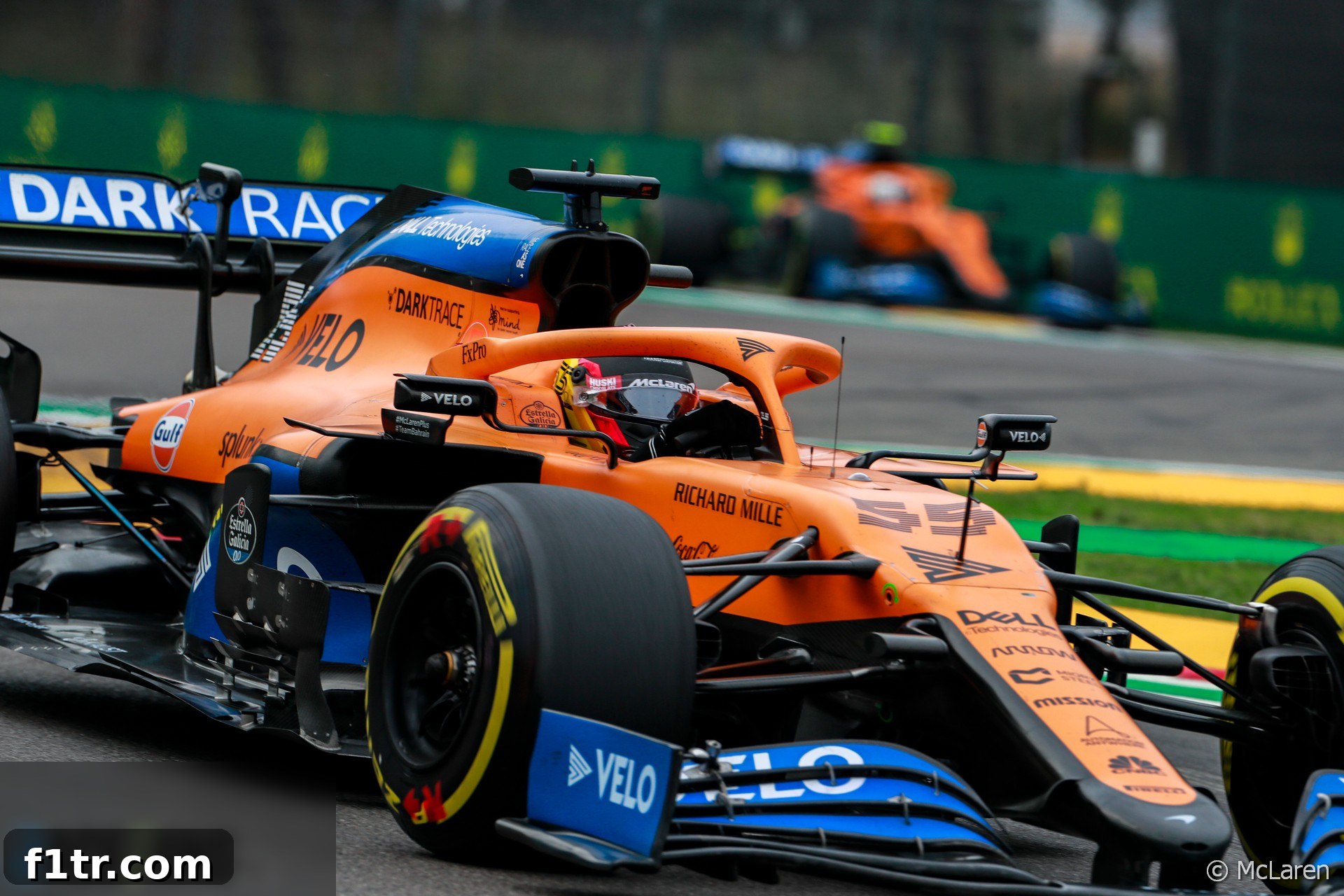
The battle for third place in the Formula 1 Constructors’ Championship represents far more than just bragging rights; it signifies a monumental achievement, substantial financial rewards, and a vital benchmark for teams striving to climb the competitive ladder. For McLaren, a storied name in motorsport currently undergoing a significant resurgence, securing this coveted position is paramount. As the 2020 season reached its climactic stages, team principal Andreas Seidl pinpointed a critical area where his squad needed to intensify its focus: qualifying pace. He stressed that maximizing performance on Saturday afternoons was the key to unlocking their full potential and ultimately outmaneuvering their formidable rivals, Renault and Racing Point, in the fiercely contested championship.
Advert | Become a Supporter & go ad-free
The championship standings underscored the intensity of this multi-team tussle. McLaren found themselves locked in a tight fight, tied on points with Racing Point and trailing Renault by a mere single point after the Emilia Romagna Grand Prix. This razor-thin margin epitomized the season’s competitiveness, where every single point, every qualifying position, and every strategic decision held immense weight. The Imola weekend served as a stark reminder of the challenges McLaren faced, illustrating how a slight deficit in qualifying could drastically compromise their race day potential, particularly on circuits where overtaking opportunities were limited.
At Imola, a track renowned for its narrow layout and unforgiving nature, both McLaren drivers found themselves finishing behind their key rivals. Daniel Ricciardo delivered a stellar performance for Renault, securing an impressive third-place podium finish. Meanwhile, Sergio Perez of Racing Point clinched a solid sixth position. Both results saw them cross the finish line ahead of McLaren’s MCL35s, highlighting a recurring pattern that McLaren needed to address. Seidl articulated the core issue: while McLaren often demonstrated a slim race pace advantage over their competitors, this edge was effectively nullified on tracks that offered scant opportunities for overtakes. Starting further down the grid meant their drivers were frequently stuck in traffic, unable to exploit their car’s potential to move up the order.
Seidl reflected on the Imola weekend with a pragmatic outlook, acknowledging the direct link between their qualifying performance and the subsequent race result. “In the end, it was clear looking at [the] weekend that our race on Sunday was pretty much compromised with the qualifying result,” he stated. “Finishing in ninth and 10th, there wasn’t a lot really we could do today.” This sentiment captured the frustration of knowing their car possessed more speed than their grid positions allowed them to showcase. The battle on Sunday largely became one of damage limitation rather than a charge up the field, a scenario McLaren was determined to avoid in future races.
Carlos Sainz Jnr offered a momentary glimpse of McLaren’s underlying pace during the Imola race, executing one of the few significant passes of the day on his own teammate, Lando Norris, en route to claiming seventh place at the finish. This move, while demonstrating Sainz’s skill and the car’s potential, simultaneously underscored the difficulty of making progress through the field. Seidl reiterated this point, saying, “We have seen with Carlos that on a track like this, if you’re stuck behind a car then even if I think we had maybe slightly more pace, we simply couldn’t do anything.” It was a clear illustration of how crucial clean air and optimal track position are in modern Formula 1, particularly on circuits that punish even minor errors and offer limited avenues for advancement.
Despite the challenging outcome at Imola, Seidl commended his team for an error-free weekend in terms of execution. He emphasized that given their starting positions, the final result was the best they could realistically achieve. “That’s why I think, in the end, we still need to be happy with the outcome that we could score 10 points,” he noted. “The team and both drivers, in terms of race execution, did a great job. We had good pit stops and the right calls on the strategy side and obviously we benefited from the incidents, which kept us in the fight for the third.” This highlighted the importance of consistency and capitalizing on any opportunities presented, even when the underlying pace might not be enough to dictate the race. Every point gained was vital in such a tight championship fight, and McLaren’s operational efficiency ensured they didn’t leave any on the table.
Delving deeper into the qualifying statistics, McLaren had shown strong potential throughout the season. Of the three teams battling for third, McLaren had reached Q3 – the final qualifying session reserved for the top 10 fastest cars – more often than their rivals. With 24 appearances in Q3, they outperformed Renault (17 times) and Racing Point (18 times). These numbers painted a picture of a car capable of performing at the sharp end when all elements converged. However, a concerning trend had emerged in the preceding five Grands Prix. In this recent run, both Lando Norris and Carlos Sainz had consistently qualified behind at least one Racing Point or Renault driver, pushing them further down the starting order and into the challenging traffic Seidl lamented.
This recent slump in qualifying performance was the precise issue Seidl aimed to rectify. He explicitly stated that the team needed to dedicate the upcoming period to meticulously analyze every single aspect of their operation. The goal was clear: identify and implement even the “smallest gains” across all areas to narrow the gap to their rivals. At Imola, Renault demonstrated a two-tenths of a second advantage in qualifying pace, a significant margin in the hyper-competitive world of F1. Similarly, Racing Point had shown a comparable edge during Q3 at the Algarve circuit. These seemingly small differences, accumulated over a single qualifying lap, proved decisive in dictating Sunday’s race narrative. Closing these fractional gaps would be critical to McLaren’s success.
Seidl’s message was one of determined optimism and a clear strategic directive. He conveyed confidence in McLaren’s resources, both human and mechanical. “With the team we have, with the car we have and also with our two drivers, we still have it in our hands to keep this fight alive and that’s what we’re focused on,” he asserted. This belief in their collective ability underscored the motivation within the team to not only maintain their championship challenge but to elevate their performance when it mattered most. The fight for third place was not just about the car; it was about the synergy between drivers, engineers, strategists, and every member of the team contributing to a unified goal.
The imperative to prioritize qualifying pace resonates throughout the paddock, but for McLaren, it had become the cornerstone of their immediate strategy. Seidl’s emphasis on “Saturday afternoon” performance was not merely a tactical preference but a fundamental truth of modern Formula 1. The difference between having “free air” ahead, allowing a driver to run their own race and optimize tire management, versus being “stuck behind another car” and losing aerodynamic efficiency, overheating tires, and struggling to overtake, is monumental. This fundamental truth meant that every fraction of a second found in qualifying would translate into a significantly stronger position for the race, offering a much clearer path to championship points. The remaining races of the season promised an exhilarating conclusion, and McLaren’s ability to consistently deliver on Saturdays would undoubtedly be the defining factor in their pursuit of third place.
Advert | Become a RaceFans supporter andgo ad-free
2020 F1 season
- Grosjean to make F1 test return tomorrow for first time since Bahrain horror crash
- Pictures: Wrecked chassis from Grosjean’s Bahrain fireball crash to go on display
- Bottas vs Rosberg: Hamilton’s Mercedes team mates compared after 78 races each
- F1 revenues fell by $877 million in Covid-struck 2020 season
- Hamilton and Mercedes finally announce new deal for 2021 season
Browse all 2020 F1 season articles