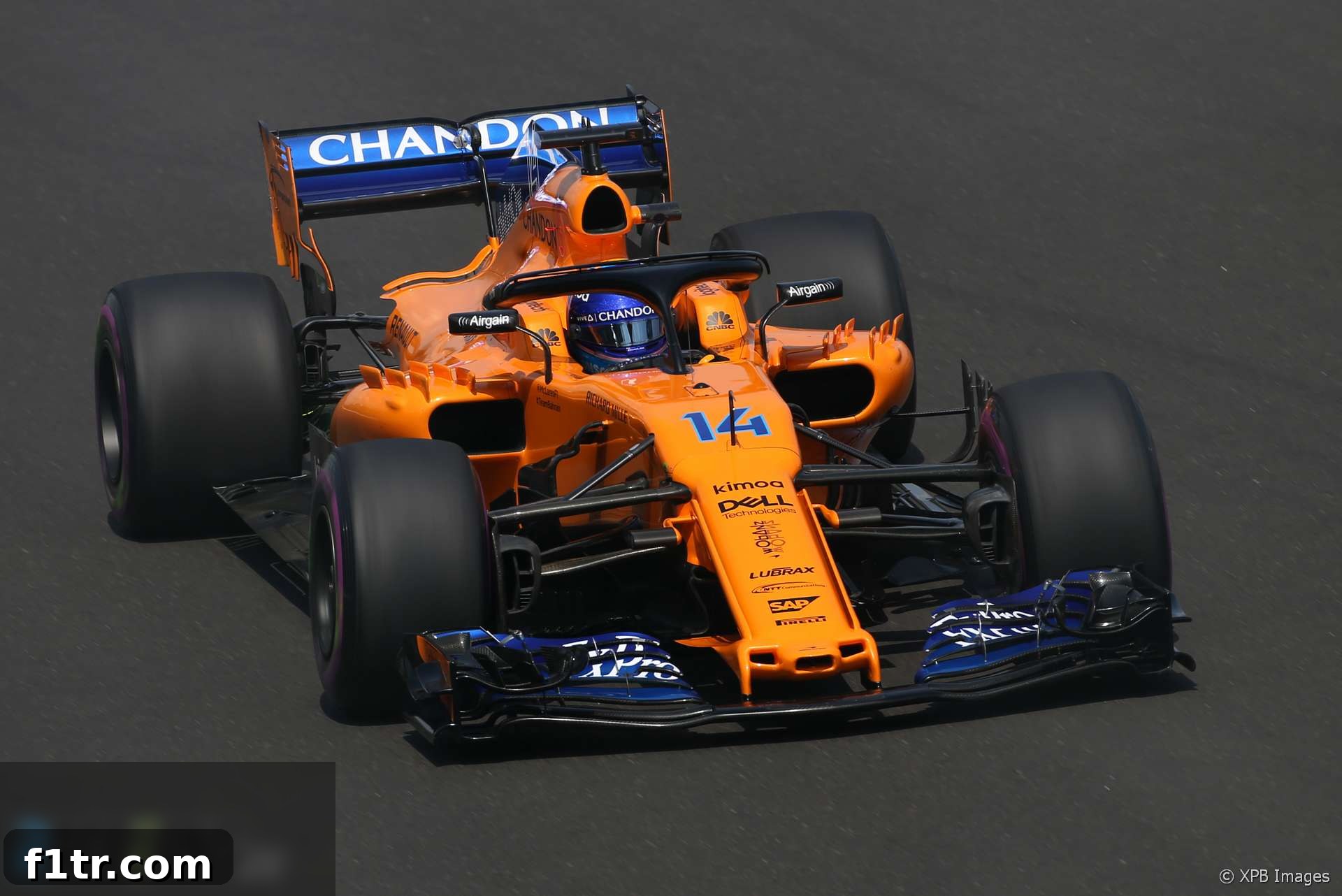
The 2018 Formula 1 season presented McLaren with a formidable set of challenges, particularly concerning the aerodynamic efficiency of its MCL33 challenger. As the racing calendar progressed towards the Russian Grand Prix, the Woking-based team revealed its strategic intention to deploy innovative car setups, which were rigorously developed and tested during the high-speed Italian Grand Prix weekend. This move was specifically aimed at mitigating the persistent problem of excessive aerodynamic drag, a factor that had severely hampered the car’s straight-line performance throughout the season.
McLaren’s Persistent Aerodynamic Challenge: Tackling Drag Head-On
Excessive aerodynamic drag had been a significant Achilles’ heel for McLaren’s MCL33. In the demanding world of Formula 1, drag represents the air resistance a car encounters as it speeds down the track, directly impacting its top speed capability and overall fuel efficiency. While generating substantial downforce is crucial for maximum cornering grip and stability, it often comes with the inherent trade-off of increased drag. The MCL33 frequently demonstrated competitive cornering ability, yet it consistently struggled to match rivals on straights, losing valuable time lap after lap. This performance disparity was particularly stark on circuits characterized by long, high-speed sections, such as the legendary Monza, and was anticipated to be a critical factor at the upcoming Russian Grand Prix, held at the Sochi Autodrom.
The Monza Experiment: A Glimmer of Hope for Drag Reduction
The Italian Grand Prix at Monza, affectionately known as the “Temple of Speed,” served as an unconventional but highly effective testbed for McLaren’s engineers. Its unique circuit layout, requiring extremely low downforce settings, forced teams to strip back their aerodynamic packages, creating an ideal environment for evaluating drag reduction solutions. Veteran driver Fernando Alonso, a prominent voice within the team regarding car development, confirmed the intensive efforts undertaken during that weekend. “Some of the ideas we tested in Monza – it seems that we improved on Saturday – were more for drag reduction,” Alonso stated, highlighting the positive indications gleaned from their experimental work. He further added, “So it will be implemented I think on the next races.”
This feedback from Alonso was a significant boost, suggesting that the team had uncovered promising avenues for improving the MCL33’s straight-line speed. These solutions likely involved nuanced adjustments to wing angles, optimization of diffuser designs, or subtle modifications to bodywork components. The cautious optimism expressed by Alonso underscored a potential breakthrough in understanding and addressing the car’s inherent drag issues, providing a much-needed sense of direction for the latter part of the season. The commitment to implementing these findings in subsequent races demonstrated a proactive approach to unlocking performance from their current machinery.
Sochi Autodrom: A Test of Straight-Line Prowess and Adaptability
The Sochi Autodrom, home to the Russian Grand Prix, presents a distinct set of aerodynamic challenges compared to Monza, yet straight-line performance remains paramount. The circuit features a sprawling main straight, leading into several long, sweeping corners that transition into further acceleration zones. A car burdened with excessive drag would inevitably concede precious time on these crucial sections, making overtakes arduous and defending positions a constant battle against faster rivals. McLaren’s strategic decision to carry over the Monza-derived setups to Russia underscored their conviction in the efficacy of their experimental findings and their applicability to diverse high-speed circuit profiles.
McLaren’s Sporting Director, Gil de Ferran, provided further insight into the team’s adaptable approach. “We’re always trying to do the best we can trying to step forward,” he affirmed, emphasizing the relentless pursuit of improvement in Formula 1. De Ferran elaborated on their development methodology, stating, “We’re exploring different spaces. Like Fernando said in Monza we decided to take a completely different direction and it worked out well for that type of track. Maybe we’ll try a similar direction again in Russia.” This statement highlights a flexible, data-driven engineering philosophy, where the team is prepared to challenge conventional setup wisdom and experiment with novel configurations if the data indicates a pathway to enhanced performance tailored to specific circuit characteristics.
Balancing Present Performance with Future Ambition: The 2019 Car Focus
De Ferran’s comments also shed light on McLaren’s broader development strategy, reiterating the continuous nature of innovation in F1. “We’re trying to bring a little bit of aero development every race,” he mentioned, underscoring the relentless drive for incremental gains that can cumulatively shave crucial tenths off lap times. The phrase “exploring different spaces” implies a willingness to push the boundaries beyond mere evolutionary updates, venturing into potentially unconventional design philosophies to uncover untapped performance potential. This aggressive experimentation signals a deep commitment to returning McLaren to its former competitive glory.
However, a critical strategic pivot was also evident in the team’s priorities. While efforts continued to optimize the MCL33 for the remaining races, the primary focus had already decisively shifted towards the forthcoming 2019 F1 season. De Ferran unequivocally confirmed this transition, stating that the team was “full-on on next year’s car.” This signifies that the bulk of McLaren’s engineering resources, design expertise, and financial investment in research and development were now being channeled into the creation of its successor. This delicate balancing act between maximizing current performance and securing a strong future is a common dilemma for all Formula 1 teams, and for McLaren, amidst its rebuilding phase, this decision was pivotal for its long-term aspirations and competitive resurgence on the global stage.
The Road Ahead for McLaren in Formula 1
The arduous journey to overcome aerodynamic deficiencies in Formula 1 is a testament to the sport’s technical complexity, and McLaren’s focused efforts with the MCL33 in 2018 perfectly encapsulated this challenge. The strategic application of drag-reducing setups, refined at Monza and deployed at the Russian Grand Prix, was a clear demonstration of their persistence, adaptability, and unwavering commitment to innovation. While the immediate results in Sochi would offer valuable insights into the effectiveness of these changes for the current season, the broader and more significant implications lie in the invaluable lessons learned and the foundational knowledge being amassed for the design and development of the 2019 challenger.
The insights gained from “exploring different spaces” and aggressively pursuing drag reduction solutions would undoubtedly feed directly into the development cycle of a more competitive and aerodynamically balanced package for the future. As McLaren continues its ambitious journey to reclaim its rightful place at the forefront of the Formula 1 grid, this period of intense technical evaluation and strategic resource allocation marked a pivotal point in their technical evolution. It showcased a pragmatic blend of immediate problem-solving for current performance issues and astute, long-term strategic planning aimed at ensuring a more successful and dominant presence in the seasons to come.
Stay Connected with Formula 1 Insights and Updates
- Join RaceFans on Facebook
- Follow RaceFans on Twitter
- Get daily email updates from RaceFans
Explore More from the 2018 F1 Season
- F1 feared “death knell” for Drive to Survive after Ferrari and Mercedes snub
- McLaren staff told us we were “totally crazy” to take Honda engines in 2018 – Tost
- ‘It doesn’t matter if we start last’: How Red Bull’s junior team aided Honda’s leap forward
- Honda’s jet division helped F1 engineers solve power unit problem
- McLaren Racing losses rise after Honda split
Browse all 2018 F1 season articles
Consider supporting our independent journalism. Become a RaceFans supporter today!