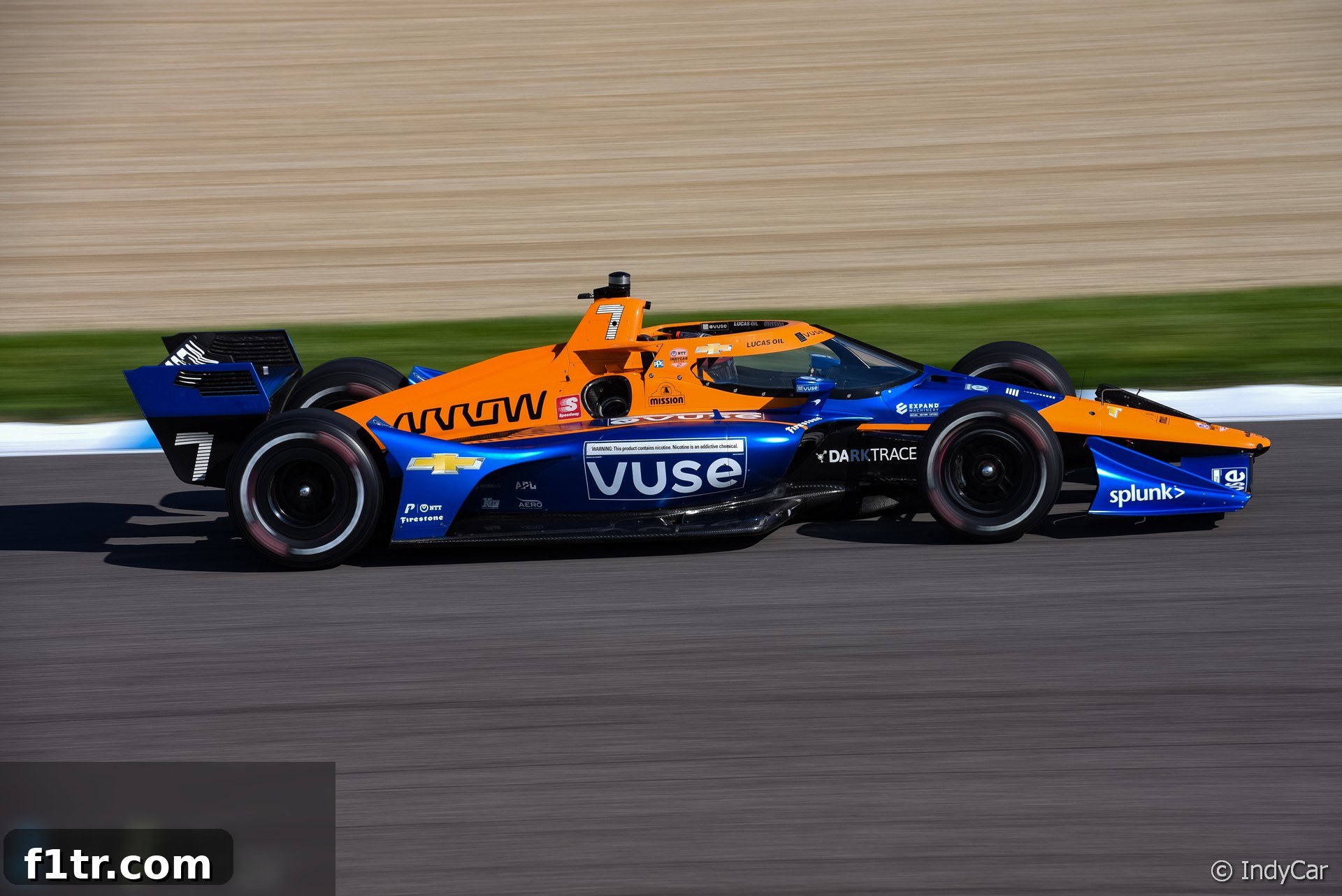
McLaren SP is gearing up for a significant strategic expansion, with plans to introduce a third full-time car to its IndyCar roster no later than the highly anticipated 2023 season. This ambitious move underscores McLaren Racing’s deepening commitment to the NTT IndyCar Series and its intent to solidify its position as a championship-contending powerhouse.
Advert | Become a Supporter & go ad-free
Speaking shortly after McLaren Racing officially announced its acquisition of a majority stake in the team, CEO Zak Brown articulated his vision for enlarging the squad. Brown’s comments highlighted not just the financial capacity for such an expansion but, more importantly, the strategic imperative behind it: to field a team capable of consistently winning races and vying for the championship title. This commitment from McLaren Racing marks a pivotal moment for McLaren SP, providing the resources and backing necessary to pursue loftier goals within one of motorsport’s most competitive arenas.
Zak Brown’s Ambitious Vision: Championship Contention with Three Cars
Zak Brown’s perspective on the expansion is clear and unequivocal. “It’s just about [getting] the right package together,” he stated, emphasizing that the team’s ambitions go far beyond simply adding another car to the grid. While acknowledging the substantial financial investment required for such an endeavor, Brown confidently asserted, “We’ve got resources, so the economics are not a concern.” This declaration suggests that McLaren SP, now with enhanced backing from McLaren Racing, possesses the financial muscle to execute its growth strategy without compromise. The focus, therefore, shifts from funding to assembling a winning formula encompassing talent, technology, and strategic acumen.
The true heart of Brown’s vision lies in the competitive intent: “But we want to run three cars that can win races and compete for the championship.” This statement is a powerful declaration of intent, signaling that McLaren SP is not content with mere participation. In a series as fiercely contested as IndyCar, where driver skill often dictates outcomes, Brown rightly identified the dual nature of championship pursuit. “I think this is very much a driver championship as much as it is a team, that’s what makes it so exciting,” he explained. This understanding profoundly influences the team’s approach to driver selection, underscoring the critical role an elite driver plays in achieving collective success. The search for this third driver is, therefore, not merely about filling a seat but about securing a talent capable of elevating the entire team’s performance and championship aspirations.
The Search for the “Right Pilot”: A Strategic Imperative
The quest for the ideal third driver is central to McLaren SP’s expansion strategy. Brown candidly admitted the challenge, stating, “So we need to make sure we can get the right pilot, as they say, in the race car. And there’s not a lot of them on the market. So we’ve got a very short list.” This ‘short list’ implies a meticulous vetting process, focusing on individuals who possess a rare combination of raw speed, race craft, consistency, and the ability to integrate seamlessly into a high-performance team environment. The scarcity of such talent in the global motorsport landscape makes this recruitment drive one of the most crucial elements of McLaren SP’s long-term strategy.
Brown outlined a flexible but firm timeline for this crucial acquisition. “If we can land someone that we think is capable of winning, we’ll go for it in ’22,” he revealed, indicating an eagerness to accelerate the expansion if the perfect candidate emerges sooner than expected. However, he also provided a pragmatic contingency: “If not, we’ll spend ’22 to making sure we find the right driver for ’23. But we definitely want to be there with three cars in ’23.” This strategic patience demonstrates a commitment to quality over speed, ensuring that the team’s long-term objectives are not compromised by a hasty decision. The year 2022 will thus serve as a critical period for evaluating talent, nurturing relationships, and securing the ideal individual to complete McLaren SP’s expanded lineup.
Amidst the excitement of expansion, Zak Brown also took the opportunity to reaffirm his confidence in the team’s existing driver lineup. “We’re very happy with Pato and Felix and you’ll see them in our cars next year,” he confirmed, referring to current drivers Patricio O’Ward and Felix Rosenqvist. Both drivers have demonstrated considerable talent and potential within the IndyCar Series, and Brown’s backing signals stability and continuity for the core of the team. O’Ward, in particular, has emerged as a front-runner, showcasing the kind of raw speed and aggressive driving style that aligns perfectly with McLaren’s winning ethos. Rosenqvist, a proven talent, continues to work with the team to extract maximum performance, and Brown’s confidence suggests belief in his ability to deliver consistent results in the coming seasons. Their continued presence provides a strong foundation upon which the third-car expansion can be built.
Taylor Kiel’s Perspective: Balancing Experience with Untapped Potential
Complementing Zak Brown’s overarching vision, McLaren SP team principal Taylor Kiel offered a nuanced perspective on the ideal profile for their prospective third driver. Kiel indicated that the team is not necessarily constrained by the need for an experienced driver, even while acknowledging the immediate advantages such a driver could bring. “I think that that can possibly speed up your development, but ultimately we’ve had success with rookies and young drivers in the series as well, so I don’t think that we need to be handcuffed to find somebody within the paddock,” Kiel explained.
This statement is particularly illuminating, highlighting McLaren SP’s strategic flexibility in its driver search. While a seasoned veteran might offer a “short-term benefit” by bringing immediate pace, technical feedback, and championship experience, Kiel’s comments suggest that the team is equally open to nurturing emerging talent. McLaren SP has indeed demonstrated a propensity for working successfully with younger drivers, often helping them unlock their full potential within the demanding IndyCar environment. This approach allows the team to consider a broader spectrum of candidates, looking beyond the established names currently competing in the series. It implies a willingness to invest in a driver’s long-term growth, aligning with McLaren’s historical reputation for developing motorsport stars.
The phrase “not handcuffed to find somebody within the paddock” further underscores this expansive outlook. It means McLaren SP is actively looking beyond the current crop of IndyCar drivers, casting its net wider to include talents from other premier global motorsport categories. This could involve drivers from Formula 1, Formula 2, Formula E, or even endurance racing, provided they possess the right combination of skill, ambition, and adaptability required to excel in IndyCar’s unique blend of oval, road, and street course challenges. This open-minded approach ensures that McLaren SP has access to the best available talent worldwide, not just those familiar with the specific nuances of the IndyCar paddock. It reflects a strategic commitment to finding the absolute best fit for the team’s long-term championship aspirations, regardless of their immediate familiarity with the series.
The Broader Motorsport Talent Pool: From F1 Aspirants to IndyCar Hopefuls
The conversation around McLaren SP’s third driver naturally extends to the broader landscape of global motorsport talent. Recent events and paddock observations provide intriguing clues as to who might be on McLaren’s radar, or at least who represents the type of talent considering an IndyCar move. Formula 2 driver Christian Lundgaard, for instance, was set to make his IndyCar debut for Rahal Letterman Lanigan Racing (RLL) in Saturday’s race on the Indianapolis road course. Such appearances serve as crucial evaluation opportunities, not just for the teams hosting them but also for rival teams like McLaren SP, which are actively scouting for future stars. These “try-outs” allow drivers to showcase their adaptability to IndyCar machinery and race formats, while also offering teams a direct comparison against established series regulars.
Another F2 rival, Marcus Armstrong, was seen visiting the IndyCar paddock in Nashville last weekend. These paddock visits are often more than casual observations; they signal a genuine interest in the series and can be precursors to more serious discussions about future opportunities. For young drivers aspiring to top-tier motorsport, IndyCar offers a compelling alternative to Formula 1, providing a high-profile platform for professional racing and championship contention. The series’ growing international appeal, combined with its unique blend of racing formats, makes it an attractive destination for ambitious talents seeking to carve out a successful career.
Adding another layer of intrigue, former Formula 1 driver Alexander Albon was also expected to attend at Indianapolis. Drivers with F1 experience, even those who haven’t secured a permanent seat in Grand Prix racing, bring a wealth of top-tier professional experience, technical understanding, and international recognition. Albon’s potential presence in the IndyCar paddock, whether for a casual visit or more substantive discussions, highlights a growing trend of talent crossover between Formula 1 and IndyCar. As the FIA continues to award more Superlicence points to IndyCar drivers, making it a more viable path for F1 hopefuls, the series’ appeal to a diverse range of international talent is only set to increase. For McLaren SP, this broad talent pool, encompassing both promising rookies and experienced F1 alumni, provides a rich hunting ground for their coveted third seat.
Strategic Implications for McLaren SP and the IndyCar Series
The expansion to a three-car team carries significant strategic implications, not only for McLaren SP but also for the IndyCar Series as a whole. For McLaren SP, fielding a trio of cars provides a substantial competitive advantage. It allows for a greater collection of data during practice and qualifying sessions, enabling engineers to refine setups and strategies more effectively. On race weekends, a third car offers increased strategic flexibility, potentially allowing the team to run different tire strategies or respond more dynamically to unexpected race incidents. Furthermore, having three drivers contributing to technical feedback and development accelerates the evolution of the race cars, benefiting the entire team. This collective effort strengthens the team’s overall championship assault, making it a more formidable contender for both driver and team titles.
For the NTT IndyCar Series, McLaren SP’s ambitious expansion is a strong indicator of the series’ health and growing stature. The investment from a global motorsport giant like McLaren, and its commitment to increasing its presence on the grid, sends a powerful message about the commercial viability and competitive appeal of IndyCar. This move is likely to attract further talent, both on and off the track, driving up competition and enhancing the spectacle for fans. As more high-profile teams commit to multi-car operations, the depth of the IndyCar grid will continue to grow, solidifying its position as one of the world’s premier open-wheel racing categories. McLaren SP’s strategic maneuver is therefore not just about its own growth; it’s a testament to the vibrant future of IndyCar racing.
Advert | Become a RaceFans supporter andgo ad-free
IndyCar Insights and Latest News
- IndyCar driver McLaughlin cleared of injury after crashing through barrier at Barber
- Schumacher says his IndyCar feels like ‘an F2 car, just with better tyres’
- IndyCar “way faster than Formula 1” in some corners, says Grosjean
- FIA to award more F1 superlicence points to IndyCar drivers from 2026
- Schumacher to race full-time in IndyCar with RLL in 2026
Browse all IndyCar articles