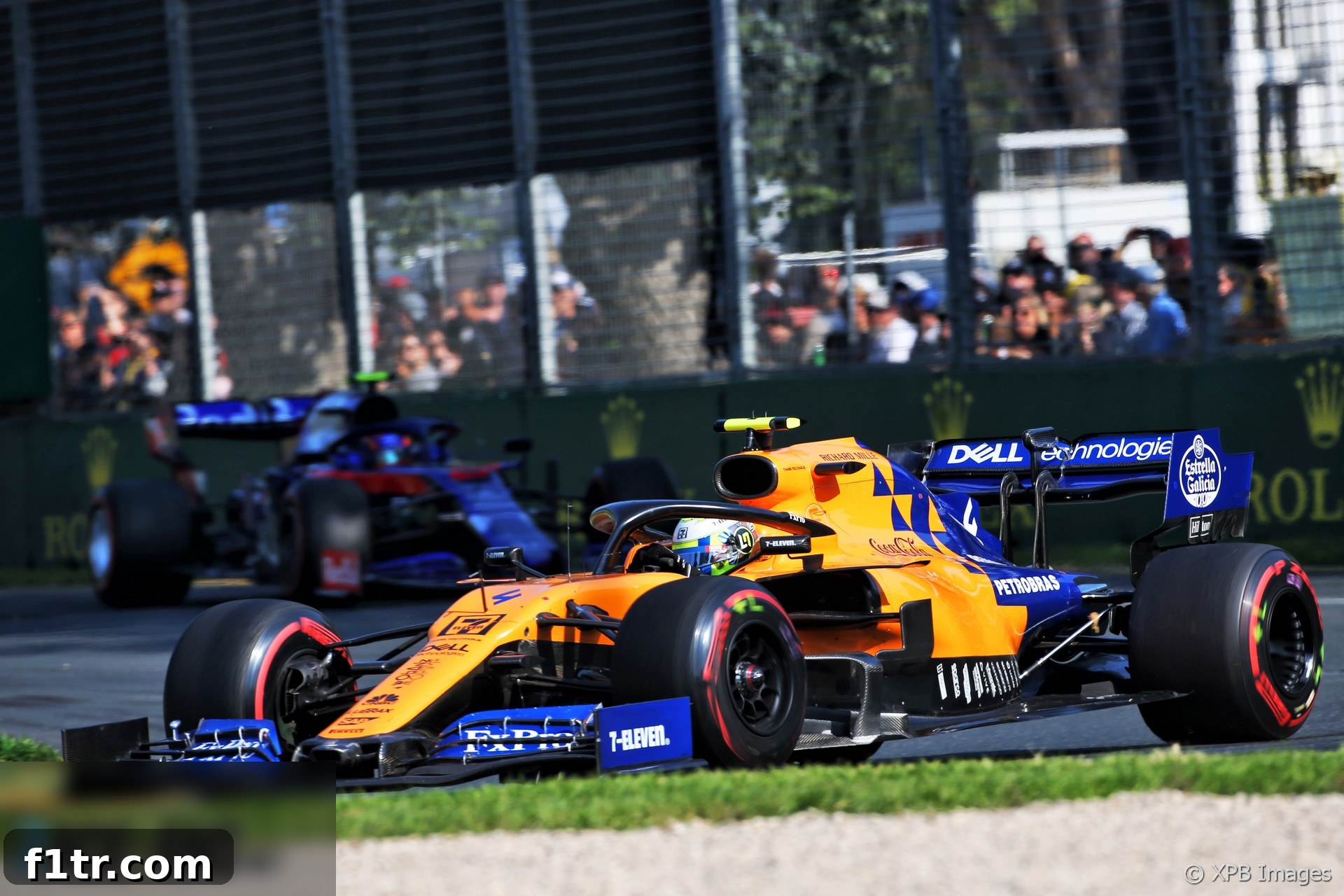
In a significant development for the future direction of Formula 1, McLaren Racing CEO Zak Brown has publicly affirmed his team’s support for engine supplier Renault’s principled stance concerning “B-teams” or customer teams. This alignment follows pointed remarks made by Cyril Abiteboul, then-managing director of Renault F1, regarding the performance and perceived advantages of Toro Rosso during the Australian Grand Prix weekend. The debate surrounding the role and scope of technical cooperation between larger and smaller teams, and its implications for fair competition and the sport’s ethos, has long been a contentious issue within the paddock. McLaren’s strong endorsement of Renault’s position signals a united front among certain stakeholders who advocate for a more level playing field and a return to Formula 1’s core identity as a constructors’ championship.
McLaren and Renault’s Unified Vision for Formula 1’s Future
Advert | Become a Supporter & go ad-free
McLaren is unequivocally aligned with Renault’s perspective on the strategic future of Formula 1. Our shared belief is that the sport desperately needs a genuinely level playing field, a critical element not solely for the benefit of McLaren, but for the competitive integrity of the entire grid. This aspiration for fairness extends across multiple crucial areas that underpin the financial and sporting health of Formula 1.
Firstly, achieving this level playing field necessitates a far more equitable distribution of revenue among all participating teams. While we do not advocate for an entirely equal revenue split, the current disparities are simply unsustainable and create an inherent disadvantage for many teams. A fair distribution would empower more teams to compete effectively, reducing the reliance on external investment and fostering a healthier, more diverse competitive landscape.
Secondly, the implementation of a realistic and enforceable budget cap is paramount. Such a cap must be set at a level that a significant majority of teams can realistically achieve through a combination of prize money, Formula One Management (FOM) distributions, and sponsorship deals. A well-constructed budget cap is not merely about cost reduction; it’s about fostering innovation within defined parameters and preventing an arms race that only a handful of teams can win, thereby encouraging closer racing and a greater spectacle for the fans.
A cornerstone of Formula 1’s identity, its very DNA, has always been the concept of a “constructor” – a team that designs and builds its own car. In this spirit, we believe that equipment should either consist of ‘listed parts,’ which fundamentally define a team as a true constructor, or ‘standard parts’ where necessary to assist teams that may lack the inherent capabilities or resources to produce every single listed component in-house. What we strongly contend against, however, is a model where some teams are permitted to supply other teams with significant components, effectively creating ‘A’ and ‘B’ teams, without that opportunity being extended across the entire grid. This selective supply chain distorts competition and undermines the principle of independent constructors. We are convinced that a move towards truer constructors, with genuine independence in design and manufacturing, would create a more authentic Formula 1 and ultimately benefit everyone involved, from teams to fans.
Furthermore, the governance structure of the sport requires urgent and comprehensive attention. Far too often, attempts to introduce vital new rules and regulations are severely hampered or even blocked by tactical alliances and political maneuvering among teams. This dynamic often prioritizes individual team interests over the collective good of the sport. We acknowledge that teams must have a voice and a vote in the decision-making process, but their influence should not be so absolute as to impede essential progress and necessary reforms. Ultimately, the fans are the true stakeholders, and their desire for a dynamic, competitive sport with frequent and diverse winners should drive fundamental decisions.
In essence, like all great sports, Formula 1 thrives on unpredictability and the emergence of different winners and champions with greater regularity. When the competitive landscape allows for such diversity, the entire ecosystem of Formula 1 flourishes. It boosts fan engagement, attracts new audiences, and ensures the long-term vitality and excitement of the pinnacle of motorsport. This is a win-win scenario that we firmly believe is achievable with the right structural changes.
Quotes: Dieter Rencken
Advert | Become a RaceFans supporter andgo ad-free
Insights from the Digital Paddock: Social Media Highlights
Beyond the official press conferences and team statements, social media platforms provide a candid, real-time pulse of the Formula 1 community. Here’s a glimpse into some notable posts that resonated with fans and key figures:
😂😂😂😂😂😂! It had to be a reason not to follow this account until now. Today you remind me again!! President never said that. Specially after scoring 80% of the points for our team. We race hard, together, with all our heart and we fought until last race for championships ✊️
— Fernando Alonso (@alo_oficial) March 26, 2019
Fernando Alonso, a two-time Formula 1 World Champion and a fiercely competitive figure, took to Twitter to express his strong disapproval of a statement attributed to a “President” (likely referring to a team or series figure). Alonso’s tweet passionately defended his contribution to his former team, emphasizing his role in securing a substantial portion of their points and highlighting the collective effort and dedication shown throughout their championship campaigns. His reaction underscores the deep emotional investment and competitive spirit that defines many F1 drivers, reminding fans that even after leaving the grid, the passion for racing and fair recognition remains as strong as ever.
Lewis Hamilton prefers the sounds of @F1’s V12s. By the time he arrived in #F1 not only were V12s a thing of the past but the V10s had been replaced by V8s too. pic.twitter.com/jJKScLm5H8
— RaceFans (@racefansdotnet) March 26, 2019
RaceFans, a prominent independent F1 news outlet, sparked discussion by highlighting Lewis Hamilton’s stated preference for the iconic V12 engine sounds of Formula 1’s past. This tweet serves as a nostalgic reminder of the sport’s auditory evolution. It points out that by the time Hamilton made his F1 debut, the golden era of V12s was long gone, and even the high-revving V10s had given way to V8 engines. This sentiment resonates with many long-time fans who lament the change in engine notes, perceiving the current hybrid V6 turbos as lacking the visceral soundtrack of older eras. The sound of an F1 car is a crucial part of its appeal, and debates about engine regulations often touch upon this sensory experience, linking technological progress with a sense of historical identity.
- For those looking to stay even more connected, our comprehensive F1 Twitter Directory offers a curated list of official accounts to follow, ensuring you don’t miss any of the action or insights from drivers, teams, and the sport itself.
Further Insights: Exploring the Wider Motorsport Landscape
Beyond the immediate headlines, the world of motor racing offers a constant stream of captivating stories and discussions. Here are more links to intriguing content that caught our attention, providing deeper dives into various aspects of the sport:
Why the 2019 Chinese Grand Prix won’t be the 1,000th Formula 1 race (RaceFans via YouTube)
This RaceFans YouTube video delves into a fascinating historical debate surrounding the true count of Formula 1 World Championship races. While the 2019 Chinese Grand Prix was widely promoted as the 1,000th F1 race, this video expertly explains the intricacies of how races have been counted historically and why, by some metrics, that particular event may not have been the actual millennium milestone. It’s a compelling piece for F1 history buffs, shedding light on the sport’s foundational statistics and the often-complex relationship between official records and popular perception.
Neue Infos und Bilder (Auto Motor und Sport – German)
Leading German motorsport publication Auto Motor und Sport presented fresh conceptual images and new information regarding the highly anticipated 2021 Formula 1 cars. These updates offered fans and technical experts a clearer vision of the radical design philosophy that was intended to reshape the sport. The focus on new aerodynamic regulations, particularly with elements like twin-tunnel underbodies, promised to facilitate closer racing and reduce the turbulent air impact that had hindered overtaking. Such insights are crucial for understanding the future trajectory of F1’s technical evolution and the ongoing efforts to enhance the on-track spectacle.
Dressed to the Nines (Haas F1 Team)
In their preview for the Bahrain Grand Prix, Haas F1 Team driver Romain Grosjean offered a candid assessment of the competitive landscape. Grosjean remarked, “I think we’re a bit further away from Red Bull than we were hoping. I’m afraid the gap could open during the year because of the resources they have.” This quote starkly illustrates the challenge faced by midfield teams. Despite strong initial performance, the vast resource disparity between privateer teams like Haas and top-tier operations like Red Bull often dictates the development pace over a season. Grosjean’s comments highlight the ongoing struggle for smaller teams to maintain competitiveness against rivals with significantly larger budgets and deeper technical capabilities, underscoring the very issues Zak Brown addressed regarding budget caps and fair distribution.
Bahrain Grand Prixview (Toro Rosso)
Toro Rosso’s preview for the Bahrain Grand Prix provided an insight into the mindset of a rookie driver tackling his second F1 event. One of their young talents reflected, “I expect the whole weekend will feel a little bit easier for me, partly because I know the track and partly because I have Australia under my belt, so even though I’m not going to say I’ll feel like a veteran F1 driver there, it should be a more straightforward weekend in terms of knowing what to expect.” This perspective beautifully captures the steep learning curve for new drivers in Formula 1. The experience gained from a single race, combined with prior track knowledge, can significantly ease the mental and physical burden, allowing rookies to focus more on fine-tuning performance rather than simply navigating the overwhelming complexity of their initial F1 foray.
Di Grassi: ‘Two Crazy Guys Ended My Race’ (e-racing365)
In the world of Formula E, an equally intense and often chaotic brand of racing unfolds. Lucas di Grassi, a seasoned competitor, did not mince words after a race incident, declaring, “I don’t know who to blame, because Frijns also moved under braking and then Buemi crashed into him because he moved too much also.” This frustrated outburst from Di Grassi perfectly encapsulates the high-stakes, tight-quarters racing typical of Formula E, where marginal movements and aggressive maneuvers often lead to multi-car incidents. It highlights the fine line between aggressive driving and reckless conduct, and the difficulty drivers face in assigning blame in complex, rapidly unfolding race scenarios, a challenge not uncommon in any top-tier motorsport.
We always endeavour to credit original sources and provide a comprehensive overview of motorsport news. If you have a valuable tip for a link or an interesting story to feature in an upcoming RaceFans round-up, please don’t hesitate to send it in via our contact form. Your contributions help us keep the community informed and engaged.
Advert | Become a RaceFans supporter andgo ad-free
Community Voice: The Future of F1 – Evolution or Revolution?
A central question frequently debated among Formula 1 enthusiasts and pundits is whether incremental adjustments can truly address the sport’s deep-rooted issues, or if a more radical, revolutionary overhaul is required. This thought-provoking query often sparks insightful discussions among our readers, as exemplified by our comment of the day:
To me, the current agreements in F1 between the commercial rights holders, tracks, teams, sponsors, etc are not sustainable. Unfortunately they also seem to be intractable. I’m skeptical changes in administration or racing can help because the market isn’t there. Maybe revenue could grow some, but it won’t offset the profit taking or racing costs. I don’t see any way to make the serious changes except for a catastrophic event like bankruptcy or a switch to another series.
RP (@Slotopen)
This powerful comment from RP (@Slotopen) articulates a deep-seated concern shared by many within the F1 community: the fundamental unsustainability of the sport’s current commercial and operational model. RP highlights the perceived intractability of existing agreements among various stakeholders – commercial rights holders, circuit owners, teams, and sponsors – suggesting that these agreements create a system that is resistant to necessary change. The skepticism regarding the effectiveness of mere administrative or sporting rule adjustments is palpable; the argument posits that the underlying market dynamics and the relentless pursuit of profit, coupled with escalating racing costs, render minor tweaks insufficient. RP’s provocative conclusion, that only a “catastrophic event” such as bankruptcy or a mass exodus to an alternative racing series, could force truly transformative changes, underscores the gravity of the situation and the perceived inertia within the sport’s corridors of power. This perspective fuels the ongoing debate about whether F1 is truly capable of self-correction or if external pressures will ultimately dictate its future direction.
Engaging with the Community: Highlights from the Forum
Our vibrant community forum serves as a hub for fans to connect, share experiences, and seek advice on all things Formula 1. It’s a testament to the passionate F1 family that thrives beyond race weekends. Here’s a recent example of community engagement:
- @Glen2506 is actively looking for assistance and insights regarding camping arrangements for the upcoming British Grand Prix. This is a prime example of how our forum facilitates practical help and fosters connections among fans planning their race experiences, ensuring a smoother and more enjoyable visit to iconic circuits like Silverstone.
A Special Shout-Out: Happy Birthday!
We love celebrating the personal milestones of our dedicated RaceFans community members. Today, we extend our warmest wishes:
Happy birthday to Justin!
If you’d like to receive a special birthday shout-out on our platform, simply let us know when your birthday is via our convenient contact form. Alternatively, you can contribute directly by adding your details to our comprehensive birthday list here. We look forward to celebrating with you!
Echoes of History: On This Day in F1
Formula 1 is a sport steeped in history, rich with unforgettable moments, dramatic races, and legendary figures. Looking back at the annals of F1 on this very day reveals compelling narratives that continue to captivate fans. Here’s a flashback to a significant event that occurred today:
- Exactly 25 years ago today, the 1994 Brazilian Grand Prix unfolded with dramatic flair. This race saw the iconic Michael Schumacher clinch victory after his formidable rival, Ayrton Senna, experienced an unexpected spin. The event was also marked by a terrifying incident where Martin Brundle miraculously escaped a colossal crash involving Jos Verstappen and Eddie Irvine. This race is often remembered for its pivotal moments, showcasing both the brilliance of rising stars and the ever-present dangers of the sport, solidifying its place in F1 lore. Such historical reflections remind us of the enduring legacy and thrilling unpredictability that defines Formula 1 through the decades.