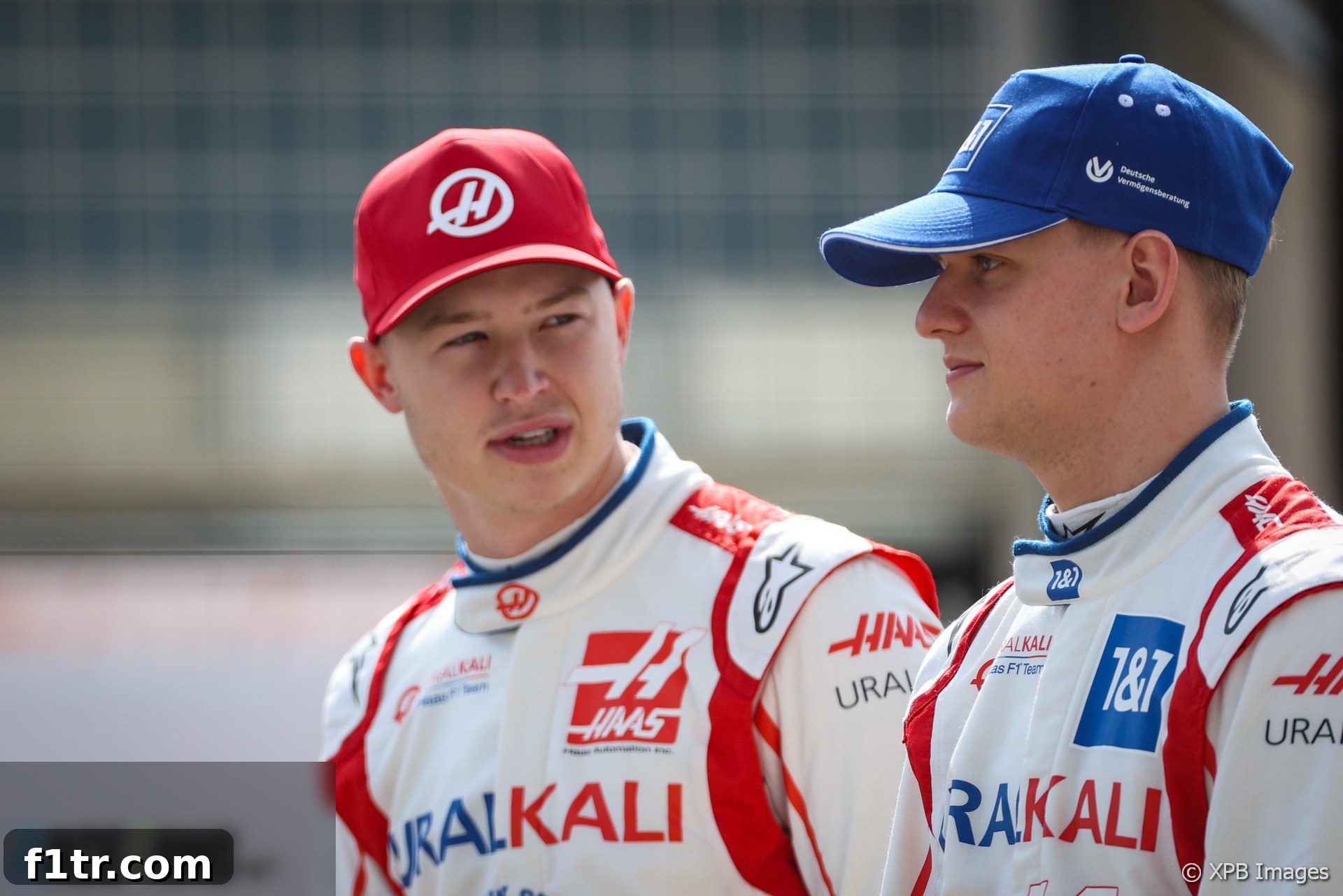
As the Formula 1 season approached, all eyes turned to the rookie class, particularly the dynamic duo set to debut at Haas. Nikita Mazepin, one half of the new lineup, confidently dismissed suggestions that his teammate, Mick Schumacher, might hold a significant advantage due to more extensive prior Formula 1 testing experience. Both drivers were making the crucial step up from Formula 2, but Schumacher’s affiliation with the esteemed Ferrari Driver Academy had afforded him multiple opportunities to test F1 machinery, a benefit not universally available to all aspiring racers.
The perceived disparity in pre-season preparation naturally sparked questions about its potential impact. When directly asked about the advantage Schumacher might possess, Mazepin offered a pragmatic and forward-looking response. “There is no point to guess because there isn’t a definitive answer,” he stated, highlighting a mindset focused on the present and controllable factors rather than speculative worries. This philosophy underscores the mental fortitude required to succeed at the pinnacle of motorsport, where external distractions must be minimized.
“I hope very little,” Mazepin continued, acknowledging the situation but quickly pivoting to his core objective. “But that’s not something for me to say because it’s not going to change my situation and I’m here to maximise what I’ve got available on the table.” This declaration speaks volumes about his determination to extract every ounce of performance from himself and his machinery, regardless of his teammate’s prior experiences. For a rookie making their F1 debut, especially in a team facing its own challenges, such a proactive approach is vital. Maximizing “what’s available” involves meticulous preparation, understanding the car’s nuances through simulator work, intensive physical training, and building a strong rapport with the engineering team. It’s about being relentlessly focused on self-improvement within the constraints of the sport.
While Mick Schumacher’s ties to the Ferrari Driver Academy provided him with valuable mileage in Formula 1 cars – often in older specifications but still crucial for understanding the immense power, complex systems, and sheer speed of F1 machinery – Mazepin himself is no stranger to top-tier equipment. The Russian driver had previously gained significant F1 experience, having tested for both Force India and Mercedes. His public appearances with the reigning world champions were noted, but perhaps even more significantly, he had also participated in an undisclosed number of private tests with Mercedes. This indicates a level of trust and potential that might not be immediately obvious, providing him with a foundation of experience that could mitigate any perceived disadvantage.
The precise details of Mazepin’s private testing with Mercedes remained shrouded in mystery, a common practice in the secretive world of Formula 1. When pressed last week about the exact number of times he had driven a Mercedes F1 car, Mazepin respectfully declined to elaborate. “I would love to answer that question but unfortunately I’m not able to expand on it because of contractual reasons,” he explained. This response, while frustrating for journalists, hints at confidential agreements that often govern driver development programs and private testing, suggesting a deeper involvement than a casual one-off test. Such experiences, even if unquantified publicly, would undoubtedly provide invaluable insight into the demands of driving a modern F1 car, offering a substantial head start over someone with no prior F1 track time.
Despite the inherent limitations on track time for any rookie in the current F1 landscape, Mazepin expressed a strong sense of readiness for his impending Grand Prix debut. He conveyed feeling “prepared” to tackle the immense challenge ahead, a sentiment crucial for instilling confidence in both himself and his new team. However, like any ambitious racing driver, he couldn’t resist the allure of more seat time. “Obviously, if you’d offered me 10 minutes on-track I’d always take it,” he admitted, highlighting the insatiable desire for practice and refinement that characterizes elite athletes. This universal craving for more opportunities to hone their craft is particularly acute in Formula 1, where every fraction of a second and every lap can contribute to a deeper understanding of the car and the circuit.
Mazepin succinctly summarized the prevailing reality of the sport: “That’s the nature of the world of F1 that we live in currently.” Modern Formula 1, with its stringent testing regulations and packed race calendar, offers very limited opportunities for young drivers to get behind the wheel of a current-spec F1 car before their debut. This makes simulator work, physical conditioning, and intense data analysis even more critical. Despite these constraints, Mazepin remained optimistic and self-assured. “But I think I’m in a good place of starting my career in Formula 1,” he affirmed, projecting confidence that his preparation, combined with the support of the Haas team, would position him well for the challenges ahead.
The decision by Haas to sign both Mazepin and Schumacher marked a significant departure from the team’s established philosophy. Historically, Haas had shown a preference for experienced drivers, aiming for immediate results and stability rather than investing in rookie development. Apart from Pietro Fittipaldi’s two substitute appearances at the close of the previous season, stepping in for the injured Romain Grosjean, the team had never fielded a full-time rookie driver. This strategic shift, driven in part by financial considerations and a long-term vision for rebuilding, meant that the team itself was adapting to a new dynamic, fostering a fresh environment for driver development.
For Mazepin, this new approach by Haas proved to be a pleasant surprise and a source of considerable encouragement. He lauded the team’s support, stating, “The team has been incredibly helpful and incredibly good in managing a young driver like me.” This positive feedback underscores the efforts made by Haas to integrate their new, inexperienced lineup, providing the necessary infrastructure and guidance. Such mentorship extends beyond technical advice, encompassing media training, psychological support, and strategic planning, all crucial for a smooth transition into the high-pressure world of F1. This level of support was particularly noteworthy for Mazepin, who admitted, “That’s something that I didn’t really expect coming into a team that used to only have experienced drivers.” The unexpected warmth and detailed attention from Haas have clearly boosted his confidence and sense of belonging.
The collaboration between the rookie drivers and the team is paramount for success, especially in a rebuilding phase. Mazepin’s optimism extended to the long-term prospects of this partnership. “So I’m very happy about that and hugely confident that over the 365 days of a year we can really go further together as a group of people,” he concluded. This sentiment reflects a belief in the collective effort and the potential for mutual growth. For Haas, nurturing two young talents like Mazepin and Schumacher presents both challenges and opportunities. While rookie mistakes are inevitable, their fresh perspectives, hunger for success, and direct comparison can provide valuable data and motivation for car development. The team’s commitment to these young drivers is a gamble, but one that could pay significant dividends in the long run, shaping the future trajectory of the Haas F1 Team.
The upcoming season promised to be a fascinating study in rookie adaptation, team dynamics, and the subtle interplay of experience versus raw talent. While Mick Schumacher carried the weight of a legendary surname and the backing of Ferrari, Nikita Mazepin brought his own prior F1 testing knowledge, a relentless work ethic, and a pragmatic approach to competition. The stage was set for an intriguing internal battle at Haas, one that would undoubtedly captivate Formula 1 enthusiasts and provide ample material for discussion throughout the championship. Both drivers, despite their differing paths to F1, shared the common goal of making their mark and proving their worth in the highly competitive environment of elite motorsport, with Mazepin confident that his preparation and the team’s support would level the playing field.
2021 F1 season
- Masi ‘basically gifted the championship’ to Verstappen says 2021 FIA steward Sullivan
- Las Vegas race backers looking to extend F1 deal beyond 2025
- Why Mercedes put ‘a reminder of joy and pain’ on display in their factory lobby
- Verdict on error in GT race suggests Mercedes would have lost 2021 Abu Dhabi GP appeal
- Title ‘stolen’ from Mercedes made us ‘underdogs people cheer for’ – Wolff
Browse all 2021 F1 season articles