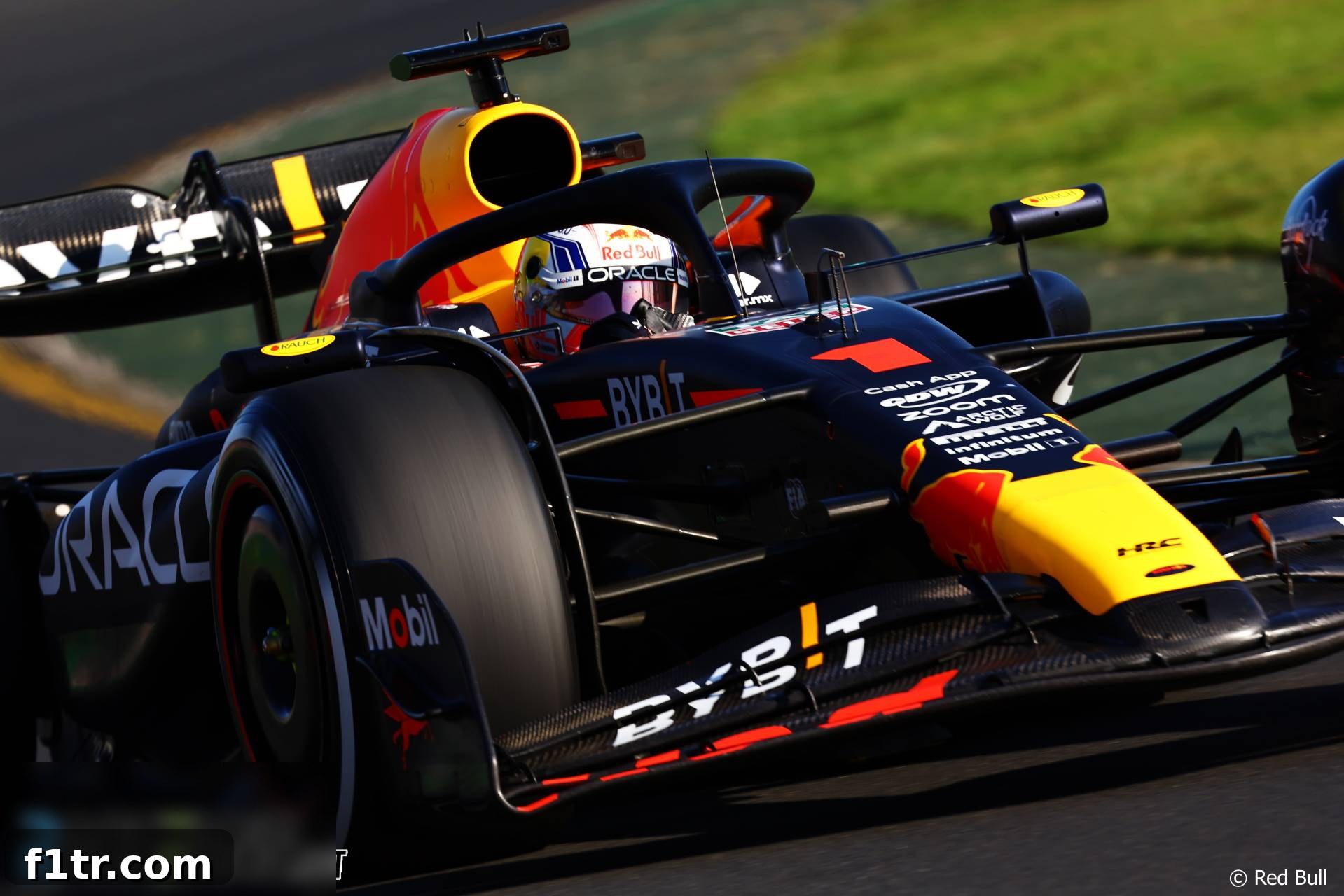
The 2023 Australian Grand Prix delivered an unforgettable spectacle of Formula 1 racing, etching itself into the annals of motorsport history as one of the most chaotic and incident-packed events in recent memory. Three red flags, multiple safety car deployments, and a dramatic finish under safety car conditions defined a race that saw Max Verstappen ultimately claim victory amidst the pandemonium. His triumph, however, was hard-fought and far from straightforward, as the race at Albert Park constantly tested the limits of driver skill, team strategy, and the very regulations governing the sport. Lewis Hamilton secured an impressive second place, showcasing Mercedes’ resurgence, while Fernando Alonso demonstrated his enduring class by taking third for Aston Martin, despite being caught up in the late-race mayhem. This Australian Grand Prix was a true test of nerve and resilience, captivating audiences worldwide with its relentless drama.
An Electrifying Start and Early Drama
The anticipation for the lights out in Melbourne was palpable, with fans eager to see if anyone could challenge Max Verstappen, who started from pole position. However, the opening moments of the race immediately signaled that this would be no ordinary Sunday drive. As the pack thundered towards Turn 1, George Russell, starting P2, executed a brilliant start. He muscled his Mercedes-AMG Petronas F1 car alongside Verstappen on the inside, holding his line with aggressive precision. Russell’s decisive move allowed him to seize the lead, much to the delight of the Mercedes garage and the roaring crowd. Verstappen, momentarily outmaneuvered, fell back, while Hamilton skillfully slipped past his championship rival at Turn 3 to take second place.
The early lead for Russell was a sign of Mercedes’ improved form, offering a glimmer of hope that the reigning champions might finally be challenged. However, the initial laps were not without incident. Ferrari’s hopes took an early blow when Charles Leclerc, after making contact with Lance Stroll, spun off into the gravel trap at Turn 3, bringing out the first safety car of the day. This early retirement was a significant setback for Ferrari and underscored the unpredictable nature of the Albert Park circuit. The safety car allowed for the recovery of Leclerc’s car, and the race resumed on lap four, with Russell leading a tight procession comprising Hamilton, Verstappen, Carlos Sainz Jnr, and Alonso.
Strategic Gambles and the First Red Flag
In the tense laps following the restart, Russell maintained a narrow lead over Hamilton, with Verstappen hot on his heels. The top three quickly established a small but crucial gap over the rest of the field. However, the race was about to take another dramatic turn. On lap seven, Alexander Albon, driving his Williams with impressive pace, lost control through the fast Turn 6 kink. The resulting high-speed impact with the barriers brought his race to an immediate and abrupt end, scattering gravel and debris across the track. This incident necessitated a second safety car deployment.
Seizing the opportunity for a strategic play, George Russell opted to pit from the lead, switching to hard tyres in an ambitious bid to run to the end of the race. This move saw him drop to seventh place, a significant sacrifice for a potentially rewarding long stint. Carlos Sainz also followed suit, pitting for hard tyres and rejoining in 11th. Hamilton inherited the lead, with Verstappen now second. Yet, their time at the front under green flag conditions was short-lived. The sheer amount of debris on the circuit from Albon’s crash, particularly around Turn 6, prompted race control to issue a red flag less than a lap later. This pivotal decision brought all cars into the pit lane for over ten minutes, allowing for a thorough track clear-up. Critically, the red flag also provided all drivers with a free tyre change, effectively negating Russell’s strategic gamble and resetting the playing field. Hamilton found himself leading ahead of Verstappen, with Russell now P7 but on fresh hard tyres, ready for the first standing restart.
Verstappen Takes Control and Russell’s Heartbreak
The race recommenced on lap ten with a thrilling standing restart. With the entire top ten now on fresh hard tyres, the battle for supremacy was reignited. Hamilton, starting from pole for this second rolling start, successfully defended his position from a charging Verstappen into Turn 1. Behind them, Fernando Alonso solidified his third position, while Pierre Gasly moved up to fourth. Russell, demonstrating his tenacity, gained two places to slot into fifth, just behind the Alpine of Gasly.
However, Max Verstappen, now fully warmed up and in his stride, was relentless. As soon as DRS (Drag Reduction System) was activated on lap 12, the Red Bull driver immediately put Hamilton under immense pressure. Utilizing the powerful DRS along the Lakeside Drive straight, Verstappen tucked in behind the Mercedes, then effortlessly swept around Hamilton well before the chicane, snatching the lead with a decisive and clinical move. The Dutchman wasted no time in asserting his dominance, quickly pulling clear of Hamilton and breaking free from DRS range, establishing a lead of over two seconds by the end of the lap. From this point, Verstappen began to stretch his advantage, demonstrating the raw pace and efficiency of his Red Bull machine.
The race then delivered another cruel twist of fate for George Russell. On lap 17, his car dramatically slowed, and he reported a power unit problem. Flames began to lick from the rear of his Mercedes, forcing him to pull off at the pit exit and retire from the race. It was a heartbreaking end to what had started as a promising Grand Prix for the Briton and his team. The Virtual Safety Car (VSC) was deployed as marshals worked to extinguish the flames and safely remove Russell’s stricken car, an operation that concluded on lap 19. While the VSC had minimal impact on Verstappen’s growing lead, it was a stark reminder of the mechanical challenges that can plague even the best teams.
The Calm Before the Storm: Magnussen’s Crash and Second Red Flag
With Russell out, Verstappen comfortably led the race, pulling away from Hamilton with a significant margin that at one point exceeded ten seconds. Fernando Alonso, ever the consistent performer, held P3, maintaining a steady two-second gap to Hamilton. The mid-race segment settled into a rhythm, with many drivers focusing on tyre management, particularly those on hard compounds hoping to make it to the checkered flag without further stops. Strategic opportunities seemed limited, with the front-runners content to manage their pace and preserve their tyres.
However, the Australian Grand Prix was far from over. With just six laps remaining, the race was plunged back into chaos. Kevin Magnussen, pushing hard, ran wide and clipped the wall on the exit of Turn 2. The impact was severe enough to cause his right-front tyre to spectacularly detach from the wheel rim, leaving the carcass of the tyre resting perilously on the track on the run to Turn 3. After a brief delay, and with the debris posing a clear hazard, the safety car was deployed on lap 54. This safety car period quickly escalated into the second red flag of the race, effectively pausing the proceedings and setting the stage for yet another dramatic restart. The race was now a sprint to the finish, with only a handful of laps remaining.
The Chaotic Climax: A Race of Unprecedented Mayhem
The second red flag brought the cars back into the pit lane, offering a crucial opportunity for teams to switch to soft tyres for the third grid start of the Grand Prix. The tension was palpable as the drivers prepared for what everyone knew would be a frantic dash to the finish. As Max Verstappen confidently held the lead ahead of Lewis Hamilton, chaos erupted immediately behind them when the lights went out for the standing restart on what was effectively the penultimate lap.
The first corner became a scene of absolute pandemonium. Carlos Sainz, attempting to make up ground, made contact with Fernando Alonso, sending the Aston Martin spinning down the order. Simultaneously, the two Alpine drivers, Pierre Gasly and Esteban Ocon, collided spectacularly, sending both cars careening into the wall and out of the race in a shower of carbon fiber. Further back, Lance Stroll ran off track at Turn 3, while Logan Sargeant clattered into Nyck de Vries, adding to the pile-up. The sheer number and severity of incidents on a single restart lap were unprecedented, leaving a trail of damaged cars and debris strewn across the circuit.
Unsurprisingly, the race was red-flagged for a third time. With just a single lap of racing remaining, officials faced a complex dilemma. After a delay of more than half an hour while the wreckage was cleared and decisions were made, race control announced that the cars would be sent out for a final lap behind the safety car. Crucially, the order for this final lap would be taken from the grid order of the preceding restart, effectively negating most of the chaos that had just unfolded. This controversial decision promoted Fernando Alonso back into fourth place (which then became third due to Sainz’s penalty) and Lance Stroll into sixth, much to the relief of Aston Martin. However, the two Alpine drivers, Gasly and Ocon, were denied any chance of restarting, their heavily damaged cars forced into retirement.
Final Standings and Championship Impact
The field completed the final lap under the safety car, taking the checkered flag in a subdued manner that belied the race’s earlier pandemonium. Max Verstappen was officially declared the winner by a mere tenth of a second over Lewis Hamilton, a testament to the close proximity of cars under safety car conditions rather than a reflection of their true race pace. Fernando Alonso secured a well-deserved third place for Aston Martin, continuing their impressive start to the season. The post-race analysis, however, revealed further drama.
Carlos Sainz, who had initially finished fifth, received a five-second time penalty for his collision with Alonso at the final standing restart. This controversial penalty dropped him to 12th place, out of the points, a harsh outcome for the Ferrari driver who had shown strong pace throughout the race. Lance Stroll was classified fourth, showcasing Aston Martin’s double points finish. Sergio Perez, after a challenging weekend and starting from the pit lane, executed a remarkable recovery drive to finish fifth, salvaging crucial points for Red Bull. Lando Norris secured McLaren’s first points of the season in sixth, a much-needed boost for the Woking-based team. Nico Hulkenberg delivered a strong performance for Haas, taking seventh ahead of McLaren’s rookie Oscar Piastri, who scored his first career points in his home race. Rounding out the points were Zhou Guanyu and Yuki Tsunoda.
The 2023 Australian Grand Prix will be remembered as a race that had everything: exhilarating overtakes, strategic gambles, heartbreaking retirements, and an unprecedented series of crashes and red flags. While Max Verstappen ultimately stood atop the podium, his victory was just one chapter in a story of relentless drama and unpredictability. It highlighted Red Bull’s continued dominance, Mercedes’ potential resurgence, and Aston Martin’s consistent threat, setting a thrilling tone for the remainder of the Formula 1 season.