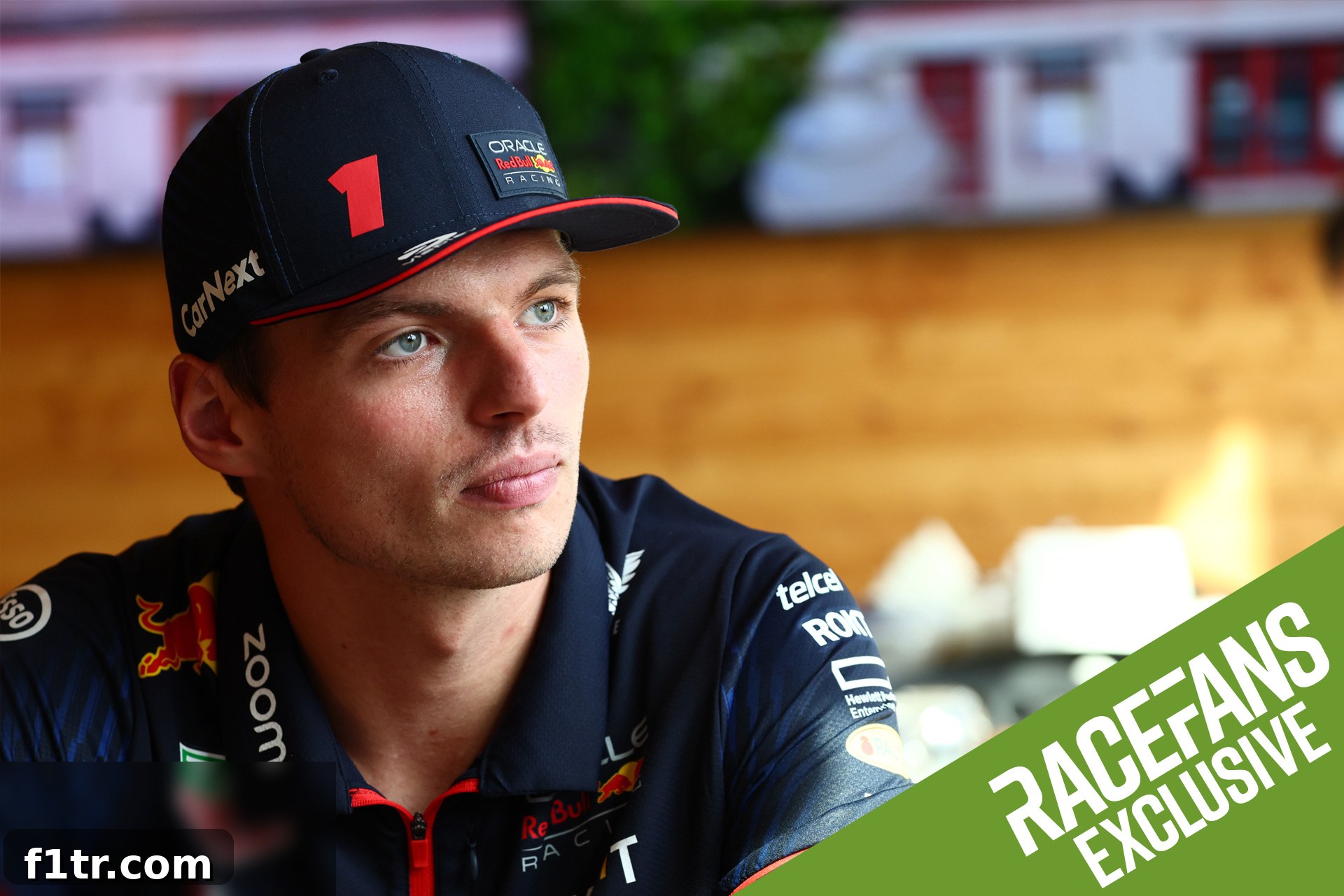
From the moment Max Verstappen burst onto the motor racing scene, his ascent to Formula 1 was widely regarded as an inevitability by his rivals and those within the sport. It wasn’t merely his raw, undeniable talent that pointed to a future in the pinnacle of motorsport, but also the unparalleled and intensely rigorous upbringing he received from his father, Jos Verstappen. A seasoned veteran with over 100 Grand Prix starts to his name, Jos meticulously crafted a path for his son, instilling a level of discipline and preparation that has been extensively documented and, at times, even sparked debate.
The young Verstappen’s formative years were almost entirely consumed by a tremendously successful karting career. This intense period of his life left little room for anything else, demanding relentless preparation, testing, and racing. Looking back, now on the cusp of securing his third consecutive world championship, Verstappen holds no doubt that the sacrifices he made in his youth were unequivocally worth it. In an exclusive interview with RaceFans at Monza, Verstappen reflected on his singular focus, stating that he was always willing to accept that a complete commitment to go-kart racing as a child would mean foregoing certain opportunities common to his peers.
“I wanted to be here,” he asserted, his conviction clear. “I wanted to be in Formula 1. People often ask me, ‘didn’t you miss going out with friends?’ Because, naturally, I couldn’t do it as frequently as others. But I always tell them that it was fine, largely because most of my friends were already within the racing community. I knew precisely what I was working for, so I was more than happy to give up that aspect of my life. I was genuinely enjoying what I was doing, so for me, it wasn’t a difficult sacrifice to make.”
While Verstappen occasionally found time to socialize with friends when at home, his ultimate vision remained sharply focused on his long-term ambition. He understood the fleeting nature of the opportunity before him. “Sometimes when I would be at home, you would go out or just have a fun time with your friends,” he recalled. “But then, on the other hand, I knew that I only had one shot at this to try and get to Formula 1, and I was determined to do everything in my power to seize it.” This unwavering determination became the bedrock of his early career, pushing him through countless hours of practice and competition.
The Priority of Ambition: School vs. The Grand Prix Dream
The year prior to Verstappen’s highly anticipated Formula 1 debut, Red Bull’s revered chief technical officer, Adrian Newey, publicly expressed concerns about aspiring racing drivers potentially missing too much academic schooling. While Newey’s comments were a general observation about the sport’s talent pipeline, they inadvertently highlighted the unique educational path many young racers, including Verstappen, embarked upon.
Perhaps unsurprisingly, Verstappen himself harbors no regrets about prioritizing his karting career over conventional schooling. “People always complain about drivers, that they miss school because they try to pursue F1 or any race,” he noted. “But school you can always finish. This is not something that comes around once. This opportunity to get to Formula 1 only comes around once.” His pragmatic perspective underscores the extraordinary nature of pursuing a career at the highest level of motorsport, where windows of opportunity open and close rapidly, demanding an all-in commitment from a very young age.
The Verstappen Legacy: Talent, Drive, and Divergent Paths
Max Verstappen’s sister, Victoria, who is almost three years his junior, also had the chance to follow in the footsteps of her brother, their father, and even their kart-racing mother into the demanding world of motor racing. Max himself believes she possessed considerable potential. “I think she had a lot of potential,” Verstappen remarked, reflecting on his sister’s innate ability.
In recent years, Formula 1 has made significant strides in acknowledging the imperative to foster greater female participation at the sport’s elite level, evidenced by the establishment of the F1 Academy. However, Verstappen revealed that his sister did not share the same fervent appetite for racing when they were younger. He recounted instances that vividly illustrated this difference in dedication. “There were a few instances where my dad would spend two days preparing everything, just like he would do with me, making sure everything was absolutely perfect for her to drive,” he explained. “Then she would drive for like 20 laps, and then she’s like, ‘that’s it for me for today’. And then my dad would get quite annoyed.”
Despite these early differences, Max remains convinced that had his sister possessed the same burning desire, she could have forged a successful career in motor racing. “I think my sister probably had the same amount of talent as I had when I was little,” he mused, “but she just didn’t want it enough. She liked it, but not enough to fight for it, be fit, be ready. And that’s fine, as long as you realize that.” He further elaborated on the crucial role of intrinsic motivation: “My dad was, anyway, mainly focused on me. But then if you really want it, if you really want to fight for it, even when let’s say your dad is not really focused on you, if you make him realize, make him see that ‘I want to do this as well’ – I was 100% sure that my dad would have gone all the way for her as well. But my dad didn’t feel it; she didn’t want it enough.” This insight provides a profound understanding of the deep-seated passion and unwavering commitment required to ascend to the top tier of any competitive sport, particularly one as demanding as Formula 1.
The Relentless Pursuit of Perfection in Formula 1
Max Verstappen is currently in the process of rewriting the history books with his astounding run of success. Just three days after his interview with RaceFans at Monza, he achieved an unprecedented feat, becoming the first Formula 1 driver ever to win 10 consecutive Grand Prix races. His third world championship appears to be little more than a formality, cementing his place among the sport’s all-time greats.
Yet, one might not surmise this level of serene dominance if listening to his team radio during a race. Even when winning races by margins exceeding half a minute over the closest non-Red Bull competitor, Verstappen remains unrelentingly focused on pushing the boundaries of his RB19’s performance. Sharp, often blunt, exchanges with his highly respected race engineer, Gianpiero Lambiase, are not uncommon. These interactions, far from indicating dissatisfaction, reveal a profound and constant drive for incremental improvement, a hallmark of his approach to racing.
This absolute focus on continuous improvement is deeply ingrained in his psyche, stemming directly from his upbringing. “It’s also the way I grew up,” Verstappen confirmed. “Always wanting more, never being satisfied, and just keep working. Don’t have a lazy attitude of ‘we are winning, why do we need to improve?’ Because you need to improve. Because if you’re not improving, you’re standing still, and if you’re standing still, you’re going backwards. So I think it’s all about that relentless drive.” This philosophy of constant evolution is a critical component of his and Red Bull’s sustained success, ensuring they never rest on their laurels.
The vivid memory of the years leading up to his breakthrough title win in 2021 also serves as a potent motivator for Verstappen’s relentless pursuit of perfection. Having experienced the challenges of competing without a championship-winning car, he cherishes the current period of dominance. “I know, I’ve been on the other side as well,” he reflected, “and that’s why I really want to enjoy what we’re doing right now and, of course, try to make it last as long as possible.” This perspective fuels his continued dedication, reminding him that success, while hard-earned, can also be fleeting.
Mastering the Craft: Experience and Serenity at the Apex
When RaceFans last engaged in an exclusive conversation with Verstappen during the 2022 season, he had just emerged victorious from an intense championship battle against Lewis Hamilton to claim his inaugural title, and was in the midst of overcoming Charles Leclerc’s early lead to secure his second. Today, Verstappen is undeniably enjoying a comparatively easier time at the front of the grid, with Red Bull remaining undefeated so far this year, a testament to their exceptional engineering and his masterful driving.
The potent combination of holding such an enviable position at the very front of the Formula 1 pack and Verstappen’s rapidly accumulating experience only serves to mold him into an even more formidable competitor – a rather discomforting prospect for his rivals. “I’ve done it now for quite a few years, and I think you learn a lot over those years of how you manage a weekend,” he explained, highlighting his growth beyond mere speed. “And at the moment, I’m very relaxed.” This growing sense of calm, coupled with his innate talent, makes him incredibly efficient.
While acknowledging the crucial role of his machinery, Verstappen emphasized the personal evolution in his approach. “Of course, it helps when you have a good car,” he conceded, “but I think it’s a lot easier now to just be in the paddock, do your thing, switch off, be ready, and try to do the best you can throughout the weekend.” This blend of natural ability, immense experience, and a composed demeanor creates a truly formidable force in modern Formula 1.
The Unseen Foundations of Max Verstappen’s Success
Undoubtedly, Max Verstappen makes his current dominance appear effortless. However, beneath the surface of his remarkable achievements lies a profound foundation built upon years of unrelenting work, meticulous preparation, and significant personal sacrifice. His journey, from a karting prodigy steered by a demanding father to a multi-world champion, exemplifies the extraordinary dedication required to reach and maintain the pinnacle of motorsport. It is a story not just of talent, but of an unyielding will to win and an insatiable desire for continuous improvement, setting a new benchmark for success in Formula 1.
Dive Deeper with Max Verstappen
- Verstappen exclusive part one: ‘I’m not here to win seven titles or race until I’m 40’
Support Independent Motorsport Journalism
RaceFans thrives thanks to the generous contributions of its dedicated readers. By contributing just £1 per month or £12 annually (or the equivalent in your local currency), you can directly help us cover the vital costs associated with creating, hosting, and continually developing RaceFans, ensuring its future.
Become a RaceFans Supporter today to not only contribute to high-quality motorsport journalism but also enjoy a completely ad-free browsing experience across the site. Learn more or sign up using the links below:
- Become a RaceFans Supporter
- RaceFans Supporter FAQ
Exclusive Insights & Interviews
- What’s changed in F1 25 – and why? In-depth Q&A with Codemasters’ Gavin Cooper
- F1 24 director Mather on anti-cheat measures and the last-gen tech debate
- F1 24 director Lee Mather on physics, in-race goals and revamped career mode
- Exclusive: Horner on Red Bull’s success, believing in Perez and why 2024 will be closer
- ‘Some days I think ‘why the hell do I do this?’: Steiner on Haas’ future – and Andretti
Browse all RaceFans Interviews