The Unconventional Prep: How F1 Drivers Tackle 2020’s Challenging New Tracks
The 2020 F1 calendar, drastically reshaped by global circumstances, presented an unprecedented challenge for teams and drivers alike. With several new and returning circuits added at short notice, mastering unfamiliar layouts became a critical component of success. Among the drivers, Max Verstappen and Lando Norris offered fascinating insights into their preparation strategies, revealing contrasting approaches to gaining a competitive edge on these novel tracks, including the much-anticipated Mugello circuit.
Max Verstappen’s Hands-On Approach: GT Cars Over Simulators
In a season defined by adaptability, Max Verstappen of Red Bull Racing adopted a proactive and decidedly hands-on method for familiarizing himself with the fresh additions to the F1 calendar. Rather than relying solely on high-fidelity simulators, Verstappen revealed he utilized a GT car for real-world practice on many of these new tracks. This unique strategy highlights a preference for tangible experience over virtual simulation, especially when confronting circuits never before raced in a Formula 1 machine.
Mastering Mugello and Beyond: The Benefits of Real-World Practice
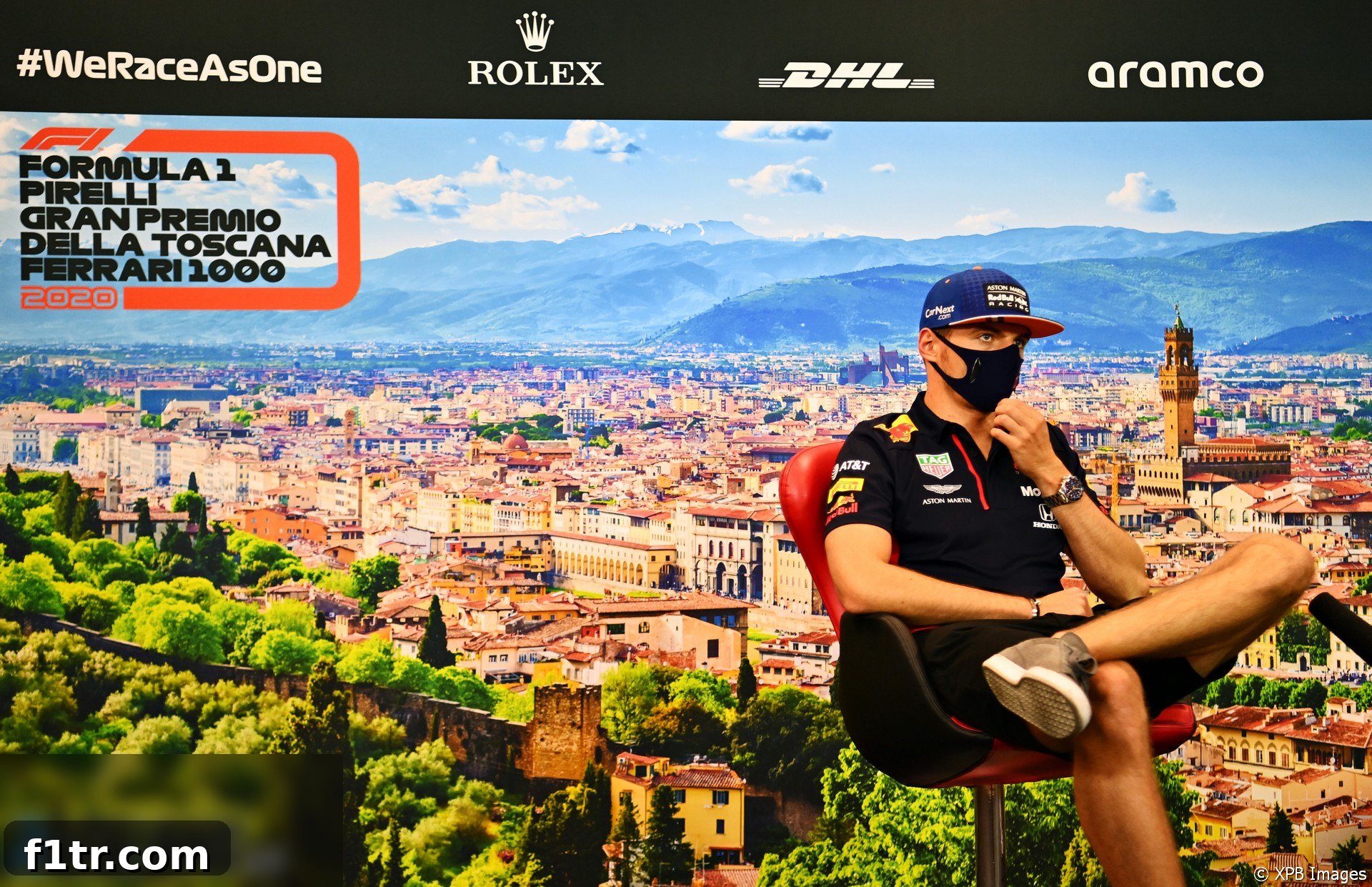
Verstappen’s pre-race preparation for Mugello, a circuit he had never experienced prior to the 2020 Tuscan Grand Prix, involved a full day of driving a GT car on the track just weeks before the F1 event. “I’ve been here a few weeks ago to drive because I had never been here before,” said Verstappen in a press conference. “I think that is the best way to learn a track.” He acknowledged the role of simulators but stated, “You can drive it on the simulator but I haven’t done that. So you get a bit of a read. Of course the car is a bit slower but it’s still fine.”
The benefits of driving a real car, even one significantly different from an F1 challenger, are numerous. A GT car allows a driver to experience the physical undulations, camber changes, surface grip nuances, and precise braking markers in a way that even the most advanced simulator struggles to replicate perfectly. This direct sensory input provides a fundamental understanding of the circuit’s flow and demands, crucial for building confidence and developing a mental map of the track. Furthermore, real-world experience eliminates any potential discrepancies between simulator data and the actual circuit conditions on race weekend, offering a more reliable foundation for performance.
Verstappen’s diligent approach wasn’t limited to Mugello. He also spent two days testing at Portugal’s Autodromo do Algarve in January, long before its inclusion on the revised F1 schedule. He further indicated that he had driven at other venues like Imola and the Nurburgring, both of which were slated to host races later in the year. “I’ve driven all the other tracks except Istanbul,” he confirmed, highlighting a comprehensive strategy to minimize unknowns. The Red Bull driver expressed his enthusiasm for the demanding nature of these circuits, predicting Mugello would be “very fast” in an F1 car and adding, “I like that,” underscoring his preference for high-speed, challenging layouts.
A Competitive Edge: The “Head Start” Advantage
For Verstappen, this real-world practice translated into a tangible advantage. “That was important, it just gives you a little bit of a head start,” he explained. While other drivers might have junior formula experience at some of these circuits or have relied solely on simulator work, Verstappen’s dedicated full day of driving ensured he wasn’t starting from scratch. In the cut-throat world of Formula 1, where fractions of a second can separate triumph from disappointment, even a slight “head start” in understanding braking points, apexes, and track limits can be invaluable, especially during condensed free practice sessions on race weekends. This preparedness allows a driver to quickly focus on fine-tuning the F1 car setup rather than spending precious track time learning the layout itself.
Lando Norris’s Pragmatic View: The Limits of Past Experience
In contrast to Verstappen’s fresh GT car outings, Lando Norris of McLaren approached the new tracks with a more cautious perspective, particularly regarding his past experience. While he had raced at Mugello in the Italian Formula 4 championship five years prior, he didn’t believe this would offer any significant advantage in an F1 car. His reasoning underscores the rapid evolution of circuits, vehicles, and driving techniques within motorsport.
From Junior Categories to F1 Powerhouses: A World of Difference
“I don’t think there’s any advantage,” Norris stated emphatically. “It was too long ago for me now, in a completely different car.” The disparity between a Formula 4 car and a modern Formula 1 machine is monumental. F1 cars boast exponentially more horsepower, vastly superior aerodynamics, incredibly powerful carbon brakes, and operate at G-forces unimaginable in junior categories. This means braking points are dramatically different, cornering speeds are on another level, and the physical demands on the driver are far greater. A driver’s muscle memory from an F4 car would likely be detrimental rather than helpful in an F1 car, requiring a complete recalibration of senses and reflexes.
The driving style required for an F1 car is also distinct. F1 drivers need to be incredibly precise, managing tire degradation and complex hybrid systems while pushing the limits of adhesion. The lines taken, the way the car reacts to bumps, and how grip evolves through a corner all change fundamentally when moving from a lighter, less powerful car to a Formula 1 beast. Therefore, while a mental image of the circuit layout might persist, the practical application of that knowledge becomes largely obsolete in the context of an F1 race weekend.
The Evolving Circuit: Track Changes and Simulator Challenges
Norris further highlighted the dynamic nature of circuits themselves. “The track’s even changed slightly since then. I don’t even remember the track being cambered in so many of the corners. I think some of the bumps have gone from what they used to be.” Circuits are not static entities; they undergo resurfacing, barrier modifications, and natural wear and tear that can alter their characteristics over time. A subtle change in camber or the removal of a specific bump can significantly impact a car’s behavior, particularly a sensitive F1 machine.
Regarding simulators, Norris acknowledged their value but also pointed out their limitations, especially for late-notice additions to the calendar. “At the same time I think simulators are very good but it was very late notice for us to know that we’re going to Mugello. So maybe not everything was as perfect and as up to date as all the tracks that we normally go to.” Simulators rely on highly accurate laser-scanned data of circuits to replicate the environment precisely. When a track is added at the eleventh hour, teams might not have sufficient time to gather and process the most current and detailed data, potentially leading to discrepancies between the virtual and real-world experience. While simulators still provide a “good enough understanding driving a Formula 1 car in a simulator of what you need to achieve, coming to a track like Mugello,” as Norris put it, these small inaccuracies can still require significant adaptation once on the actual track.
The Unprecedented 2020 F1 Season: A Calendar of Novelty and Challenge
The 2020 F1 calendar was truly unique, forcing teams and drivers to adapt at an unprecedented pace. The inclusion of storied venues like Imola and the Nurburgring, alongside challenging newcomers like Mugello and Portimao, brought a refreshing novelty to the championship. This shift away from some traditional circuits and towards less familiar territory tested the versatility and skill of every participant on the grid.
Adapting to the Unknown: Team and Driver Strategies
For teams, the rapid changes meant a scramble to gather data, update simulator models, and prepare car setups for circuits that hadn’t seen modern F1 cars in decades, if ever. Engineers had to work overtime to ensure their drivers had the best possible baseline setup before hitting the track. For drivers, it was a test of mental fortitude, adaptability, and pure driving talent. Those who could quickly learn and extract performance from their cars on new layouts were poised to gain a significant advantage in a championship where every point was fiercely contested.
The varying preparation methods employed by drivers like Max Verstappen and Lando Norris highlighted the different philosophies within the paddock. While some might favor the cost-effectiveness and accessibility of simulators, others, like Verstappen, clearly saw the irreplaceable value of real-world experience, even in a different class of car. The unique challenges of the 2020 season inadvertently created a fascinating case study in driver preparation, demonstrating that there is no single ‘right’ way to master the art of Formula 1.
Conclusion: The Ultimate Test of Versatility
The 2020 Formula 1 season stands as a testament to the sport’s enduring adaptability and the extraordinary skill of its drivers. Whether through the direct engagement of a GT car on unfamiliar tarmac, as favored by Max Verstappen, or the pragmatic assessment of outdated experience and simulator limitations, as articulated by Lando Norris, every competitor faced the unique task of conquering the unknown. These diverse strategies underlined the constant quest for perfection and the relentless pursuit of speed in a season that truly pushed the boundaries of what was possible, making the racing on these novel circuits all the more captivating for fans worldwide.
2020 Tuscan Grand Prix Ferrari 1000
Browse all 2020 Tuscan Grand Prix Ferrari 1000 articles