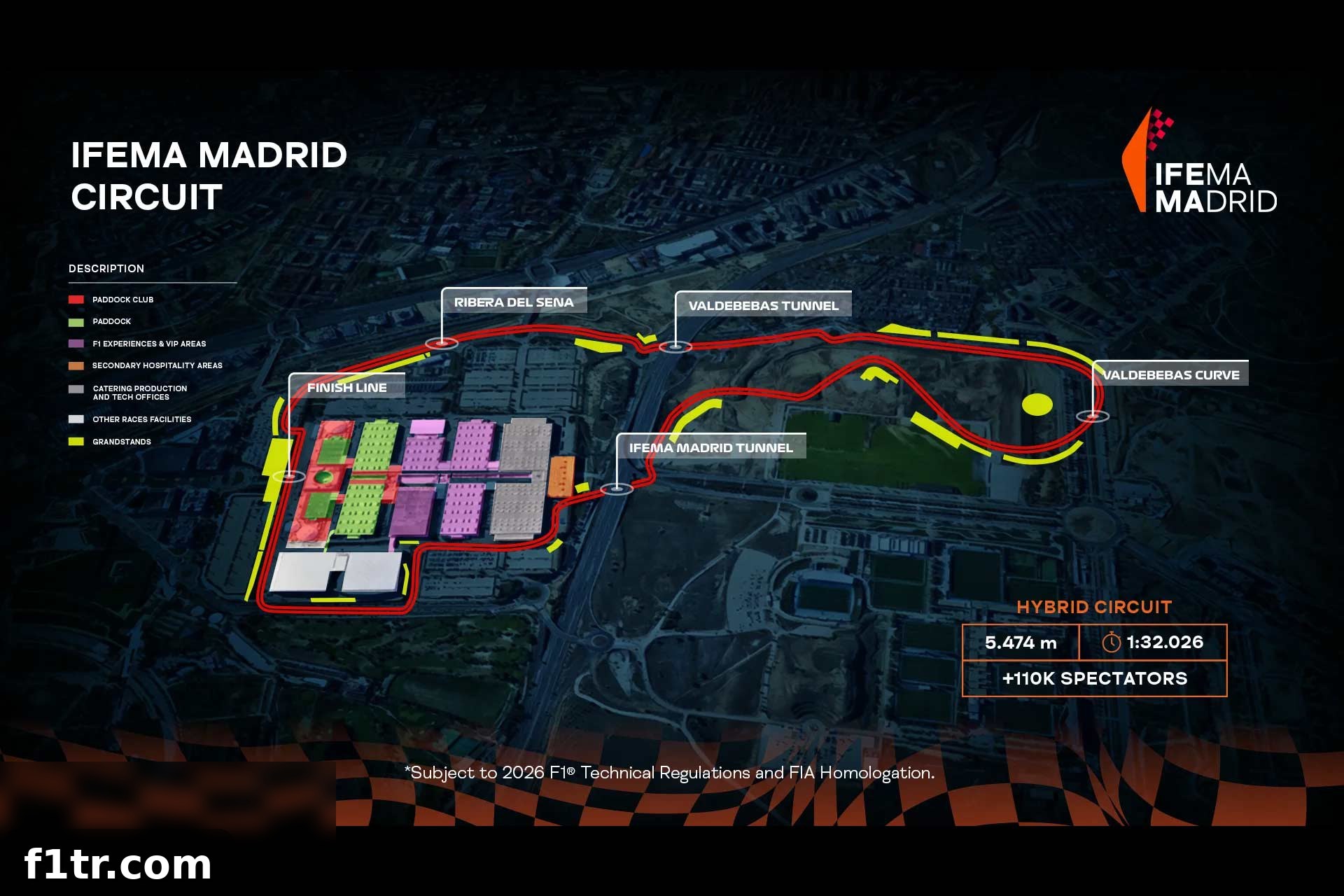
Formula 1 is set to embark on an exhilarating new chapter in Spain, as it officially confirms a return to the vibrant capital city of Madrid from 2026. The prestigious motorsport series announced a landmark 10-year agreement to host the Spanish Grand Prix on a brand-new, purpose-built 5.47-kilometre street circuit meticulously designed around the state-of-the-art Ifema Exhibition Centre. This highly anticipated move marks a significant shift for F1 in Spain and introduces a dynamic new urban racing spectacle to the global calendar, promising an unforgettable multi-day event for fans and participants alike.
Madrid Joins the Formula 1 Calendar: A New Era Begins
The vision for the Madrid Grand Prix extends far beyond a typical race weekend. Spearheaded by the Ifema Madrid group, the project embodies Formula 1’s evolving strategy to deliver comprehensive entertainment experiences in iconic global cities. The proposed circuit, featuring 20 challenging corners, is set to weave through the modern exhibition complex, integrating both street sections and purpose-built track elements. While exact performance metrics will depend on the new generation of F1 cars and power units scheduled for introduction in 2026, initial projections estimate lap times around a blistering 92 seconds, promising high-speed action and strategic racing.
F1 CEO Stefano Domenicali lauded the initiative, stating, “Madrid is an incredible city with amazing sporting and cultural heritage, and today’s announcement begins an exciting new chapter for F1 in Spain. I would like to thank the team at Ifema Madrid, the Regional Government of Madrid and the city’s mayor for putting together a fantastic proposal. It truly epitomises Formula 1’s vision to create a multi-day spectacle of sport and entertainment that delivers maximum value for fans and embraces innovation and sustainability.” Domenicali’s comments underscore F1’s commitment to creating events that are not only thrilling on track but also offer a rich cultural and entertainment program, seamlessly integrated with the host city’s infrastructure and values.
A cornerstone of Madrid’s bid was its exceptional accessibility. Event organisers proudly project that an impressive 90% of fans will be able to reach the venue using public transport, a testament to Madrid’s extensive and efficient transport network. This focus on sustainable travel aligns with F1’s broader environmental initiatives and makes the race highly accessible to a vast audience. The initial capacity for the Madrid Grand Prix is planned for around 110,000 spectators, with ambitious plans by the promoter to expand this to an impressive 140,000 over the first five years of its tenure. This scalable approach highlights the long-term vision for Madrid to become one of F1’s premier events, capable of accommodating a growing global fanbase.
The Dilemma for Barcelona: End of an Era?
The confirmation of Madrid as the new Spanish Grand Prix host from 2026 casts a significant shadow over the future of the Circuit de Catalunya, the long-standing venue near Barcelona. The Circuit de Catalunya has been an integral part of the Formula 1 calendar since 1991, hosting the Spanish round every year without interruption. For decades, it was also a frequently utilised testing ground for F1 teams, making it a familiar and historically significant fixture for the sport. Its current contract to host the Spanish Grand Prix runs until 2026, creating a direct overlap and immediate uncertainty regarding its future involvement.
While an F1 spokesperson confirmed that discussions with the Circuit de Catalunya are ongoing, the prospect of two Spanish Grands Prix seems unlikely given the current F1 calendar structure and its push for global expansion. The Barcelona circuit has made substantial investments in recent years, implementing upgrades and improvements to its track configuration and facilities, all aimed at securing its place on the F1 schedule. These efforts included modifications to certain corners and spectator areas, demonstrating a proactive stance to meet F1’s evolving standards. However, the allure of a new street circuit in a capital city like Madrid, with its fresh narrative and modern infrastructure, presents a compelling alternative for Formula 1’s commercial direction.
Spain has, in the past, hosted multiple Grands Prix in a single season, often under the banner of the European Grand Prix. This precedent was set at Jerez in 1994 and 1997, and more recently, for five consecutive years from 2008 to 2012, at a controversial street circuit in Valencia. While the return to a multi-Spanish race scenario cannot be entirely ruled out, F1’s current strategic focus appears to be on diversifying its global reach rather than saturating specific regional markets. The financial implications and logistical demands of hosting two Formula 1 events within the same country would be substantial, requiring extraordinary commercial and political will.
Spain’s Rich Formula 1 Heritage
Spain boasts a deep and varied history with Formula 1, marked by a succession of iconic and unique circuits. Madrid itself is not a newcomer to the F1 calendar; the permanent Jarama circuit, located just north of the city, hosted Grand Prix races from 1968, with its final F1 event taking place in 1981. This circuit, known for its tight and technical layout, provided many memorable moments during its time on the schedule. Prior to Jarama, Formula 1 ventured into urban environments with two other Spanish street circuits, both located in Barcelona.
The Pedralbes circuit in Barcelona hosted two rounds in the early 1950s, immersing the pinnacle of motorsport directly into the city’s bustling streets. Later, the breathtaking Montjuic Park circuit, also in Barcelona, became a celebrated but ultimately tragic venue, hosting four Grands Prix between 1969 and 1975. Montjuic was renowned for its stunning backdrop and challenging elevation changes, though safety concerns ultimately led to its discontinuation. Following Jarama, the Spanish Grand Prix moved south to the picturesque Jerez circuit in Cadiz, which hosted the event between 1986 and 1990, delivering a unique flavour of Andalusian racing. After Jerez, the race found its long-term home at the Circuit de Catalunya in Barcelona, establishing a new era of Spanish Formula 1 racing that has lasted over three decades.
Beyond these primary venues, Spain also briefly hosted the European Grand Prix at the aforementioned Valencia street circuit from 2008 to 2012. While intended to bring F1 to another major Spanish city, the circuit itself often received mixed reviews from drivers and fans alike, primarily due to its lack of overtaking opportunities. This rich tapestry of venues, from permanent tracks like Jarama and Jerez to challenging street circuits in Barcelona and Valencia, showcases Spain’s enduring passion for Formula 1 and its continuous evolution as a host nation.
Why Madrid? Formula 1’s Strategic Shift Towards City Circuits
The decision to bring Formula 1 to Madrid from 2026 reflects a broader strategic shift within the sport. F1 has increasingly gravitated towards “destination cities” and dynamic street circuits, exemplified by recent additions like Las Vegas and Miami, and the established success of events in Monaco and Baku. This move is driven by a desire to immerse the sport in the heart of major urban centres, attracting new audiences and providing a unique blend of sport, entertainment, and tourism. Madrid, as a global capital with a rich cultural scene, vibrant nightlife, and exceptional infrastructure, perfectly aligns with this modern vision.
The appeal of Madrid lies in its ability to offer more than just a race. It promises a fully integrated experience where the city itself becomes a part of the spectacle. This includes leveraging Madrid’s world-class hotels, restaurants, and cultural attractions to create a week-long festival atmosphere that captures the attention of both dedicated motorsport fans and general tourists. The economic benefits for Madrid are expected to be substantial, ranging from increased tourism revenue and job creation to enhanced global visibility. For Formula 1, securing a long-term presence in a key European capital reinforces its global footprint and strengthens its commercial portfolio, diversifying its appeal beyond traditional racing strongholds.
Furthermore, the Ifema Madrid project has emphasized innovation and sustainability, key pillars of F1’s contemporary agenda. The use of an existing exhibition centre allows for efficient infrastructure repurposing and minimises new construction. The commitment to public transport for a vast majority of attendees significantly reduces the event’s carbon footprint, showcasing how large-scale sporting events can be organised with environmental consciousness. This forward-thinking approach undoubtedly played a crucial role in winning Formula 1 over, positioning Madrid as a model for future Grand Prix hosts.
The Ifema Madrid Street Circuit: Design and Fan Experience
The proposed 5.47-kilometre Ifema Madrid street circuit is designed to be a blend of urban challenges and high-speed sections, promising an exciting and unpredictable race. With 20 corners, the layout will demand precision and bravery from drivers, offering technical sections alongside opportunities for overtaking. The integration of the track within the Ifema Exhibition Centre allows for innovative paddock facilities, hospitality suites, and spectator zones that can be seamlessly incorporated into existing modern structures. This unique setting is poised to offer unparalleled viewing experiences for fans, placing them closer to the action and providing diverse vantage points.
Fan experience is at the forefront of the Madrid Grand Prix vision. Beyond the track action, attendees can expect a plethora of entertainment options, including concerts, culinary experiences, and interactive exhibitions, transforming the event into a true festival. The emphasis on public transport will ensure that spectators can easily navigate to and from the circuit, reducing congestion and enhancing overall accessibility. Moreover, the capacity expansion plans, from an initial 110,000 to 140,000, signal a robust commitment to welcoming an ever-larger audience, ensuring that the Madrid Grand Prix grows in stature and popularity over its 10-year agreement. The blend of a modern city backdrop, a challenging new circuit, and a comprehensive fan engagement strategy positions Madrid to become a flagship event on the Formula 1 calendar.
Impact on the Formula 1 Calendar and Global Strategy
The addition of Madrid to the Formula 1 calendar from 2026 holds significant implications for the sport’s global strategy and the future composition of its schedule. While F1 has been expanding into new markets, particularly in the Middle East and North America, maintaining a strong presence in traditional European territories remains crucial. The shift to Madrid signifies a modernisation of F1’s European footprint, moving from a traditional permanent circuit to a dynamic city-based event. This trend suggests that F1 is increasingly prioritising venues that can offer a broader spectacle and integrate more deeply with a city’s tourism and entertainment offerings.
The move also raises questions about the long-term viability of other European races, especially those on older, less glamorous circuits. As demand for F1 hosting rights continues to surge globally, the competition for calendar slots intensifies. While historic tracks hold a sentimental value for many fans, the commercial imperative to secure lucrative deals with vibrant destination cities often takes precedence. Madrid’s entry reinforces F1’s balancing act between honouring its rich heritage and charting a course for future growth and commercial success. It underscores a clear preference for events that promise extensive fan engagement, robust infrastructure, and significant economic impact for the host city.
The introduction of the Madrid Grand Prix from 2026 marks a bold and exciting new chapter for Formula 1 in Spain. With its innovative street circuit, commitment to accessibility, and vision for a multi-day spectacle, Madrid is poised to become a standout event on the global calendar. While it poses significant questions for the future of the Circuit de Catalunya, this move reflects F1’s strategic evolution towards integrating world-class racing with dynamic urban entertainment. As the sport continues to expand and redefine its presence, Madrid stands ready to deliver an electrifying experience that captures the essence of modern Formula 1.