Charles Leclerc Reflects on Praise from F1 Legends, Plus the Latest from the Paddock and Beyond
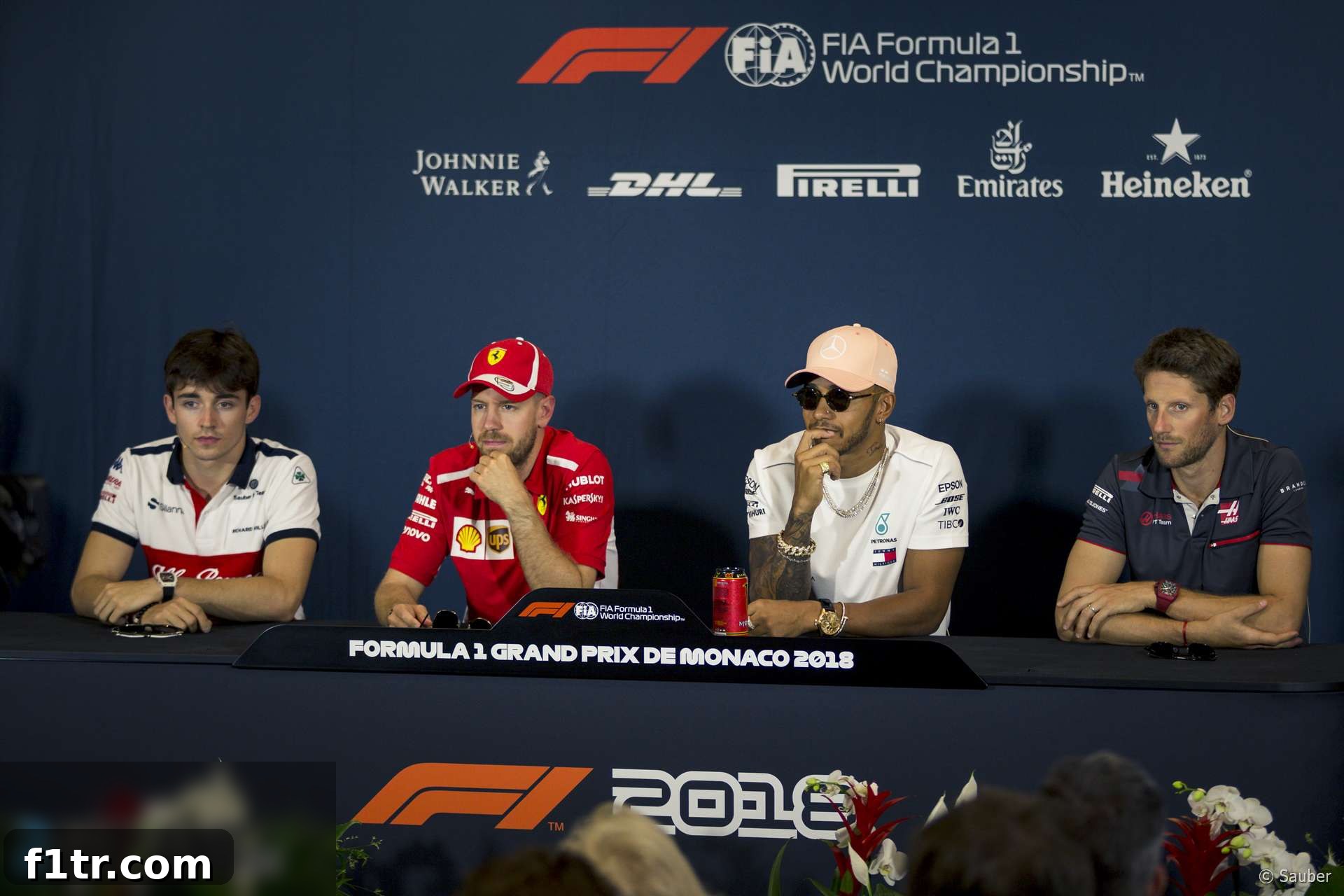
In the dynamic world of Formula 1, emerging talents often catch the eye of seasoned champions. For young prodigy Charles Leclerc, the recognition from titans like Lewis Hamilton and Sebastian Vettel is not just a compliment but a profound validation of his burgeoning career. Leclerc recently described the experience as “crazy,” acknowledging the immense honor of being singled out by drivers who have reshaped the sport’s history.
Leclerc on Receiving Accolades from F1’s Elite
The praise showered upon Charles Leclerc by current world champions Lewis Hamilton and Sebastian Vettel represents a significant milestone for any young driver. Their words carry immense weight, signifying a recognition of raw talent, dedication, and potential from the very top echelon of motorsport. Leclerc, ever-humble, shared his feelings about these endorsements, emphasizing that while such affirmations are deeply gratifying, they also fuel his relentless pursuit of improvement.
“It feels absolutely amazing,” Leclerc expressed, beaming with a mix of pride and a clear-eyed focus on the future. “Beyond Lewis and Sebastian, I’ve also received incredible feedback from other respected drivers. Nico Hulkenberg, during our time together for Formula One Live, spoke very highly of me. He even joked that it was hard to say anything bad since I was ahead on track, but his genuine positive comments meant a lot. And Felipe Massa, another highly experienced competitor, has also offered encouraging words.”
He continued, highlighting the unique nature of this collective approval: “To have these four drivers — Hamilton, Vettel, Hulkenberg, and Massa — speak of me in such a way, saying genuinely positive things, it truly feels crazy. It’s incredibly rewarding to hear that, and it provides a real boost to my confidence.”
Despite the elation, Leclerc remains grounded. “On the other hand,” he noted with a mature perspective, “I try not to dwell on it too much. There’s always so much I can improve on, areas where I need to develop my driving, my race craft, and my understanding of the car. But it is always, always very special to hear those positive things from such esteemed figures in our sport.”
Leclerc also drew a clear distinction between his personal respect for his peers and his competitive mindset on track. “As a person, when I’m out of the car, I hold immense respect for every driver on the grid. It’s a great honor to receive their praise. However, when I’m in the car, with the helmet on, a different mindset takes over. All those external thoughts disappear. The drivers out there become simply competitors, and I will fight as hard as I can against any of them, regardless of who they are or what they’ve said off-track. But once the helmet comes off, yes, it’s truly fantastic to hear such encouraging words.” This sentiment perfectly encapsulates the balance between sportsmanship and the fierce competitive spirit required at the pinnacle of motorsport.
Quotes courtesy of Gabriele Koslowski
Advert | Become a RaceFans supporter andgo ad-free
Social Media Buzz: A Glimpse into the F1 World
Social media continues to be a vibrant hub for Formula 1 fans and personalities alike, offering candid glimpses into the lives of drivers, engineers, and teams. From behind-the-scenes moments to passionate commentary, the digital sphere captures the essence of the sport. Here’s a selection of notable posts circulating on Twitter and Instagram, reflecting the varied moods and activities within the F1 community:
pic.twitter.com/yE2aUoV3xA
— Dickie Stanford (@dickiestanford) June 1, 2018
A fascinating visual shared by Dickie Stanford offers a nostalgic look, perhaps at a classic F1 machine or a significant moment from the sport’s rich history. These images often spark conversations among fans, bridging generations of F1 enthusiasts.
We all know that is raining a lot in @circuitspa but this… 😳😳 Hopefully they have already changed the signals ! 😂 #wet pic.twitter.com/JKEYDg3caZ
— Stéphane Richelmi (@StefRichelmi) June 1, 2018
Stéphane Richelmi provides a humorous, yet stark, reminder of the unpredictable weather conditions often encountered at iconic circuits like Spa-Francorchamps. His post highlights the extreme elements drivers and teams must contend with, and the need for constant adaptation. The mention of changing signals playfully underlines the impact of heavy rain on track operations and safety.
1992 was thrilling, because Mansell looked like he could pass Senna, every corner and every lap such was the aggressiveness of his drive. Uncertainty prevailed till the flag, and it really was exciting! Not like 2018… pic.twitter.com/UT0aVgY7cf
— Paul-Henri Cahier (@F1Photo) June 1, 2018
Renowned F1 photographer Paul-Henri Cahier stirred up a classic debate, reminiscing about the intense 1992 season, particularly the fierce rivalry between Nigel Mansell and Ayrton Senna. His post fondly recalls Mansell’s aggressive driving style, which kept fans on the edge of their seats, and draws a pointed comparison to the racing dynamic of 2018. This kind of commentary often fuels discussions among fans about different eras of Formula 1 and what constitutes truly thrilling racing.
Back at the base to start prepping for the #CanadianGP @redbullracing pic.twitter.com/T3o95N3BD4
— Max Verstappen (@Max33Verstappen) June 1, 2018
Max Verstappen, always one to share his journey with fans, posted about his return to the Red Bull Racing base, signaling the commencement of preparations for the upcoming Canadian Grand Prix. These posts offer a tangible connection to the rigorous schedule and dedication required of F1 drivers and teams, highlighting the relentless cycle of development, travel, and competition that defines their season.
- For more official F1 accounts and insights into the world of motorsport, find our comprehensive F1 Twitter Directory.
Essential Reads: Diving Deeper into Motor Racing News
Staying informed about the multifaceted world of motor racing requires sifting through a wealth of news and analysis. We’ve curated a selection of compelling articles and videos that offer unique perspectives and deep dives into various aspects of Formula 1 and beyond. These links cover team strategies, driver performance, historical insights, and personal reflections from some of the sport’s most engaging figures.
Advert | Become a Supporter & go ad-free
How Renault emerged as best of the rest (F1)
This insightful feature from Formula1.com delves into Renault’s ambitious journey to climb the constructor standings. The article quotes a key figure from the team, outlining their impressive progress: “We started last year two seconds away from the top teams. We finished the season one second away. We started this season pretty much the same position, so one second away. And the target is to halve that deficit to the top teams and finish this season half a second off.” This shows a methodical approach to development and highlights the monumental challenge of bridging the gap to the sport’s dominant forces. Understanding Renault’s strategic development reveals the immense engineering and financial investment required to compete at the sharp end of the grid, even for the “best of the rest” title.
Is Sirotkin sinking or swimming? (Motorsport magazine)
Motorsport Magazine offers a critical assessment of Sergey Sirotkin’s early career in Formula 1. The article provides a nuanced view of the pressures faced by rookie drivers, particularly within a team grappling with performance issues. It observes, “In this hectic, troubled environment, he is keeping his head down, remaining calm – and progressing. His team-mate, by contrast, is becoming ever-more strident in his frustrated complaints and going backwards.” This analysis underscores the mental fortitude required in F1, where a calm demeanor and consistent effort can sometimes be more valuable than outward displays of frustration, especially when battling at the back of the grid. It offers a fascinating comparison of two drivers’ coping mechanisms under immense pressure.
On Monaco track with my dad (Nico Rosberg via YouTube)
Former F1 World Champion Nico Rosberg shares a profoundly personal and historic moment in this YouTube video. Titled “On Monaco Track with My Dad in Our Championship Cars | A Historical Day in F1 I Will Never Forget,” the video captures Nico driving his championship-winning Mercedes alongside his father, Keke Rosberg, in his own championship-winning Williams, on the legendary streets of Monaco. This rare father-son reunion, featuring two F1 champions in their iconic cars at one of motorsport’s most revered venues, is a poignant testament to family legacy and the enduring allure of Formula 1. It offers fans an emotional and unique perspective on the sport’s history through the eyes of two of its most celebrated figures.
Tony Brooks and the Dangerous 1950s (F1 GPDC)
The F1 Grand Prix Drivers Club provides a compelling historical account of Tony Brooks, one of the unsung heroes of 1950s Formula 1, and the perilous nature of racing during that era. Brooks famously remarked about one of his machines, “I think it was the worst grand prix car I ever raced. Really, the car was almost undrivable.” This quote vividly illustrates the extreme challenges and inherent dangers faced by drivers in an era when safety standards were virtually non-existent. The article serves as a powerful reminder of how much F1 technology, safety, and driver experience have evolved, offering a stark contrast to the sophisticated and highly controlled environment of modern motorsport.
We always endeavour to credit original sources and bring you the most engaging content. If you have a tip for a link to feature in the next RaceFans round-up, or a piece of motor racing news you believe deserves wider attention, please don’t hesitate to share it with us here:
- Contact RaceFans
Advert | Become a RaceFans supporter andgo ad-free
Snapshot: Santino Ferrucci’s IndyCar Debut
In a significant crossover for his burgeoning career, Haas F1 test driver and Formula 2 racer Santino Ferrucci is poised to make his highly anticipated IndyCar debut this weekend. Stepping in as a substitute for the injured Pietro Fittipaldi, Ferrucci will be competing with Dale Coyne Racing at the challenging Detroit Grand Prix. This opportunity presents a unique test of Ferrucci’s adaptability and skill, transitioning from the open-wheel development series of F2 to the distinct demands of American open-wheel racing. His performance in Detroit will be closely watched as he navigates a new car, new circuits, and a highly competitive field, offering a glimpse into his versatility as a racing driver on an international stage.
Comment of the Day: The Enduring F1 Wheel Size Debate
The discussion around Formula 1 wheel sizes has been a recurrent and often passionate topic among fans and technical experts alike. Should F1 transition from its traditional 13-inch wheels to larger 18-inch rims, mirroring road car trends? This question sparks considerable debate, with arguments ranging from aesthetic appeal to fundamental engineering principles. Today, we highlight a thought-provoking perspective from David, who offers a rather radical idea on how the decision should genuinely be made.
“What is the optimum size for performance? That is the size I want,” David asserted, cutting straight to the core of the technical argument. For many purists, the primary goal of Formula 1 should always be pushing the boundaries of performance and technological innovation, unburdened by external commercial pressures.
David continued, critiquing a common justification for larger wheels: “Being relevant to road cars is a poor excuse for adopting 18-inch rims. The linkage to road cars is already there, and it’s a crucial one: the development of better tire compounds. This is where F1 innovation truly benefits road car technology.” He argues that a cosmetic change, driven by marketing rather than performance, would undermine the sport’s technical integrity. “There is nothing substantial to gain from a purely cosmetic change; instead, the sport risks losing an aspect of its rich technical history.”
He elaborates on the historical context: “If someone asks why F1 cars currently have 13-inch wheels, the answer involves a fascinating narrative of history, the gradual evolution of technology in F1, and how these incredible machines have been meticulously built to accommodate or exploit the particular characteristics of that specific wheel size. It’s a story of continuous engineering refinement.”
“However,” David posits, “if someone asks the same question about 18-inch wheels, and the answer is ‘because some marketing focus group thought they looked cool,’ then, in my opinion, that would undoubtedly be a backwards step for Formula 1.” This highlights the tension between maintaining F1’s identity as a cutting-edge technological proving ground and its commercial imperative to appeal to a wider audience.
He concludes with a conditional acceptance: “If there were genuinely compelling technical reasons behind such a switch – tangible benefits in terms of performance, safety, or groundbreaking innovation that couldn’t be achieved otherwise – then I would wholeheartedly accept the new size. But without that clear technical rationale, the change seems arbitrary and detrimental to the sport’s heritage and engineering ethos.” David’s comment champions F1’s role as a technological pioneer over a mere marketing platform, reflecting a sentiment shared by many dedicated fans who value substance over superficiality in the world’s premier motorsport series.
Celebrating Milestones: Happy Birthday to Our Readers!
The RaceFans community is a global family, and we love to celebrate together! Join us in extending warm birthday wishes to some of our dedicated readers: Jayantj, Rahim.Rg, and Aditya Fakhri Yahya! We hope you all have a fantastic day filled with joy and perhaps some exciting F1 news to enjoy.
If you’d like to receive a special birthday shout-out in a future RaceFans round-up, please let us know when your birthday is by submitting the details via our contact form. Alternatively, you can contribute to our ever-growing list by adding your date here. We look forward to celebrating with you!
On This Day in F1 History: A Monaco Farewell
- On this day in 1973, the legendary Jackie Stewart, a three-time Formula 1 World Champion, demonstrated his unparalleled skill by securing pole position for what would prove to be his final Monaco Grand Prix. This achievement at one of F1’s most iconic and demanding circuits perfectly underscored Stewart’s mastery and strategic brilliance, just months before he would claim his third world title and retire from the sport at the peak of his powers. His performance at Monaco that year remains a memorable highlight in the illustrious career of one of motorsport’s true giants.