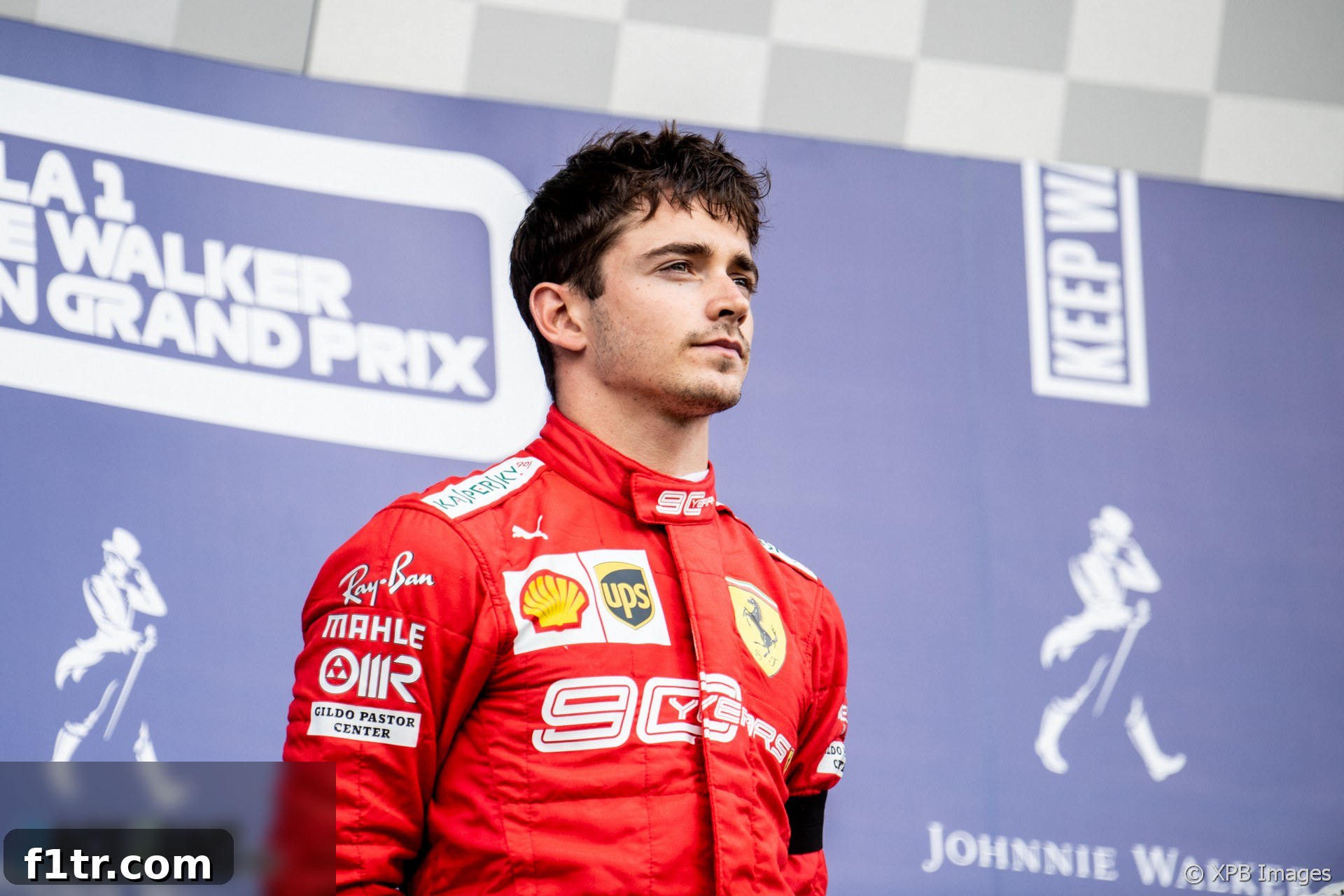
The 2019 Formula 1 season witnessed a truly momentous occasion at the Belgian Grand Prix as Charles Leclerc clinched his maiden victory, becoming the 108th different driver to win a round of the prestigious world championship. This triumph was not just a personal milestone for the young Monegasque driver but also a significant chapter in the rich tapestry of Formula 1 history, marking him as a driver with immense potential and a bright future.
Leclerc’s victory also etched Monaco into the record books as the 23rd different country to produce a Formula 1 race-winning driver. While many nations have multiple champions and race winners, some countries have uniquely contributed to this elite club with just a single victor. These include Poland, represented by the resilient Robert Kubica, and Venezuela, with the charismatic Pastor Maldonado.
Leclerc’s Breakthrough and Ferrari’s Enduring Legacy
For the iconic Scuderia Ferrari, Leclerc’s win was equally profound. He became the 39th different driver to achieve a victory for the legendary Italian team, further cementing their status as one of the most successful outfits in motorsport. What makes Leclerc’s achievement particularly poignant is the timing: his first win came in his 34th Grand Prix start. Coincidentally, this is the exact number of races contested by his late godfather, Jules Bianchi, whose memory continues to resonate deeply within the F1 paddock.
Leclerc’s journey to this moment has been one of exceptional talent and determination. Having shown flashes of brilliance throughout his debut season with Ferrari, often battling against his more experienced teammate, this victory at Spa-Francorchamps was a testament to his evolving skill set and unwavering focus. The win, coming after several near misses and strong qualifying performances, signals a new era for Ferrari, potentially with Leclerc at the forefront of their championship ambitions for years to come.
The Elusive Nature of a Maiden F1 Victory in the Modern Era
In contemporary Formula 1, the opportunities for new drivers to stand on the top step of the podium have become remarkably scarce. The sport has seen a period of sustained dominance by a handful of top teams and established drivers, making it exceedingly difficult for emerging talents to break through. Over the past decade, a mere half-dozen first-time winners have graced the sport. Charles Leclerc now joins an exclusive list alongside Valtteri Bottas, Max Verstappen, Daniel Ricciardo, Pastor Maldonado, and Nico Rosberg as the only drivers to have scored a win during that challenging period.
This trend highlights a significant shift in Formula 1 dynamics. The 2010s, despite witnessing a steady increase in the number of races – with the 2020 F1 calendar set to feature a record 22 rounds – is on track to record the fewest new drivers among the first seven decade-long periods since the world championship began. Unless the remaining races of this specific 10-year period produce at least five new winners, this decade will stand out as an anomaly, reflecting a challenging environment for newcomers to claim that coveted first victory. This scarcity can be attributed to various factors, including the increasing sophistication and stability of top teams, greater driver retention, and the financial barriers to entry for new constructors, which limits the number of competitive seats available.
Historically, decades like the 1960s and 1970s often saw a higher turnover of winners, reflecting a different era of the sport with more varied team fortunes and a less entrenched hierarchy. The current landscape, while incredibly competitive at the very top, presents a steeper climb for those striving for their initial taste of F1 success. This makes Leclerc’s achievement even more remarkable, as it underscores his ability to penetrate a highly fortified elite group of winning drivers.
Championship Battle Intensifies and Red Bull’s Shifting Fortunes
While Leclerc celebrated his breakthrough, the championship battles continued to unfold with renewed intensity. His victory brought him within a striking 12 points of his teammate, Sebastian Vettel, in the drivers’ championship standings. For Vettel, the Belgian Grand Prix served as a stark reminder of his ongoing dry spell, as it marked exactly 12 months since his last victory. The pressure on the four-time world champion continues to mount as his young teammate demonstrates incredible pace and race-winning ability.
Further up the standings, Vettel also finds himself trailing Max Verstappen by an identical 12-point margin. However, the Belgian Grand Prix brought an unexpected end to Verstappen’s impressive run of consistency. His remarkable 21-race streak of consecutive top-five finishes, which had begun at Spa the previous year, came to an abrupt halt on the very first lap of this year’s race due to an unfortunate incident. This break in form, while disappointing, also highlights the unpredictable nature of Formula 1 racing, even for the most consistent performers.
With Verstappen’s streak ending, attention quickly turned to Red Bull’s new team mate, Alexander Albon. Making his highly anticipated debut for the senior team, Albon delivered an impressively mature performance, rising through the field to finish a commendable fifth. With just 12 prior starts to his name in Formula 1, Albon is Red Bull’s least experienced new driver since Robert Doornbos joined them in 2006, having only made eight starts before his Red Bull debut (and going on to make just three more). Albon’s strong showing immediately suggests that he could be the driver to pick up the mantle and deliver consistent points for Red Bull alongside Verstappen, particularly as the team looks to solidify its position against Ferrari and Mercedes.
Mercedes’ Unyielding Consistency and the Championship Conundrum
Even without a victory in Belgium, the dominant Mercedes team continued to rack up impressive statistics. Lewis Hamilton and Bottas secured the other two rostrum places, contributing to the team’s astounding milestone of 200 podium finishes in Formula 1. This remarkable consistency is a cornerstone of Mercedes’ unparalleled success in the hybrid era, allowing them to accumulate points relentlessly even when not winning races outright.
Hamilton further extended his championship lead to a significant 65 points over Bottas, reinforcing his grip on the drivers’ title. With 208 points still available across the remaining races of the season, the championship mathematical permutations begin to narrow. At this stage, only the top six drivers in the championship standings remain mathematically in contention for the title. This includes the Mercedes duo, the Ferrari pair, and Max Verstappen, underscoring the formidable challenge faced by anyone hoping to upset Hamilton’s charge towards another world championship.
The narrowing field of contenders indicates the immense challenge of overcoming such a substantial points deficit against a driver and team performing at peak levels. While the top three teams command the majority of points, the consistency of Mercedes, particularly Hamilton, makes their lead incredibly difficult to erode, setting the stage for an intense, albeit potentially predictable, conclusion to the championship.
Reviewing the Season So Far: Key F1 Statistics
For those keen to delve deeper into the intricate details of the 2019 F1 season, a comprehensive statistical review is invaluable. These insights offer a granular understanding of driver and team performances, strategy effectiveness, and the unfolding narrative of the championship:
- 2019 F1 Championship Points: A breakdown of how each driver and team have accumulated points throughout the season, offering a clear picture of their standing.
- 2019 F1 Season Records: Highlights significant achievements, records broken, and other notable occurrences across the Grand Prix weekends.
- 2019 F1 Race Data: Detailed information from each race, including lap times, fastest laps, and race incidents.
- 2019 F1 Qualifying Data: Insights into individual qualifying performances, grid positions, and overall team pace over a single lap.
- 2019 F1 Retirements and Penalties: A crucial overview of reliability issues, driver errors, and official sanctions that have impacted race outcomes.
- 2019 F1 Strategy and Pit Stops: Analysis of tire choices, pit stop timings, and strategic decisions that shaped the races.
The 2019 Belgian Grand Prix will forever be remembered as the race where Charles Leclerc announced his arrival as a Formula 1 winner. His victory, coupled with the ongoing twists and turns in the championship, ensures that the remainder of the season promises captivating racing and a relentless pursuit of glory. Have you spotted any other intriguing statistics or facts from the Belgian Grand Prix that warrant discussion? Share your insights and observations in the comments below.
Related Articles: 2019 Belgian Grand Prix
- Norris says he thought of Hubert during Belgian GP
- 2019 Belgian Grand Prix Star Performers
- “For Tonio”: Dominant Leclerc scores maiden win
- Leclerc is only the sixth new F1 race winner in last 10 years
- Hamilton: Crowd reaction to practice crash prompted safety comments
Browse all 2019 Belgian Grand Prix articles