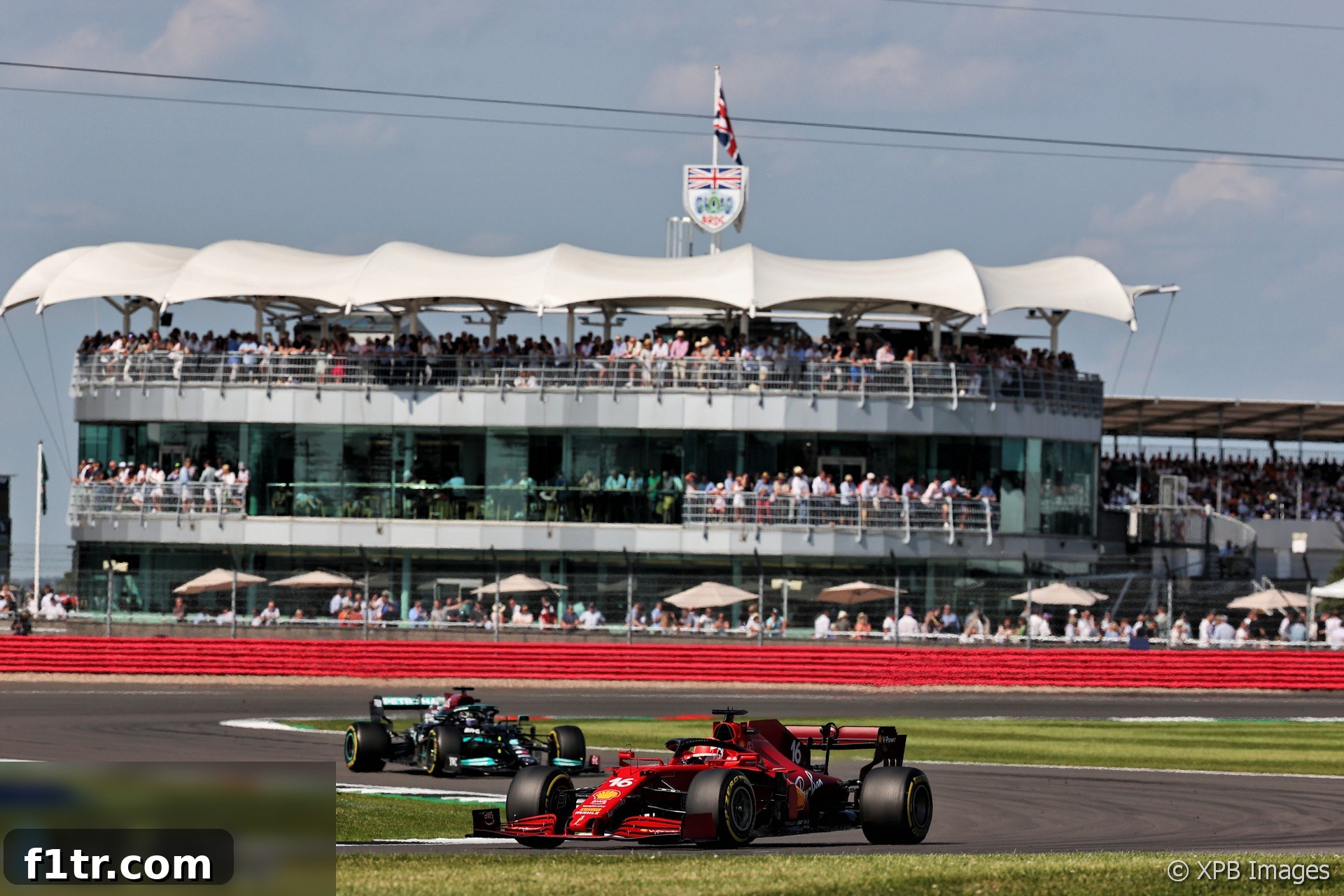
Charles Leclerc: Ferrari’s Persistent Tyre Enigma Despite British Grand Prix Brilliance
The exhilarating spectacle of the British Grand Prix saw Charles Leclerc deliver a masterful performance, piloting his Ferrari to a commendable second-place finish, less than four seconds behind eventual race winner Lewis Hamilton. Yet, despite this remarkable turnaround from their struggles in France, Leclerc candidly admits that the Scuderia is far from solving the profound tyre issues that plagued their showing at Paul Ricard. This juxtaposition of a near-victory at Silverstone and the lingering questions about their performance consistency highlights a critical challenge for the Italian team in the competitive world of Formula 1.
The French Grand Prix: A Tyre Nightmare at Paul Ricard
Just weeks prior to the heroics at Silverstone, both Ferrari drivers endured a forgettable French Grand Prix. The team struggled immensely with tyre performance, specifically experiencing a severe and inexplicable drop-off that left them out of the points. Paul Ricard, with its smooth surface and high-speed corners, demands exceptional front tyre management, and Ferrari’s car seemed unable to cope, leading to excessive degradation and a lack of grip. This dire performance sparked a major internal investigation within the team, aimed at understanding the root cause of such a dramatic decline in competitive pace.
The concerns were palpable heading into the British Grand Prix at Silverstone. Another circuit renowned for its demanding nature on front tyres, Silverstone presented a potential repeat scenario for Ferrari. The team feared that the underlying issues discovered at Paul Ricard could re-emerge, once again hindering their ability to challenge at the front. The pressure was immense to at least show an improvement, if not fully resolve, the complex aerodynamic and mechanical interactions affecting their tyre wear.
Silverstone’s Rollercoaster: Leclerc’s Heroics and Ferrari’s Unexpected Pace
Defying initial expectations, the British Grand Prix weekend proved to be a stark contrast to France. From the moment the lights went out, Charles Leclerc showcased exceptional skill and determination. Starting from fourth position, he capitalised on the dramatic opening lap collision between Lewis Hamilton and Max Verstappen, seizing the lead and immediately setting an impressive pace. It was a demonstration of opportunistic brilliance, positioning himself perfectly to take advantage of the chaos unfolding around him.
Leclerc’s opening stint on the medium compound tyres was nothing short of extraordinary. He maintained the lead for the vast majority of the race, fending off the formidable Mercedes of Lewis Hamilton for an astonishing 49 laps. Despite an intermittent engine problem that he had to manage throughout this period, the Monegasque driver reported that the “car felt incredible” and that Ferrari was “very, very quick” on this compound. His ability to sustain such a high level of performance, while simultaneously nursing an engine issue, highlighted both his driving prowess and a surprising surge in the SF21’s competitive edge that weekend. The strategic acumen displayed by keeping the faster Mercedes behind him for so long was a testament to his racecraft and the improved balance of his car on the medium tyres.
This sustained period at the front was a significant boost for Ferrari, providing tangible evidence that their efforts between races were yielding positive results, at least on certain tyre compounds and circuit conditions. The F1 community watched in awe as Leclerc, in a car that had struggled so profoundly just a fortnight earlier, battled wheel-to-wheel with the reigning world champion, demonstrating a potential that many had doubted after the French debacle. The team’s engineers were carefully observing every data point, eager to understand the nuances of this newfound pace.
Unpacking the Hard Tyre Dilemma: Where Hamilton Gained
However, the complexion of the race began to shift after the pit stops, particularly once both drivers switched to the harder compound tyres for their final stints. While Leclerc initially felt “quite good” on the hard tyres, he soon encountered a familiar and frustrating challenge. As the race progressed and he began to navigate through traffic, the inherent fragility of this compound became apparent. “Whenever I started to hit the traffic,” Leclerc explained, “I could feel we were on a bit more fragile tyre and we seemed to suffer a bit more, by being [near] those guys, even though it was so quite far, I could feel the rear of the car was not as stable as I wanted it to be.”
This subtle but critical loss of rear stability, particularly when running in the turbulent air of other cars, meant Leclerc was unable to extract the same consistent performance. It forced him to manage the car more, compromising his ability to push to the absolute limit and defend his position effectively. This issue, though not as severe as the widespread degradation seen in France, still indicated an underlying sensitivity in the car’s interaction with specific tyre compounds and aerodynamic conditions. Lewis Hamilton, in contrast, seemed to unlock superior pace on the hard tyres, progressively closing the gap to Leclerc with each passing lap. His Mercedes appeared more robust and consistent, allowing him to maintain peak performance even in challenging circumstances.
Ultimately, Hamilton’s relentless pursuit culminated in an overtake on lap 49, just three laps from the chequered flag, securing the victory. Leclerc’s assessment was clear: “But overall, even when everything felt good, Lewis was just much quicker than us on those hard tyres.” This statement underscores the core of Ferrari’s unresolved puzzle: while they found excellent pace on the medium tyres, the hard compound continued to expose a relative weakness, preventing them from converting an exceptional drive into a race win. The subtle differences in how the two cars managed tyre temperatures and degradation over a race stint, particularly in varying airflows, proved decisive.
The Lingering Mystery: Ferrari’s Ongoing Tyre Investigation
Despite the elation of a strong performance at Silverstone, Charles Leclerc has firmly stated that Ferrari’s comprehensive efforts to understand the issues from the French Grand Prix will continue unabated. “There’s been a big investigation after France to try to understand exactly why we were struggling that much with those front tyres,” he revealed. “I don’t think we get that answer yet. So yes, we were much better here but I don’t think it is because we found the complete answer of what happened in France.”
This ongoing investigation highlights the complex nature of modern Formula 1 tyre performance. It’s not simply about finding a “magic bullet” but understanding the intricate interplay between aerodynamics, suspension setup, driver input, and tyre thermodynamics. The dramatic swing in performance between Paul Ricard and Silverstone, on different tyre compounds, suggests that Ferrari has yet to fully grasp the fundamental characteristics causing their inconsistency. The team’s commitment to this deep dive is crucial; a superficial solution would only mask the problem, leaving them vulnerable to similar performance dips at other circuits.
Leclerc remains optimistic about the future, emphasizing the dedication within the team: “So, the investigation is still going on and we are still working hard on it. And even though we’ve had a good day today we don’t forget about the bad day in France and once we understand the full extent of why we were slow in France, then I’m pretty sure we will do a big step as a team and it will help us to reproduce this type of performance as we did today.” This “big step” refers to unlocking the consistent performance potential across a wider range of conditions and tyre compounds, a critical factor for any team aspiring to challenge for championship honours. The ability to extract maximum performance from the tyres throughout a race, regardless of ambient conditions or circuit layout, is a hallmark of championship-winning teams, and Ferrari is keenly aware of this.
Looking Ahead: Consistency and Championship Ambitions
Ferrari’s journey in Formula 1 is one of constant evolution and adaptation. The Silverstone performance, spearheaded by Charles Leclerc, served as a powerful reminder of the team’s inherent speed and strategic capabilities when the package comes together. However, the comments from Leclerc underline the reality that consistency remains the ultimate goal. To truly contend for championships, Ferrari must eliminate the dramatic performance swings witnessed between races like France and Britain. This involves not only understanding their car’s behaviour across all tyre compounds and circuit types but also refining their development process to implement lasting solutions.
The lessons learned from both the struggles at Paul Ricard and the triumphs at Silverstone will be invaluable. They provide the engineers with crucial data points to further refine the SF21 and inform the design of future challengers. The dedication to this meticulous analysis, combined with the raw talent of drivers like Leclerc, suggests a hopeful path forward for the Scuderia. While the tyre mystery may still linger, Ferrari’s determination to unravel it is stronger than ever, aiming to reproduce the exhilarating performance seen at Silverstone on a regular basis and reclaim their place at the pinnacle of Formula 1.
2021 British Grand Prix Insights
- Verstappen reveals “vision problems” since 2021 Silverstone crash with Hamilton
- Who was to blame for Verstappen and Hamilton’s collision at Silverstone?
- Hamilton penalty “harsh” for move within FIA’s overtaking guidance – Allison
- Why Hamilton “wasn’t seen as wholly to blame” for the Verstappen crash
- Sainz convinced he had pace to challenge for podium without British GP setbacks
Browse all 2021 British Grand Prix articles