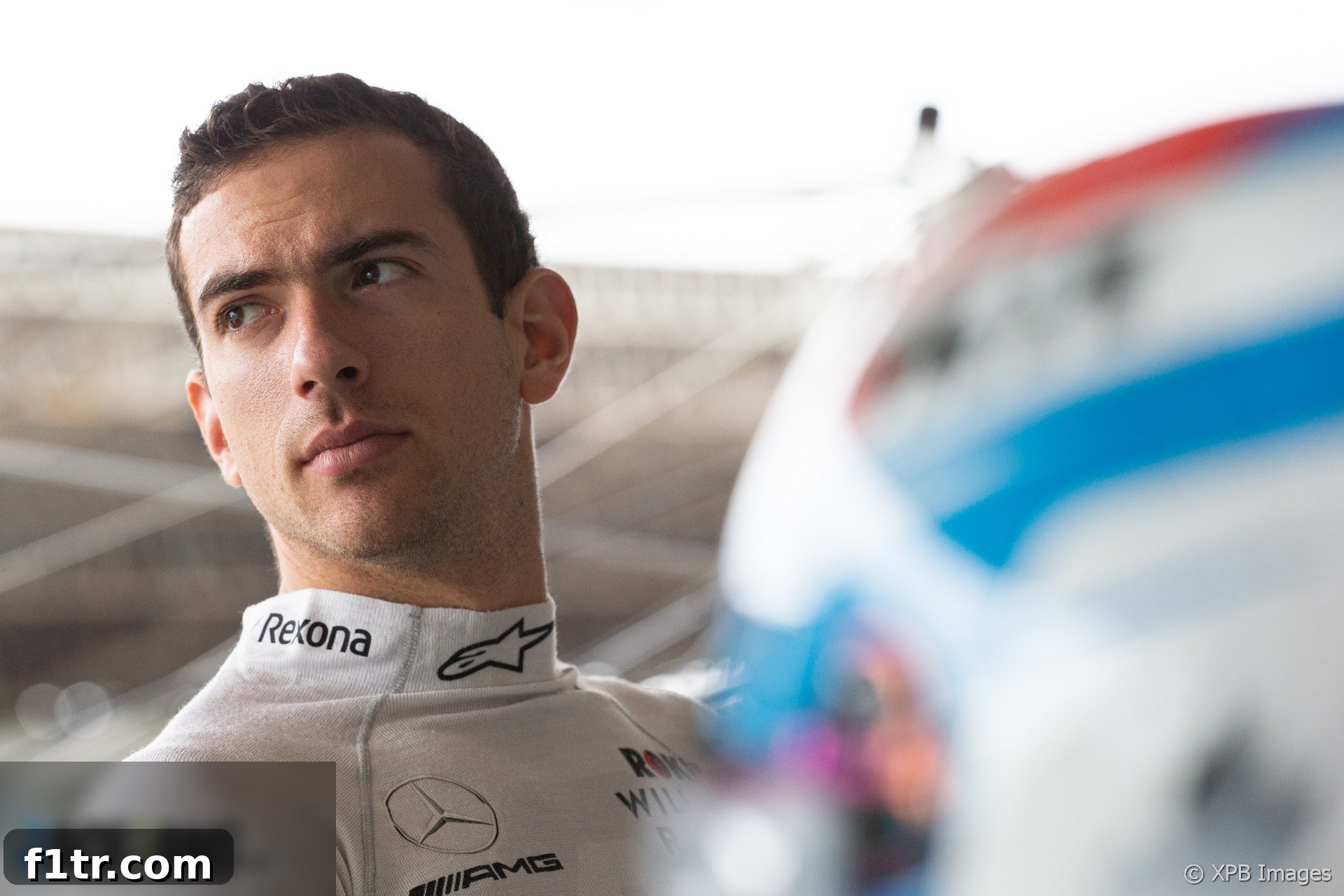
Nicholas Latifi’s long-awaited Formula 1 debut with Williams marks a significant milestone in his racing career, bringing a new face to the pinnacle of motorsport. As is customary for every F1 driver since 2014, Latifi has chosen a permanent career number – a symbol that will accompany him throughout his tenure in the sport. Stepping onto the global stage, the Canadian rookie opted for the number six, a digit that immediately draws parallels to a recent F1 champion, Nico Rosberg, who famously clinched his 2016 title with the very same number. However, for Latifi, the significance of the number six stems from a deeply personal connection, one that is intrinsically tied to his roots and identity, far removed from the legacies of past champions. This unique choice sets him apart and offers a fascinating glimpse into the individual narratives that shape the personas of F1 drivers. His arrival promises not only a fresh talent on the grid but also a story of hometown pride emblazoned on his car.
But the Williams rookie has not chosen the career number because of its connection to the 2016 champion or his father Keke Rosberg, who took it to the championship in 1982. Instead, the inspiration behind Latifi’s selection of the number six traces directly back to his vibrant Canadian hometown, Toronto. Known affectionately to its residents and global fans alike as ‘The 6’, this moniker has become an integral part of the city’s modern identity, largely popularized by one of its most famous sons: the international music sensation, Drake.
Latifi himself explained the origins in a post on his official website, noting, “Toronto is widely referred to as ‘The 6’, which is partly down to Drake, who’s also from Toronto.” Drake’s influence cannot be overstated; he famously referenced “The 6” in his early music, and his critically acclaimed album was originally titled ‘Views from the 6’, solidifying the nickname in contemporary culture. This cultural nod immediately resonates with millions, especially those familiar with North American pop culture. “He mentions the name in one of his early songs, and one of his albums was originally called ‘Views from the 6’.”
Beyond the contemporary musical influence, the number six holds historical and geographical significance for Toronto, further cementing its relevance for Latifi. The city was historically divided into six distinct districts, a structural organization that, while no longer formally in place, left an indelible mark on its urban planning and collective memory. Moreover, a more practical, everyday connection exists through the city’s telecommunication infrastructure: Toronto’s primary telephone area codes prominently feature the number six, either as a starting or finishing digit. “Other 6 links are that Toronto was one divided into six districts, and that the two telephone area codes for Toronto start or finish with a six.”
These multiple layers of connection – from music and popular culture to historical governance and modern communication – coalesce to make “The 6” a powerful symbol of Torontonian identity. As Latifi articulates, “For all these reasons the name has just stuck,” he added. “Anyone who’s from North America knows what ‘the six’ is – especially if they listen to Drake.” His choice, therefore, is a heartfelt homage to his heritage and the place that nurtured his dreams, carrying a piece of home with him onto the global Formula 1 stage.
It’s an intriguing coincidence that the number six became available just as Nicholas Latifi was poised to make his Formula 1 debut. The number was last famously wielded by Nico Rosberg, the German driver who masterfully piloted his Mercedes to the 2016 Formula 1 World Championship. Rosberg’s association with the number six became iconic during his title-winning season, etched into the memories of fans worldwide. Following his unexpected retirement at the peak of his career, F1 regulations stipulated that his chosen number would be reserved for him for a period of two years, ensuring its exclusivity should he ever decide to return. As this two-year window expired, the revered number became fair game for new entrants or drivers wishing to change their selections. Rosberg’s six has become available for selection as drivers’ career numbers are reserved for their up to two years after leaving the championship.
Despite the obvious and powerful association with a recent world champion, Latifi’s decision was entirely independent of Rosberg. Latifi confirmed that his choice was driven purely by his connection to Toronto, making it clear that his intention was not to emulate or pay tribute to the Rosberg legacy. This distinction is crucial, highlighting that while the number carries a significant F1 history, Latifi is forging his own path and imbuing the number with a personal narrative that transcends mere racing statistics. It underscores the profound impact of the permanent number system, allowing drivers to infuse their chosen digits with unique stories and personal meaning, rather than inheriting a legacy they did not choose.
Nicholas Latifi’s path to Formula 1 was a rigorous journey through the junior categories, where he steadily honed his skills and built his reputation as a formidable talent. His affinity for the number six actually predates his F1 ascent, featuring prominently in his earlier racing endeavors. He previously raced with the number six his 2016 GP2 campaign, a pivotal season in his development. Interestingly, his initial adoption of the number was largely a matter of circumstance rather than deliberate choice. As he explained, “That was more by chance, as DAMS was given five and six because of the finishing positions in the championship.” Teams in junior series often have numbers assigned based on their previous year’s performance, and DAMS, Latifi’s team, secured the numbers five and six through their strong championship standings.
However, what began as a random assignment quickly evolved into a personal preference. When faced with the choice between five and six, Latifi knew exactly which one he wanted. “But as soon as we had those numbers, I knew immediately which one I wanted!” he declared. This early connection solidified his bond with the number, and he again raced with it in 2018 and 2019 when the category had become Formula 2. Throughout these crucial development years, the number six became his consistent identifier, accompanying him through race wins, podiums, and the intense pressure of battling for a Formula 1 seat. His consistent performance in Formula 2, culminating in a strong second-place finish in the 2019 season, ultimately paved the way for his dream debut with Williams. For Latifi, the number six represents not just a link to his hometown but also a symbol of his journey and perseverance through the ranks, carrying with it the memories of his successes and the relentless pursuit of his F1 dream.
View the current list of 2020 F1 drivers and teams
The introduction of permanent driver numbers in Formula 1 starting from the 2014 season marked a significant shift in how drivers are identified and how they connect with their fans. Prior to this change, numbers were assigned based on a team’s championship position from the previous season, with the reigning world champion typically taking number one (though they could choose their permanent number instead). This often meant drivers raced with different numbers year after year, making it harder for fans to form a consistent association. The new system, inspired by disciplines like MotoGP and NASCAR, allows drivers to select a number between 2 and 99 (number 1 is reserved for the reigning world champion, who can choose to use it or stick with their permanent number). Once chosen, the number remains with the driver for their entire F1 career, and is then reserved for two years after their last F1 race, as seen with Nico Rosberg’s number six.
This policy change has injected a new layer of personality and storytelling into the sport. Drivers often select numbers with deep personal meaning – a lucky number, a family member’s birth date, a number used in their karting days, or even a tribute to a sporting hero. For instance, Max Verstappen chose number 33, a number he used in karting because his preferred number 3 was already taken by Daniel Ricciardo. Sebastian Vettel, a four-time world champion, chose number 5, a number he won championships with in junior categories and also associated with Nigel Mansell, one of his heroes. Lewis Hamilton, another multi-champion, races with number 44, a nod to his karting number. Valtteri Bottas races with 77, and Charles Leclerc with 16. These choices become part of their brand, fostering stronger connections with fans who can identify with their favorite driver not just by name or team, but by a unique, unchanging numerical identifier. Latifi’s number six, with its Toronto roots, is a perfect example of how these permanent numbers transcend mere identification, becoming powerful symbols of identity, heritage, and personal journey on the world’s biggest racing stage.
Nicholas Latifi’s debut with Williams Racing places him within one of Formula 1’s most storied and historically successful teams. While Williams has faced challenging seasons in recent years, their legacy as multiple constructors’ and drivers’ champions remains undiminished. For a rookie like Latifi, joining such a team, even during a rebuilding phase, presents a unique set of opportunities and pressures. He steps into a highly competitive environment where every tenth of a second counts, and the learning curve is incredibly steep. Rookies must not only adapt to the immense power and complexity of a modern F1 car but also master intricate race strategies, pit stop procedures, and the relentless demands of a global racing calendar.
The pressure on Latifi will be multifaceted. He will be expected to learn quickly, contribute to the team’s development, and demonstrate his potential against seasoned competitors. Moreover, as the sole Canadian driver on the grid, he carries the hopes of a nation passionate about motorsport. His choice of the number six, symbolizing his Toronto heritage, will undoubtedly resonate with his compatriots, adding an extra layer of national pride to his maiden season. His challenge will be to translate his impressive junior formula performance into consistent results in Formula 1, helping Williams claw its way back up the grid. His personal connection to his car number might serve as a constant reminder of his roots and the support system behind him, providing a mental anchor amidst the intense pressures of top-tier motorsport. His journey with the number six, from its casual adoption in junior categories to its deliberate choice in Formula 1, underscores a personal narrative that is both unique and inspiring as he embarks on this exciting chapter with Williams.
2020 F1 season
- Grosjean to make F1 test return tomorrow for first time since Bahrain horror crash
- Pictures: Wrecked chassis from Grosjean’s Bahrain fireball crash to go on display
- Bottas vs Rosberg: Hamilton’s Mercedes team mates compared after 78 races each
- F1 revenues fell by $877 million in Covid-struck 2020 season
- Hamilton and Mercedes finally announce new deal for 2021 season
Browse all 2020 F1 season articles
Nicholas Latifi’s selection of the number six for his Formula 1 career is a beautiful illustration of how personal identity and professional aspiration can converge on the global stage. Far from being a random pick or a tribute to F1 legends, his choice is a heartfelt homage to his Canadian homeland, specifically his beloved city of Toronto, affectionately known as ‘The 6’. This decision, rooted in popular culture popularized by Drake, as well as historical and geographical nuances of Toronto, ensures that a piece of his heritage rides with him in every Grand Prix. It’s a powerful statement of pride and connection, offering fans a deeper insight into the man behind the helmet.
While the number six holds a recent championship legacy through Nico Rosberg, Latifi’s independent reasoning highlights the personalized nature of the modern F1 number system, allowing drivers to craft their unique brand. From its incidental use in GP2 to its intentional embrace in Formula 2 and now Formula 1, the number six has evolved with Latifi, becoming a constant symbol throughout his racing journey. As he navigates the demanding world of Formula 1 with Williams, facing the intense scrutiny and challenges that come with being a rookie, his number will serve as a constant reminder of where he comes from and the unwavering support that propels him forward. Latifi’s number six is more than just a digit; it’s a narrative of identity, an anchor to home, and a personal emblem as he writes his own chapter in the annals of Formula 1 history.