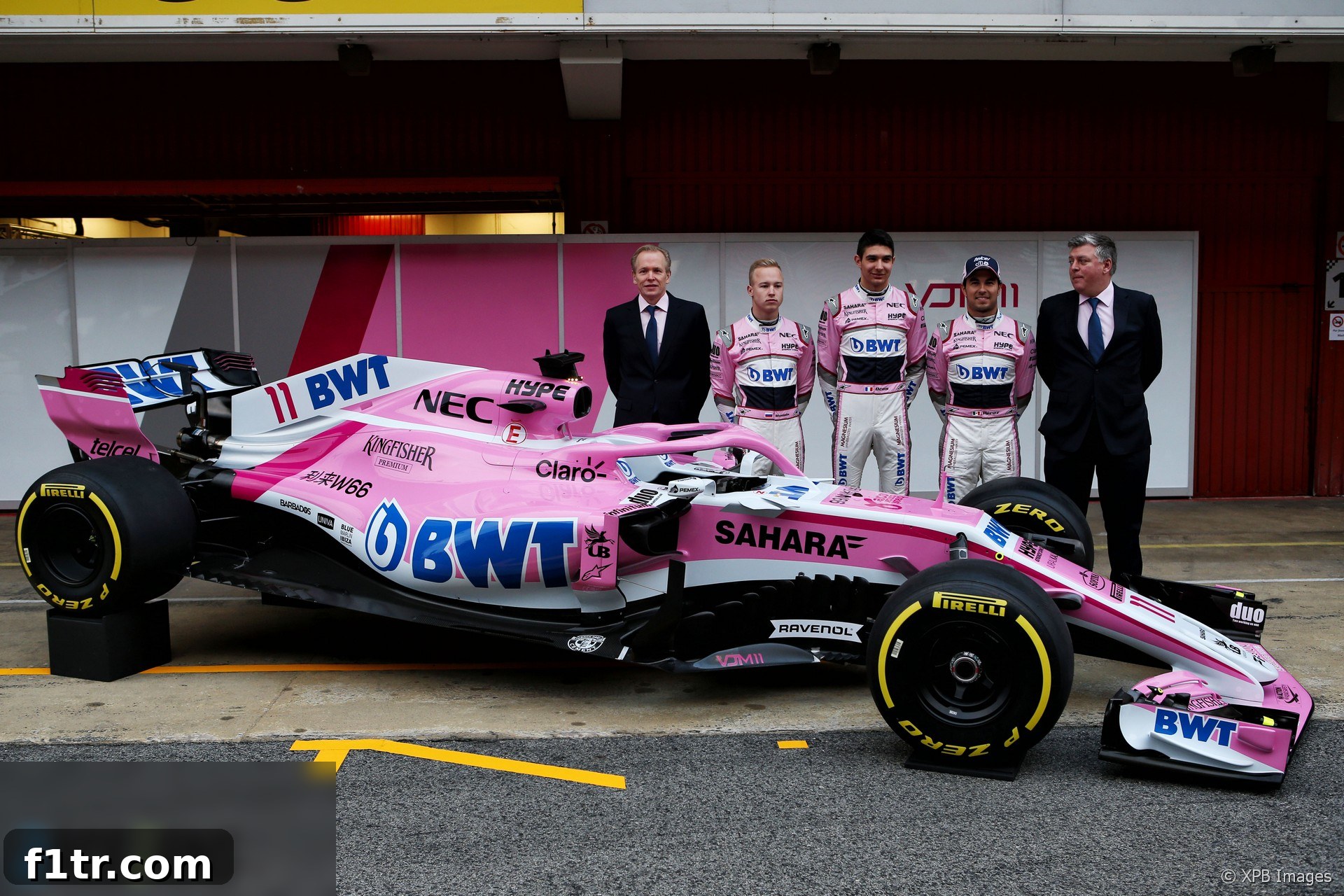
Force India VJM11 Unveiled: The Final Challenger for the 2018 F1 Season
The dawn of a new Formula 1 season always brings with it a wave of anticipation and excitement, punctuated by the grand reveals of each team’s new challenger. For the 2018 F1 season, one of the most awaited unveilings was that of Force India, a team renowned for its ability to punch significantly above its weight. They ultimately became the final team to reveal their new car, the VJM11, marking a significant moment as all ten contenders officially entered the fray.
The presentation of the VJM11 took place at the iconic Circuit de Catalunya in Barcelona, Spain. This strategic timing occurred just ahead of the commencement of the crucial first week of pre-season testing for the 2018 F1 season. This annual testing period in Barcelona is not merely a formality; it is an invaluable opportunity for teams to put their meticulously designed machines through their paces, gather vital data, and iron out any initial technical glitches before the real battle begins.
The VJM11: An Evolutionary Step for Sahara Force India
Force India, officially known as Sahara Force India F1 Team at the time, had consistently delivered impressive performances despite operating with a considerably smaller budget compared to the sport’s giants. Their new car, the VJM11, was expected to be an evolution rather than a revolution, building upon the strong foundations of its predecessors. The team’s philosophy often revolved around maximizing efficiency and extracting every ounce of performance from their Mercedes-Benz power unit, a tradition they aimed to continue with the VJM11.
Initial glimpses of the VJM11 revealed a car that, while adhering to the stringent new aerodynamic regulations – most notably the introduction of the ‘halo’ cockpit protection device – also showcased Force India’s characteristic design cues. The livery, often a striking element of the team’s identity, maintained its vibrant pink, white, and black scheme, reflecting the brand image of their title sponsor, BWT. The continuity in aesthetics often suggested a stable technical platform, hinting at the team’s confidence in their design direction.
Drivers and Expectations for the 2018 Campaign
Heading into the 2018 season, Force India boasted a formidable driver lineup: the experienced Mexican driver Sergio Perez and the highly promising Frenchman Esteban Ocon. Both drivers had proven their mettle in previous seasons, consistently delivering points and showcasing impressive race craft. Their chemistry and competitive spirit were expected to be key assets for the team in their quest to maintain their strong midfield position, having finished fourth in the constructors’ championship in both 2016 and 2017.
Sergio Perez, with his strategic race management and consistent point-scoring ability, was seen as the team’s anchor. Esteban Ocon, on the other hand, brought youthful exuberance and raw speed, constantly pushing the boundaries and eager to prove his potential for a top team drive in the future. The team also had Nikita Mazepin as their development driver, who participated in some testing sessions, gaining valuable experience and contributing to the car’s initial shakedown and data collection.
Pre-Season Testing: The Acid Test at Circuit de Catalunya
The launch of the VJM11 directly preceded the crucial pre-season testing at the Circuit de Catalunya, a venue that provides a diverse range of corners and straights, making it an ideal testing ground. For Force India, like all other teams, these test sessions were critical. They served multiple purposes:
- Reliability Runs: Ensuring the car could withstand race distances without mechanical failures.
- Data Collection: Gathering extensive aerodynamic, tire, and power unit data to understand the VJM11’s characteristics.
- Driver Familiarization: Allowing Perez and Ocon to get accustomed to the car’s handling and provide feedback for setup adjustments.
- Component Evaluation: Testing new parts and updates developed over the winter.
- Tire Understanding: Learning the behavior of Pirelli’s new tire compounds for the 2018 season.
The early days of testing often involve long runs focused on reliability and basic setup. As the sessions progress, teams begin to explore performance limits, conducting shorter, faster laps to gauge the car’s ultimate speed. For a team like Force India, maximizing track time and minimizing disruptions were paramount to ensure they had a competitive package ready for the opening race in Australia.
A Closer Look at the VJM11: The Launch Gallery
Witness the debut of the Force India VJM11 and its key figures through this exclusive gallery. From its sleek profile on the track to the team’s drivers and personnel, these images capture the excitement and meticulous preparation surrounding the launch of Force India’s challenger for the 2018 F1 season.
The Wider Context of the 2018 F1 Season
The 2018 Formula 1 season was shaping up to be a fascinating chapter in the sport’s history. Mercedes, Ferrari, and Red Bull were expected to lead the charge at the front, but the midfield battle, where Force India traditionally thrived, was anticipated to be incredibly fierce. Teams like McLaren, Renault, and Haas had all shown signs of progress, making the fight for ‘best of the rest’ even more intense.
Regulations for 2018 brought subtle but impactful changes, most notably the aforementioned introduction of the halo. While initially controversial among some fans and drivers for its aesthetic impact, it was universally adopted for its significant safety benefits. Teams had to integrate this new structural element seamlessly into their designs, which posed a unique engineering challenge. The season also continued to see the evolution of power unit technology, with manufacturers constantly striving for more power, better reliability, and improved fuel efficiency.
The anticipation surrounding the VJM11’s performance was high, not just for the team’s loyal fanbase but also for neutral observers who admired Force India’s plucky spirit. Their ability to compete with much larger outfits often made them a fan favorite, embodying the spirit of underdog success in a sport increasingly dominated by financial might.
This article aims to provide a comprehensive overview of the Force India VJM11 launch and its implications for the 2018 F1 season. We will continue to update our coverage with insights from pre-season testing, technical analyses, and team developments as the season progresses. Stay tuned for more in-depth reports.
More on the 2018 F1 season
Dive deeper into the narratives and developments that shaped the 2018 F1 season, exploring various aspects from team strategies to significant technological advancements.
- F1 feared “death knell” for Drive to Survive after Ferrari and Mercedes snub – Explore how key teams’ initial reluctance impacted the now-iconic Netflix series, a major factor in F1’s global surge in popularity, starting around the 2018 era.
- McLaren staff told us we were “totally crazy” to take Honda engines in 2018 – Tost – Understand the controversial engine switch by McLaren for 2018 and the high stakes involved in their partnership decisions, a move that greatly influenced their performance.
- ‘It doesn’t matter if we start last’: How Red Bull’s junior team aided Honda’s leap forward – Discover the pivotal role of Toro Rosso (now AlphaTauri/RB) in developing Honda’s power unit in 2018, paving the way for Red Bull’s future successes.
- Honda’s jet division helped F1 engineers solve power unit problem – An intriguing look into how cross-industry collaboration within Honda helped overcome critical power unit challenges during this period, showcasing innovative engineering.
- McLaren Racing losses rise after Honda split – Analyze the financial repercussions for McLaren following their separation from Honda, highlighting the significant commercial impact of F1 engine partnerships.
Browse all 2018 F1 season articles