The Las Vegas Grand Prix: A Standalone Spectacle on the F1 Calendar
The Las Vegas Grand Prix, Formula 1’s highly anticipated new addition to its global calendar, promises an unparalleled racing experience amidst the dazzling lights of Sin City. However, in a significant departure from typical F1 weekends, this inaugural event will feature no support races, setting it apart as a truly unique fixture in motorsport. This decision shapes much of the weekend’s structure and the overall fan experience, focusing entirely on the premier class of racing.
An Exclusive F1 Experience: No Support Races in Las Vegas
For motorsport enthusiasts attending the Las Vegas Grand Prix, the focus will be exclusively on Formula 1. Unlike many other F1 events that are complemented by junior categories like Formula 2, Formula 3, or regional championships, the Las Vegas weekend will not include any support races. This means that fans will witness only F1 cars on track, offering a concentrated dose of top-tier racing.
This absence is a direct consequence of the unique logistical and scheduling arrangements required for a race held in the heart of a major international tourist destination. The event’s organizers have worked closely with local casino owners and city authorities, who are keen to minimize disruption to their thriving businesses. The closure of surrounding roads for an extended period, which would be necessary for a full roster of support races and their respective paddock operations, was deemed impractical. Therefore, simplifying the on-track schedule became a critical factor in securing the event.
While the elimination of support races might lead to less overall track action, it also underscores the organizers’ commitment to making the F1 race itself the undisputed main event, ensuring all attention is on the pinnacle of motorsport as it navigates the iconic Las Vegas Strip.
Unprecedented Schedule: Thursday to Saturday Night Racing
Further distinguishing the Las Vegas Grand Prix is its highly unusual schedule. Breaking from the traditional Friday-to-Sunday format, the F1 weekend in Las Vegas will run from Thursday to Saturday, with all track sessions strategically planned to take place after sunset. This innovative timing is designed to maximize the visual spectacle of Formula 1 cars racing under the vibrant lights of the city while minimizing the impact on daytime city traffic and commercial activities.
The action kicks off on Thursday with the first and second practice sessions, scheduled for 6:30 PM and 10:00 PM local time, respectively. This gives teams and drivers ample opportunity to familiarize themselves with the challenging street circuit in varying night conditions. Friday will follow a similar pattern, hosting the final practice session and the crucial qualifying rounds during the same evening time slots. The crescendo of the weekend, the Grand Prix itself, will begin at 10:00 PM on Saturday night. This makes the Las Vegas Grand Prix the first F1 race held outside of a Sunday since the 1985 South African Grand Prix, marking a significant historical moment for the sport.
This unique evening schedule presents both opportunities and challenges. For fans, it allows for daytime exploration of Las Vegas’s myriad attractions before immersing themselves in the racing spectacle. For teams and drivers, adapting to the late-night sessions and adjusting sleep patterns will be a key factor in performance. The total amount of track time over this condensed three-day weekend could be as little as five-and-a-half hours, assuming no significant delays or stoppages, making every moment on track incredibly valuable for data gathering and setup optimization.
The Las Vegas Street Circuit: An Urban Masterpiece
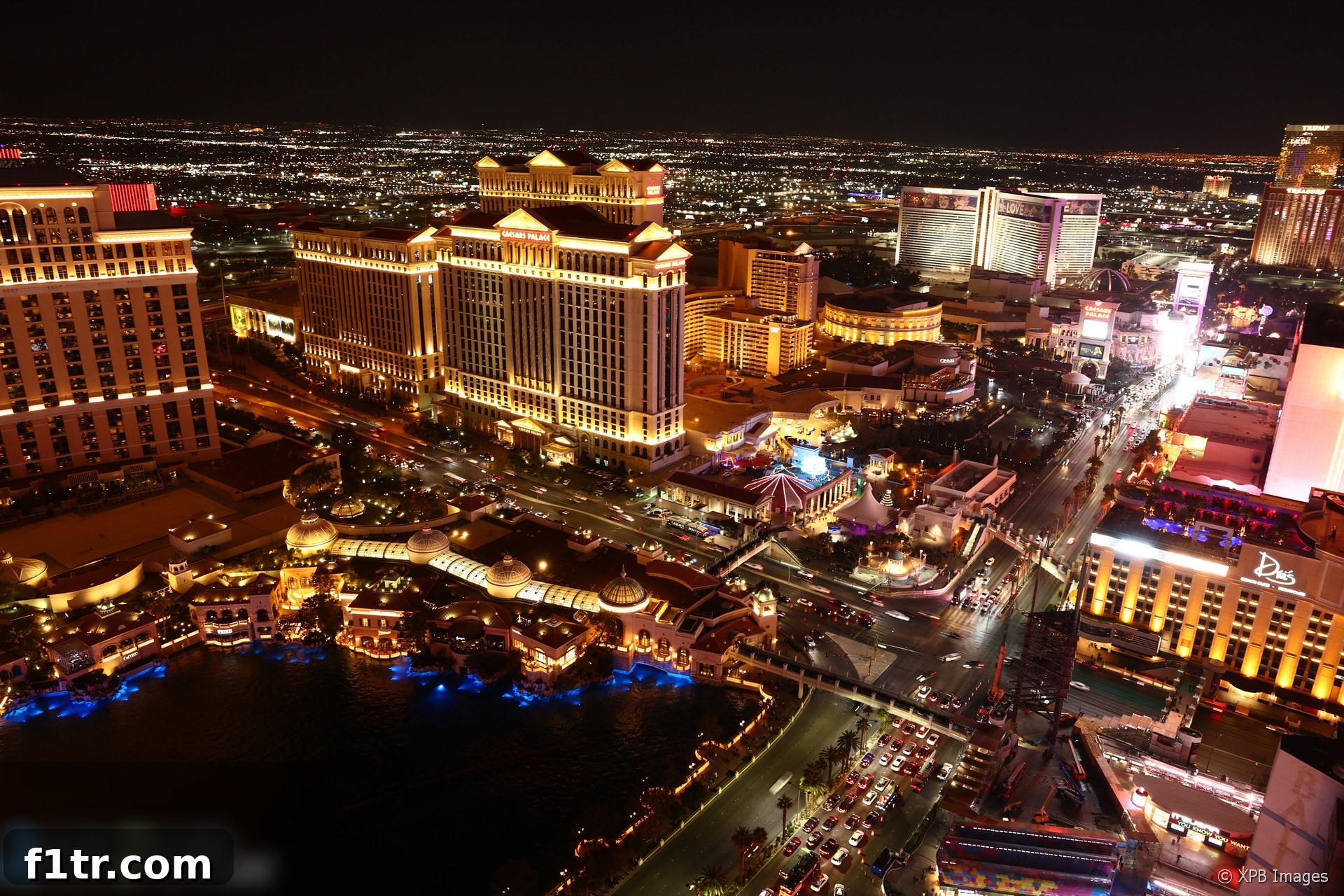
The Las Vegas Grand Prix will unfold on a brand-new, purpose-built street circuit that integrates seamlessly with the city’s iconic landscape. Spanning 6.1 kilometers (approximately 3.8 miles), the circuit features 17 corners, promising a thrilling blend of high-speed sections and technical challenges. A significant portion of the track will run directly along the world-famous Las Vegas Strip, offering breathtaking views of illuminated casinos, resorts, and landmarks as F1 cars race past at incredible speeds.
To facilitate the event, Formula 1 is constructing a dedicated paddock facility, a testament to the long-term commitment to this race. This state-of-the-art facility will house team garages, hospitality suites, and media centers, providing a world-class environment for F1 operations. Initially, a three-year deal was agreed for the Grand Prix, demonstrating confidence in its success. Reinforcing this commitment, city authorities recently approved a request to permit F1’s use of the public roads for up to 10 years, solidifying the Las Vegas Grand Prix as a staple on the Formula 1 calendar for the foreseeable future.
Designing a street circuit in such a densely populated and active urban environment is a monumental undertaking. Engineers and designers have meticulously crafted a layout that not only challenges drivers but also provides spectacular viewing opportunities for fans. The long straights on the Strip are expected to generate high speeds, setting the stage for dramatic overtakes, while the tighter sections will demand precision and skill, creating a diverse and exciting racing experience.
Ticket Prices and the Premium Fan Experience
Attending the Las Vegas Grand Prix comes with a premium price tag, reflecting the unique nature of the event and its prime location. Ticket prices for the November street race are among the highest on the F1 calendar. Three-day general admission passes, offering “standing room only,” begin at $500. For those seeking a more luxurious experience, four-day “Skybox” hospitality packages can soar to $10,000. These high-end tickets typically include exclusive access to premium viewing areas, gourmet food, and a selection of beverages, often alcoholic as well, though the article specifically mentions “all-inclusive food and non-alcoholic beverages” for even the cheapest tickets. It’s a clear indication that the organizers are positioning this Grand Prix as a high-value, all-encompassing entertainment event.
The significant investment required for tickets raises questions about the value proposition for fans, especially given the absence of support races and the relatively limited track time. However, the Las Vegas Grand Prix is marketed not just as a race, but as an entire entertainment spectacle. Attendees are paying not only for the thrill of Formula 1 but also for the immersive experience of being in Las Vegas during one of its most glamorous events. The city itself offers an unparalleled array of dining, shows, and nightlife, transforming the Grand Prix into a larger-than-life festival of speed and extravagance.
F1’s American Presence and Historical Context
The Las Vegas Grand Prix is one of three rounds hosted in the USA on the 2023 F1 calendar, alongside the Miami Grand Prix and the United States Grand Prix at the Circuit of the Americas (COTA) in Austin, Texas. This robust presence in the United States highlights Formula 1’s strategic focus on the rapidly growing American market, fueled in part by the success of the ‘Drive to Survive’ documentary series.
In contrast to Las Vegas, last year’s inaugural Miami Grand Prix was supported by the W Series and the Porsche Sprint Challenge North America, offering fans a broader motorsport program. Similarly, the United States Grand Prix at COTA typically features a range of support categories, including classic F1 cars in the Masters Historics and Endurance Legends events. The last F1 race weekend to feature no support races was the first Qatar Grand Prix in 2021, which was added to the calendar at short notice due to the logistical challenges and disruptions caused by the Covid-19 pandemic. This weekend’s season-opening Bahrain Grand Prix, for instance, typically features multiple support races, including Formula 2, Formula 3, and the Porsche Sprint Challenge Middle East, providing a stark contrast to the Las Vegas format.
While this new Las Vegas event marks a fresh chapter, F1’s history with Sin City isn’t entirely new. Formula 1 returns to Las Vegas this year for the first time since its short-lived presence from 1981 to 1982. The previous iteration, known as the Caesar’s Palace Grand Prix, was held on a circuit laid out in the car park of the famous casino. That event, while criticized for its uninspiring track layout, did feature support races, including America’s popular Can-Am series. At one stage, promoters even announced ambitious plans to hold a joint event for F1 and the CART IndyCar series on the circuit, a cross-series spectacle that was ultimately blocked by the FIA. The return in 2023, with a grander vision and a circuit directly on the Strip, represents a monumental upgrade from its predecessor, aiming to solidify its place as one of F1’s most iconic venues.
The Future of F1 in Las Vegas
The Las Vegas Grand Prix represents a significant evolution in how Formula 1 approaches its events, particularly in high-profile urban locations. By stripping back the traditional race weekend to focus solely on F1, and by embracing an unconventional schedule, the organizers aim to deliver an unforgettable, high-octane experience that is uniquely Las Vegas. It’s a bold gamble, but one that aligns perfectly with the city’s reputation for grand spectacle and unparalleled entertainment.
As F1 continues to expand its global reach and diversify its calendar, events like the Las Vegas Grand Prix serve as a benchmark for innovation. Its success will not only depend on the racing action itself but also on how effectively it integrates with the local culture and delivers a premium experience that justifies its distinct characteristics. The world will be watching as Formula 1 lights up the Las Vegas Strip, eager to see if this unique spectacle lives up to its immense hype and secures its legacy in the annals of motorsport history.
2023 F1 season related articles
- FIA president cleared of alleged interference in two 2023 races
- First week viewing figures for new Drive to Survive season fall again
- Max who? Drive to Survive season six prefers its favourite faces
- RaceFans’ complete 2023 season review
- The F1 drivers who pulled off the 10 biggest charges through the field in 2023
Browse all 2023 F1 season articles