Advert | Become a Supporter & go ad-free
Controversial Contact: Kvyat’s Austrian GP Suspension Failure and the Ocon Clash
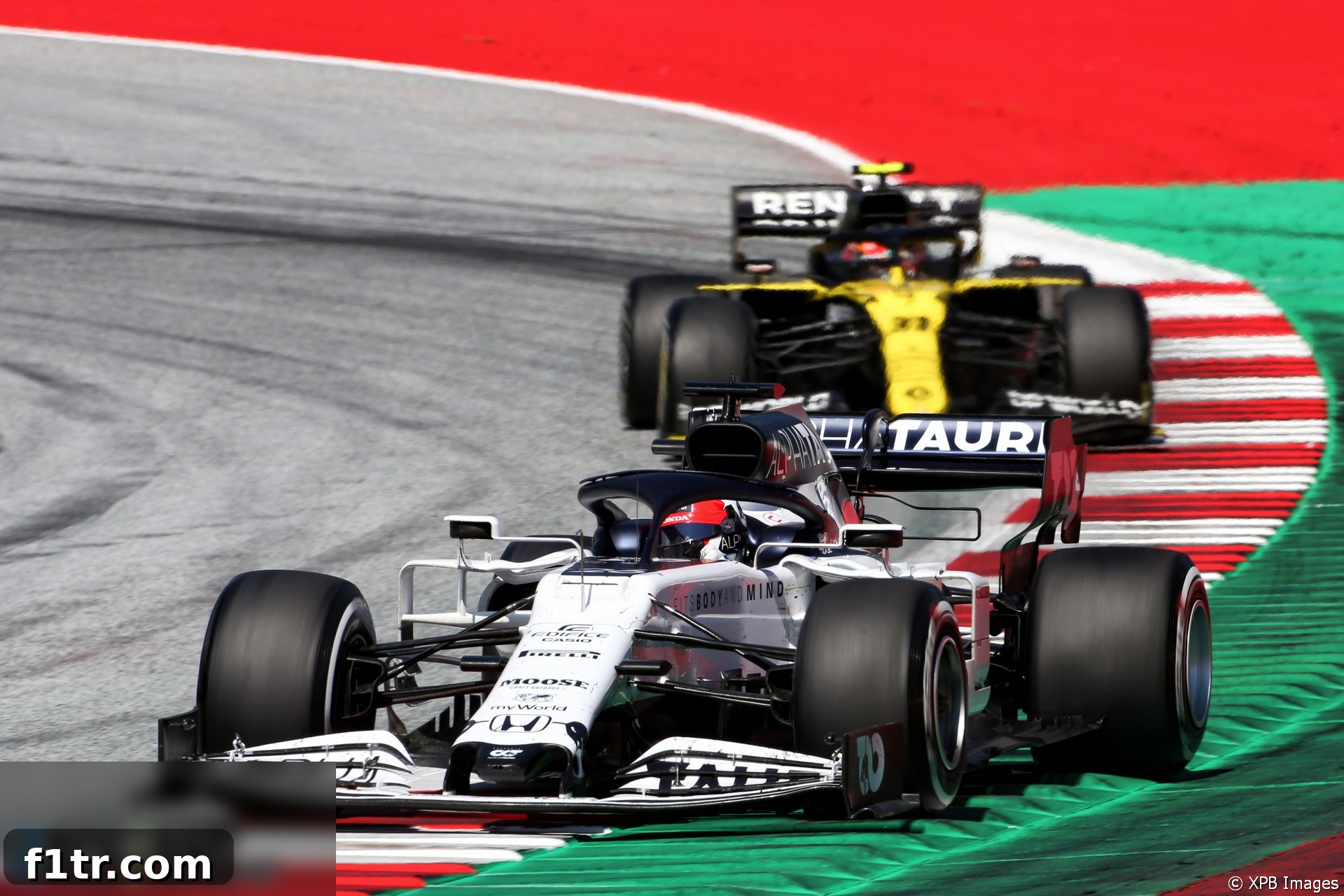
The opening rounds of the 2020 Formula 1 season delivered immediate drama and intense on-track battles, and the Austrian Grand Prix was no exception. Among the many talking points emerging from the Red Bull Ring, a late-race incident involving AlphaTauri’s Daniil Kvyat and Renault’s Esteban Ocon sparked significant debate and ultimately ended Kvyat’s race prematurely. The Russian driver attributed his suspension failure to contact with Ocon, who, from his perspective, forced him wide during a crucial overtaking maneuver.
The incident, occurring just four laps from the checkered flag, robbed Kvyat of a potential points-scoring finish, a significant blow for the AlphaTauri team. While Kvyat was adamant about Ocon’s role in the mishap, he also reflected on his own decision-making, acknowledging that a more measured approach might have yielded a different outcome.
The Pivotal Moment: Conflicting Views of the Turn 6 Battle
The closing stages of the Austrian Grand Prix saw a determined Daniil Kvyat on fresher soft tires, rapidly closing the gap on Esteban Ocon, who was managing much older hard compound tires. This tire differential set the stage for an inevitable overtaking attempt. The crucial moment unfolded at Turn 6, a relatively fast, sweeping right-hander at the Red Bull Ring known for its tricky kerbs and challenging racing lines.
Kvyat’s Perspective: “Pushed Off” and Sudden Failure
Speaking after his abrupt exit from the race, Kvyat didn’t mince words regarding the incident. “Everything happened very suddenly,” he explained, describing the immediate onset of the suspension failure. “It was a disappointing day.”
Kvyat felt strongly that Ocon had transgressed the unwritten rules of engagement. “It’s not great from Ocon’s side to push off people like this, to be honest,” he stated. His perspective was that Ocon had not left him sufficient room, forcing him onto a less forgiving part of the track, which subsequently led to the mechanical failure. Despite his frustration, Kvyat demonstrated a degree of self-awareness and accountability, adding, “But I could have been more patient as well.” This self-critique suggested he recognized the fine line between aggressive racing and an unnecessarily risky move, acknowledging that he might have had other opportunities to pass Ocon elsewhere on the circuit.
Ocon’s Defense: A Risky Move and Unforgiving Kerbs
Esteban Ocon, naturally, presented a different interpretation of the events. From his vantage point, Kvyat’s overtaking attempt was overly ambitious, labeling it a “risky” move given the circumstances. “I’ve just rewatched the action, for sure it was a close, very close battle between us two,” Ocon recounted, highlighting the intensity of their duel.
Ocon further elaborated on the challenging context of the maneuver. “He was on fresh softs, I was on old hards, so there is a slight difference in grip there.” This tire disparity, while giving Kvyat an advantage, also meant Ocon was doing his utmost to defend his track position against a much faster car. “But getting a move around the outside of Turn 6, it’s something difficult. It’s a risky move, definitely.”
Crucially, Ocon maintained that there was no direct contact between the two cars. “I think it came close but we didn’t touch,” he asserted. Instead, he attributed Kvyat’s damage to the unforgiving nature of the track’s kerbs. “Daniil did touch the kerb and both kerbs aren’t forgiving, unfortunately. So it probably made damage to his front wing or something after that. So it’s unfortunate. But I enjoyed the racing with him before that.” Ocon’s assessment suggested that Kvyat’s error lay in his line through the corner, compounded by the aggressive kerb usage, rather than any direct defensive action from the Renault driver.
Team Reaction and the Cost of the Incident
The incident had immediate repercussions for AlphaTauri, as Daniil Kvyat was on course for valuable championship points. Team Principal Franz Tost expressed his disappointment at the lost opportunity. “Kvyat could have scored points today,” Tost lamented, emphasizing the significance of the potential finish. “But the collision with Ocon compromised his race due to a suspension failure, which we need to investigate.”
Tost’s comment highlighted the mechanical integrity concerns and the need for a thorough technical analysis to understand the precise cause of the suspension failure. In the highly competitive world of Formula 1, every point counts, especially for midfield teams like AlphaTauri. Losing out on points due to what was perceived as a racing incident was undoubtedly a frustrating outcome, impacting the team’s standing in the Constructors’ Championship.
The Nuances of F1 Racing Ethics and Track Limits
This incident brought to the forefront the perennial debate in Formula 1 about racing etiquette, track limits, and the fine line between aggressive defense and unsportsmanlike conduct. Drivers are expected to leave a car’s width when battling wheel-to-wheel, but the interpretation of this rule can often be subjective, particularly at high speeds and under intense pressure.
Turn 6 at the Red Bull Ring, with its distinct kerbs, has often been a flashpoint for such incidents. While designed to delineate track boundaries, these kerbs can be incredibly harsh on suspension components when hit incorrectly or at high speed. The difference in tire performance between Kvyat and Ocon also added another layer of complexity. Ocon, on older, harder tires, was fighting to maintain position with limited grip, while Kvyat, on fresher, softer rubber, had superior traction and pace. This dynamic often leads to close calls and conflicting interpretations of responsibility.
Ultimately, the stewards did not take any official action regarding the incident, suggesting they considered it a racing incident where both drivers contributed to the outcome, or at least that no single driver was solely to blame for an infraction warranting a penalty. This lack of official intervention further underscores the differing perspectives and the inherent challenges of real-time race officiating.
Looking Ahead: Impact on Drivers and the 2020 F1 Season
For Daniil Kvyat, the Austrian Grand Prix incident was a missed chance to build momentum early in the 2020 season. His immediate reaction conveyed a mix of anger at what he perceived as Ocon’s aggressive defense and a degree of self-reflection. These kinds of on-track clashes, while frustrating, often serve as learning experiences for drivers, influencing their approach to future wheel-to-wheel battles.
Esteban Ocon, on the other hand, successfully defended his position, albeit with Kvyat’s retirement. His assertion of no contact and Kvyat’s reliance on the kerb reflected a defensive stance common among drivers in such situations. As the 2020 F1 season progressed, both drivers continued to be key figures in the midfield battles, encountering each other on track numerous times. This incident served as an early reminder of the competitive spirit and the fine margins that define success and failure in Formula 1.
The Austrian Grand Prix, despite its early season timing, laid bare the intense competition and the high stakes involved in every race, where a single moment of misjudgment or an aggressive defensive move can dramatically alter a driver’s and a team’s fortunes.
2020 F1 Season
- Grosjean to make F1 test return tomorrow for first time since Bahrain horror crash
- Pictures: Wrecked chassis from Grosjean’s Bahrain fireball crash to go on display
- Bottas vs Rosberg: Hamilton’s Mercedes team mates compared after 78 races each
- F1 revenues fell by $877 million in Covid-struck 2020 season
- Hamilton and Mercedes finally announce new deal for 2021 season
Browse all 2020 F1 season articles