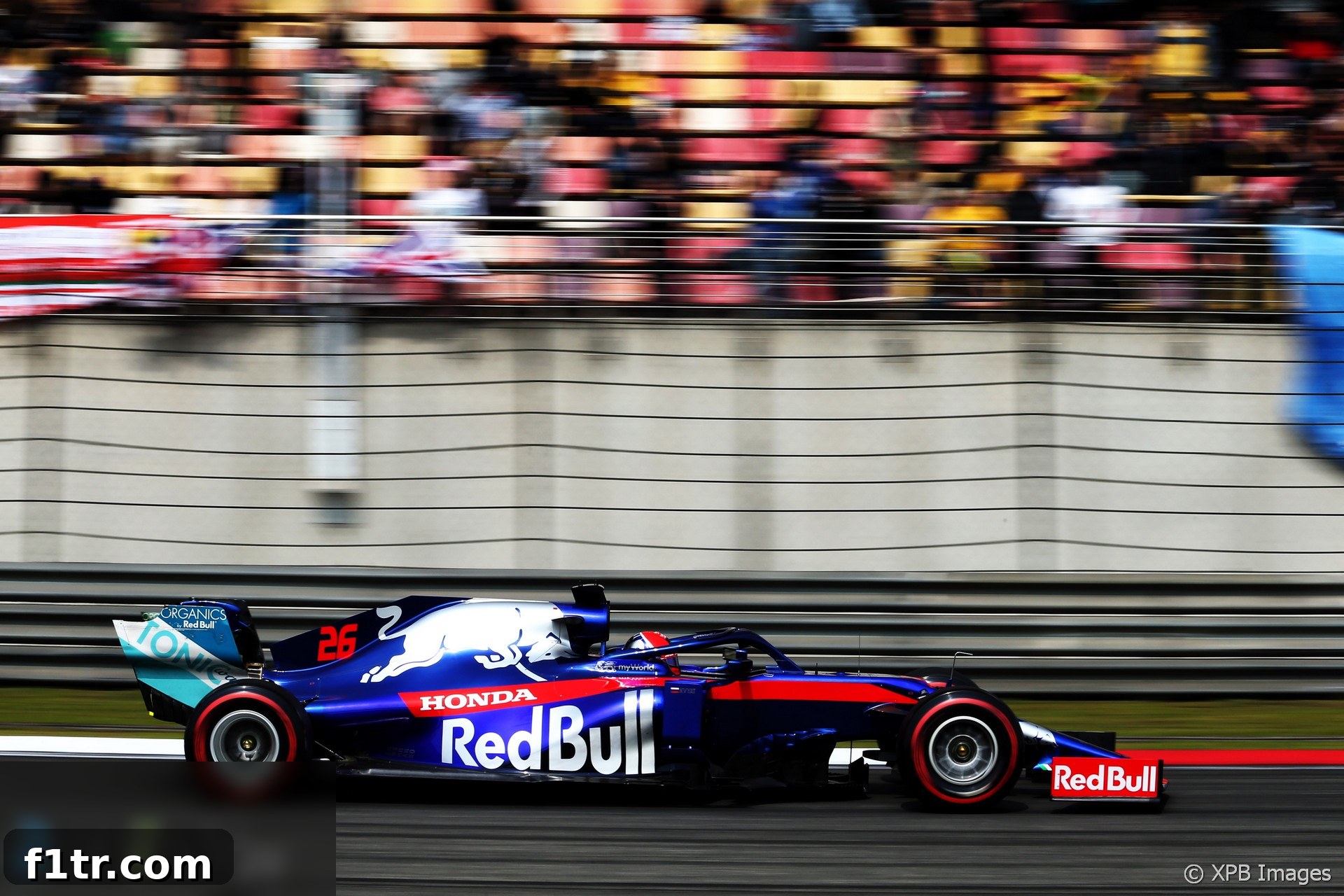
Kvyat Deemed Wholly at Fault for Chinese Grand Prix First-Lap Incident with McLaren Drivers
The 2019 Formula 1 season was still in its nascent stages when the Chinese Grand Prix delivered an early dose of on-track drama and controversy. In a decisive ruling, race stewards unequivocally held Toro Rosso driver Daniil Kvyat entirely responsible for a chaotic first-lap collision involving both McLaren drivers, Carlos Sainz Jnr and Lando Norris. This incident not only marred the early stages of the race but also reignited discussions around aggressive opening lap maneuvers and driver conduct in the pinnacle of motorsport.
The stewards’ comprehensive investigation concluded that Kvyat’s actions led directly to the multi-car contact, resulting in significant repercussions for the Russian driver and a frustrating, premature setback for the McLaren team. The incident underscored the intense pressures of competitive racing and the razor-thin margins separating assertive driving from culpable errors, particularly amidst the high-speed, condensed chaos that often defines a Formula 1 start.
Advert | Become a Supporter & go ad-free
Detailed Account of the Turn Six Collision
The collision unfolded with alarming speed during the opening lap, a critical phase where all twenty drivers vie for optimal track position, often pushing their machinery to the absolute limits. As the tightly-packed field navigated Turn 6 of the Shanghai International Circuit, Daniil Kvyat, piloting his Toro Rosso STR14, found himself embroiled in a tight battle with the two McLaren machines of Sainz and Norris. A meticulous review of onboard camera footage, trackside cameras, and telemetry data by the stewards painted a clear and comprehensive picture of the unfortunate sequence of events that transpired.
Kvyat’s car initially made contact with Carlos Sainz Jnr’s McLaren MCL34. This glancing blow was enough to destabilize Kvyat’s Toro Rosso, causing it to swerve unpredictably and veer into the path of Lando Norris. The impact with Norris was particularly dramatic and concerning; it briefly launched the young Briton’s McLaren into the air, a heart-stopping moment that vividly underscored the ferocity and potential danger of the incident. While Kvyat’s car remarkably sustained no significant visible damage, allowing him to continue the race, both McLaren cars were left with considerable damage, necessitating immediate attention in the pit lane.
Both Sainz and Norris were forced to limp their compromised cars back to the pits at the end of the first lap. This early, unscheduled stop for essential repairs effectively derailed their races, stripping them of crucial track position and valuable time. For a McLaren team striving to improve its standing in the fiercely competitive constructors’ championship, such an incident was a major setback, potentially costing them precious points in a midfield battle where every position counts.
Stewards’ Verdict: Kvyat “Wholly at Fault”
Following a thorough post-incident investigation, which involved extensive review of various camera angles, telemetry data, and likely driver statements, the race stewards issued a decisive and unequivocal verdict. Their findings placed the blame squarely on Daniil Kvyat. “The stewards reviewed video evidence and concluded that the driver of car 26, (Daniil Kvyat), lost control of his car at the exit of turn six and hit the cars to his left,” their official statement clarified, emphasizing the root cause of the incident.
Crucially, the stewards underscored that Kvyat’s loss of control was self-inflicted and not a consequence of being forced into an unavoidable situation by other drivers or unforeseen track conditions. “He did this on his own and the stewards determined that he was wholly at fault, causing the collision.” This phrase, “wholly at fault,” is particularly significant in Formula 1 stewarding, as it indicates that no mitigating circumstances were found to distribute blame among other drivers. The decision reaffirmed the FIA’s unwavering commitment to holding drivers accountable for errors that compromise the safety and fairness of the race, especially during the critical and often chaotic opening laps.
Consequences for Kvyat: Drive-Through Penalty and Penalty Points
As a direct result of the stewards’ ruling, Daniil Kvyat was handed a drive-through penalty during the race itself. This type of penalty requires a driver to enter the pit lane, drive through it at a regulated speed without stopping (unless for a scheduled pit stop, which would be separate), and then rejoin the track. While it doesn’t involve a physical stop for repairs or tire changes, a drive-through penalty typically costs a driver a significant amount of time – often around 18-22 seconds, depending on the circuit layout and pit lane configuration. This substantial time loss can severely impact a driver’s race strategy, track position, and ultimately, their final finishing position.
In addition to the immediate race penalty, Kvyat was also assessed two penalty points on his FIA Super Licence. This marked a significant moment for the driver, as these were the first penalty points he had accrued since his highly anticipated return to Formula 1 at the beginning of the 2019 season with Toro Rosso. The penalty point system in F1 is a critical mechanism designed to monitor and regulate driver conduct over a rolling 12-month period. Accumulating 12 penalty points within this timeframe results in an automatic one-race ban, a severe consequence that few drivers wish to face. For Kvyat, a driver with a historic reputation for aggressive maneuvers at times, these initial points served as an early warning in his comeback year, prompting increased caution in future races.
McLaren’s Race Disrupted: A Significant Setback for Sainz and Norris
The incident proved particularly detrimental to the McLaren F1 Team, who had entered the 2019 season with renewed optimism and a strong, dynamic driver pairing in Carlos Sainz Jnr and rookie Lando Norris. Both drivers had consistently shown promising pace throughout the practice sessions and qualifying segments of the Chinese Grand Prix weekend, harboring realistic hopes of converting their potential into valuable championship points for the team.
For Carlos Sainz, the early damage and subsequent mandatory pit stop completely derailed his carefully planned race strategy and forced him to fight an arduous battle from the very back of the grid, a challenging prospect on any Formula 1 circuit. Lando Norris, in his maiden season, was experiencing the steep and unforgiving learning curve of Formula 1. An unexpected early repair stop was a frustrating interruption to his race flow and concentration, though his resilience in continuing to push despite the setback was commendable. While both drivers eventually managed to finish the race, their chances of scoring significant points were severely diminished by Kvyat’s actions, underscoring how swiftly a promising weekend can turn sour due to an external incident.
The Crucial Role of the Race Stewards in Formula 1
The esteemed panel of stewards responsible for this critical ruling comprised experienced figures within motorsport: Tim Mayer, Steve Stringwell, Derek Warwick, and Zheng Honghai. Their collective expertise and deep understanding of racing regulations are absolutely crucial in making swift, fair, and consistent judgments during the high-stakes, pressure-cooker environment of a Grand Prix weekend. Stewards are officially tasked with upholding and enforcing the FIA Sporting Regulations, ensuring driver safety, and maintaining the sporting integrity of the competition for all participants.
Their rigorous review process involves meticulously examining all available data – including multiple angles of onboard camera footage, various trackside cameras, detailed telemetry data, and even driver radio communications – to reconstruct incidents with the highest degree of accuracy possible. The transparent explanation provided by the stewards regarding Kvyat’s culpability not only helps to foster trust in the judicial process of Formula 1 but also serves to educate fans on the intricate nuances of racing regulations and the demanding standards of driver conduct at this elite level of sport.
Kvyat’s Return to F1 and the Enduring “Torpedo” Reputation
Daniil Kvyat’s return to Formula 1 in 2019 with Toro Rosso was widely seen as a significant narrative of redemption for many motorsport enthusiasts. After being dropped by Red Bull’s senior team and then by Toro Rosso itself in 2017, he spent a year as a Ferrari development driver before making his highly anticipated comeback. This incident at the Chinese Grand Prix, unfortunately, brought back unwelcome memories of past controversies and reignited discussions about his infamous “Torpedo” nickname, given due to some particularly aggressive overtaking attempts and collisions in previous seasons.
While Kvyat himself aimed for a more mature, consistent, and controlled approach in his second stint in F1, the Turn 6 collision served as a stark reminder of the incredibly fine line drivers walk between daring aggression and costly mistakes. His ability to effectively move past this incident, learn from it, and consistently demonstrate clean, precise racing would prove vital for his reputation and long-term career prospects in the intensely competitive and unforgiving world of Formula 1.
Looking Ahead: The Ripple Effect of Early-Season Incidents
Early-season incidents, such as the one witnessed at the Chinese Grand Prix, can often have significant ripple effects throughout the championship standings and team dynamics. For McLaren, every lost point in the fiercely contested midfield battle could prove critically important by the time the season concludes. For Kvyat, accumulating penalty points early in his return season meant he would have to exercise extra caution and demonstrate exemplary driving standards in subsequent races, knowing that further infractions could lead to more severe penalties, including potential race bans, which no driver desires.
The 2019 season was undoubtedly a period of transition and intense competition, particularly within the midfield, where teams like McLaren and Toro Rosso (which would later evolve into AlphaTauri) were fiercely battling for every available position and championship point. Incidents such as this serve as crucial learning experiences for both drivers and teams, shaping their strategies, approaches, and risk assessment for future races and highlighting the constant demand for precision, control, and judicious decision-making at the pinnacle of motorsport.
Don’t miss anything new from RaceFans
Follow RaceFans on social media for the very latest updates, exclusive content, and in-depth analysis from the captivating world of Formula 1. Join our passionate community and stay ahead of the grid:
- Join RaceFans on Facebook for daily news, engaging discussions, and behind-the-scenes insights.
- Follow RaceFans on Twitter for real-time updates, breaking stories, and immediate reactions to all the F1 action.
- Get daily email updates from RaceFans directly to your inbox, ensuring you never miss a moment of the thrilling Formula 1 season.
Advert | Become a RaceFans supporter andgo ad-free – enjoy an uninterrupted browsing experience with exclusive benefits.
More from the 2019 F1 season
Explore more compelling articles related to the exciting 2019 Formula 1 season, diving deeper into key moments, driver performances, and significant team developments:
- “Crying in the Melbourne car park at 2019 grand prix was my career low” – Ocon: A poignant reflection on a particularly challenging period in Esteban Ocon’s career.
- McLaren Racing reports reduced £71 million loss in 2019: Financial insights into the operational and fiscal health of one of F1’s most historic and revered teams.
- Kvyat: Hockenheim podium last year was “my biggest achievement” so far: Daniil Kvyat’s personal highlights and reflections from his memorable return season.
- How the FIA’s new encrypted fuel flow meter targets Ferrari’s suspected ‘aliasing’ trick: An in-depth investigative look at technical regulations, innovations, and controversies within Formula 1.
- “He smashed my office door”: 23 must-see moments from ‘Drive to Survive’ season two: Unpacking the behind-the-scenes drama, rivalries, and excitement captured in the popular documentary series.
Browse all 2019 F1 season articles for a complete and insightful retrospective of the year’s events, stories, and championship battles.