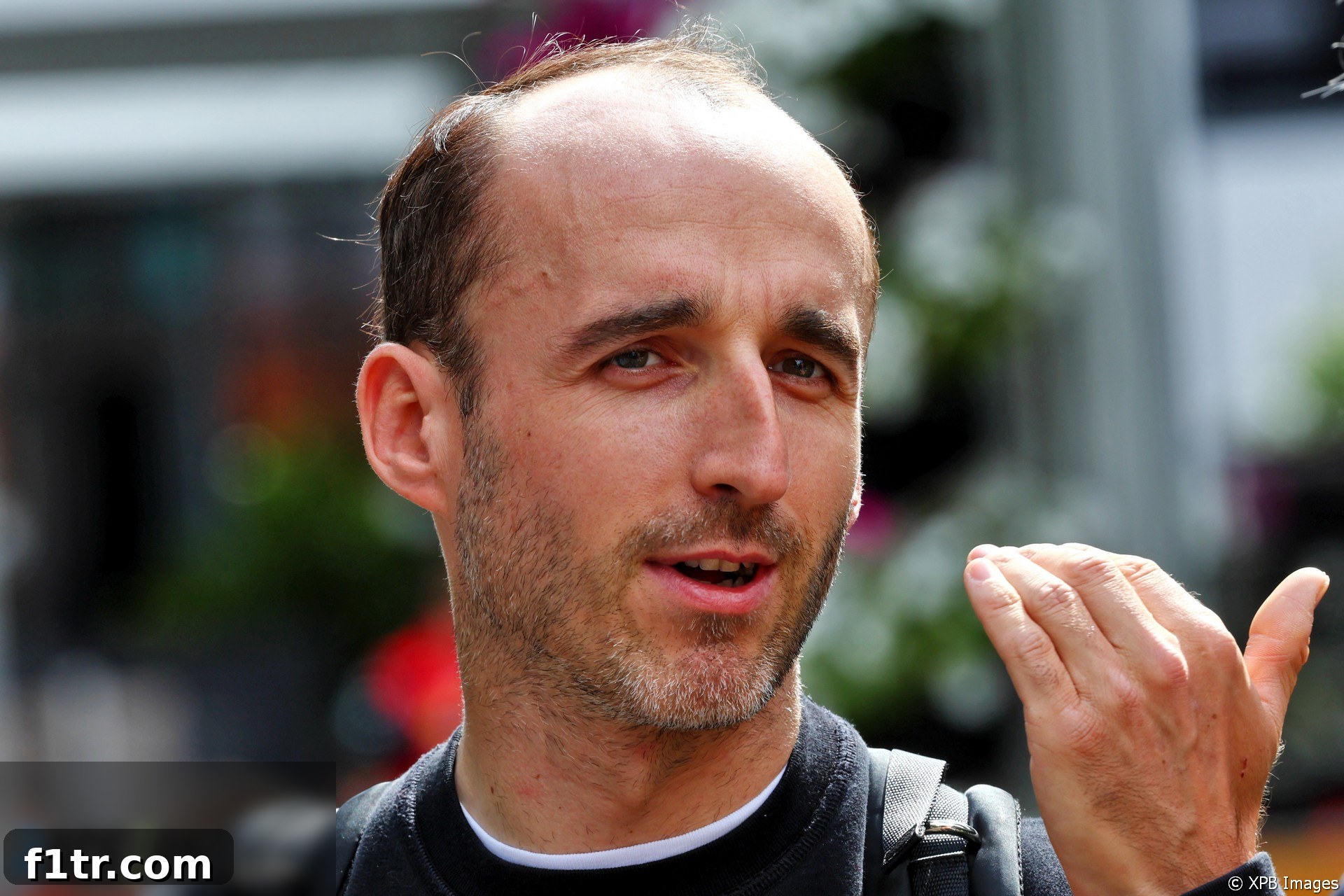
In a significant moment for motorsport enthusiasts, Robert Kubica made a notable return to the cockpit of a Formula 1 car during an official session last weekend. This marked his first appearance since stepping in for Kimi Raikkonen at the Italian Grand Prix the previous year. As the reserve driver for Alfa Romeo, Kubica’s participation always garners considerable attention, given his remarkable journey back to the pinnacle of motorsport.
Kubica’s recent outing was not his first encounter with Alfa Romeo’s latest challenger, the C42. He had previously gained brief experience with the car during a short, nine-lap shakedown in pre-season testing, followed by a more extensive Pirelli tyre test. However, his most recent session at the high-speed Circuit de Catalunya brought forth some surprising revelations, particularly regarding the car’s feel on hard compound tyres.
Robert Kubica’s Surprising F1 Comeback: Navigating the Alfa Romeo C42 at Barcelona
Robert Kubica’s career in Formula 1 has been defined by incredible resilience and an unwavering passion for racing. His return to an official F1 session at the Spanish Grand Prix provided a fresh perspective on the current generation of cars and underscored the critical role of reserve drivers in modern F1 team operations. While not a full-time return, each outing for Kubica is a testament to his enduring talent and dedication, offering invaluable insights to the Alfa Romeo engineering team.
A Different Beast: Imola’s “Best Car” vs. Barcelona’s Challenging Circuit
Speaking after his session at Barcelona, Kubica shared candid reflections on his experience, noting a stark contrast between the C42’s behaviour at the Spanish circuit compared to an earlier test at Imola. “It was fine,” Kubica began, describing the session. “I have to say, I got a bit of a different feeling to Imola, where I tested a couple of weeks ago, which was a bit shocking.” This initial surprise set the tone for a session that proved to be both challenging and illuminating for the veteran driver.
Kubica elaborated on the perceived differences, highlighting the unique characteristics of each track and the varying conditions encountered. “Okay, I was not expecting as easy of a car to drive as it was in Imola,” he admitted. “Imola was, I think, one of the best, if not the best car I drove in my career, from feeling-wise and from the simplicity of driving.” This glowing assessment of the C42 at Imola set a high bar, making the Barcelona experience all the more unexpected.
The reasons behind this disparity are multifaceted. Barcelona, a well-known F1 testing ground, presented a different set of challenges. “Of course, Barcelona is quite different, conditions are different, the track after all weekend is more rubbered, so everything comes to you,” Kubica explained. The accumulation of rubber from preceding practice sessions and races significantly alters grip levels and track characteristics, demanding a different approach from the driver and a different setup from the car. Furthermore, the Pirelli tyre compounds play a crucial role, and Kubica had a novel experience with the hard tyres at Barcelona.
The Hard Tyre Challenge and the Soft Tyre Conundrum
The hard compound tyres, often perceived as more durable but less grippy, presented a steep learning curve for Kubica at Barcelona. “Here it was quite shocking, also with hard compound, I never drove it, so the first time was not easy, I would say,” he stated. Adapting to the specific characteristics of this compound on a demanding circuit like Catalunya, especially with limited preparation time, underscores the challenges faced by reserve drivers. The feedback from a driver like Kubica, who can discern subtle differences in tyre behaviour, is vital for a team’s tyre strategy and setup development.
Following his run on the hard tyres, Kubica switched to the soft compound, a transition that brought its own set of uncertainties. “Then of course I jumped to the soft compound, you don’t know what to expect, it is a one-lap tyre so you go [in] kind of blind.” This highlights the high-stakes nature of a practice session for a driver unfamiliar with a car’s specific soft tyre performance. Soft tyres offer maximum grip for a short duration, making the initial out-lap and the subsequent flying lap critical for data collection and performance assessment. The unpredictability of a “one-lap tyre” in hot conditions adds another layer of complexity to the driving experience.
Regaining the Feeling: A Promising Return to Form
Despite the initial shock and the challenges presented by the tyre compounds and track conditions, Kubica expressed satisfaction with his overall performance and the resurgence of a familiar driving sensation. “All in all, I think it was a good session, I’m happy to see that, although I haven’t driven from Monza last year, in Imola it was okay straight away on the pace,” he reflected. This immediate adaptability and pace are crucial indicators of a driver’s natural talent and readiness.
More importantly, Kubica felt a significant improvement in his connection with the car compared to the previous season. “Also here, I think the pace was good and I’m happy that the feeling is back to 2020, because last year I was struggling in the car, so this is promising.” This statement is particularly encouraging, as it suggests a return to a comfortable and confident driving style, enabling him to extract more performance from the C42. The “feeling” a driver has with a car is paramount; when it aligns, consistency and speed often follow.
Comparing the Car’s Evolution: From Launch to Barcelona Upgrades
When asked to compare the car’s feel to his earlier run at the beginning of the year, Kubica clarified that his initial experience with the C42 in Barcelona was limited to installation laps. “Well, at the beginning of the year, I didn’t drive it in Barcelona, I just did installation laps here in Barcelona,” he noted. This distinction is important, as installation laps are typically slow and aimed at checking systems rather than pushing the car to its limits.
He further emphasized that the C42 he drove in Spain was significantly different from the car initially launched and tested. “Of course the conditions are different and the car is quite different to the car we launched.” F1 cars undergo continuous development throughout the season, with upgrades frequently introduced. This evolving nature of the machinery means a driver’s perception can change dramatically even over a few weeks or months. “I can only compare it to last time I drove it in Imola a couple of weeks ago on a Pirelli test, which is quite different to what I was expecting,” Kubica added, reiterating his surprise at the C42’s altered behaviour.
The experience at Barcelona, particularly after the positive Imola test, highlighted the variability inherent in F1 testing. “But definitely it was not an easy session, I was quite shocked because I have something in my mind which would feel completely different to what I got, based on my Imola experience.” Such contrasts provide invaluable data for engineers, helping them understand how upgrades and different track conditions impact driver feedback and car performance.
The Crucial Role of Driver Feedback in a Compressed Session
Providing effective feedback to engineers in the tight timeframe of a Formula 1 practice session is a demanding task, especially for a driver stepping into the car for a single hour. Kubica acknowledged this challenge when asked about his input for the team’s weekend strategy. “It’s quite difficult, especially in a one-hour session, for me. I can give my feelings to them, like feedback, but I cannot really guide them,” he explained. While he can articulate his sensations, the responsibility of translating those into actionable setup changes ultimately rests with the engineering team.
Kubica has “strong feelings about some areas,” but the rapid change between tyre compounds and the impact of track conditions make precise guidance complex. His run included a “quite long run” on the hard compound, followed by the soft compound, which he noted was “like one-and-a-half seconds faster” but effectively “only a one-lap tyre especially with this heat.” This rapid shift, coupled with the dramatic performance difference between the compounds, meant his initial lap on softs was again a discovery. “So my first lap I was quite shocked. I still put quite a good lap together, but definitely the feeling is quite different to what I reported to them after my Imola test.” This illustrates the dynamic nature of F1 testing and the importance of adapting quickly to changing variables.
Anticipating Future Outings: Kubica’s Role in Alfa Romeo’s Development
Looking ahead, Kubica expressed optimism about future opportunities to drive the Alfa Romeo C42. When questioned about his next practice session, he simply stated, “I hope soon.” This hint suggests that his contributions are valued by the team, and further appearances are part of Alfa Romeo’s strategic plan. Pressed on whether a future outing was scheduled, Kubica responded, “Kind of, I think quite soon probably. I don’t know if things are changing also.”
The scheduling of reserve driver sessions is not straightforward and depends on various factors. “Here we brought quite a significant upgrade,” Kubica pointed out, highlighting how car development influences driver assignments. The team might strategically deploy him to test specific components or validate data from race drivers. “So it’s also depending on what is going on, or how it is scheduled. There are some priorities on some weekends, on some others.” For instance, circuits like Monaco, which are highly specialized and demand maximum track time for race drivers, are unlikely venues for reserve driver outings. “For sure it will not be Monaco, which is normal.”
Instead, future sessions are likely to occur at tracks that are more amenable to allowing a reserve driver to get up to speed quickly without significantly penalizing the race drivers. “Probably it will be some kind of track where it’s quite easy to get up to speed because also losing other race drivers one session is penalising to them, so you have to adapt to this.” This pragmatic approach ensures that Kubica’s valuable input can be utilized effectively while minimizing disruption to the team’s race weekend preparations. His continued involvement underscores the depth of talent within Alfa Romeo and their commitment to maximizing car development.
2022 Spanish Grand Prix Insights
- Q&A: Kubica ‘shocked’ by ‘completely different’ Alfa Romeo in Spain
- How heat and traffic trouble left F1 fans fuming after the Spanish Grand Prix
- Mercedes not yet certain their porpoising problem has “disappeared”
- Sticking to budget cap “pretty much impossible” due to rising costs – McLaren
- Ricciardo hoping to find an explanation for Spanish GP pace deficit to Norris
Browse all 2022 Spanish Grand Prix articles