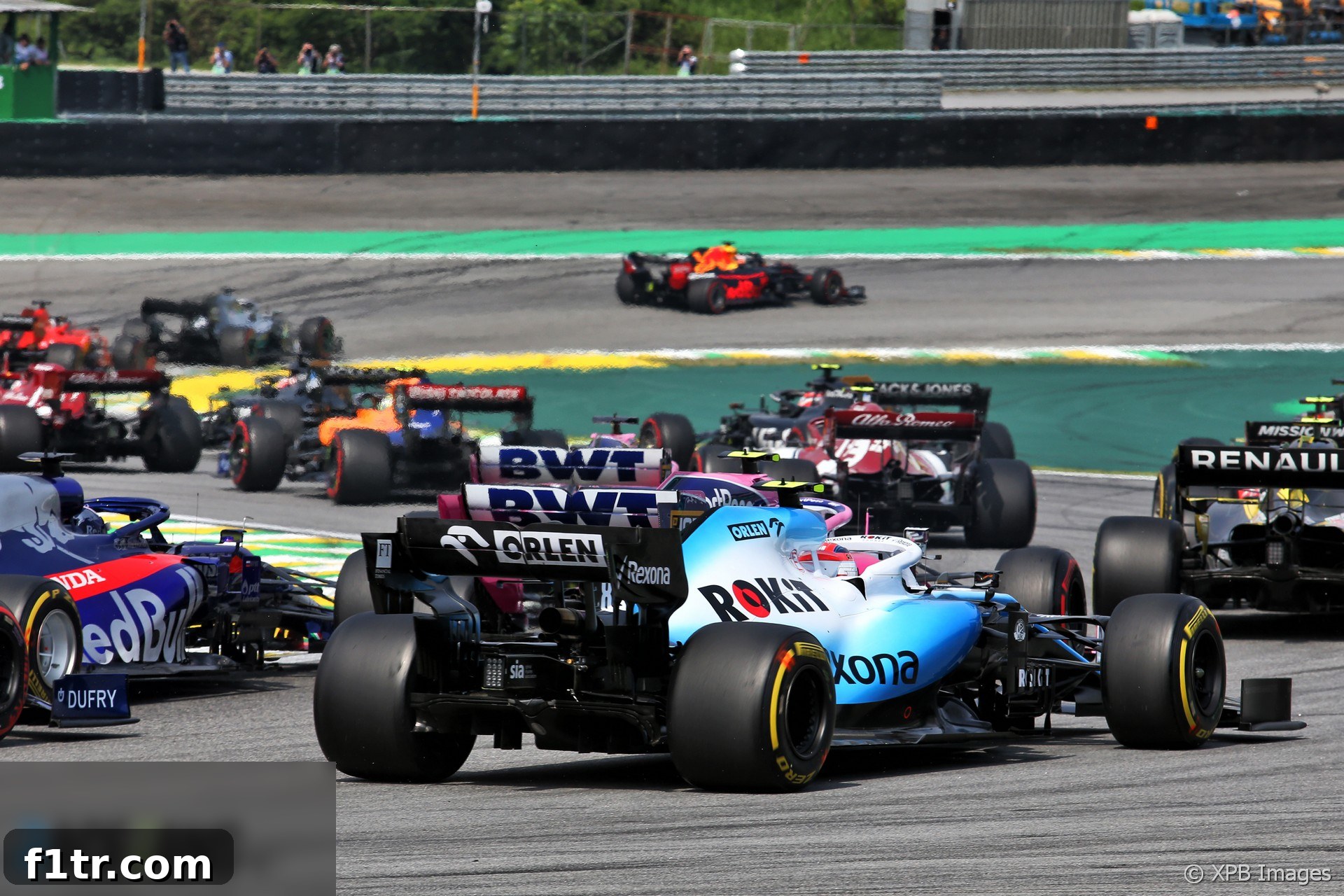
In a candid reflection on the challenging season, Williams Racing driver Robert Kubica revealed that the team’s only opportunities to directly compete with other cars on track typically arose during the initial moments of races. According to Kubica, the severely uncompetitive nature of their FW42 challenger meant that maintaining any early advantage was an almost impossible task as the race progressed.
Kubica’s Insights: The Race Start Advantage and Underlying Struggles
Throughout the 2019 Formula 1 season, Robert Kubica frequently demonstrated an impressive knack for gaining positions at the start of races, often outperforming his teammate George Russell in this critical phase. However, as the Grand Prix wore on, the inherent lack of pace in the FW42 inevitably led to these hard-won gains being lost. Kubica provided a detailed explanation of why the chaotic first lap offered a fleeting window of opportunity.
On the first lap you can hide a bit things and there is much more guessing what will happen and improvisation than knowledge. The grip is completely different, there’s a lot of things going on. And I felt like this year this has been very good. The opening moments of a Grand Prix are always unpredictable. With the differing grip levels, cars jostling for position, and drivers reacting on instinct rather than pure data, it creates an environment where raw driving skill and quick reflexes can temporarily mask the limitations of a slower car. I believe my performance in this specific aspect was quite strong throughout the season.
But with our pace it doesn’t really matter. You will stay in front of those guys for one or two laps and then most of the races they will get you back. But still here we did have at least some pace to fight with the others and I was keeping eye contact with some people. Normally it wasn’t the case. While gaining places initially was satisfying, the reality of our car’s performance meant that these positions were almost always temporary. We could hold off rivals for a lap or two, but ultimately, they would inevitably regain their positions as our true pace became apparent. Despite this, there were a few races where, for a brief period, we genuinely felt we could engage in wheel-to-wheel combat, even if it was short-lived. This was a rare experience for us this year.
So there is, I think, some important things out of this year at least for the team. Hopefully they will be able to solve them for next year. It wasn’t easy, some things are really compromising myself and George also on racing side. The season, though challenging, has undoubtedly highlighted crucial areas for improvement within the team. I sincerely hope that Williams can address these fundamental issues for the upcoming season. Both George and I faced significant compromises in our racing due to these underlying problems, which made extracting performance from the car incredibly difficult and frustrating.
Kubica’s insights underscore the immense challenges faced by drivers in an uncompetitive car. While the Polish veteran showed flashes of his renowned racecraft, particularly at the start, the FW42’s fundamental design flaws and lack of aerodynamic performance meant that sustained competitiveness was simply out of reach. His comments about “important things” for the team to solve likely refer to deep-seated issues with the car’s aerodynamic platform, chassis stability, or overall design philosophy that hampered both drivers throughout a difficult campaign. The team’s ability to identify and rectify these areas will be crucial for their future prospects in Formula 1.
Quotes: Dieter Rencken
Advert | Become a RaceFans supporter andgo ad-free
Social Media Buzz: F1’s Digital Engagement and Beyond
In today’s interconnected world, social media plays a pivotal role in bringing Formula 1 closer to its global fanbase. From driver updates to behind-the-scenes glimpses, platforms like Twitter and Instagram offer unique insights into the fast-paced world of motorsport. Notable posts from various social media channels continue to fuel fan engagement and expand the sport’s reach.
One such post, often shared by drivers and teams, showcases unique moments, off-track activities, or personal reflections that resonate with fans:
https://www.instagram.com/p/B6TW4g2Hg5w/?igshid=1830n73osqaek
This particular Instagram post, like many others shared by F1 personalities and official accounts, helps to bridge the gap between the high-octane action on track and the personalities behind the helmets. Such content is crucial for maintaining a vibrant and engaged community, allowing fans to connect with their heroes on a more personal level. Beyond individual posts, the broader F1 ecosystem on social media is a treasure trove of information and interaction.
- Find more official F1 accounts to follow in the F1 Twitter Directory, an essential resource for any dedicated fan looking to stay updated with the latest news, opinions, and behind-the-scenes content directly from the sport’s key figures.
The strategic use of social media has been a cornerstone of Formula 1’s efforts to grow its audience, especially among younger demographics, since Liberty Media took over the sport. This digital outreach not only keeps existing fans informed but also attracts new followers by showcasing the excitement, drama, and human stories that define F1.
Motorsport Links: News and Highlights from Around the Globe
Dive into a curated selection of intriguing motor racing links, offering a glimpse into significant developments and captivating stories from across the motorsport world. From driver announcements to engine partnerships and social media trends, these updates provide valuable context to the dynamic landscape of global racing.
Advert | Become a Supporter & go ad-free
Coyne team signs Palou to drive in 2020 (IndyCar)
“Spain’s Alex Palou, a Super Formula race winner and Rookie of the Year, will be coming to America to compete full-time in the 2020 IndyCar Series driving for Dale Coyne Racing with Team Goh.” This announcement marks an exciting addition to the IndyCar Series, bringing a rising international talent to American open-wheel racing. Alex Palou’s impressive accolades in Super Formula, Japan’s premier single-seater category, demonstrate his formidable potential. His success as a race winner and Rookie of the Year in a highly competitive series suggests he could quickly adapt to the unique challenges of IndyCar, known for its diverse tracks and fierce competition. Dale Coyne Racing, often an underdog team that has punched above its weight, will provide Palou with a platform to showcase his skills, potentially making him a dark horse for strong performances in his debut season.
Horner: Engine promises finally met with Honda (Autosport)
“Obviously we saw an awful lot of spreadsheets over the years, from Viry (Renault’s engine headquarters) but never realised the potential of what was on those sheets. This is the first year where everything that was promised was absolutely delivered.” Christian Horner’s comments reflect a profound sense of relief and satisfaction within the Red Bull Racing camp regarding their engine partnership with Honda. After years of a tumultuous relationship with former engine supplier Renault, marked by unfulfilled promises and frustrating performance deficits, Honda’s consistent delivery of power, reliability, and development during the season was a game-changer. This newfound stability and competitive edge allowed Red Bull to challenge at the front more consistently, culminating in race victories and setting the stage for a stronger title assault in subsequent seasons. The statement highlights the critical importance of engine performance and supplier trust in modern Formula 1.
F1 surges towards MotoGP in the social media stakes (Motorsport broadcasting)
In the past year, F1’s following across the three main social media platforms has increased by 28.9 percent from 16.73 million to 21.56 million followers. In contrast, Moto GP’s following has increased by 11.5 percent, from 22.20 million to 24.76 million followers, which is still strong in isolation.” These statistics vividly illustrate Formula 1’s remarkable success in expanding its digital footprint and engaging a wider global audience. Under Liberty Media’s stewardship, F1 has aggressively pursued a digital-first strategy, embracing social media, esports, and Netflix documentaries to attract new fans. While MotoGP maintains a strong and loyal following, F1’s significantly higher percentage growth indicates a successful strategy in reaching younger demographics and broadening its appeal beyond traditional motorsport enthusiasts. This digital surge is a key indicator of the sport’s health and future potential, demonstrating its ability to adapt and thrive in the modern media landscape.
Hamilton MotoGP Onboard (Monster via YouTube)
An exciting video that captured the imagination of motorsport fans worldwide features Formula 1 legend Lewis Hamilton taking to the track on a MotoGP bike. This particular footage provides an onboard perspective of Hamilton riding Valentino Rossi’s Yamaha YZR-M1, a testament to his passion for two-wheeled racing and the allure of cross-discipline events. Such encounters between titans of different motorsport categories are always a huge draw, offering fans a unique spectacle and insight into the incredible versatility and skill required at the pinnacle of racing. Hamilton’s experience highlights the mutual respect and curiosity between F1 and MotoGP, further strengthening the bond between these two global motorsport phenomena.
We always endeavour to credit original sources. If you have a tip for a link to feature in the next RaceFans round-up please send it in via the contact form.
Advert | Become a RaceFans supporter andgo ad-free
Driver Rankings Debate: Sergio Perez vs. Lance Stroll
Discussions around driver performance rankings are always a hot topic among Formula 1 enthusiasts, sparking passionate debates and diverse opinions. One such discussion revolves around the comparative performance of Sergio Perez and Lance Stroll, particularly concerning their season-long consistency and relative positions in fan-created driver rankings.
I think Perez was outstanding after the summer break. Scoring points in every race but Singapore where he had to retire.
Before then though, I thought he was overall pretty poor, with only a few solid results. The fact that Stroll outscored him over the first 12 races before the summer break is pretty negative for Perez, especially given Stroll was rated 19th. I think sixth is possibly a little too high. It wasn’t just bad luck that resulted in Stroll getting more points than him in the first 12 races. Perez binned it in the race where he had the best opportunity of the season to score highly. Stroll managed this and Perez didn’t. As well as scoring more points at this stage of the season, he also finished in the points more often than Perez. four times vs three.
I actually think both drivers underperform somewhat in qualifying (although clearly Stroll does far more) and make some of this up in the race. The average gap in qualifying over the season was 0.13, which isn’t much at all given how often Perez out qualified Stroll. I think this indicates qualifying really is not either drivers strong point.
Perez seemed to be incredibly good in the last nine races, pretty much dominating Stroll (which I really don’t think was the case before hand results wise). Stroll however did look convincingly better in Brazil and would have had a points finish above Perez if not for his suspension problems.
I think Perez should be rated a little lower really as I think he looked to be nowhere given his reputation at one stage of the season. Either that or Stroll should be given a little more credit for the amount of points and points finishes he got before the summer break vs Perez.
Ben Rowe (@Thegianthogweed)
Ben Rowe’s comment, under the handle @Thegianthogweed, provides a thoughtful and detailed analysis of the two Racing Point drivers’ seasons, particularly highlighting the stark contrast in their performance before and after the summer break. Rowe argues that while Sergio Perez demonstrated exceptional form in the latter half of the season, consistently scoring points, his early-season performance was somewhat underwhelming. The observation that Lance Stroll actually outscored Perez in the initial 12 races, despite often being rated lower, adds significant weight to the argument that Perez’s overall season might be slightly overvalued in some rankings. The reference to Perez “binning it” in a crucial race further underscores the notion that missed opportunities played a role in his earlier points deficit.
Furthermore, Rowe points out a perceived weakness in both drivers’ qualifying performances, suggesting that neither truly excelled over a single lap, even though Perez generally had the edge over Stroll. The close average qualifying gap supports the idea that their racecraft often compensated for their grid positions. The comment also acknowledges Stroll’s stronger moments, such as his performance in Brazil, which, but for misfortune, could have seen him outscore Perez in that specific event. This nuanced perspective challenges the simplistic view that one driver consistently outperformed the other throughout the entire season and advocates for a more balanced assessment that considers fluctuating form, missed opportunities, and the specific circumstances of each race.
Community Corner: Happy Birthday to Our Fellow RaceFans!
A special shout-out and warmest wishes go out to members of our vibrant RaceFans community celebrating their birthdays today! Happy birthday to Arun Srini, Fastmovingthoughts, Stig 3, and Dom! We hope you all have a fantastic day filled with joy, celebration, and perhaps a touch of motorsport magic.
If you’d like to receive a birthday shout-out in our daily round-up, simply let us know your special day via the contact form or by adding your details to our dedicated birthday list here. It’s a wonderful way to feel connected with fellow fans who share your passion for Formula 1 and motorsports.
On This Day in F1 & Motorsport History
- Born today in 1991: Two-times IndyCar champion Josef Newgarden. A true talent in American open-wheel racing, Newgarden has established himself as one of IndyCar’s elite drivers, showcasing exceptional skill and consistency en route to multiple championship titles. His career highlights the rich talent pool in motorsport and the diverse paths drivers can take to reach the pinnacle of their respective series.