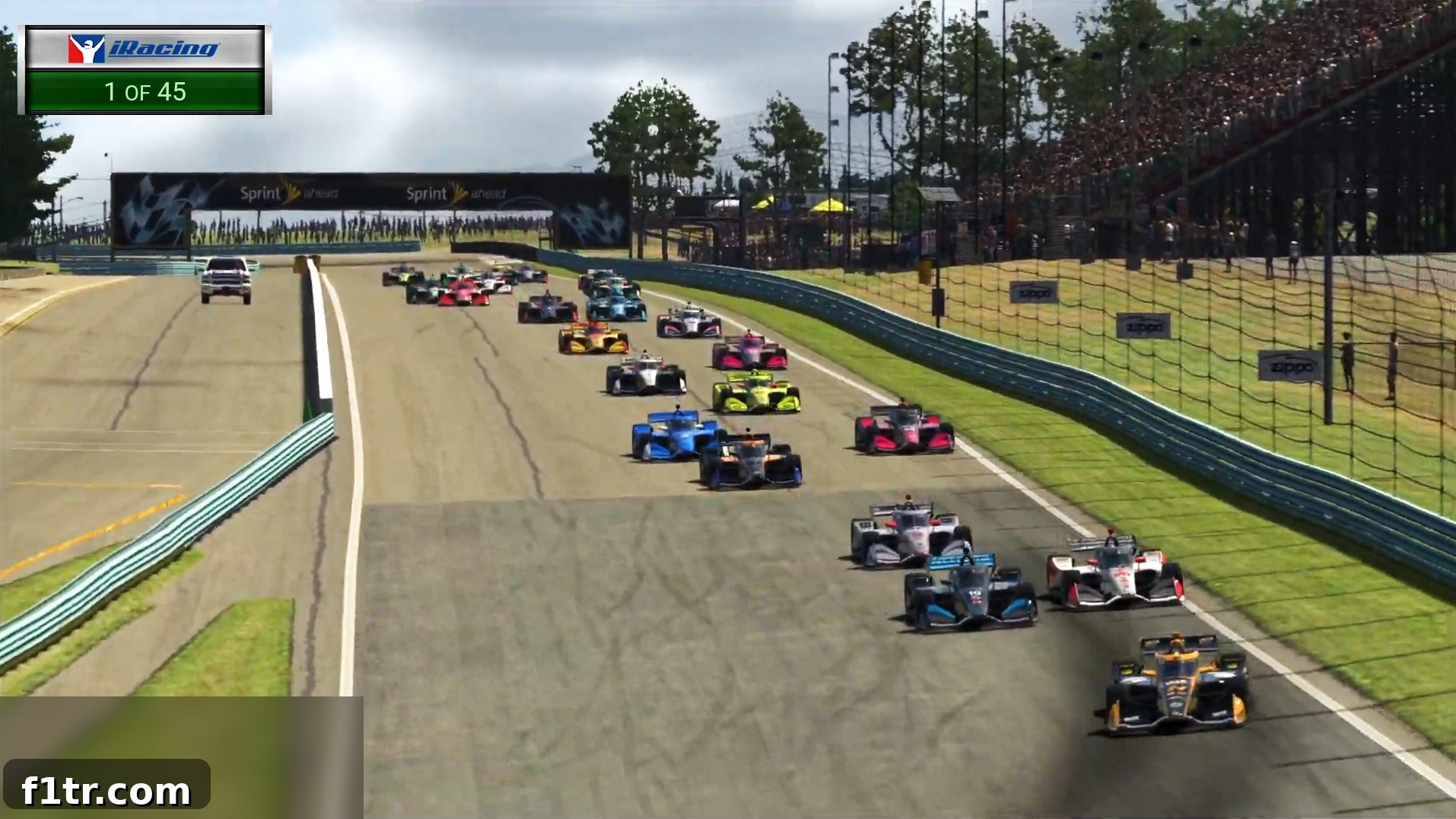
Sage Karam Dominates Watkins Glen in Thrilling IndyCar iRacing Challenge Opener
The virtual roar of engines echoed across the digital landscape as the inaugural IndyCar iRacing Challenge kicked off with an electrifying event at the legendary Watkins Glen International circuit. In a masterful display of sim racing prowess, Sage Karam asserted his dominance from the green flag, leading every lap and ultimately clinching a commanding victory. His flawless performance at the notoriously challenging road course set a high bar for the season, demonstrating the intricate blend of skill, focus, and strategic thinking required to triumph in the burgeoning world of professional esports motorsport.
The highly anticipated IndyCar iRacing Challenge emerged as a beacon of competitive racing, captivating fans and drivers alike during an unprecedented period for global sports. Bringing together a stellar field of real-world IndyCar stars, the series quickly established itself as a must-watch event, showcasing the drivers’ talents in a virtual environment that closely mimics the intensity and demands of genuine on-track competition. This innovative platform allowed teams and sponsors to maintain engagement with their audience, while providing motorsport enthusiasts with their much-needed dose of high-octane action.
Masterclass at The Glen: Karam’s Unyielding Lead
From the moment the virtual lights went out, Sage Karam left no doubt about his intentions. Piloting his digital machine with surgical precision, Karam immediately seized the lead and never relinquished it. He held off persistent challenges from Felix Rosenqvist, who shadowed him for the entirety of the 45-lap contest. Karam’s ability to maintain a consistent pace, navigate traffic, and manage virtual tire wear under pressure was a testament to his extensive sim racing experience and natural talent. His margin of victory, a decisive 3.6 seconds, belied the underlying tension and the constant threat posed by Rosenqvist, who pushed him to the absolute limit.
Watkins Glen International, often affectionately known as “The Glen,” is a revered circuit with a rich history in American motorsports. Its fast straights, sweeping corners, and dramatic elevation changes make it a favorite among drivers and fans alike. Translating this iconic track into the iRacing simulation platform brought its unique challenges and rewards to the virtual realm. Drivers had to contend with the Glen’s infamous “Boot” section, a series of high-speed turns that demand immense commitment, as well as the treacherous Bus Stop chicane, a frequent scene of incidents in both real and virtual races. Karam’s ability to master these elements lap after lap, extracting maximum performance without a single major error, was truly remarkable.
Rosenqvist’s Persistent Pursuit and a Close Call
Felix Rosenqvist, an accomplished real-world racer with a keen understanding of simulation, proved to be Karam’s closest challenger. He remained within striking distance throughout the race, patiently waiting for an opportunity to pounce. As the race entered its crucial final laps, Rosenqvist seemed to find an extra gear, narrowing the gap to Karam. This late-race surge was inadvertently aided by a dramatic near-miss involving the race leader and Kyle Kirkwood, a promising young talent in the IndyCar ladder system.
The incident unfolded as Karam prepared to put Kirkwood a lap down. In a sudden and unfortunate turn of events, Kirkwood lost control of his car and spun directly into Karam’s path. In a split-second demonstration of reflexes that would impress any real-world racing steward, Karam took immediate evasive action, swerving sharply to avoid a catastrophic collision that would have almost certainly ended his dominant run. Despite the heart-stopping moment, Karam managed to recover without significant loss of time or position, a testament to his cool under pressure. This close call, rather than rattling him, seemed to re-energize Karam. He quickly reasserted his authority, pulling away from Rosenqvist once more to secure his well-deserved victory.
Mid-Pack Mayhem: The Penske Pile-Up
While the battle for the lead remained a relatively clean affair, the mid-pack witnessed its fair share of drama. Will Power, a veteran of IndyCar and a formidable competitor in both real and virtual racing, executed a clean race, strategically navigating the field to secure a commendable fourth-place finish. Power’s astute judgment proved crucial, as he skillfully moved ahead of McLaren’s Oliver Askew early in the race, effectively avoiding a multi-car pile-up that Askew inadvertently triggered shortly thereafter.
The incident, a stark reminder of the close-quarters nature of racing, involved Askew and three of his formidable Penske teammates: Scott McLaughlin, Simon Pagenaud, and Josef Newgarden. On lap six, Askew, perhaps pushing the limits a little too far, cut the Bus Stop chicane. The resulting loss of control sent McLaughlin into a spin, creating a chain reaction. Pagenaud and Newgarden, caught in the unfolding chaos with nowhere to go, became entangled in the incident. It was a painful moment for the Penske quartet, showcasing how quickly fortunes can change in motorsport, even in a virtual setting.
Despite the significant setback, all four drivers demonstrated remarkable resilience and sportsmanship, recovering their cars and rejoining the fray. While their hopes for a podium finish were dashed, their determination to reach the checkered flag was evident. McLaughlin, after an intense battle, managed to pass Askew for fourth place among the recovering group, finishing over 47 seconds behind the victorious Karam. Pagenaud and Newgarden followed, another half-minute adrift, highlighting the substantial time lost in the incident but also their commitment to completing the race.
Noteworthy Performances and Technical Hurdles
Beyond the leading protagonists and the dramatic incidents, several other drivers delivered noteworthy performances or encountered their own challenges. Santino Ferrucci, known for his aggressive real-world driving style, brought his virtual car home in a respectable eighth position, albeit a lap down, demonstrating consistent pace in the competitive field. Kyle Kirkwood, despite his unfortunate spin, continued to battle and finished just behind Ferrucci, ahead of Conor Daly, who rounded out the top ten.
The virtual environment, while offering immense opportunities, is not without its own unique set of hurdles. Alexander Rossi, a former Indy 500 winner and a highly respected competitor, suffered an early blow to his race. Classified 17th, his hopes for a strong finish were dashed on the very first lap when he was involved in an incident that sent him into a barrier, showcasing that even in simulation, the consequences of contact can be race-ending. Furthermore, James Hinchcliffe, another fan favorite, was unfortunately unable to even take the start due to technical problems, underscoring the complexities of participating in high-level esports, where connectivity and equipment can be as crucial as driving skill.
The Impact and Future of Virtual Motorsport
The first IndyCar iRacing Challenge race at Watkins Glen was more than just a competition; it was a resounding success in bridging the gap between traditional motorsport and the rapidly expanding world of esports. It provided invaluable entertainment and a much-needed sense of normalcy for fans craving racing action. For the drivers, it offered a chance to hone their skills, maintain their competitive edge, and connect with their fanbase in a novel way. The seamless integration of real-world racing personalities into a high-fidelity simulation showcased the incredible potential of virtual platforms to complement and even innovate within the broader motorsport landscape.
The event proved that sim racing, when executed with the professionalism and competitive spirit of the IndyCar series, can deliver genuinely thrilling and engaging content. As the series progresses, it promises to further solidify the position of virtual motorsport as a legitimate and exciting facet of the sporting world. The lessons learned, the strategies developed, and the rivalries forged in the digital arena will undoubtedly influence how teams, drivers, and fans interact with racing for years to come, pushing the boundaries of what is possible in the pursuit of speed and glory, both on and off the traditional track.
Advert | Become a RaceFans supporter andgo ad-free
More IndyCar News and Features
- IndyCar driver McLaughlin cleared of injury after crashing through barrier at Barber
- Schumacher says his IndyCar feels like ‘an F2 car, just with better tyres’
- IndyCar “way faster than Formula 1” in some corners, says Grosjean
- FIA to award more F1 superlicence points to IndyCar drivers from 2026
- Schumacher to race full-time in IndyCar with RLL in 2026
Browse all IndyCar articles