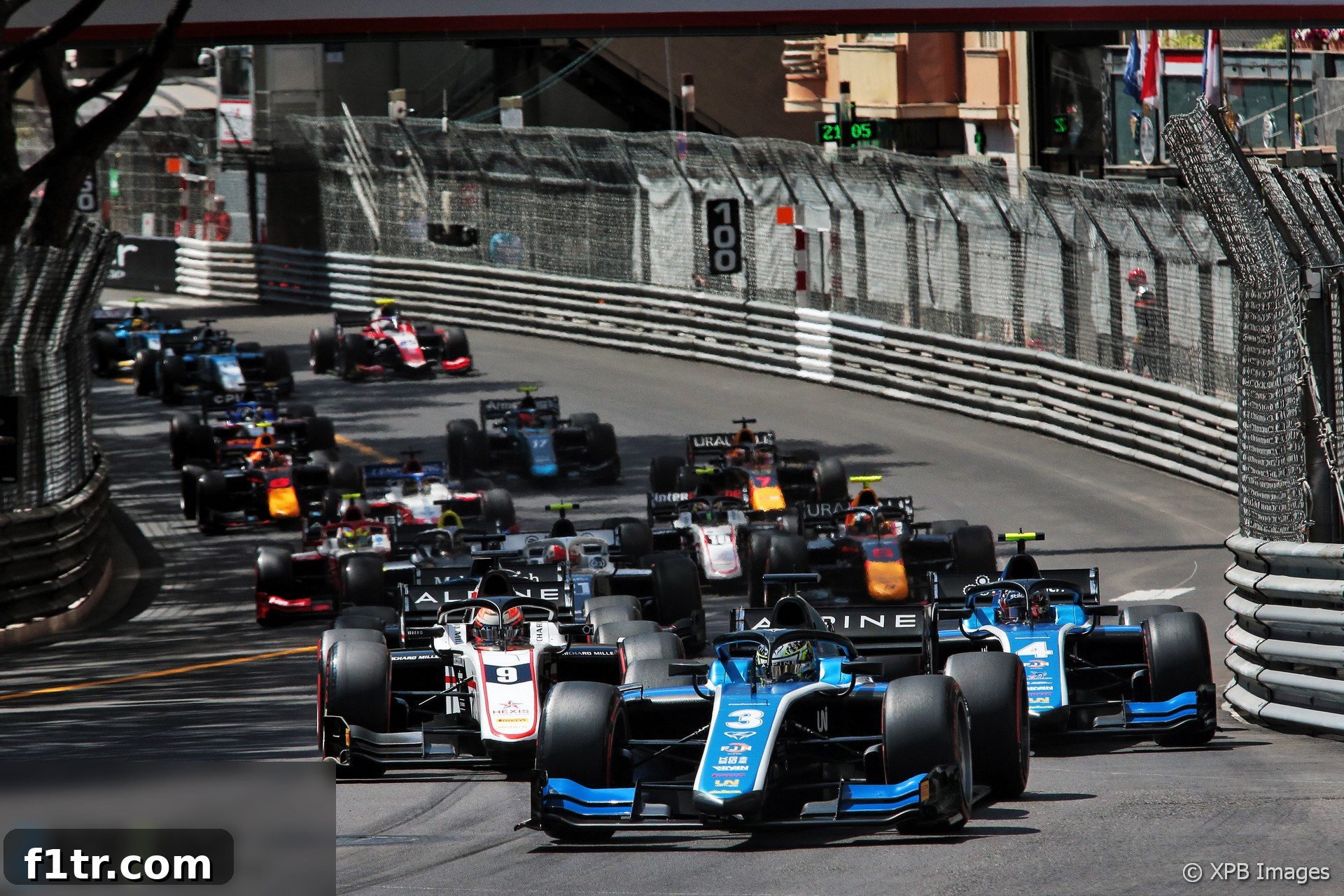
Motorsport, by its very nature, stands as one of the most financially demanding pursuits in the world of sports. Even its most basic forms, such as junior karting, carry a prohibitive price tag that dwarfs the entry costs of globally popular pastimes. Consider the simple football, a round leather object costing a mere fraction of even the most rudimentary kart. It’s no surprise then that motorsport, despite its global appeal and thrilling spectacle, rarely features among the world’s top ten sports, which often require little more than a ball, a bat, or perhaps just a pair of running shoes.
The journey from aspiring talent to a potential Formula 1 superstar is a long and incredibly expensive one, beginning surprisingly young. A revealing 2015 survey conducted by Reuters shed light on the astronomical figures involved, reporting that parents were spending up to an astonishing $120,000 for a single season of national-level junior karting for their ten-year-old children. The costs escalate dramatically when a young driver progresses to the international stage; a single European race weekend could easily consume $20,000, even when operating with what is considered a “cheap” budget. Multiplied across a typical ten-event season, this figure quickly surges to $200,000 annually. Over an estimated four seasons of a child’s karting career before transitioning to cars, the total investment, factoring in contingency costs, could easily reach a staggering million dollars. This figure, mind you, was from six years ago, and expenses have likely inflated by at least 10% per annum since then, pushing the current cost even higher.
Therefore, a comprehensive six-year karting career could realistically cost a family anywhere up to $2 million. This immense sum is incurred even before the aspiring F1 champions make their crucial leap to single-seater cars, typically starting with Formula 4. Depending on the team, the specific country, and the championship series, Formula 4 budgets can range from £250,000 to double that amount for a single season. The financial climb continues relentlessly through the junior ranks. By the time a driver reaches the pinnacle of motorsport, Formula 1, an estimated $7 million will, in most cases, have been expended on their journey – and that’s if they even manage to take the final, coveted step, a feat that undeniably depends on more than just raw talent.
Breaking down this daunting financial ladder reveals a rough split: approximately $2 million spent on karting, followed by around $500,000 per season in F4. The progression to Formula 3 then demands another $1 million, with Formula 2, the direct feeder series to F1, requiring $3 million or more – and these figures often exclude unforeseen contingency costs. While not all of this substantial sum necessarily comes directly from parents’ pockets, $7 million remains a colossal amount of money. This investment is made even more precarious by the stark reality that there are absolutely no guarantees of securing a coveted F1 seat at the end of such a demanding and costly pathway. The attrition rate from Formula 2 to Formula 1 is notoriously high, hovering around 90%, unless a driver is fortunate enough to secure significant external funding or, more commonly, a “pay seat” at motorsport’s most exclusive table.
Given these staggering figures, it’s hardly a surprise that Formula 1, in particular, was recently characterized as a “Billionaire Boys’ Club” by none other than the reigning world champion, Lewis Hamilton. This perception is reinforced by the backgrounds of several recent F1 entrants. Nicholas Latifi, Mick Schumacher, and Nikita Mazepin, for instance, all hail from exceptionally privileged families. Furthermore, Lance Stroll’s multi-billionaire father, Lawrence, is the fashion mogul who famously acquired and now owns the Aston Martin F1 team. Similarly, Lando Norris’s father, Adam, is recognized as one of the UK’s richest 500 individuals. These prominent examples firmly entrench the enduring perception that success in Formula 1 is increasingly tied to immense personal wealth, rather than talent alone.
However, it’s crucial to acknowledge the intriguing counterpoint to this narrative. With only a single exception, every Formula 1 world champion this millennium has emerged from a decidedly modest background. This remarkable trend applies to legendary figures such as Michael Schumacher, Fernando Alonso, Jenson Button, Sebastian Vettel, and Lewis Hamilton himself. The solitary exception is Nico Rosberg, who famously emulated his father Keke Rosberg’s title-winning feat in 2016. Intriguingly, similar statistics and patterns can be observed when tracing back the lineage of champions all the way to the inaugural F1 season in 1950. These drivers, despite their humble beginnings, were exceptionally fortunate to attract vital support from benefactors. These patrons possessed the financial wherewithal to shepherd them through the demanding and expensive junior and secondary racing series, ultimately propelling them to the sport’s grandest stage. Each benefactor had their own motivations for investing such substantial sums – some driven by sheer passion for racing, others viewing it as a shrewd business proposition, and still others as part of structured driver academies. Yet, the undeniable fact remains that, regardless of the funding source, it still cost up to $7 million to navigate the intricate path to Formula 1. By stark comparison, a simple football costs mere peanuts, and traditional sports teams offer a significantly greater number of competitive berths.
The burgeoning costs of junior motorsport have not gone unnoticed by the sport’s most influential figures. Toto Wolff, the CEO of Mercedes-AMG Petronas Motorsport, recently articulated his concerns, describing the expenses of junior competition as “totally absurd.” Wolff passionately called for Formula 1 and its constituent teams to take a more proactive role in identifying and financially supporting budding talents. “It needs to stop,” he asserted, “because we want to have access. I think we need to give access to kids that are interested in go-karting, the opportunity to race for much more affordable budgets.” His sentiment underscores a growing realization within the sport that the current financial barriers risk alienating potential stars from diverse socio-economic backgrounds, thereby narrowing the talent pool.
A number of prominent champions, most notably Lewis Hamilton and Sebastian Vettel, have also publicly voiced their strong opposition to the escalating costs within junior racing series. Hamilton, whose own inspirational journey began from a working-class background, shared a poignant anecdote on the BBC’s Graham Norton Show in 2019. He recounted, “My dad spent something like £20,000 and re-mortgaged the house several times in the first years. But today it’s just got so expensive.” Hamilton further illustrated the stark reality of the current system, adding, “A friend of mine who was nearly in Formula 1 got leapfrogged by a wealthy kid and then his opportunity was gone.” Hamilton’s family diligently funded his karting career until he secured the pivotal backing of former McLaren boss Ron Dennis, a testament to the sheer financial struggle involved even for prodigious talents.
Sebastian Vettel, a four-time world champion, similarly commented that the costs of junior motorsport have “gone wild in the last years.” He considers himself incredibly fortunate to have had “Mr. Gerhard Noack looking after me [as benefactor], who was the same man who looked after Michael Schumacher when he started, probably 20 years before me as a young child.” Vettel underlined the historical challenge, stating, “It was already very, very expensive back then, so I think Michael was in need of help, and I was in need, because I couldn’t afford it. I think the first season we did in very junior go karts, we managed sort of half on our own and then we started to be very lucky to find people that supported and helped us.” More recently, Hamilton reiterated his concerns to the Spanish outlet AS, emphasizing, “If I were to start over from a working-class family, it would be impossible for me to be here today because the other boys would have a lot more money. We have to work to change that and make this an accessible sport, for the rich and for people with more humble origins.” These powerful statements from the sport’s most celebrated figures highlight the urgent need for reform.
In an effort to delve deeper into these critical issues, these points and financial figures were presented to Bruno Michel, the CEO of Liberty Media’s Formula 2 series, which also oversees Formula 3 under an agreement with the FIA. The focus of the discussion revolved particularly around the quoted costs for a season of F3 and F2. To reiterate the prevalent estimates, a season of F2 is widely believed to cost up to $2.5 million, with F3 typically commanding around half of that sum.
Michel, a seasoned veteran of motorsport with nearly three decades of experience, brings a wealth of knowledge to this debate. His career began in 1993 with the now-defunct Ligier F1 team before he transitioned into driver management alongside the renowned F1 entrepreneur Flavio Briatore, where he oversaw the careers of future Grand Prix winners like Giancarlo Fisichella and Mark Webber. In 2005, Michel and Briatore co-founded GP2, the direct predecessor to the current F2 series, making Michel uniquely qualified to speak on the topic of junior racing costs. His acumen extends beyond the purely sporting, encompassing a keen political understanding. He successfully navigated the fallout from Briatore’s alleged role in Renault’s ‘Crashgate’ scandal and the subsequent departure of Bernie Ecclestone from F1 following Liberty Media’s acquisition of the sport’s commercial rights. Ecclestone, who had a close relationship with Briatore and, by extension, Michel, supported the establishment of GP2 despite significant opposition from the FIA. This history underscores Michel’s valuable abilities, which are clearly recognized and appreciated by Liberty Media.
“I cannot really agree with the figures because they can vary,” the Swiss-domiciled Frenchman countered, addressing the specific cost estimates. He elaborated on two primary reasons for this variability. “Number one, they are changing from one team to another; all teams are not having the same cost. And number two, where we have to be quite careful is the difference between the costs that the teams are really incurring, and then how much they’re charging the drivers, which might be two different amounts.” Michel steadfastly maintained that, in comparative terms, costs have scarcely risen – if at all – since he first placed drivers in Formula 3000, another forerunner to F2 and GP2, well over a decade ago. He asserted that the perception of skyrocketing costs in F2 and F3 is largely unfounded.
Providing further context, Michel stated, “For F2 and F3, what needs to be understood is that the cost, if I speak about F3 first, the costs are more or less the same that they were 20 years ago in European Formula 3. For F2, if you look at what the costs were in GP2 when we had two [series] – GP2 main division and GP2 Asia – which was about 15 years ago, the costs are the exact same as well.” He then posed a rhetorical question: “Why is that possible?” The answer, he explained, lies in the rigorous and sustained efforts over the past 15 to 20 years to meticulously control and contain costs. “I can give you many examples of decisions we took to ensure that costs are not increasing,” he affirmed. “So, when I hear that the costs are getting crazy, I think it’s a completely unfair statement.”
Michel provided concrete examples of these cost-saving initiatives. He highlighted limitations on team staff, explaining that the cars themselves are specifically designed to be operated efficiently with a minimal number of personnel: 12 people for an F2 team running two cars, and 10 for an F3 team managing three cars. Furthermore, testing has been severely restricted, and the lifespan of the current generation of cars has been extended for several years, deliberately to prevent teams from needing to invest in new, expensive machinery too frequently. “We are renegotiating permanently with our suppliers to make sure that costs are kept as low as possible. There are many, many other things that we’re doing all the time,” he emphasized, underscoring the continuous nature of these efforts.
“That’s the first part,” Michel continued, shifting focus from the direct costs to the broader issue. “[But] the real question is ‘How drivers can get funded to go to the next category and to get to Formula 1’, not the costs themselves, but how [drivers] get funded to race. We need to understand how this works.” He went on to explain that while individual families might fund some drivers, significant support also comes from official driver academies. “The most active academies are Alpine, Ferrari, Red Bull. They’re not putting full budgets for the drivers, but they’re helping. Williams also is helping some drivers; Sauber is helping some drivers.” This structured support from F1 teams provides a crucial pathway for some talents. Michel also made a point to acknowledge and champion fairness towards drivers from wealthy families. “I’ve got a list of drivers that are from wealthy families in F2 and F3. That helped the whole team and the other drivers to finance their seasons. I only can thank people like (Artem) Markelov, people like (Nicholas) Latifi and others.” He views their financial contributions as often beneficial to the wider ecosystem of junior racing, allowing teams to sustain operations and support other drivers.
Despite Michel’s assurances regarding cost control, the undeniable fact remains that a million and a half dollars, in any major currency, represents a huge pile of money, regardless of how it is financed. When pressed on the possibility of further reducing costs, Michel entertained a “very simple way,” suggesting, “and that is to take the F3 car and rename it F2, because F3 is more or less half of the price [of F2].” However, he quickly articulated the inherent problem with such an approach: “But the other problem is that our job is to prepare drivers for F1. If we don’t prepare drivers for F1, if we give them a car that is not really good enough for [the next step], then we’re not doing our job.” This highlights the core mission of F2 – to serve as an effective training ground, providing a car that adequately mirrors the demands and performance of Formula 1 machinery.
Michel pointed to recent successes as evidence of F2’s efficacy in this regard. “We’ve seen in the last seasons, with Charles Leclerc, with George Russell, with Lando, with all the drivers that came from F2, we’ve seen them completely ready when they get to F1. If we want the smallest budgets [it can be much easier] but then what is our job? It is to prepare drivers.” The series, therefore, prioritizes the quality of driver preparation over drastic cost reductions that might compromise the training. The most prominent Red Bull driver of recent years, Max Verstappen, famously did not progress through the ranks of F2, nor, for that matter, Michel’s then-version of F3, which was known as GP3. “He went directly to Formula 1,” Michel acknowledged with a chuckle, recognizing Verstappen’s unique path. “He was young, they took a risk and they were right to do that. But I think now it is not possible to do that,” he added, alluding to the subsequent introduction of Formula 1’s superlicence points system. This regulatory change has made it exceedingly difficult, if not virtually impossible, for drivers to bypass Formula 2 entirely on their direct route to a Grand Prix car, reinforcing the importance of the feeder series.
The technical structure of F2 and F3 series relies on a carefully managed supplier model. Both series source their rolling chassis from the esteemed Italian manufacturer Dallara. These chassis are then meticulously assembled into complete racing cars by integrating power units supplied by the precision engineering company Mecachrome, which is also widely known as a primary sub-contractor for Renault’s F1 engine operations. Hewland transmissions and sophisticated electronics from Magneti Marelli complete the package. These standardized, complete cars are then supplied to the individual teams, with a concerted effort to ensure each vehicle is as identical as possible. The question arises: Is this truly the most efficient business model for cost control?
“Oh, yeah,” Michel promptly responded, unequivocally defending the current supplier strategy. “We’ve been working with Dallara and Mecachrome for the past 20 years. I’ve been around in the market to try to find substitutions, and I can tell you they are in terms of quality and cost the best people we can work with.” He elaborated that these long-standing partners possess an intimate understanding of the series’ objectives. “They know exactly what we want, they understand exactly our philosophy, which is to try to make a car which [performs] on track but is also easy to operate because that’s a very important part of our cost control system.” This emphasis on operational ease is crucial for keeping team expenses down, given the limited staff allowances.
Beyond the technical aspects, the structure of F2’s racing calendar also faced criticism during the season in question. The calendar featured only eight fixtures, although each comprised three races, resulting in a significantly uneven schedule. Notably, there was an eight-week gap between the first and second weekends of the season. Geographically, three events were held in Europe (Monaco, Britain, Italy), with the Middle East hosting three (Bahrain, Saudi Arabia, and Abu Dhabi), and Azerbaijan and Russia each featuring one. This seemingly fragmented and spread-out calendar prompted questions regarding its true cost-effectiveness, particularly concerning logistical challenges.
“That’s also to save costs,” Michel explained, clarifying the rationale behind the condensed calendar, “because obviously there are less events.” He estimated that this structure reduces logistical costs by up to 30%, a substantial saving for the teams. Simultaneously, it offers drivers the invaluable opportunity to participate during Formula 1 Grand Prix weekends, providing crucial sponsor exposure and an unparalleled overall experience. While drivers would undoubtedly prefer more races, and Formula 1 itself thrives on as many support events as possible, Michel asserted that a delicate balance must be struck. “It’s true that having only eight events in 10 months, it’s not ideal, I completely agree with you, but that’s the best balance we can find if we want to limit costs. We’re always trying to find the right balance between the number of events to ensure the championship is strong, and attractive for drivers. The same for testing: we limit testing but the drivers, of course, would like more.” Indeed, the calendar was so “not ideal” that sources suggested a potential restructuring since the interview was conducted. However, it is clear that any agreed-upon format for the future will need to maintain similar cost savings and a strategic regional spread to remain viable.
Ultimately, Bruno Michel remains resolute in his conviction that F2 and its in-house F3 feeder series are making every conceivable effort to reduce the costs of competing in the two crucial rungs below Formula 1. This commitment is pursued while simultaneously ensuring that the best talents are rigorously prepared for the pinnacle of motorsport. It is, perhaps, an intriguing paradox that the most outspoken critics of junior category costs are often those who benefit most directly from the significantly larger budgets available to Formula 1 teams, which are many multiples higher than those managed by F2 teams. While the current F2/F3 system may not be deemed “ideal” by all, it has demonstrably succeeded in delivering qualified drivers to Formula 1 within its carefully managed cost structures, as Michel has meticulously outlined. The lingering question remains whether the preceding stages, namely karting and Formula 4, can genuinely make the same claim regarding their own increasingly uncontrolled and spiraling cost structures.