The global motorsport community found itself at an unprecedented crossroads last week, as the ongoing global health crisis brought traditional racing series to an abrupt halt. With circuits silenced and millions of fans yearning for the roar of engines, Formula 1 and IndyCar swiftly moved to fill the void, launching their respective virtual racing initiatives. Formula 1 made its first foray into replacing a championship round with a virtual event, quickly followed by IndyCar’s ambitious iRacing Challenge. This rapid pivot to digital platforms offered a fascinating glimpse into the future of motorsport entertainment, but also sparked an immediate debate: which series delivered a more authentic and compelling virtual experience?
The initial attempts by both premier racing categories to transition from real-world tracks to digital asphalt provided a stark contrast in philosophy and execution. While both endeavors aimed to satiate the appetite of motorsport enthusiasts, their approaches yielded vastly different results. Only IndyCar’s inaugural iRacing event truly captured the essence of competitive racing, coming remarkably close to being mistaken for a genuine, high-stakes event. Indeed, for many viewers, it felt like a slightly tamer version of some of IndyCar’s notoriously wild and unpredictable real-world races, a testament to its successful translation into the virtual realm.
A significant factor in IndyCar’s immediate success was the overwhelming participation of its current driver roster. While Formula 1’s Virtual Bahrain Grand Prix struggled to attract its top talent, with merely two active F1 drivers making an appearance, the IndyCar iRacing Challenge boasted a formidable field of 25 competitors, almost entirely composed of regular series drivers. This strong turnout immediately lent credibility and intensity to the virtual races, ensuring that fans witnessed their favorite stars battling it out, even if only on screens. The commitment from the drivers themselves signaled a serious approach to virtual competition, setting a high standard for engagement and authenticity.
For context, NASCAR also demonstrated a similarly robust lineup for its iRacing series, which, despite being primarily broadcast on Fox platforms in the US, underscored the potential of a dedicated and professional virtual racing setup. This commitment from drivers in other major motorsport series further highlighted the disparity in F1’s initial driver engagement, suggesting that a strong, driver-centric approach is crucial for the success of virtual racing endeavors.
To be fair to Formula 1, their venture into virtual racing was organized on a tighter schedule, giving them less time to secure a comprehensive entry list. However, the subsequent decisions made in populating the remainder of their grid ultimately detracted from the racing spectacle. Instead of focusing on pure racing talent, F1 opted for a diverse mix that included reserve drivers, junior category hopefuls, various celebrities, and social media ‘influencers’. While a broad appeal might seem beneficial on the surface, this heterogeneous lineup diluted the competitive integrity and felt disconnected from the core motorsport fanbase’s expectations.
IndyCar, on the other hand, strategically filled its few available seats with motorsport legends and high-profile figures, ensuring that every participant added value to the racing narrative. Seven-time NASCAR champion Jimmie Johnson, a titan of American motorsport, enthusiastically joined the fray, bringing immense star power and competitive spirit. Reigning Australian Supercars champion Scott McLaughlin also participated, further solidifying the challenge’s status as a serious competition. These additions not only captivated existing fans but also attracted new audiences from different racing disciplines, all while maintaining a focus on high-caliber motorsport talent. This curated approach created an atmosphere where every driver, virtual or otherwise, felt integral to the competition.
The F1 approach, while aiming for wider demographic engagement, risked alienating its most dedicated fans. While there might be a niche audience interested in seeing celebrities race on the F1 2019 game purely for entertainment, the core fanbase yearns to see real F1 drivers and the potential stars of the future push the limits of virtual machinery. The question remains: are there truly millions clamoring for another contest between, for example, a promising junior driver and a professional golfer? The doubt expressed by many commentators suggests that such crossovers, while novel, fail to resonate deeply with the traditional motorsport audience who prioritize competitive authenticity and a genuine racing spectacle.
It’s important to acknowledge that neither the F1 nor the IndyCar virtual races were entirely free from technical glitches, which are often inherent in live online broadcasts and events of this scale. F1’s star driver, Lando Norris, a prominent figure in the sim racing community, notably missed qualifying and the start of the race due to persistent connection problems, a frustrating outcome for both him and his fans. Similarly, James Hinchcliffe encountered technical difficulties that kept him out of the IndyCar event, and other competitors in both series faced intermittent issues. Therefore, technical reliability was not the differentiating factor between the two events.
What truly distinguished IndyCar’s virtual challenge from the outset was its clear and coherent philosophy. IndyCar embraced the idea that it was not merely staging an exhibition; it was consciously replacing a race that could not happen with one that could, albeit in a virtual world. This fundamental understanding informed every aspect of their presentation, from meticulous race setup to the incorporation of elements familiar to real-world racing. This included virtual pre-race autograph sessions and post-race press conferences, all designed to mimic the immersive experience of a genuine race weekend. This commitment to replicating the complete motorsport experience, rather than just the on-track action, allowed IndyCar’s event to truly resonate as a legitimate substitute.
Looking ahead to future virtual events, Formula 1 faces a critical decision. It must clearly define its purpose: is it aiming to produce a light-hearted jolly for celebrities, or a serious racing event for dedicated motorsport fans? If the latter is the objective, F1 needs to critically re-evaluate its strategy, particularly concerning driver participation. It may be necessary to gently remind its star drivers that while they continue to receive substantial salaries and benefits from their teams, expecting them to participate in a video game once every other week as a gesture of fan engagement and brand representation is hardly an unreasonable request during these unprecedented times. Such participation is not just about entertainment; it’s about maintaining connection with the fanbase and upholding the sport’s spirit.
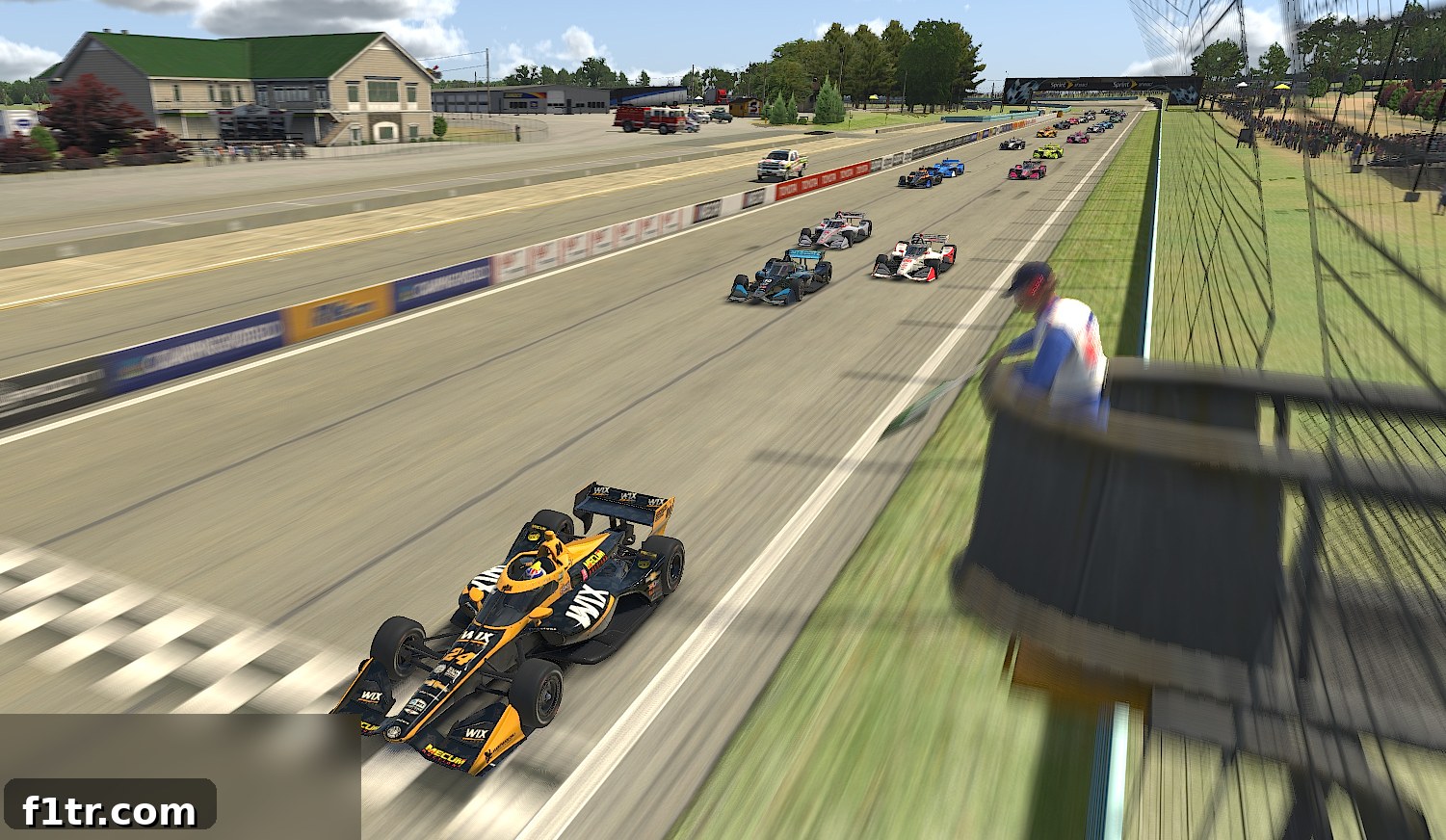
2020 IndyCar iRacing Challenge race one – Watkins Glen: A Benchmark for Virtual Motorsport
The inaugural IndyCar iRacing Challenge event at Watkins Glen served as an exemplary model for how virtual motorsport can successfully stand in for real-world competition. The choice of the iconic Watkins Glen International circuit, known for its challenging layout and rich history, immediately added a layer of authenticity. Coupled with the realistic physics and dynamic racing provided by the iRacing platform, the event showcased wheel-to-wheel action that felt genuinely competitive and thrilling. Fans watched current IndyCar stars navigate the virtual track with precision and aggression, mirroring the intensity of their real-life counterparts.
The broadcast production values for the IndyCar iRacing Challenge were also commendable, further blurring the lines between virtual and real. Professional commentators, detailed graphics, and dynamic camera angles enhanced the viewing experience, making it feel like a polished television production rather than a casual online stream. This professional presentation, combined with the high level of driver commitment and the realistic nature of the simulation, created an immersive spectacle that truly captivated its audience. The race not only provided much-needed entertainment during a challenging period but also set a new standard for how major motorsport series can effectively leverage virtual platforms to maintain fan engagement and competitive spirit.
The Future of Virtual Motorsport: Lessons from the Digital Track
The initial ventures by Formula 1 and IndyCar into virtual racing have provided invaluable lessons for the future of motorsport during periods of disruption and beyond. IndyCar’s success demonstrated that a clear focus on competitive authenticity, high driver participation, and a commitment to replicating the full race weekend experience are paramount. By prioritizing the core motorsport fan and leveraging platforms that offer realistic simulation, a virtual event can genuinely serve as a compelling alternative, rather than just a fleeting distraction. The strong engagement from drivers like Jimmie Johnson and Scott McLaughlin underscored the importance of involving respected figures from across the motorsport spectrum to lend gravitas to the virtual grid.
Conversely, Formula 1’s initial struggles highlight the risks of diluting the competitive aspect with an overly broad entertainment strategy. While attracting new audiences is always a goal, it should not come at the expense of alienating the dedicated fanbase who seek genuine racing battles. Moving forward, F1 has an opportunity to refine its approach, perhaps by incentivizing greater participation from its primary drivers, streamlining its technical setup, and focusing on a more simulation-oriented platform. The potential for virtual motorsport to grow and complement real-world racing is immense, offering a new dimension for fan engagement, driver training, and competitive spectacle. The early digital races have laid the groundwork, and how each series adapts will determine their ultimate success in this evolving landscape.