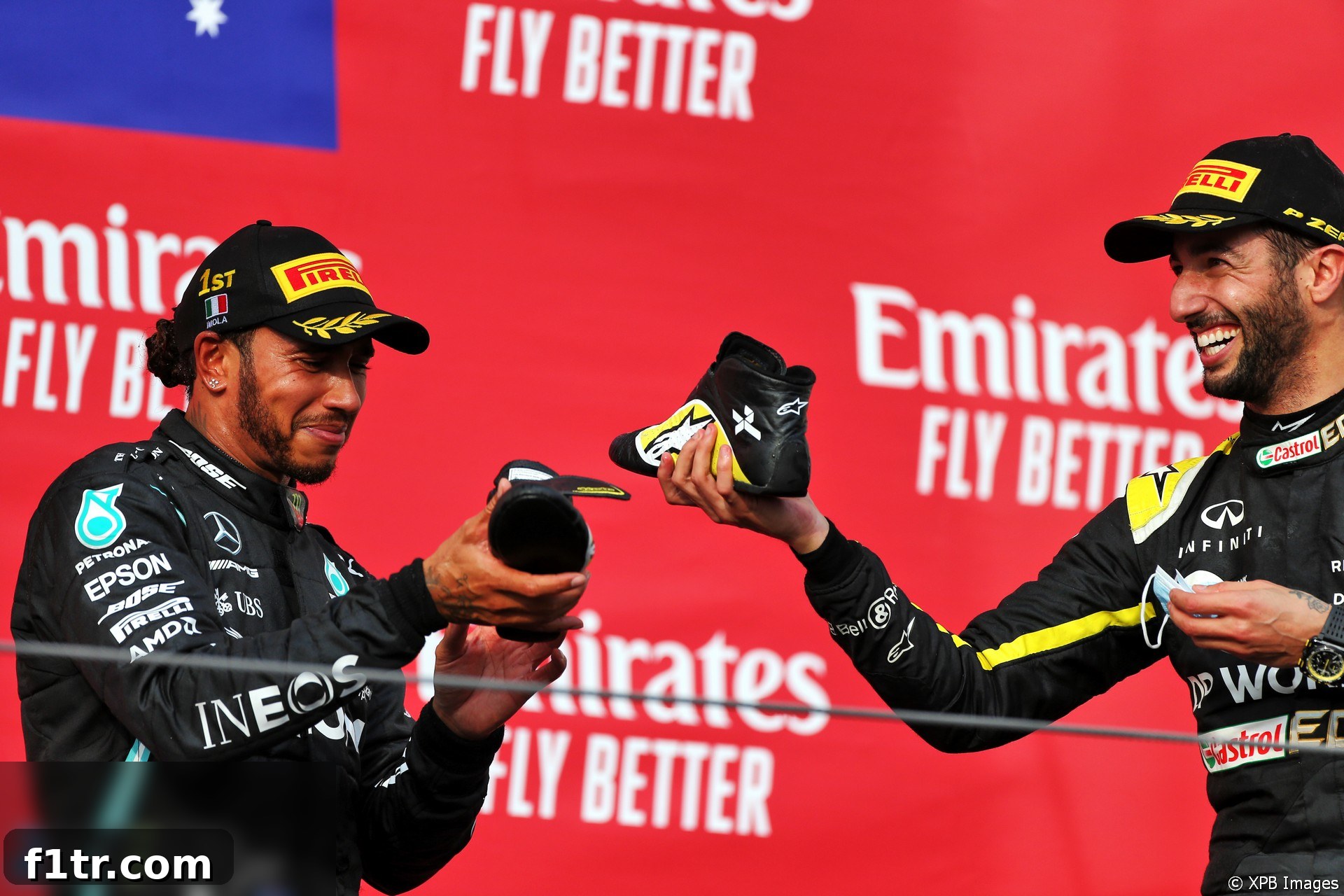
The 2020 Emilia-Romagna Grand Prix delivered a captivating spectacle of strategy, drama, and speed, culminating in another dominant victory for Lewis Hamilton. The reigning world champion orchestrated a masterful recovery from third place on the grid to secure his ninth win of the season, further solidifying his march towards a record-equalling seventh drivers’ championship. The race at the iconic Imola circuit, making a highly anticipated return to the Formula 1 calendar, was filled with twists and turns that ultimately saw Mercedes-AMG Petronas F1 Team clinch an unprecedented seventh consecutive Constructors’ Championship.
The race start promised an immediate showdown among the sport’s top contenders. From pole position, Valtteri Bottas held his lead confidently into the first corner, denying any challenge from the cars behind. However, the initial moments were less favourable for Hamilton. Starting alongside Bottas on the front row, Hamilton found himself outmanoeuvred by Max Verstappen, who made a decisive move to snatch second place. This set the stage for a strategic battle, with the Mercedes duo now separated by the aggressive Red Bull of Verstappen, all vying for supremacy on a track known for its demanding nature and narrow overtaking opportunities.
As the first stint progressed, the race evolved into a fascinating strategic chess match. While Bottas and Verstappen opted for earlier pit stops, seeking to maintain their tyre performance, Hamilton extended his run on the medium compound tyres. This bold decision proved to be a stroke of genius, allowing Hamilton to unlock crucial extra pace and build a significant lead. His remarkable tyre management and consistent lap times meant that when he finally peeled into the pits for his own tyre change, he emerged comfortably ahead of both Bottas and Verstappen, executing a flawless ‘overcut’ that propelled him into the lead.
Just as the strategic landscape seemed to settle, a sudden incident injected further drama. Esteban Ocon’s Renault suffered a mechanical failure at the challenging Acqua Minerali corner, forcing him to retire and triggering a brief Virtual Safety Car (VSC) period. This intervention, though short, had a profound impact. Any slim hope Bottas harboured of closing the gap and challenging Hamilton for the lead was instantly extinguished, as the VSC nullified any potential advantage he might have gained through track position or tyre differences. Hamilton’s lead was now virtually unassailable, barring any unforeseen circumstances.
Bottas, meanwhile, was fighting an increasingly difficult battle. His car had sustained significant damage to its floor, a consequence of collecting a piece of debris from Sebastian Vettel’s Ferrari during the earlier stages of the race. This compromised his car’s aerodynamic performance and led to a noticeable drop in pace. The Finn’s struggles became evident when he ran wide at Rivazza later in his second stint, an error that the ever-opportunistic Verstappen instantly capitalised on. The Red Bull driver wasted no time in pouncing, seizing second place from the ailing Mercedes, leaving Bottas to contend with a damaged car and a rapidly disappearing podium finish.
However, the drama was far from over. Just a few laps after his impressive overtake, Verstappen’s race came to an abrupt and spectacular end. A sudden and catastrophic right-rear tyre failure pitched his car violently into the gravel trap at the Villeneuve chicane. The sight of the Red Bull driver out of the race sent shockwaves through the paddock, not only ending his strong performance but also simultaneously sealing Mercedes’ seventh consecutive Constructors’ Championship. This historic achievement surpassed Ferrari’s long-standing record and underscored the unparalleled dominance of the Silver Arrows in the hybrid era. Verstappen’s retirement also necessitated a full Safety Car period, further shaking up the order and offering a final strategic gamble for some teams.
The Safety Car period, intended to allow marshals to clear Verstappen’s stricken car, brought its own share of misfortune. Among those impacted was George Russell, who had been driving a superb race for Williams and was on the cusp of securing valuable points. In an effort to generate crucial heat in his tyres, Russell lost control of his car on the approach to Acqua Minerali, spinning into the wall and ending his promising performance in heartbreaking fashion. His retirement underscored the fine margins and intense pressure drivers face, even under Safety Car conditions.
When the Safety Car eventually pulled in and the race resumed for a final sprint, Hamilton managed the restart with his usual composure and expertise, easily holding onto his lead over Bottas. Behind him, a thrilling battle unfolded for the remaining podium spot. Daniel Ricciardo, piloting his Renault, had made a strategic decision with his team not to pit under the Safety Car. This gamble, which could have backfired spectacularly, paid off handsomely, allowing him to maintain third place and secure another fantastic podium finish for Renault, demonstrating excellent racecraft and tyre preservation skills.
The Red Bull camp’s day went from bad to worse following Verstappen’s retirement. Alexander Albon, under immense pressure to perform, spun his car on his own, just moments after being overtaken by the Racing Point of Sergio Perez. This unfortunate incident capped a disappointing weekend for the Thai driver and added to Red Bull’s woes. Elsewhere, the AlphaTauri team experienced a mixed bag of fortunes. Pierre Gasly, who had shown incredible pace in qualifying, was forced to retire due to a coolant leak, a bitter blow for the young Frenchman. However, his teammate, Daniil Kvyat, seized the opportunity presented by the Safety Car and late-race incidents. Kvyat displayed remarkable aggression and skill, salvaging an impressive fourth place for AlphaTauri, notably passing Charles Leclerc’s Ferrari on his charge through the field.
Sergio Perez, having run strongly in fourth place for much of the race, saw his podium hopes dashed by a strategic pit stop under the Safety Car. While some teams used the opportunity to switch to fresh soft tyres, Perez’s gamble didn’t quite pay off as he ultimately finished in sixth place, still a solid points haul for Racing Point, but a bittersweet outcome given his earlier track position. Following him were the two McLarens, with Carlos Sainz Jnr leading his teammate Lando Norris. Sainz had an eventful race, initially passing Norris early on and later demonstrating quick reflexes to take avoiding action when Albon spun directly in front of him, securing valuable points for the Woking-based squad in their fight for third in the Constructors’ Championship.
The final points-scoring positions were claimed by the Alfa Romeo pair, Kimi Räikkönen and Antonio Giovinazzi, a significant result for the Swiss-Italian team, showcasing their consistent performance and taking advantage of the chaotic end to the race. Their double points finish was a testament to their perseverance and strategic acumen. Just shy of claiming his first-ever Formula 1 point was Nicholas Latifi for Williams, finishing less than a second behind the final points-scorer. While a valiant effort, it highlighted the fierce competition and the extreme challenge of breaking into the top ten in Formula 1.
The Emilia-Romagna Grand Prix was a thrilling and unpredictable race that perfectly encapsulated the excitement of the 2020 Formula 1 season. Lewis Hamilton’s strategic brilliance, Mercedes’ historic Constructors’ Championship triumph, and the myriad of dramatic incidents ensured that Imola’s return to the F1 calendar was one to remember. The race not only showcased individual brilliance but also the complex interplay of strategy, tyre management, and sheer racing skill required to succeed at the pinnacle of motorsport.