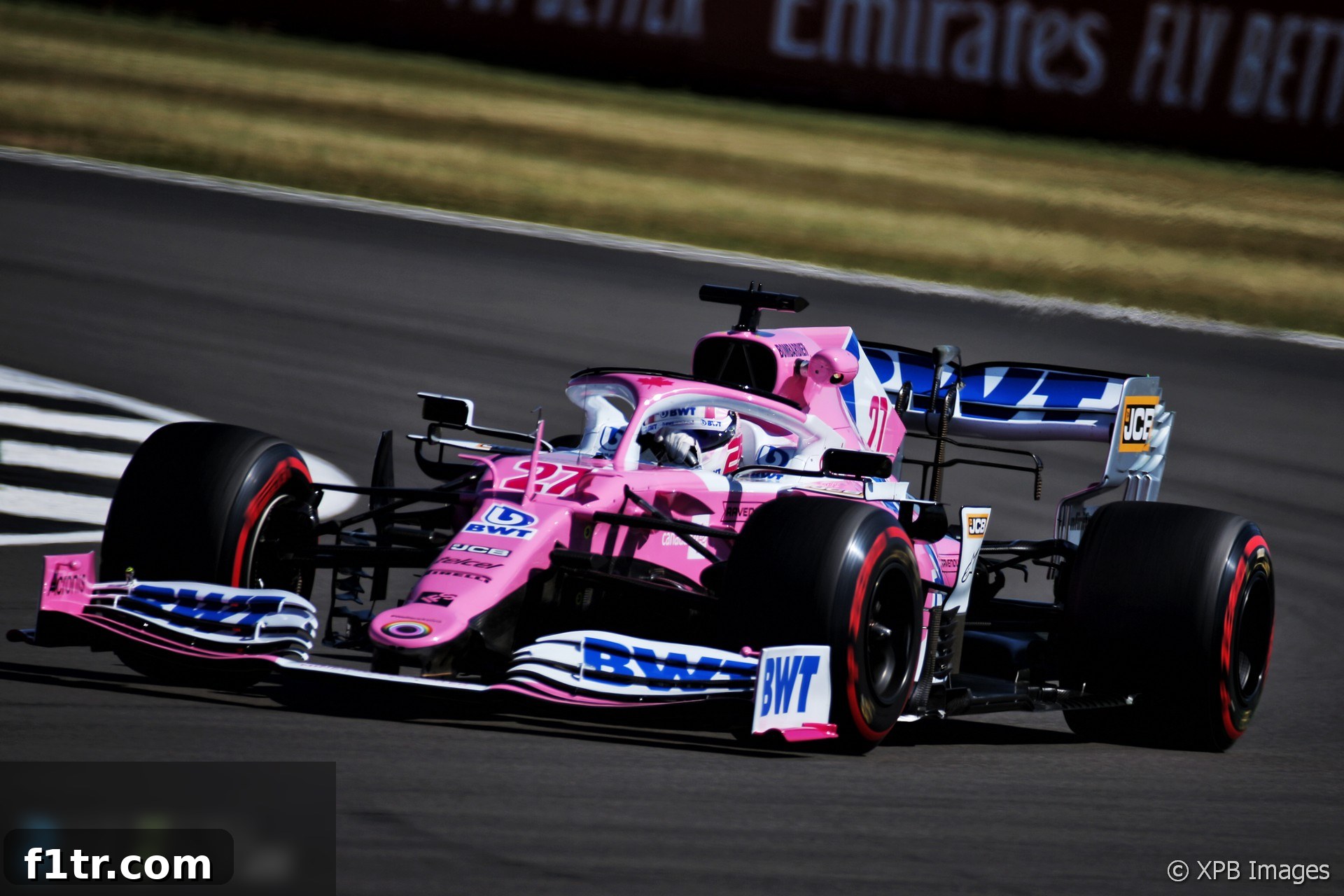
Nico Hulkenberg Finds His Stride: Enhanced Preparation Fuels Strong Return for Racing Point
In a dramatic twist to the already unusual 2020 Formula 1 season, Nico Hulkenberg made an unexpected, yet highly anticipated, return to the grid as a substitute driver for Racing Point. Stepping in for Sergio Perez, who was sidelined due to a positive COVID-19 test, Hulkenberg’s initial outing at the British Grand Prix was fraught with last-minute challenges and ultimately ended before it truly began due to a power unit issue. However, for his second consecutive weekend deputizing, the German driver arrived at Silverstone feeling significantly more prepared and confident, a sentiment he strongly articulated after a promising first day of practice for the 70th Anniversary Grand Prix.
The saga began when Sergio Perez tested positive for COVID-19 ahead of the British Grand Prix, forcing Racing Point into a frantic search for a replacement. With short notice, Nico Hulkenberg, a seasoned F1 veteran with over a decade of experience, was called upon. His first weekend was a whirlwind; a hasty seat fitting, limited track time, and a race start that never materialized due to an unforeseen technical fault. It was a baptism of fire, or rather, a non-start under immense pressure. Despite this setback, Racing Point’s hopes of seeing Perez return for the following 70th Anniversary Grand Prix were unfortunately dashed when a subsequent test again confirmed his positive status. This meant another call-up for Hulkenberg, but this time, crucially, with the advantage of a few extra days for proper preparation – a luxury he was not afforded in his initial rushed comeback.
The Power of Preparation: Simulator Sessions and Setup Adjustments
Hulkenberg wasted no time in making the most of this invaluable window. “We’ve used the last couple of days to prepare as much and as well as we can,” he stated, highlighting a stark contrast to his previous weekend’s eleventh-hour entry. A significant part of this enhanced preparation involved extensive work in the simulator. Unlike his first call-up where he jumped straight into the real car with minimal virtual practice, this time he managed to complete two dedicated simulator sessions. This allowed him to familiarize himself with the car’s nuances, the track layout, and the various operational procedures from a more controlled environment.
Beyond virtual laps, the team also collaborated closely with Hulkenberg on car setup. “I’ve been in the simulator twice and that certainly helped. And also we tried a couple of things with the car, with the set-up and I think that cleared up some of the questions we had,” he explained. This proactive approach to fine-tuning the RP20 to his preferences was instrumental. The engineering team could gather feedback, make adjustments, and essentially pre-empt many of the setup dilemmas that often plague a substitute driver. This groundwork paid dividends on Friday, as Hulkenberg noted, “That was confirmed today and the programme today we went through quite easily and cleanly so it was all good.” The smooth execution of their Friday practice program was a testament to the thorough preparation undertaken between races.
“Much More At Home”: Physical Comfort and Mental Familiarity
The impact of this preparation was immediately evident in Hulkenberg’s comfort level behind the wheel. After concluding Friday’s practice sessions with a respectable sixth position, just behind his teammate Lance Stroll, Hulkenberg unequivocally declared that his second Friday with the team felt “much better” than his first. This improvement wasn’t merely psychological; it encompassed both physical and mental aspects of driving a modern Formula 1 car.
“Obviously I’m much more familiar with the whole situation inside the car. I know what to expect much more than one week ago,” he elaborated. This familiarity extends to understanding the intricate controls on the steering wheel, the car’s braking points, turn-in characteristics, and acceleration profile. Modern F1 cars are incredibly complex machines, and even an experienced driver needs time to adapt to a new chassis, its specific feedback, and the operational procedures unique to each team. Having had the opportunity to process the data from his brief first outing and then consolidate that understanding in the simulator proved invaluable.
Crucially, his physical state also saw significant improvement. “Physically, also, it was much better so all in all a much more expected Friday I would say,” Hulkenberg remarked. Driving an F1 car is an immense physical challenge, demanding peak athletic performance. Without a full season of training and regular driving, even a fit athlete like Hulkenberg can find the G-forces and sustained concentration taxing. The additional days allowed his body to recover from the initial shock of returning to an F1 cockpit and adapt further, ensuring he could extract maximum performance without fatigue becoming a limiting factor. This combination of physical readiness and mental familiarity allowed him to feel “much more at home straight away,” laying a solid foundation for the rest of the race weekend.
Promising Pace and Qualifying Prospects
Beyond comfort, Hulkenberg’s performance on track spoke volumes. “I felt good and I think that the pace was there straight away,” he confidently stated. His sixth-place finish in Friday’s practice sessions, nestled amongst regular front-runners, underscored the inherent speed of the Racing Point RP20 and Nico Hulkenberg’s ability to quickly tap into its potential. The car, affectionately dubbed the “Pink Mercedes” due to its striking resemblance to the championship-winning W10, has proven to be a formidable contender throughout the season, and Hulkenberg was clearly able to exploit its strengths.
He did, however, admit to a minor imperfection during his qualifying simulation run. “Just on the option or the quali tyre today the lap wasn’t that clean especially the last corner, I lost a bit of time,” he revealed. This indicates that while the raw pace was there, a perfect lap on new soft tyres, crucial for qualifying, was still slightly elusive. Yet, this minor hiccup didn’t dampen his overall confidence. “But I’m pretty happy and confident in the car I have to say, I’m quite pleased with that. And I think we can definitely build on that from today.” His positive assessment suggests that with further analysis and perhaps a slight tweak to his driving style or car balance, he has the potential to deliver a strong qualifying performance.
Racing Point’s Strategic Advantage and the Road Ahead
For Racing Point, having a driver of Hulkenberg’s caliber, even as a stand-in, is a significant asset. The team is locked in a tight battle for third place in the constructors’ championship, and every point counts. While the absence of their lead driver Sergio Perez is undoubtedly a blow, Hulkenberg’s ability to get up to speed so quickly and deliver competitive times minimizes the damage. His vast experience means he can provide valuable feedback to the engineers, contributing to the car’s development even if his tenure is temporary.
The 70th Anniversary Grand Prix presents a unique challenge, being held on the same Silverstone circuit but potentially with different tyre compounds or conditions. Hulkenberg’s rapid adaptation bodes well for the team’s prospects. The focus will now shift to consolidating the long-run pace for Sunday’s race and ensuring a faultless qualifying session. If Hulkenberg can iron out the minor issues from his single-lap run and convert his strong practice performance into a solid grid position, Racing Point stands to gain crucial points in their championship pursuit.
Nico Hulkenberg’s unexpected return has captivated the F1 paddock. His professionalism, adaptability, and undeniable talent have shone through despite the challenging circumstances. His improved preparation has clearly paid dividends, allowing him to feel genuinely comfortable and competitive in the RP20. As the weekend progresses, all eyes will be on the ‘Hulk’ to see if he can translate this promising start into a memorable points finish, further cementing his reputation as one of Formula 1’s most capable and resilient drivers.
2020 F1 season – Related Articles
- Grosjean’s F1 Test Return: A Look Back at His Post-Crash Drive
- Iconic Chassis on Display: The Story of Grosjean’s Bahrain Crash
- Team-mate Dynamics: Bottas vs Rosberg, Hamilton’s Mercedes Era
- Financial Impact: F1’s Revenue Dip During the 2020 Covid Season
- Contract Saga: Hamilton and Mercedes Secure New Deal for 2021
Browse all 2020 F1 season articles