Oliver Bearman’s F1 Ambition Soars After Stellar Haas Debut at Mexican Grand Prix
The highly anticipated Formula 1 debut of Oliver Bearman has sent ripples of excitement through the motorsport world, with the young British talent confidently asserting his belief in his own capability to reach the pinnacle of racing. His impressive performance during the first free practice (FP1) session at the Mexican Grand Prix not only lived up to expectations but arguably exceeded them, solidifying his status as one of Formula 2’s most promising prospects.
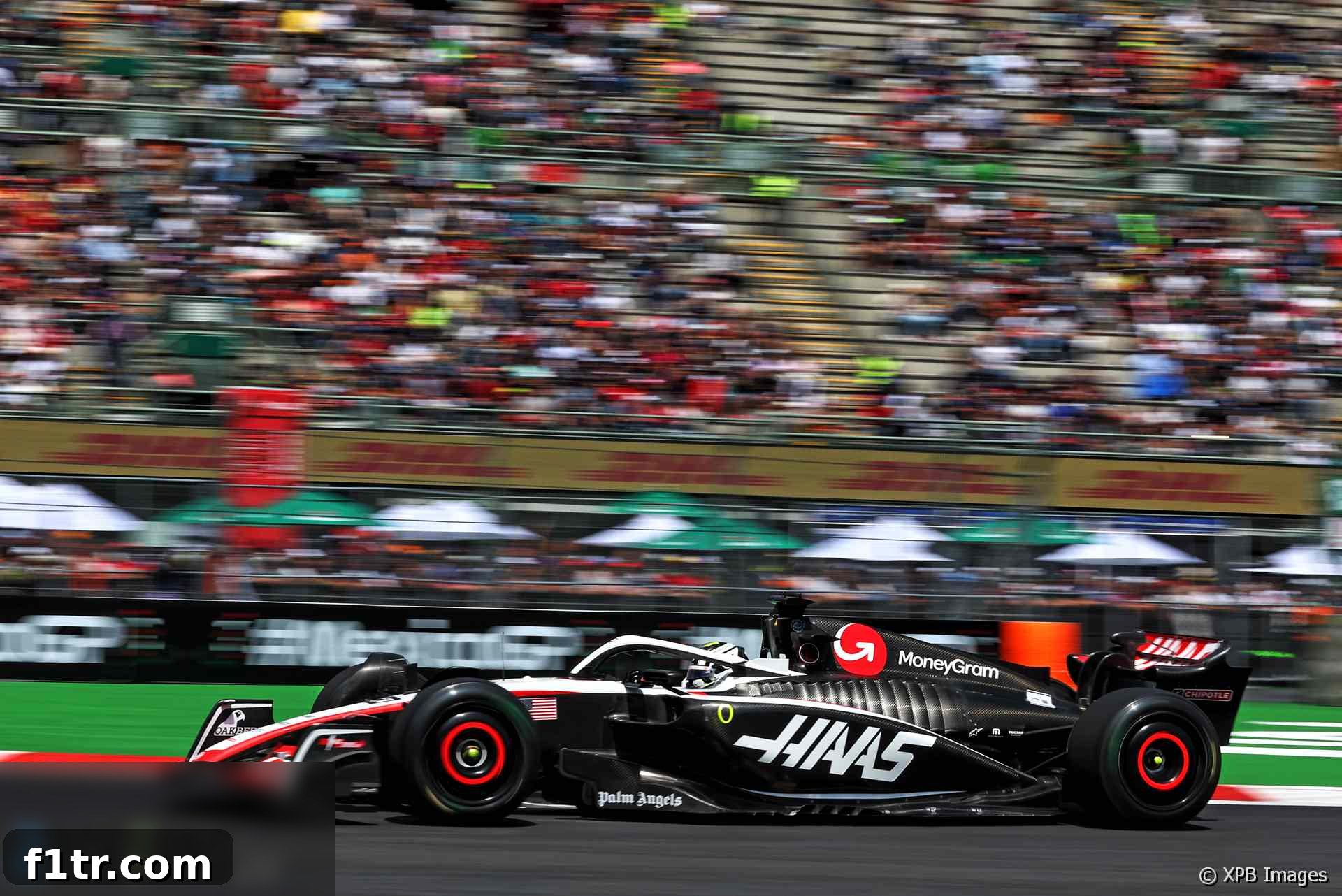
Bearman, a key member of the esteemed Ferrari Driver Academy, took the wheel of Kevin Magnussen’s Haas VF-23 at the challenging Autodromo Hermanos Rodriguez circuit. Despite the inherent pressure of his maiden F1 outing, the 18-year-old displayed remarkable composure and raw speed, concluding the hour-long session with the 15th-fastest time. Crucially, his best lap was within a mere half-second of his experienced teammate, Nico Hulkenberg, a testament to his rapid adaptation and natural talent. This initial showing has undoubtedly fueled his personal aspirations and piqued the interest of many within the F1 paddock.
A Glimpse of Grand Prix Glory: Bearman’s Mexican Debut Unpacked
Oliver Bearman’s appearance in Mexico was not merely a ceremonial run; it was a strategically important session mandated by Formula 1 regulations. All teams are required to field a rookie driver in at least two FP1 sessions throughout the season, allowing emerging talents to gain invaluable experience in a current-generation F1 car. This rule provided the perfect platform for Bearman to showcase his capabilities on one of the sport’s most demanding circuits, known for its high altitude and complex layout, which adds an extra layer of challenge to car setup and driver performance.
His performance stood out among a strong contingent of F2 drivers also making their FP1 debuts. Bearman emerged as the highest-placed F2 driver among the five who participated, underscoring his immediate competitiveness. Beyond lap times, his session management was equally impressive. Bearman completed a significant 31 laps, a higher tally than any of the other F2 rookies, effectively meeting his self-imposed target for his inaugural F1 outing. This extensive running allowed him to accumulate crucial data for the team and further familiarize himself with the car’s intricate systems and the unique characteristics of F1 racing, which differ significantly from the F2 machinery he is accustomed to.
Beyond the Stopwatch: A Mature Performance for a Rookie
Reflecting on his debut, Bearman articulated his primary objectives and his satisfaction with their achievement. “My first goal was to have a clean session, and we did that, which is the main thing,” he stated, emphasizing the importance of a fault-free run. In the high-stakes environment of Formula 1, avoiding mistakes and providing reliable data is often prioritized over outright pace for a rookie. His ability to deliver a pristine session from the outset speaks volumes about his discipline and focus.
Moreover, Bearman quickly found his rhythm, demonstrating an innate feel for the car. “I got up to speed quite fast. I felt I had really good confidence with the car, and more or less, I’m happy.” This rapid adaptation is a hallmark of truly gifted drivers. He also acknowledged the learning curve, particularly regarding specific F1 procedures and components. “There’s always a few things; it was my first time doing everything, my first time on the soft tyre, my first long run. So I would do better the second time, but for the first time, I was quite happy.” Navigating the complexities of F1 tyres, especially the delicate balance required for optimal performance on soft compounds over varying stints, is a significant challenge for any new driver. Bearman’s candid assessment highlights his analytical approach and commitment to continuous improvement, qualities highly valued by F1 teams.
Backing His Belief: The Path to Formula 1
Bearman’s confidence in his own abilities is unwavering. When directly asked about his prospects of reaching Formula 1, the young driver’s response was resolute: “I believe that I have what it takes; in my mind, there’s no doubt about that.” This self-assurance is a critical component for any aspiring F1 driver, reflecting the immense mental fortitude required to compete at the elite level. However, he also displayed a mature understanding of the broader landscape, recognizing that raw talent alone is often insufficient.
“But that’s not all you need to get to F1; there’s a lot more going on behind the scenes,” he added, alluding to the complex interplay of funding, political maneuvering, team affiliations, and market timing that often dictates who secures a coveted F1 seat. Despite these external pressures, Bearman maintains a clear focus on what he can control: his performance. “So, I’ve just got to keep focusing on myself. I have to do a good job next year in F2, and if that’s enough, that’s enough. If it’s not, then I don’t know what to say.” This pragmatic approach underscores his understanding that F2 remains his primary battleground for now, and continued success there is his surest path forward.
His F2 season has been nothing short of impressive for a debutant. Currently sitting sixth in the championship standings with one round remaining, Bearman has already secured four victories, showcasing his race-winning pedigree and consistent pace. This strong performance in the feeder series, combined with his affiliation with the Ferrari Driver Academy, positions him as a prime candidate for future F1 opportunities. The Ferrari link, in particular, opens doors not just with the Scuderia itself but also with its customer teams like Haas, creating a natural progression pathway for talents like Bearman.
Haas’s Verdict: A Team Thoroughly Impressed
The positive feedback from the Haas F1 Team was equally significant, with Trackside Engineer Director Ayao Komatsu revealing that Bearman’s professionalism extended far beyond his on-track performance. Komatsu, a highly respected figure within the team, could not find fault with Bearman’s conduct. “I don’t think you can fault him; he’s done really well,” Komatsu affirmed, emphasizing the completeness of Bearman’s impression.
The praise began even before he stepped into the car. “All the way from the initial preparation, he’s been very professional. Very, very easy to deal with in every single process, I have nothing to complain [about],” Komatsu elaborated. This highlights the importance of off-track diligence, including simulator work, technical briefings, and seamless integration with the engineering team. An F1 driver’s role is multifaceted, requiring not just driving skill but also strong communication and collaboration abilities. Bearman’s ease of interaction and professional demeanor clearly made a strong impression on the Haas personnel.
During the session itself, Bearman’s calmness under pressure was a standout attribute. “Then today, with the calmness, procedures he understood, he understood the objectives of every single run. He didn’t put a foot wrong, really,” Komatsu stated. Understanding the specific objectives for each run—be it aero correlation, tire data collection, or power unit mapping—is critical for maximizing the limited track time in FP1. Bearman’s ability to internalize and execute these complex instructions flawlessly as a rookie speaks volumes about his mental capacity and discipline.
The Engineering Perspective: Why Feedback Matters
While Komatsu noted that Bearman “didn’t maximize the soft tyre” on his fastest lap, he also downplayed the significance, adding, “Nico’s lap wasn’t great either, so you can’t read too much into it.” This contextualization further validated Bearman’s relative pace. More importantly, his feedback quality and engagement with his engineers were lauded. “But in terms of his feedback, it was really good, engagement with his engineers, really, really good job. Really impressed.”
In Formula 1, precise and articulate driver feedback is the bedrock of car development and setup optimization. Engineers rely heavily on a driver’s ability to communicate subtle nuances about the car’s behavior, tire degradation, and balance issues. For a rookie, providing such valuable insights, particularly after experiencing an F1 car for the first time, is an exceptional skill. Bearman’s strong engagement with his engineering team suggests a maturity beyond his years and a deep understanding of the technical aspects of racing, further cementing his appeal to F1 teams looking for future talent.
Komatsu further expressed the team’s surprise at the 18-year-old’s overall handling of the demands associated with being a Formula 1 driver, even if for just one session. “Honestly, I can’t pick a moment from all the way through that preparation where something was frustrating or difficult, including his management,” he confessed. “It’s been a really smooth process. It’s been a pleasure to work with him and his management team.” This seamless collaboration is a significant asset, demonstrating that Bearman is not only a fast driver but also a team player, surrounded by a supportive and efficient management structure.
Looking Ahead: Abu Dhabi and Beyond for Bearman
Oliver Bearman’s journey with Haas is far from over. His impressive outing in Mexico has paved the way for another crucial opportunity, as he is scheduled to drive for the team in FP1 at the upcoming Abu Dhabi Grand Prix. This second session will allow him to build on his initial experience, further refine his technique, and demonstrate consistent performance on a different track layout, which is another key indicator of a driver’s adaptability and potential.
Komatsu’s concluding remarks underlined the team’s optimism regarding Bearman’s future. “I really can’t fault him today,” he reiterated. “He’s got another session planned in Abu Dhabi. So really looking forward to that, and then hopefully more sessions next year as well. So it’s very promising.” The prospect of “more sessions next year” suggests that Haas views Bearman as a valuable asset for their long-term plans, potentially as a reserve driver, simulator driver, or even a contender for a full-time seat in the future. The highly competitive landscape of Formula 1 means that securing a full-time drive is immensely challenging, often requiring years of dedicated effort, consistent results, and a stroke of good fortune.
For Oliver Bearman, the path to Formula 1 is now clearer than ever. His Mexican Grand Prix debut was more than just a fleeting appearance; it was a powerful statement of intent. Combining raw speed with commendable professionalism, maturity, and valuable technical feedback, he has firmly positioned himself on the radar of teams like Haas and, by extension, Ferrari. As he continues his F2 campaign and prepares for his second F1 FP1 outing, all eyes will be on this young talent, eager to see if he can convert his undeniable potential into a permanent place on the Grand Prix grid.
2023 Mexican Grand Prix Related Articles
- ‘I’m so s*** in qualifying’: Norris berates himself despite pole-winning lap
- Ferrari reaping the benefits of having F1’s most closely-matched team mates
- Norris had “no chance” to beat Verstappen in Mexico even without Q1 exit
- Transcript: How Ricciardo’s race went awry soon after he was told to “bring it home”
- Mercedes see “very encouraging signs” from Austin floor update
Browse all 2023 Mexican Grand Prix articles