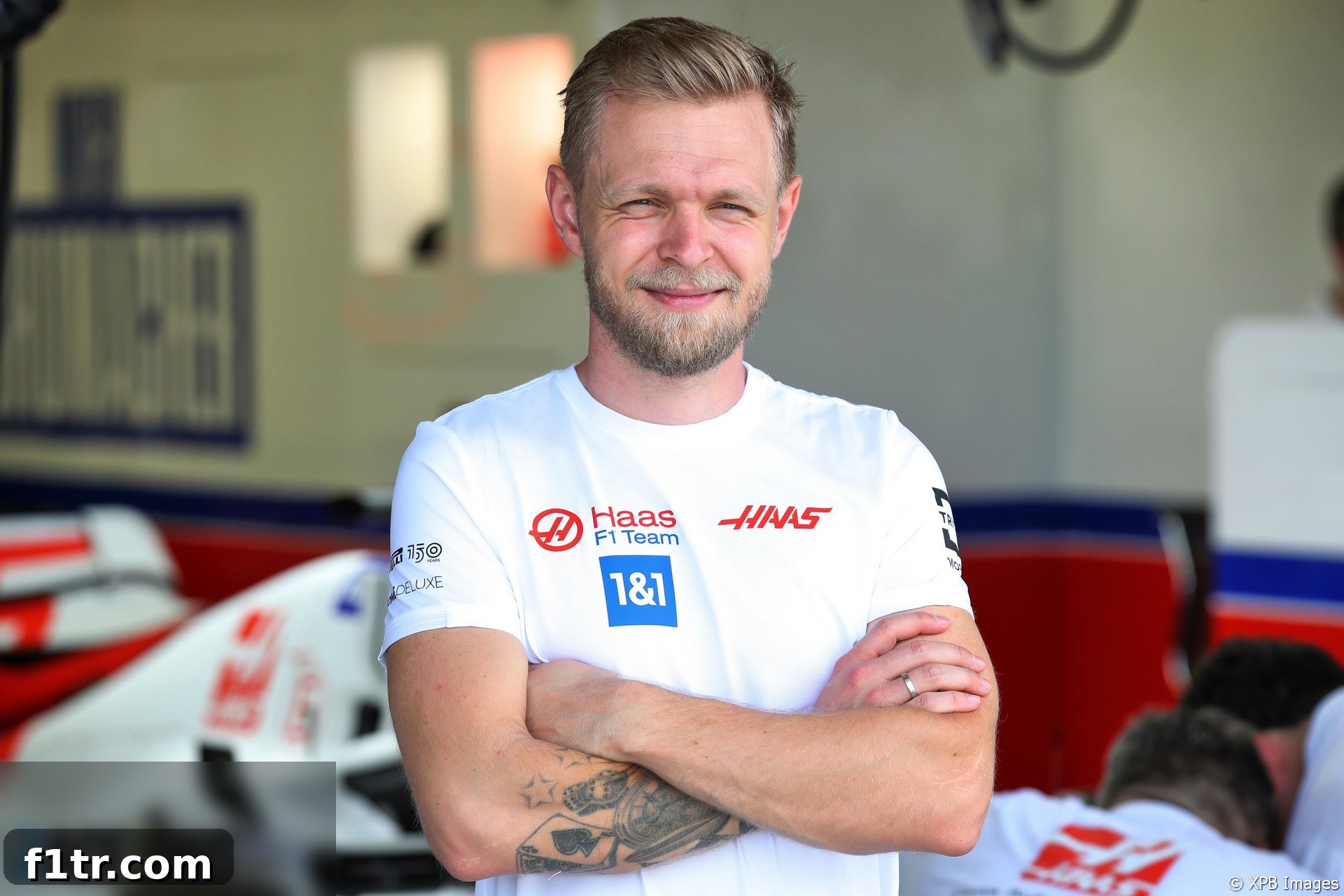
Kevin Magnussen’s Remarkable F1 Comeback: A Journey of Resilience and Renewed Passion
At the close of the dramatic 2020 Formula 1 season, as the checkered flag fell on the Abu Dhabi Grand Prix, Kevin Magnussen stepped out of his VF-20 with a profound sense of finality. He had spent his last two seasons with Haas, battling an uncompetitive car, culminating in a frustrating year that yielded a mere single point. For a driver of Magnussen’s caliber and unwavering desire to win, the experience had become unbearable. He believed this was the end of his Formula 1 journey, a chapter he was prepared to close as he sought a return to the thrill of victory elsewhere.
Advert | Become a Supporter & go ad-free
A Farewell Steeped in Frustration and a Quest for Victory
The 2020 season was particularly arduous for Magnussen and the Haas F1 Team. Plagued by a car that lacked fundamental performance, the Danish driver found himself consistently at the back of the grid, a position antithetical to his competitive spirit. Known for his candidness, Magnussen openly expressed his disappointment, a sentiment understandable for any elite athlete who lives for the podium. “I’m a racing driver that likes to win,” he articulated in the Yas Marina paddock, fully expecting it to be his swansong from the pinnacle of motorsport. “I know every racing driver wants to win but I really, really want to win, and we haven’t been even remotely close to being in any sort of situation to win races in the last two years and even four years.” This honest assessment highlighted not just the struggles of 2020 but a broader period of unfulfilled potential within Formula 1.
His disillusionment was palpable. As he looked forward to a life beyond F1, Magnussen stated he wasn’t “really sad” but rather “really looking forward to getting back in a winning situation where I can go to race weekends and just think about and be focused on that win and think about the championship all year. So I’m not going to miss that in Formula 1.” This was not his first encounter with the harsh realities of Grand Prix racing. His promising rookie season with McLaren in 2014, which began with an impressive second-place finish, abruptly ended when he was unceremoniously dropped to make way for the returning Fernando Alonso for the 2015 season. That previous experience left him sidelined and emotionally bruised.
Reflecting on that earlier setback, Magnussen revealed, “Last time, in 2014, I was very, very nervous about everything. I remember Abu Dhabi in 2014 being a terrible race because there was so much uncertainty; they had told me they would take the option and then it dragged out and they didn’t take the option and eventually dropped me. I remember being so sad about everything and depressed about it.” These experiences forged a resilient character, one who knew how to navigate the highs and lows of a demanding career.
Rediscovering the Joy of Racing Beyond F1’s Spotlight
With his Formula 1 aspirations seemingly behind him, Magnussen embraced new challenges in 2021. He had no shortage of options and quickly found a home in prototype sports car racing. Competing with legendary team owner Chip Ganassi in Cadillacs, he found himself back in winning situations, an exhilarating change from the backmarker battles of F1. His talent was recognized further when French manufacturer Peugeot signed him to spearhead their ambitious Le Mans bid. These endeavors, combined with a profound shift in his personal life – welcoming a newborn daughter and relocating back to his native Denmark – brought him a renewed sense of contentment and perspective.
Away from the relentless scrutiny and cutthroat competition of Formula 1, Magnussen rediscovered the pure joy of being a racing driver. He relished the camaraderie of endurance racing and the satisfaction of competing for victories. The fast-paced, high-stakes world of F1, which had once consumed him, now felt like a distant memory, a closed chapter he had made peace with. He was enjoying life, balancing his passion for motorsports with the responsibilities and joys of family, settling into a rhythm that promised stability and fulfillment.
Advert | Become a RaceFans supporter andgo ad-free
The Unexpected Ring: A Call That Rewrote His Future
Just as Kevin Magnussen was fully immersed in his new life, his phone rang. The caller ID displayed a familiar name: Guenther Steiner, team principal of the Haas F1 Team. The call came amidst a dramatic turn of events for Haas, who were severing ties with Russian sponsor Uralkali and consequently dropping driver Nikita Mazepin. This unforeseen opening in Formula 1 created a ripple effect that reached Magnussen, who had firmly believed his F1 career was over.
“I was in a happy place when Guenther called me,” Magnussen explained, highlighting his contentment before the surprising proposition. “2021 was really enjoyable for me. I had a daughter and I moved back to Denmark for the first time in many years and I did a season in IMSA, which I enjoyed a lot too. Had fun, did an IndyCar race, did Le Mans with my dad – I was just really enjoying myself a lot.” His contentment underscores the shock of the call. He had truly “accepted that Formula 1 was a closed chapter.”
Despite seeing news of Mazepin’s departure, Magnussen initially dismissed any notion of a return for himself. He knew he didn’t bring substantial sponsorship, relying solely on his driving prowess. “I still don’t bring a lot other than just my driving skills to a team. So I thought that was still not going to be a possibility and then Guenther called me and that was a big surprise.” The opportunity, seemingly out of nowhere, reignited a spark he thought had been extinguished.
The Irresistible Allure of a Second Comeback
Despite previous statements indicating a lack of interest in returning to the back of the grid, Magnussen’s resolve melted the moment the opportunity presented itself. “When he called me I said ‘yes’ immediately,” he revealed, a testament to the powerful, enduring pull of Formula 1. The decision wasn’t without its complications, as he had existing contracts with other teams in sports car racing, and personal doubts inevitably surfaced about re-entering the high-pressure F1 world. However, that initial, visceral “yes” proved to be the decisive factor.
“I just felt like that first initial feeling that I had when Guenther called was so telling,” he reflected. “I just felt so excited about this possibility to actually just go back again and make another comeback. This is my second comeback and it’s fantastic. Anyone that gets the chance to race in Formula 1 is extremely lucky and if you get that opportunity, I think you should always grab it and seize the moment.” His words encapsulate the unique privilege and immense draw of competing at motorsport’s highest level, a chance few drivers get once, let alone twice.
Magnussen later clarified that his earlier pronouncements about moving on from F1 were, in part, a coping mechanism. It’s easier to accept a reality when there’s no alternative. “I think it’s one thing saying that all that stuff when you don’t have an opportunity to go to Formula 1. Then when you actually sit with an opportunity to go back, it’s different,” he explained. “It’s also a way of coping. There’s no reason to look back and say, ‘oh, I want to go back.’ I got asked quite a lot, ‘would you like to go back?’ – I got tired of all those questions. It’s easier to deal with if you say ‘no, I’m looking forward and I’ve moved on.’ But then, when you get that opportunity, you take it.” This candid insight reveals the psychological toll and the human aspect of a driver’s career, always seeking to balance ambition with acceptance.
Haas’s Vision for 2022: A New Chapter with the VF-22
In offering Magnussen the drive, Guenther Steiner made no grand promises about immediate championship contention. Instead, he conveyed a sense of cautious optimism, emphasizing the team’s dedicated efforts on the new VF-22 car, which had been under development for over a year, benefiting from new technical regulations. “He didn’t promise anything,” Magnussen confirmed. “He said that they’ve been working really hard on it and have given me some indications. Just walking around and speaking to everyone in the team, I feel like there’s some sort of vibe going on. Let’s see. I don’t think we’re going for the championship this year, but I think I think there’s a good atmosphere. You can feel something good is coming.” This pragmatic yet hopeful outlook resonated with Magnussen, who valued honesty and a clear direction.
Advert | Become a RaceFans supporter andgo ad-free
Stepping back into the Bahrain paddock, Magnussen was met with a genuinely warm welcome. Haas team members, rival drivers, and journalists alike expressed their pleasure at his return. In a sport often perceived as ruthless and exclusive, the collective sentiment indicated a true appreciation for his character and journey. Many in the paddock were genuinely pleased to see him granted a second – or arguably a third – chance at Formula 1, recognizing his talent and enduring passion.
The familiarity of the environment struck him. “I feel the same. Walking into the paddock yesterday, I felt like I never left,” Magnussen recounted. The past year, though transformative with personal milestones like fatherhood and moving home, felt strangely compressed. “It’s funny when I think about the year that I’ve had, how much has happened – I had a kid, I moved back to Denmark. A lot of things happened, it feels like ten years have passed if I’m looking outside of the paddock. But then I walk in and it feels like I never left. It’s funny how time can mess with you.” This sentiment perfectly captures the timeless, all-encompassing nature of the Formula 1 world.
Team Dynamics: Partnering with Mick Schumacher
Magnussen’s return introduced a new dynamic within the Haas garage, as he was paired with Mick Schumacher. Despite Magnussen’s vast experience – nearly a hundred more F1 starts than his younger teammate – he stated there was no expectation for him to assume a mentoring role. “I haven’t been asked to play any sort of mentoring role at all. I know what I’m here to do and that is go score some points and do good races to help the team develop this car and help the team move forward,” he asserted.
The nature of Formula 1 competition dictates that while teammates can collaborate, they are ultimately rivals for the same points and accolades. “Formula 1 is different to other forms of motorsport – sports cars, especially – where you really are working as a team with your team mates. In Formula 1, you are racing against each other. So I think it’s important to understand that you can benefit from each other, but also important to accept that you are, at the end of the day, racing for the same points.” This clear understanding sets the tone for their working relationship, one balanced between mutual benefit and healthy competition.
A unique bond, however, exists between the two Haas drivers: both grew up with famous Formula 1 driver fathers. “He grew up with motorsport in his blood,” Magnussen remarked about Schumacher, recognizing a shared heritage. “I know what that means. I think he should be a very strong driver and I’m looking forward to learning from him and working with him.” This shared background offers a subtle layer of understanding and mutual respect between them.
The Unyielding Pressure and Enduring Allure of Formula 1
With a multi-year contract firmly in hand, Kevin Magnussen is once again fully committed to the most intense and pressurized environment in global motorsport. This time, however, he approaches the challenge with a newfound perspective, born from his time away and his personal growth. It’s a challenge he openly relishes, understanding the constant demand for excellence that defines Formula 1.
“Formula 1 is a sport where you always need to prove yourself,” he explained. “Every lap, every second you have in the car, you’re proving yourself. That’s what’s so cool about this sport, is that it’s such high pressure. There’s no time to relax. You’ve always got to be the best version of yourself. You can never be perfect and you’re always striving for better. It is the most competitive form of motorsport and I’m just excited.” His words beautifully encapsulate the essence of Grand Prix racing: a relentless pursuit of perfection, an unwavering commitment to improvement, and an unparalleled competitive fire. Magnussen’s return is not just a second chance, but a testament to his enduring talent and the magnetic pull of Formula 1, where dreams can be revived against all odds.
Become a RaceFans Supporter
RaceFans is run thanks in part to the generous support of its readers. By contributing £1 per month or £12 per year (or the same in whichever currency you use) you can help cover the costs of creating, hosting and developing RaceFans today and in the future.
Become an RaceFans Supporter today and browse the site ad-free. Sign up or find out more via the links below:
- Become a RaceFans Supporter
- RaceFans Supporter FAQ
2022 F1 season
- Mercedes told me “you’re wrong” about 2022 car’s problems – Hamilton
- FIA confirms all 10 F1 teams complied with 2022 cost cap
- Steiner “not ashamed” of panning “slow” Schumacher in Drive to Survive
- Albon believes year out of F1 improved him as a driver
- Hamilton sees diversity gains in F1 years on from his ‘traumatising’ experience of racism
Browse all 2022 F1 season articles